All Questions
Can Box Type High-Temperature Resistance Furnaces Control The Atmosphere During Heat Treatment? Discover The Key Differences
Learn how atmosphere furnaces prevent oxidation with precise gas control, while standard box furnaces operate in air for basic heating applications.
What Types Of Workpieces Are Suitable For Box Type High-Temperature Resistance Furnaces? Versatile Solutions For Metals, Ceramics, And More
Discover which workpieces suit box-type high-temperature furnaces, including metals, ceramics, and refractory materials, with temperature ranges from 500°C to 1800°C.
What Are The Operational Advantages Of Box Type High-Temperature Resistance Furnaces? Achieve Reliable, User-Friendly Thermal Processing
Explore the operational benefits of box furnaces, including intuitive controls, safety features, and energy efficiency for consistent lab and small-batch results.
What Makes Muffle Furnaces Particularly Useful For Sensitive Materials? Ensure Precision, Purity & Protection
Discover how muffle furnaces prevent contamination, ensure uniform heating, and enable inert atmospheres for sensitive materials in labs.
How Does A Muffle Furnace Compare To Other Types Of Laboratory Melting Furnaces? Discover The Best Fit For Your Lab
Compare muffle, vacuum, and induction furnaces for lab melting. Learn key differences in purity, speed, and versatility to choose the right furnace for your needs.
What Structural Features Make Muffle Furnaces Versatile For Laboratory Use? Discover Key Designs For Precision Heating
Explore muffle furnace structural features like the isolated muffle chamber, insulation, and temperature control for versatile lab applications in metallurgy and materials science.
What Are The Key Performance Benefits Of Using A Muffle Furnace? Achieve Precise, Uniform, And Contamination-Free Heating
Discover how muffle furnaces deliver precise temperature control, uniform heating, and contamination-free environments for reliable material processing in labs and industries.
Why Is Temperature Stability Important In A Muffle Furnace? Ensure Reliable Results And Process Control
Learn why temperature stability in muffle furnaces is vital for repeatability, material properties, and defect prevention in thermal processes.
What Are The Primary Applications Of A Laboratory Muffle Furnace? Achieve Precise, Contaminant-Free High-Temperature Processing
Explore key uses of muffle furnaces in analytical testing and material transformation, including ashing, heat treatment, and sintering for accurate results.
What Is A Muffle Furnace And How Does It Work? Discover Its Key Benefits For Your Lab
Learn how muffle furnaces provide isolated, uniform heating for contamination-free processes in labs and industrial applications.
Why Are Muffle Furnaces Particularly Suitable For Ashing Processes? Achieve Contaminant-Free Sample Analysis
Discover how muffle furnaces ensure precise, high-temperature ashing with uniform heat and contamination prevention for accurate inorganic residue analysis.
How Are Muffle Furnaces Applied In Textile Manufacturing? Ensure Quality With Precise Ashing Tests
Learn how muffle furnaces determine ash content in textiles for quality control, purity assessment, and additive verification in manufacturing.
What Paint Industry Processes Utilize Muffle Furnaces? Essential For Lab Analysis And Quality Control
Discover how muffle furnaces are used in the paint industry for ash content analysis and high-temperature testing to ensure quality and R&D.
How Are Muffle Furnaces Used In The Glass Industry? Precision Heating For Quality Control And Tempering
Explore muffle furnace uses in glass: material analysis, recycling, shaping, and tempering for enhanced strength and purity in controlled environments.
What Are Some Typical Applications Of Muffle Furnaces? Essential Uses In Labs And Industry
Explore muffle furnace applications in ashing, heat treatment, and ceramics firing for clean, high-temperature processes in labs and manufacturing.
What Factors Should Be Considered When Selecting A Muffle Furnace? Key Tips For Optimal Lab Performance
Learn essential factors for choosing a muffle furnace, including temperature range, chamber size, control features, and safety, to enhance lab efficiency and reliability.
What Are The Advantages Of Using A Muffle Furnace? Achieve Precise, Contamination-Free Heat Treatment
Discover muffle furnace benefits: high-temperature uniformity, sample isolation for purity, and precise control for labs and materials research.
Which Industries Benefit From The Use Of Muffle Furnaces? Essential Applications Across 8 Key Sectors
Discover how muffle furnaces drive precision in biomedical, aerospace, electronics, and more—enabling contamination-free high-temperature processes up to 3000°C.
What Are The Main Applications Of A Muffle Furnace? Unlock Precision Heating For Material Transformations
Explore muffle furnace uses in material analysis, modification, and synthesis. Learn how its isolated heating ensures purity and precision in labs.
What Are The Steps To Operate A Box Muffle Furnace? Master Safe And Efficient Heating Processes
Learn the essential steps to operate a box muffle furnace, including preparation, programming, heating, cooling, and safety tips for optimal results.
What Role Does A Box Muffle Furnace Play In Life Sciences? Unlock Precise Mineral Analysis In Research
Learn how box muffle furnaces enable accurate ashing for mineral quantification in life sciences, supporting nutrition, environmental, and biomaterials studies.
How Is A Box Muffle Furnace Used In Chemical Experiments? Unlock Precise High-Temperature Processing
Learn how box muffle furnaces enable pyrolysis, calcination, ashing, and sintering in labs with precise temperature control and contaminant-free heating.
What Are The Main Applications Of A Box Muffle Furnace In Material Research? Unlock Precision Heat Treatment And Analysis
Explore key applications of box muffle furnaces in material research, including heat treatment, sintering, and thermal analysis for precise material control.
How Does A Box Muffle Furnace Work? Achieve Clean, Controlled Heating For Your Lab
Learn how a box muffle furnace uses indirect heating for precise temperature control and contamination-free processing in labs.
What Is A Box Muffle Furnace And What Temperature Can It Reach? Essential Guide To High-Temp Precision
Learn about box muffle furnaces, their temperature range (500°C to 1800°C), applications, and key selection tips for labs and industries.
What Are The Common Applications Of The Box Furnace? Unlock Precise Heat Treatment For Your Lab
Explore box furnace uses in metal heat treatment, sintering, and lab analysis for precise, uniform thermal processing in research and small-batch production.
What Is The Chamber Of The Box Furnace Made Of And How Are Heating Elements Arranged? Optimize Your Lab's Heat Processing
Learn about box furnace chamber materials like aluminum oxide fiber and heating element arrangements for uniform heat distribution in labs.
What Materials Are Used In The Construction Of The Box Furnace's Structure? Durable Solutions For High-Temperature Applications
Learn about the high-temperature alloy steel, stainless steel, and welded steel plates used in box furnace construction for durability and heat resistance.
How Is The Box Furnace's Door Secured And What Safety Feature Does It Have? Ensuring Safe Operation With Robust Design
Learn how box furnace doors use mechanical hinges and safety interlocks for secure closure and automatic power cutoff to prevent hazards.
What Is The Working Principle Of The Box Furnace's Door Mechanism? Ensure Safety And Efficiency In Your Lab
Learn how box furnace door mechanisms use hinges, levers, and safety interlocks for secure sealing and operator protection in high-temperature applications.
What Temperature Range Is Typical For Furnace Gas In A Box Type Resistance Furnace? Learn How To Choose The Right Furnace For Your Needs
Discover the typical 800°C to 1700°C range for box furnaces, influenced by heating elements like FeCrAl, SiC, and MoSi2, to optimize your lab's heat treatment processes.
What Is The Role Of Convective Heat Transfer In A Box Type Resistance Furnace? Unlock Efficient Heating Dynamics
Explore how convective heat transfer works with radiation in box furnaces, key for uniform heating and temperature control in industrial processes.
How Does The Furnace Wall And Roof Of A Box Type Resistance Furnace Transfer Heat To The Metal? Discover The Key Mechanism For Uniform Heating
Learn how furnace walls and roofs transfer heat via radiation and convection for uniform metal heating in box type resistance furnaces, enhancing process efficiency.
How Does Radiant Heat Transfer From Furnace Gas To Metal Work In A Box Type Resistance Furnace? Unlock Efficient Heating Insights
Learn how radiation and convection heat metal in box-type resistance furnaces, with tips for optimizing processes above and below 800°C.
What Types Of Heat Transfer Occur In A Box-Type Resistance Furnace? Master Radiation And Convection For Optimal Heating
Learn how radiation and convection heat workpieces in box-type resistance furnaces, with tips for temperature control and uniformity in heat treatment processes.
What Is A Box Type Resistance Furnace And What Is It Used For? Discover Precision Heating Solutions
Learn about box type resistance furnaces: their working principles, applications in sintering, heat treatment, and high-temperature testing for material science.
Why Are Muffle Furnaces Important In Quality Control? Ensure Product Integrity With Controlled Heat Testing
Learn how muffle furnaces enable precise material testing, simulate thermal stress, and verify composition for quality control across industries.
What Scientific Processes Can A Muffle Furnace Assist With? Unlock Precise, Contaminant-Free Heat Treatment
Explore how muffle furnaces enable ashing, heat treatment, and material analysis with indirect heating for purity and precision in labs.
What Types Of Materials Can Be Analyzed Using A Muffle Furnace? Unlock Precise Thermal Analysis For Diverse Samples
Discover how muffle furnaces analyze ceramics, metals, plastics, and more for ash content, heat treatment, and thermal stability in labs.
Which Industries Commonly Use Muffle Furnaces? Essential For Clean High-Temp Processing
Discover industries using muffle furnaces for contamination-free heating in ceramics, metallurgy, pharmaceuticals, and environmental testing.
What Are The Primary Applications Of A Muffle Furnace? Essential For Analysis And Heat Treatment
Explore muffle furnace uses in ashing, metal heat treatment, sintering, and more for labs and industries requiring precise high-temperature control.
What Are Some Technical Specifications Of Advanced Muffle Furnaces? Unlock Precision And Efficiency In Your Lab
Explore key technical specs of advanced muffle furnaces, including temperature control, atmosphere options, and safety features for precise thermal processing.
What Are Common High-Temperature Applications Of Muffle Furnaces In Laboratories? Unlock Precision In Material Testing And Synthesis
Explore muffle furnace uses in labs for ashing, ceramics, and heat treating. Achieve contaminant-free, high-temperature control for accurate results.
How Has Technology Improved Muffle Furnace Performance? Achieve Precision, Efficiency, And Purity In Heating
Discover how advanced materials, superior temperature control, and energy-efficient designs enhance muffle furnace performance for labs and industries.
What Are The Key Functional Features Of A Modern Muffle Furnace? Precision, Safety, And Efficiency For Your Lab
Explore modern muffle furnace features like programmable controls, high-temperature uniformity, and safety systems for precise thermal processing in labs.
How Do Box Furnaces Maintain Temperature Over Long Periods? Key Components For Stable Heat
Learn how box furnaces use automated controllers, efficient heating elements, and advanced insulation to ensure precise temperature stability for extended durations.
What Safety Features Are Commonly Found In Box Furnaces? Essential Protection For Your Lab And Industrial Needs
Explore key box furnace safety features like over-temperature protection, power cut-offs, and insulation for secure thermal and electrical operation.
What Types Of Box Furnaces Are Available Based On Power Source? Choose Electric Or Gas For Your Needs
Explore electric and gas box furnaces: electric offers precision and cleanliness, while gas suits large-scale industrial cost savings.
How Are Modern Box Furnaces Controlled? Discover Precision With Digital Pid Systems
Learn how digital controllers, sensors, and power regulators ensure precise temperature control, programmability, and energy efficiency in box furnaces.
What Features Help Box Furnaces Maintain Uniform Temperatures? Key Design Elements For Precise Heat Distribution
Learn how box furnaces achieve uniform temperatures with heating elements, insulation, zone control, and air circulation for reliable lab results.
What Temperature Range Can Box Furnaces Reach? Achieve 1800°C For Precise Thermal Processing
Explore box furnace temperature ranges up to 1800°C, with insights on uniformity, control, and applications for labs and industries.
What Is A Box Furnace And What Are Its Common Uses? Discover Versatile High-Temperature Solutions
Learn about box furnaces, their components, and common uses like heat treating metals, sintering ceramics, and material analysis for labs and industries.
What Are Some Common Applications Of Box Furnaces? Versatile Solutions For Metal Heat Treatment And Material Processing
Explore common box furnace uses like annealing, sintering, and ceramic firing. Learn how they provide uniform heating for industrial and lab applications.
What Temperature Information Is Displayed Simultaneously On The Controls? Monitor Real-Time And Target Temperatures For Precision
Learn how simultaneous display of chamber and setpoint temperatures enhances process control, stability, and troubleshooting in high-temperature applications.
How Can The Front Panel Of The Box Furnace Be Configured? Optimize Temperature Control For Your Lab
Learn to configure box furnace front panels for precise temperature control, thermocouple setup, and ramp-soak programming to enhance lab efficiency and safety.
What Features Are Included In The Temperature Control Console Of Box Furnaces? Achieve Precision And Repeatability In Thermal Processing
Discover key box furnace temperature control features like self-tuning PID, programmable ramp-to-setpoint, and uniform heating for reliable thermal processing.
What Temperature Ranges Are Available For Box Furnaces? Find The Perfect Fit For Your Thermal Processes
Explore box furnace temperature ranges from 1100°C to 1800°C, with insights on heating elements, control, and uniformity for optimal performance.
What Are The Primary Heat Transfer Mechanisms In A Box Furnace? Master Radiation And Convection For Optimal Heating
Learn how radiation and convection work in box furnaces, with radiation dominating above 800°C for efficient high-temperature processing and uniform heating.
What Safety Features Are Enhanced In Muffle Furnaces? Discover Advanced Protection For Your Lab
Explore enhanced muffle furnace safety with intelligent systems, electrical safeguards, and insulation for reliable, secure high-temperature operations.
How Do Muffle Furnaces Contribute To Energy Efficiency? Discover Advanced Heat Management For Labs
Learn how muffle furnaces use insulation, heating elements, and digital controls to enhance energy efficiency, reduce costs, and improve lab performance.
What Makes Muffle Furnaces Versatile In Their Applications? Unlock Precision Heating For Diverse Industries
Explore how muffle furnaces enable contamination-free heating, atmosphere control, and uniform temperatures for applications in materials science, chemistry, and manufacturing.
How Does A Muffle Furnace Reduce Contamination During Heating? Ensure Purity In Your Lab Processes
Learn how muffle furnaces prevent contamination with indirect heating and controlled atmospheres for high-purity applications like ashing and material processing.
What Are The Benefits Of High Precision And Control In A Muffle Furnace? Achieve Reliable Thermal Processing For Your Lab
Discover how high precision and control in muffle furnaces ensure accurate temperature management, repeatable results, and material integrity for research and production.
What Materials Are Used In Muffle Furnace Construction? Key Materials For High-Temp Performance
Explore muffle furnace materials like steel shells, ceramic insulation, and heating elements for durability, efficiency, and purity in labs.
What Advantages Do Rapid Heating And Cooling Features Offer In Some Muffle Furnace Models? Boost Efficiency And Control In Your Lab
Discover how rapid heating and cooling in muffle furnaces enhance throughput, reduce costs, and improve process control for labs and production.
What Are The Benefits Of Programmable Controls In A Muffle Furnace? Unlock Precision And Automation For Your Lab
Discover how programmable controls in muffle furnaces enable precise ramps, multi-stage automation, repeatability, and unattended operation for advanced thermal processing.
How Does The Insulated Chamber Of A Muffle Furnace Function? Unlock Precise, Contamination-Free Heating
Learn how a muffle furnace's insulated chamber ensures uniform temperature and sample purity through radiant heating and isolation for reliable lab results.
What Are The High-Temperature Capabilities Of A Muffle Furnace? Unlock Precision Heating For Your Lab
Explore muffle furnace high-temperature ranges (500°C-1800°C), design factors, and applications for labs in materials science and heat treatment.
What Is The Role Of Muffle Furnaces In Incineration Processes? Precision Ashing For Accurate Material Analysis
Explore how muffle furnaces enable controlled incineration for analytical ashing, ensuring precise temperature control and contamination-free sample analysis in labs.
How Do Muffle Furnaces Assist In Ash Testing? Achieve Accurate Mineral Analysis For Quality Control
Learn how muffle furnaces enable precise ash testing by burning organic matter at high temperatures, ensuring reliable results for food, fuel, and pharmaceutical analysis.
What Are The Uses Of Muffle Furnaces In Calcination And Sintering? Achieve Precise High-Temperature Material Transformations
Explore how muffle furnaces enable uniform heating, contamination prevention, and atmospheric control for calcination and sintering in materials science.
How Are Muffle Furnaces Applied In Heat Treatment Processes? Achieve Precise Control For Superior Material Properties
Discover how muffle furnaces enable precise heat treatment like annealing and hardening with controlled atmospheres for contamination-free results in labs.
What Are The Primary Uses Of A Muffle Furnace In Material Testing? Essential For Analysis, Modification, And Performance Evaluation
Discover how muffle furnaces enable precise material testing for ash analysis, heat treatment, and durability assessments in industries like ceramics and metallurgy.
What Environmental Testing Applications Involve Muffle Furnaces? Achieve Accurate Soil And Water Analysis
Discover how muffle furnaces enable precise ash content, LOI, and VSS testing for environmental samples like soil, sediment, and wastewater.
How Are Muffle Furnaces Used In The Pharmaceutical Industry? Essential For Quality Control And R&D
Learn how muffle furnaces ensure pharmaceutical purity through ashing, sample prep, and thermal studies, meeting strict industry standards.
What Role Do Muffle Furnaces Play In Biomedical Applications? Essential For Purity And Precision In Medical Research
Discover how muffle furnaces ensure contaminant-free heating for biomedical processes like material creation, ashing, and sterilization, enhancing purity and accuracy.
How Are Muffle Furnaces Utilized In Ceramics And Glass Industries? Essential For High-Temperature Processing
Discover how muffle furnaces enable contaminant-free firing, sintering, and annealing in ceramics and glass industries for superior product quality.
What Are The Common Applications Of A Muffle Furnace In Metallurgy? Enhance Metal Properties With Precision Heat Treatment
Explore muffle furnace uses in metallurgy for annealing, hardening, tempering, and sintering. Achieve uniform heating and contamination-free results for reliable metal processing.
What Is The Benefit Of Customizing A Muffle Furnace? Achieve Precision And Reliability For Your Unique Applications
Discover how custom muffle furnaces enhance performance with tailored materials, geometry, and controls for specialized processes, ensuring optimal results.
How Does Chamber Size Affect Muffle Furnace Selection? Ensure Precision With The Right Fit
Learn how chamber size and constant temperature zone impact muffle furnace selection for uniform heating, energy efficiency, and accurate results.
Why Is Input Voltage An Important Factor In Selecting A Muffle Furnace? Ensure Safety And Performance For Your Lab
Learn why correct input voltage is crucial for muffle furnace safety and functionality, and how it impacts heating rates and compatibility with your power supply.
What Considerations Apply To Crucible Size In A Muffle Furnace? Ensure Optimal Heating And Safety
Learn key factors for choosing crucible size in muffle furnaces, including sample fit, furnace clearance, and material compatibility for precise results.
How Do Sample Requirements Influence The Choice Of A Muffle Furnace? Match Your Material For Accurate Results
Learn how sample temperature, reactivity, and composition dictate muffle furnace selection for precise heating, control, and contamination prevention.
What Should Be Considered Regarding The Working Temperature Of A Muffle Furnace? Ensure Precision And Longevity For Your Lab
Learn key factors like temperature range, buffer zones, rise time, and uniformity for optimal muffle furnace performance in labs and production.
Why Is The Intended Application Important When Selecting A Muffle Furnace? Ensure Precision And Efficiency For Your Lab
Learn how selecting a muffle furnace based on application prevents failed experiments and optimizes temperature range, uniformity, and chamber design.
How Do Electrical Muffle Furnaces Work? Unlock Precision Heating For Your Lab
Learn how electrical muffle furnaces use resistance heating and insulated chambers for contaminant-free, uniform heat in labs and industries.
What Types Of Processes Can Modern Muffle Furnaces Support? Discover Versatile High-Temperature Solutions
Explore how modern muffle furnaces support annealing, sintering, ashing, and more with precise temperature, atmosphere, and purity control for labs and small-batch production.
What Are The Advantages Of Modern Muffle Furnaces Compared To Older Models? Discover Precision, Efficiency, And Reliability
Explore the benefits of modern muffle furnaces, including precise temperature control, energy efficiency, and superior sample isolation for labs and industries.
What Are The Primary Uses Of A Muffle Furnace? Achieve Precise High-Temperature Processing
Discover the key applications of muffle furnaces in ashing, heat treatment, and materials science for contamination-free, high-temperature thermal processing.
What Role Do Muffle Furnaces Play In Pharmaceutical Research And Development? Essential For Quality Control And Innovation
Discover how muffle furnaces ensure drug purity and drive innovation in pharmaceuticals through ashing, sample pretreatment, and thermal stability studies.
How Are Muffle Furnaces Used In High-Temperature Sintering Within The Pharmaceutical Industry? Ensure Precision And Purity In Drug Development
Learn how muffle furnaces enable uniform sintering for drug delivery systems and implants, ensuring purity and consistency in pharmaceutical manufacturing.
Why Are Muffle Furnaces Important For Determining Moisture, Ash, And Volatile Content In Pharmaceutical Materials? Ensure Purity And Compliance
Learn how muffle furnaces enable precise thermal analysis for moisture, ash, and volatile content in pharmaceuticals, ensuring drug purity and regulatory compliance.
What Is The Role Of Muffle Furnaces In The Pretreatment Of Medical Samples? Essential For Accurate Trace Element Analysis
Learn how muffle furnaces use ashing to remove organic material from medical samples, enabling precise inorganic analysis for labs.
How Does A Muffle Furnace Compare To Other High-Temperature Furnaces In Terms Of Cost? Discover Affordable Heat Treatment Solutions
Explore cost comparisons of muffle furnaces vs. tube and vacuum furnaces, highlighting affordability, capacity, and ideal applications for labs and industries.
What Types Of Heating Media Are Compatible With Muffle Furnaces? Unlock Optimal Process Atmospheres
Explore muffle furnace atmospheres like air, nitrogen, and hydrogen for applications such as ashing, annealing, and brazing to enhance lab efficiency.
What Are The Energy Efficiency Considerations For Muffle Furnaces? Cut Costs With Smart Design
Learn how insulation, heating elements, and digital controls boost muffle furnace efficiency, reduce energy waste, and lower operational costs.
How Does A Muffle Furnace Support Controlled Atmosphere Operations? Ensure Purity And Precision In Your Lab
Learn how muffle furnaces enable controlled atmospheres for oxidation prevention and material processing, with key features and safety considerations.
Why Is Compact Design Beneficial In A Muffle Furnace? Maximize Thermal Efficiency And Save Space
Learn how compact muffle furnace designs enhance heat retention, energy efficiency, and lab space utilization for precise high-temperature applications.
What Are The Common Applications Of Muffle Furnaces? Essential Uses In Labs And Industry
Explore muffle furnace applications in ashing, heat treatment, sintering, and more for clean, high-temperature processes in labs and manufacturing.
Why Might A Muffle Furnace Have Low Heating Efficiency? Diagnose And Fix Energy Loss Issues
Learn the causes of low heating efficiency in muffle furnaces, such as insulation degradation, heating element failure, and poor seals, to reduce energy waste and costs.
Related Products
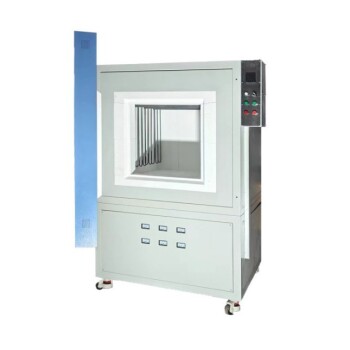
High Temperature Muffle Oven Furnace for Laboratory Debinding and Pre Sintering

Laboratory Muffle Oven Furnace with Bottom Lifting

1200℃ Muffle Oven Furnace for Laboratory

1400℃ Muffle Oven Furnace for Laboratory

1700℃ High Temperature Muffle Oven Furnace for Laboratory
