Products High Temperature Furnaces Atmosphere Furnace

Atmosphere Furnace


FAQ

What Is An Atmosphere Furnace Used For?

Atmosphere furnaces are widely used in material processing, metal processing, semiconductor manufacturing, solar cell production, optical materials, ceramics and glass industry, electronic material manufacturing, and research and development of new energy materials.

What Is The Principle Of A Hot Press Furnace?

A hot press sintering furnace combines high temperature and high pressure in a vacuum environment to sinter materials. It is particularly effective for ceramic powders, which melt and fuse under pressure. The process leverages controlled temperature and pressure to ensure uniform material flow and strong bonding, often in a vacuum environment to prevent oxidation.

What Are The Key Features Of An Atmosphere Furnace?

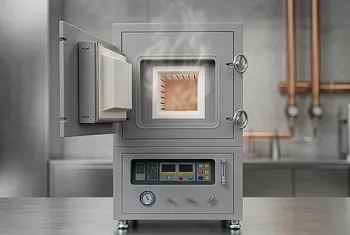
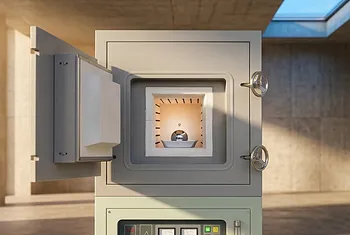
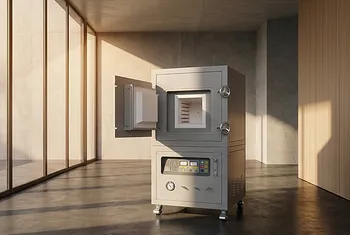
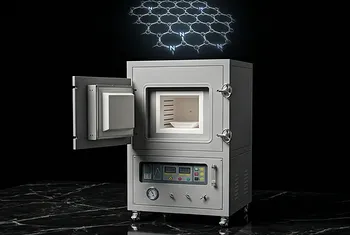
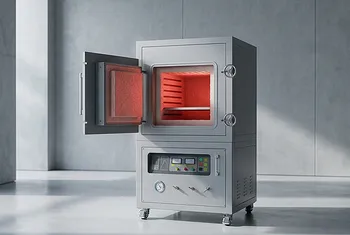
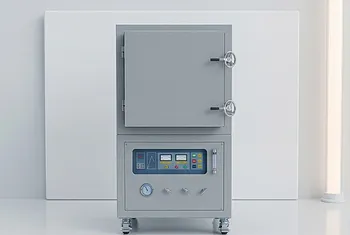
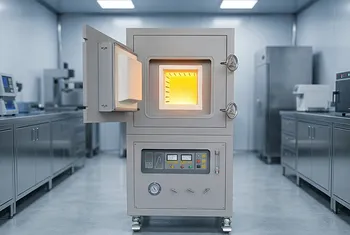
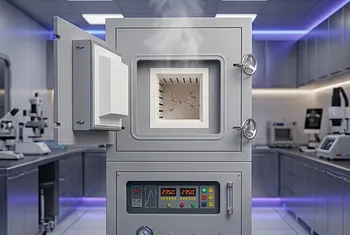
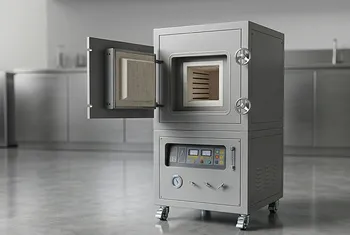
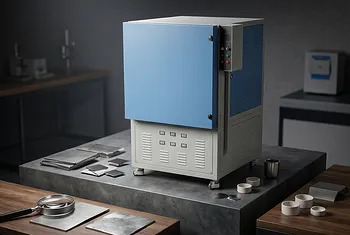
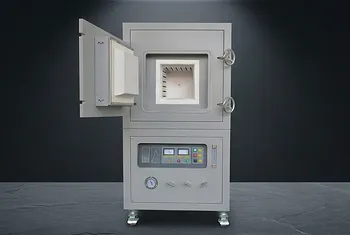
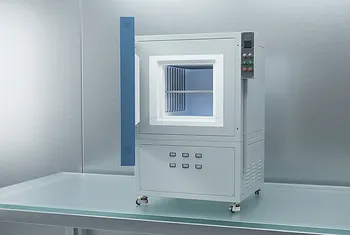
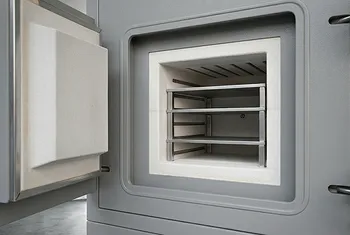
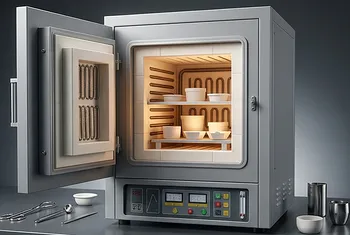
The key features of an atmosphere box furnace include its ability to maintain a specific gas environment, such as inert gases (e.g., nitrogen, argon), reducing gases (e.g., hydrogen), or vacuum conditions, to prevent oxidation, contamination, or unwanted chemical reactions during heating. The furnace typically consists of a high-temperature-resistant box chamber, heating elements, and a gas supply system. Advanced models may include programmable temperature controllers, uniform heating zones, and safety interlocks to ensure operational reliability.

What Are The Applications Of A Hot Press Furnace?

Hot press furnaces are used in sintering and consolidation, powder metallurgy, materials research, semiconductor manufacturing, ceramic processing, graphene synthesis, composite material production, diamond synthesis, and research and development.

How Does An Atmosphere Furnace Work?

A tube furnace generates heat through a heat source and transfers this heat to the heated workpiece or medium via the furnace tube. This process provides stable and uniform heating suitable for various industrial applications. The principle of sintering involves heating materials to high temperatures below their melting points, causing particles to bond and form a solid structure. Heat and sometimes pressure are applied to compact and densify materials, enhancing their mechanical and physical properties.

What Are The Features Of A Hot Press Furnace?

The hot press sintering furnace features a strongly cooled body, except for the heating and insulation components, ensuring precise temperature control and structural integrity.

What Are The Advantages Of Using An Atmosphere Furnace?

The advantages of an atmosphere furnace include strong environmental control capability by adjusting atmosphere components, lower cost compared to vacuum furnaces, and a wide range of applications suitable for various materials like metals and ceramics. Additionally, atmosphere tube furnaces offer precise temperature control, flexible atmosphere control, high heating efficiency, energy conservation and environmental protection, safe and reliable operation, wide applicability, and reasonable structural design.

Why Is A Vacuum Environment Used In Hot Press Furnaces?

A vacuum environment is used in hot press furnaces to prevent oxidation during the sintering process, ensuring high-quality components with minimal deformation and strong material bonding.

What Types Of Gases Can Be Used In An Atmosphere Furnace?

An atmosphere furnace can maintain specific gas environments such as inert gases (e.g., nitrogen, argon), reducing gases (e.g., hydrogen), or vacuum conditions to prevent oxidation, contamination, or unwanted chemical reactions during heating.

What Materials Are Commonly Processed In Hot Press Furnaces?

Hot press furnaces are commonly used for ceramic powders, metals, composites, and other materials that require high-temperature and high-pressure conditions for sintering and bonding.

What Safety Features Are Available In Advanced Atmosphere Furnaces?

Advanced atmosphere furnaces may include programmable temperature controllers, uniform heating zones, and safety interlocks to ensure operational reliability. A program-controlled atmosphere furnace includes a protection system that monitors critical parameters such as furnace temperature and oxygen content. In case of any abnormalities, the system can automatically shut down or trigger an alarm to protect both the furnace and the samples inside.
REQUEST A QUOTE

Our professional team will reply to you within one business day. Please feel free to contact us!


Related Articles

Beyond 1200°C: The Hidden Engineering Behind Vacuum Furnace Hot Zones

Beyond 1200°C: The Hidden Engineering Behind Vacuum Furnace Hot Zones

A deep dive into the critical choice between graphite and all-metal vacuum furnace hot zones, balancing cost, purity, and performance.

Read more
The Alchemy of Control: Mastering Material Properties with High-Temperature Tube Furnaces

The Alchemy of Control: Mastering Material Properties with High-Temperature Tube Furnaces

Discover how tube furnaces enable material transformation by precisely controlling heat, atmosphere, and time—the keys to repeatable science.

Read more
From Brute Force to Perfect Control: The Physics and Psychology of Vacuum Furnaces

From Brute Force to Perfect Control: The Physics and Psychology of Vacuum Furnaces

Discover how vacuum furnaces transform heat treatment from an unpredictable art into a precise science, offering unparalleled control and material purity.

Read more
Beyond Heat: The Unseen Power of Environmental Control in Tube Furnaces

Beyond Heat: The Unseen Power of Environmental Control in Tube Furnaces

Discover why the true value of a tube furnace isn't just temperature, but the absolute environmental control it offers for repeatable science.

Read more
The Physics of Perfection: How a Vacuum Furnace Creates Order from Chaos

The Physics of Perfection: How a Vacuum Furnace Creates Order from Chaos

Discover how vacuum furnaces achieve material perfection by removing atmospheric chaos, ensuring unparalleled purity, control, and repeatability in heat treatment.

Read more
Beyond the Scrubber: Why Your Furnace Design is the Real Key to Environmental Compliance

Beyond the Scrubber: Why Your Furnace Design is the Real Key to Environmental Compliance

Stop struggling with complex exhaust systems. Discover how the right furnace design inherently minimizes emissions and simplifies compliance.

Read more
The Controlled Void: How Vacuum Furnaces Forge the Materials of Tomorrow

The Controlled Void: How Vacuum Furnaces Forge the Materials of Tomorrow

A vacuum furnace is more than an absence of air; it's a tool for precise control over a material's fundamental chemical and physical properties.

Read more
Why Your High-Temperature Synthesis Results Are Unreliable—And How to Fix It

Why Your High-Temperature Synthesis Results Are Unreliable—And How to Fix It

Struggling with inconsistent results in material synthesis, CVD, or annealing? Discover the hidden cause of failure is your furnace's environment, not your process.

Read more
Beyond Temperature: The Art and Science of Thermal Control in Vacuum Furnaces

Beyond Temperature: The Art and Science of Thermal Control in Vacuum Furnaces

Perfect heat treatment isn't just about hitting a temperature; it's a mastery of closed-loop control, thermal uniformity, and the full thermal cycle.

Read more
The Hidden Flaw in Your Heat Treatment: It’s Not the Temperature, It’s the Air

The Hidden Flaw in Your Heat Treatment: It’s Not the Temperature, It’s the Air

Discover why your heat-treated components fail despite perfect recipes. The root cause isn't temperature—it's the atmosphere. Learn how to fix it.

Read more
The Anatomy of Speed: Deconstructing Vacuum Furnace Pump-Down Times

The Anatomy of Speed: Deconstructing Vacuum Furnace Pump-Down Times

Pump-down time is a deceptive metric. True throughput depends on a staged system of pumps, cooling, and overcoming the physics of outgassing.

Read more
Beyond the Program: Why Your Sintering Fails and How to Guarantee Uniformity

Beyond the Program: Why Your Sintering Fails and How to Guarantee Uniformity

Struggling with cracked or inconsistent parts? Discover why your furnace's thermal environment, not just your program, is the real culprit and how to fix it.

Read more
Beyond Clean: How Vacuum Furnaces Redefine Perfection in Metal Joining

Beyond Clean: How Vacuum Furnaces Redefine Perfection in Metal Joining

Vacuum brazing isn't just clean; it prevents contamination at a molecular level. Discover how this shift from cure to prevention creates superior joints.

Read more
Why Your High-Temp Experiments Fail: It’s Not the Heat, It’s the Atmosphere

Why Your High-Temp Experiments Fail: It’s Not the Heat, It’s the Atmosphere

Frustrated by inconsistent results? Discover why the furnace atmosphere, not just temperature, is the key to success in heat treatment and materials science.

Read more
Why Your High-Temperature Furnace Fails (Even When the Temperature Is Right)

Why Your High-Temperature Furnace Fails (Even When the Temperature Is Right)

Discover why your high-temp experiments fail despite correct settings. Learn how the heating element material—not just temperature—is the key to success.

Read more
The Physics of Perfection: Deconstructing Temperature Control in a Vacuum Furnace

The Physics of Perfection: Deconstructing Temperature Control in a Vacuum Furnace

Vacuum furnace precision is a system, not a feature. It's a concert of PID control, electric elements, and vacuum physics mastering heat.

Read more
The Invisible Contaminant: Why Your Furnace Atmosphere is Sabotaging Your Results

The Invisible Contaminant: Why Your Furnace Atmosphere is Sabotaging Your Results

Struggling with inconsistent results from your high-temp processes? Discover the hidden contaminant sabotaging your work and how to fix it for good.

Read more
Mastering the Void: How Custom Vacuum Furnaces Forge the Future of Materials

Mastering the Void: How Custom Vacuum Furnaces Forge the Future of Materials

Explore how custom-designed vacuum furnaces provide unparalleled control over thermal processes, enabling breakthroughs in advanced material manufacturing.

Read more
Why Your High-Temperature Furnace Fails: It’s Not the Heating Element, It’s the Physics

Why Your High-Temperature Furnace Fails: It’s Not the Heating Element, It’s the Physics

Tired of replacing burnt-out furnace heating elements? Discover the hidden thermal physics that causes premature failure and learn how a systems approach ensures reliability.

Read more
Beyond Inert: The Physics and Psychology of Perfecting Joints in a Vacuum Furnace

Beyond Inert: The Physics and Psychology of Perfecting Joints in a Vacuum Furnace

Vacuum brazing isn't just about removing air; it's an active purification process that ensures absolute joint integrity for critical components.

Read more