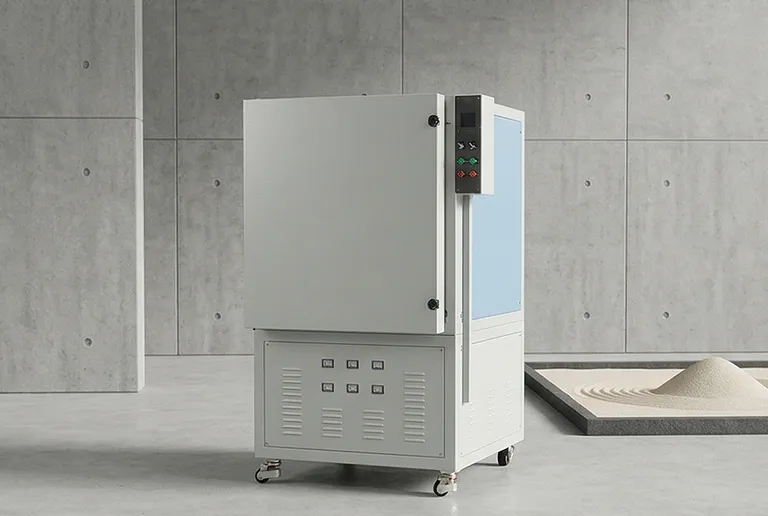
The Frustration of the "Ghost" in Your Alloy Data
Imagine you are observing the liquid phase separation of a specialized alloy. You’ve calculated the thermodynamics, prepared the sample, and dialed in the temperature. But when you review the dynamic imaging or analyze the cooled ingot, the results are baffling. The phase boundaries are blurred, the composition is "off," or worse—the sample surface has developed a dull, brittle scale.
For many researchers in metallurgy and materials science, this is a recurring nightmare. You spend weeks preparing a Ti-55531 or a medium-entropy alloy, only to have the data "noise" or physical degradation render the experiment useless. You’re left wondering: Is the theory wrong, or is there a ghost in the furnace?
The High Cost of "Good Enough" Thermal Environments
When experiments fail to replicate, the first instinct is often to tweak the cooling rate or re-verify the alloy’s purity. Many labs attempt to solve these issues by using standard furnaces with inert gas purging (like Argon).
However, "standard" is rarely enough for advanced alloy research. Common struggles include:
- Oxidation and Embrittlement: Materials like Titanium are notoriously "hungry" for oxygen. Even trace amounts at high temperatures can lead to hydrogen embrittlement or surface oxidation, altering the very phase transformations you are trying to study.
- Compositional Segregation: Without a perfectly uniform thermal field, alloying elements may diffuse unevenly, leading to "pockets" of inconsistency that ruin the structural integrity of the final metal.
- Data Interference: If you are using neutron beams or real-time dynamic imaging, any atmospheric "haze" or physical obstruction in the furnace design can degrade the signal-to-noise ratio.
The business impact is clear: project delays, wasted high-value precursor materials, and a lack of confidence in the data used to scale up to industrial production.
The Root Cause: The Invisible Saboteur
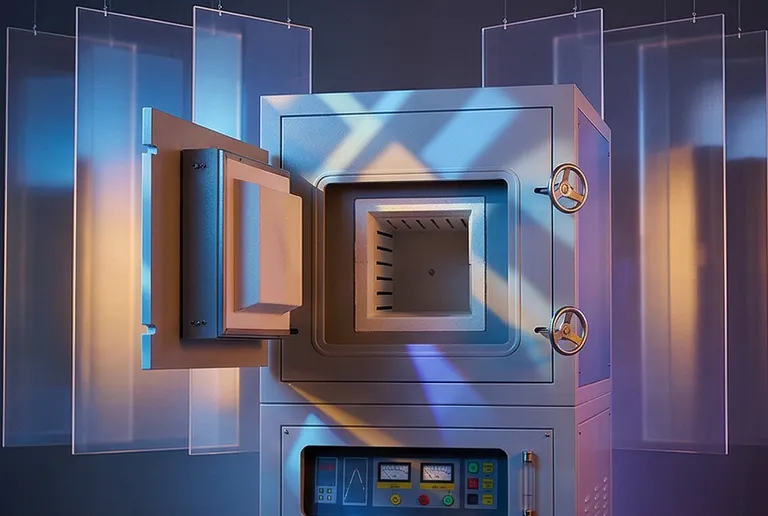
Why do conventional methods fail? The answer lies in the partial pressure of the environment and atomic-level diffusion.
In liquid phase separation, the way elements move and segregate is incredibly sensitive. At temperatures reaching 1500°C, the kinetic energy of atoms is high. If there is even a microscopic amount of oxygen or nitrogen present, these gas molecules collide with the liquid alloy surface, creating an "impurity layer." This layer acts as a physical and chemical barrier, preventing the alloy from reaching its true equilibrium state.
Furthermore, in processes like the separation of Aluminum-Magnesium alloys, the goal is often to volatilize specific elements. Without a deep vacuum (around 10-15 Pa or lower), the saturated vapor pressure of the magnesium isn't high enough to clear its evaporation path. You aren't just fighting chemistry; you’re fighting the physics of the atmosphere itself.
The Solution: Engineering a "Zero-Interference" Zone
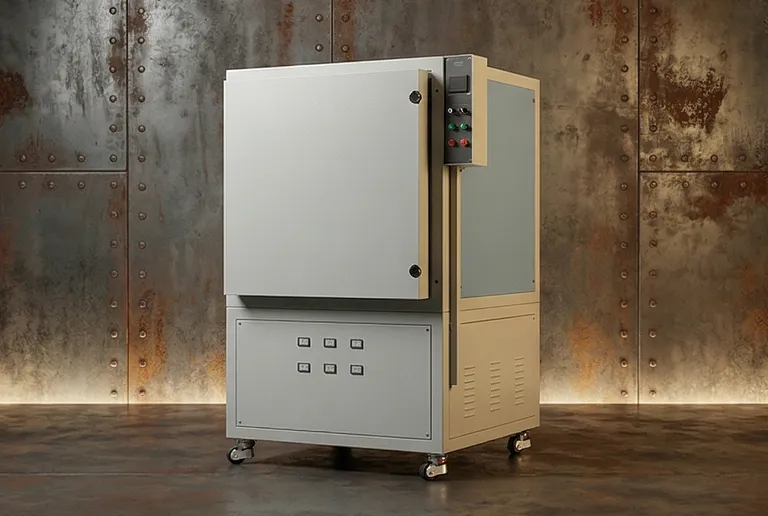
To see the truth of how an alloy behaves, you must remove the atmosphere from the equation. This is where a high-temperature vacuum furnace becomes more than just a heater—it becomes a precision analytical tool.
KINTEK’s High-Temperature Vacuum Furnaces are designed specifically to eliminate these variables:
- Extreme Vacuum Levels: By maintaining a vacuum as deep as 1 x 10^-6 mbar, our furnaces remove the "invisible saboteur." This ensures that when you heat a Ti-55531 alloy to 950°C for solution treatment, the alloying elements dissolve into the beta matrix without a single atom of oxygen causing embrittlement.
- Dynamic Observation Design: Our top-loading furnace configurations are engineered for researchers using neutron beams or detectors. By precisely positioning the sample within the beam path in a clean vacuum, you get "crystal clear" dynamic imaging of phase transformations as they happen.
- Total Thermal Control: To eliminate compositional segregation in CoReCr or superalloys, our systems provide a uniform thermal field up to 1500°C. This allows for the full diffusion of elements, creating a stable, single-phase structure that is repeatable every single time.
Beyond the Fix: What Becomes Possible?
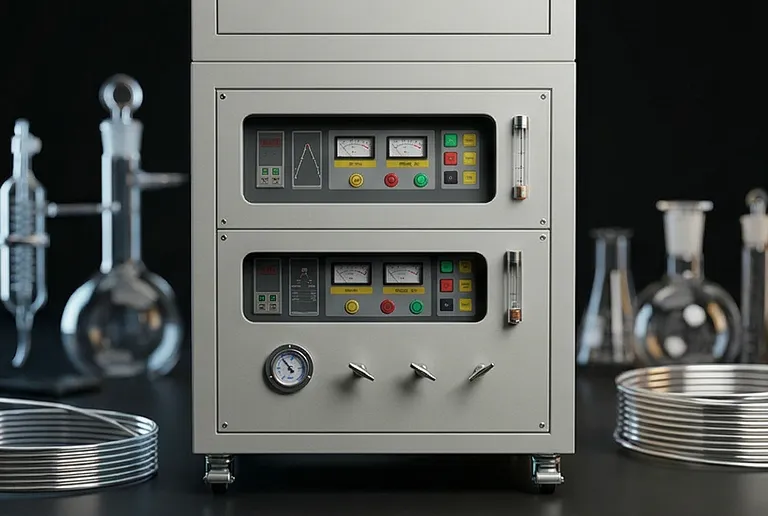
When you stop fighting contamination, you start unlocking the next generation of materials. Solving the "vacuum problem" isn't just about getting a clean sample; it’s about what that sample allows you to do:
- Accelerated Aerospace Development: Create superalloys that can withstand temperatures closer to their solidus line (e.g., 1175°C) with predictable strengthening phases.
- High-Purity Refining: Efficiently separate Magnesium from Aluminum to produce ultra-pure materials that were previously too costly or difficult to refine.
- Perfected Welding Joints: Use stepped isothermal annealing to eliminate residual stresses in welded joints, significantly increasing fatigue strength for critical infrastructure.
By controlling the environment to a surgical degree, you move from "guessing why it failed" to "knowing why it succeeded."
Whether you are struggling with inconsistent phase separation data or looking to push the limits of superalloy diffusion, your choice of thermal environment is the deciding factor. At KINTEK, we don't just provide furnaces; we provide the controlled conditions necessary for scientific breakthroughs. Contact our team today to discuss how we can customize a high-vacuum solution for your specific research challenges. Contact Our Experts
Related Products
- 2200 ℃ Tungsten Vacuum Heat Treat and Sintering Furnace
- 2200 ℃ Graphite Vacuum Heat Treat Furnace
- Molybdenum Vacuum Heat Treat Furnace
- 1400℃ High Temperature Laboratory Tube Furnace with Alumina Tube
- Vacuum Heat Treat Sintering Furnace Molybdenum Wire Vacuum Sintering Furnace
Related Articles
- Why Your High-Strength Titanium Biomaterials Are Brittle—and How Vacuum Heat Treatment Fixes It
- The Unseen Engine: Why Graphite Dominates High-Temperature Vacuum Furnaces
- Heat, Void, and Control: Designing the Heart of a High-Temperature Vacuum Furnace
- The Paradox of Strength: Why Graphite Dominates High-Temperature Vacuum Furnaces
- Your Furnace Reached Temperature. So Why Did Your Experiment Fail?



















