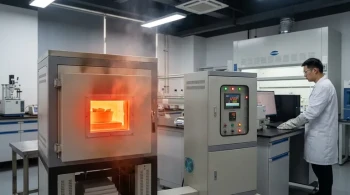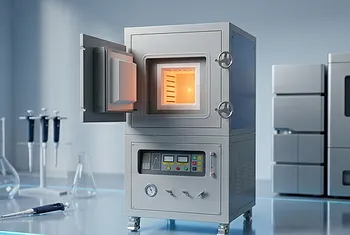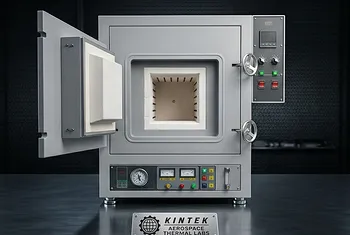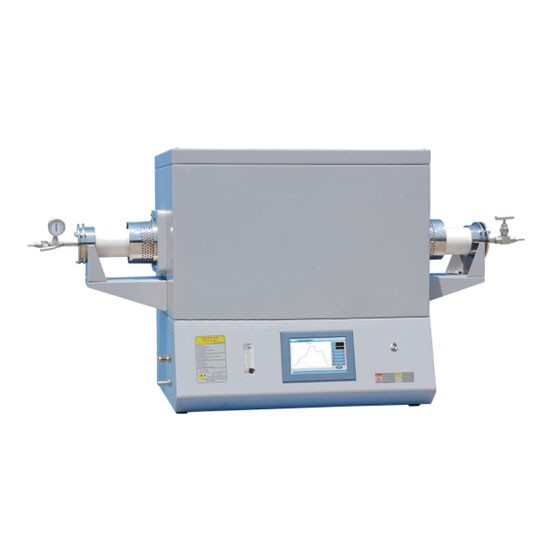
Products High Temperature Furnaces Tube Furnace 1700℃ High Temperature Laboratory Tube Furnace with Quartz or Alumina Tube
1700℃ High Temperature Laboratory Tube Furnace with Quartz or Alumina Tube

Tube Furnace

1700℃ High Temperature Laboratory Tube Furnace with Quartz or Alumina Tube

Item Number : KT-TF17

Price varies based on specs and customizations


Max. temperature
1700℃
Furnace tube material
High grade Al2O3 alumina
Heating zone length
300 / 450 / 600 / 800 mm
ISO & CE icon

Shipping:

Contact us to get shipping details Enjoy On-time Dispatch Guarantee.

View Specs

Why Choose Us

Easy ordering process, quality products, and dedicated support for your business success.

Easy Process Quality Assured Dedicated Support

KINTEK: Your Partner in Advanced High-Temperature Solutions

Leveraging exceptional R&D and in-house manufacturing, KINTEK provides diverse laboratories with advanced high-temperature furnace solutions. Our product line, including Muffle, Tube, Rotary Furnaces, Vacuum & Atmosphere Furnaces, and CVD/PECVD/MPCVD Systems, is complemented by our strong deep customization capability to precisely meet unique experimental requirements.

Need a specialized furnace configuration? Contact our experts to discuss your custom requirements and discover how we can support your research and production goals.

Tube Furnace with Alumina Tube: Precision and Reliability for High-Temperature Processes

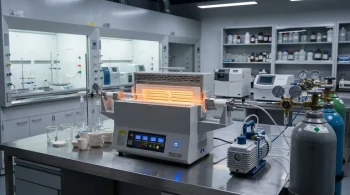
KINTEK's Tube Furnace with Alumina Tube is expertly designed for laboratory and industrial high-temperature applications reaching up to 1700°C. It is a cornerstone for processes such as material synthesis, chemical vapor deposition (CVD), vacuum sintering, and specialized heat treatments. At its heart, a high-purity alumina ceramic tube provides exceptional thermal insulation and robust resistance to high temperatures, as well as acidic and alkaline environments. This ensures precise temperature control, a clean and inert processing atmosphere, minimal contamination, and extended operational life. Benefit from its compact design and reliable performance for your critical high-temperature experiments and production.

Detailed Views & Components
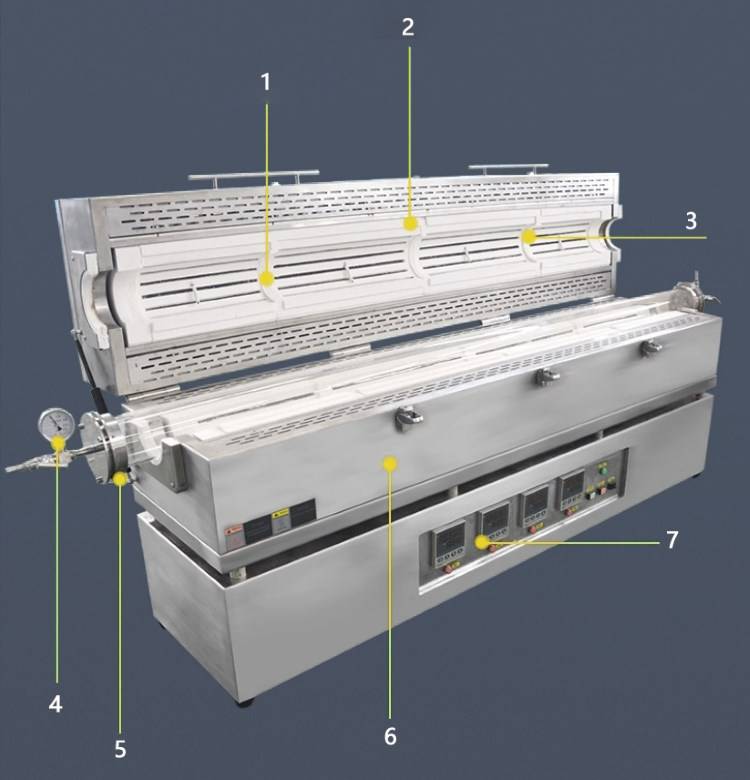
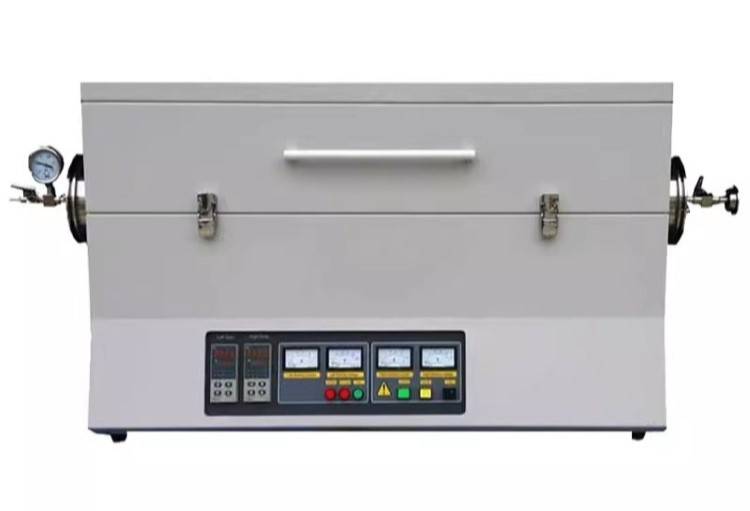
Tube Furnace Illustration(1.Temperature Zone Separation 2.Furnace Material 3.Heating Element 4.Vacuum Gauge 5.Stainless Steel Flange 6.Furnace Body 7.Temperature Control Instrument Meter System)
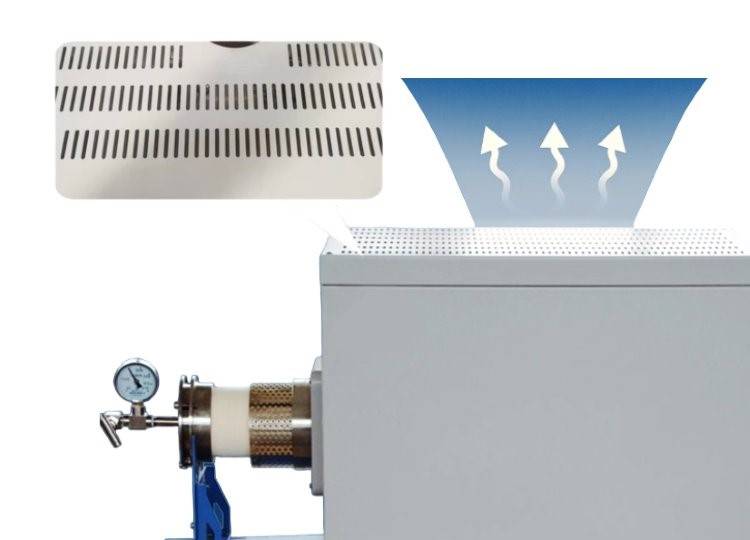
There are heat dissipation holes on the top and side of the furnace, and the fan circulates to reduce the temperature to ensure the temperature of the outer surface of the furnace shell.
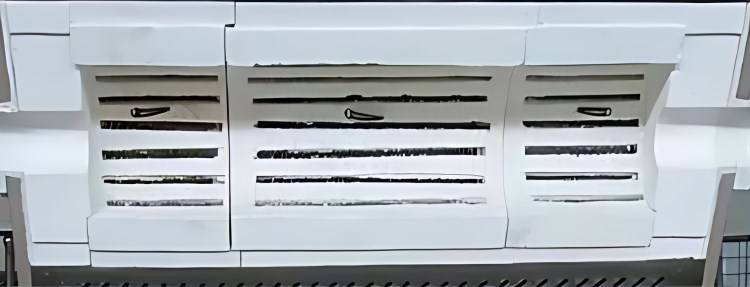
Furnace chamber material for polycrystalline alumina ceramic fiber board, using bulk cotton and inorganic binder with wet vacuum filtration and pressurization, and according to different models after high temperature forging treatment, is currently the main material for the production of high-temperature furnace chamber.
Tube furnace features low density, light weight, easy to handle and long service life. Clean furnace chamber, will not contaminate the heated product. High strength, resistant to flame and high-temperature gas impact, long service life. Low thermal conductivity, low heat capacity, resistant to thermal shock and erosion.
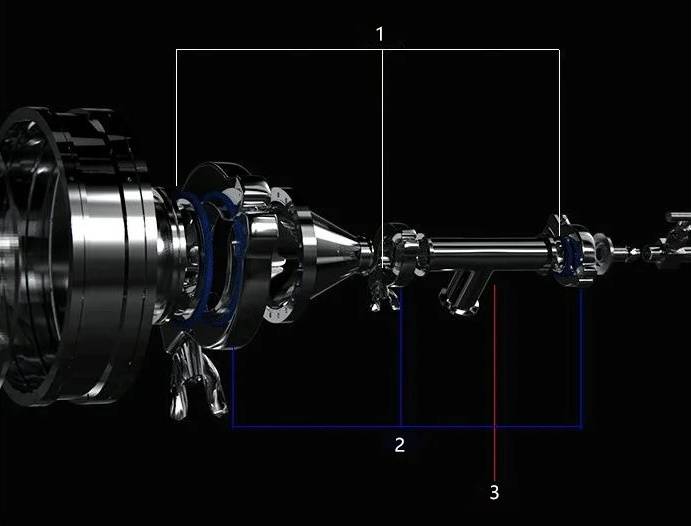
Tube furnace flange 1.Seal ring 2.Clamp 3.Tee
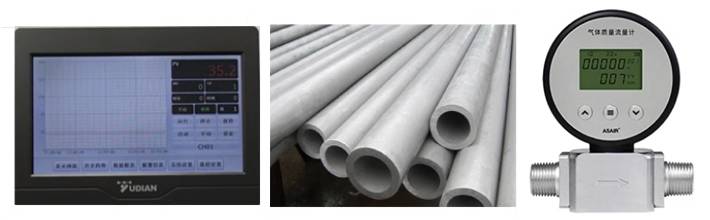
Tube furnace details 1. Temperature control meter optional touch screen 2. Stainless steel tube 3. Mass flow meter

Key Features & Advantages of KINTEK's Tube Furnace

  • Compact & Versatile Design: Optimized for a small footprint without compromising on functionality, making it suitable for diverse laboratory environments and a wide range of applications, including high-temperature pyrolysis and composition analysis.
  • Enhanced Safety & Efficiency: Features a double furnace shell design with forced air cooling, ensuring a low surface temperature for operator safety and improved energy efficiency.
  • Precise Temperature Management: Equipped with PID programmable temperature control for exceptional accuracy and stable heating. Supports remote monitoring and centralized control for streamlined operations. The KT-TF17 Pro model features a user-friendly 7-inch TFT touch screen for intuitive program setting, historical data analysis, and storage for multiple program recipes.
  • Durable High-Purity Alumina Tube: Utilizes a high-purity alumina tube (Al2O3) offering excellent resistance to acids and alkalis, withstands high working temperatures (up to 1700°C), ensures minimal sample contamination, and provides a long service life for a better return on investment. Note: Alumina tubes are subject to thermal shock; smaller diameter tubes generally perform better in this regard.
  • Robust Vacuum Capability: Includes stainless steel vacuum flanges with various adapting ports, ensuring excellent sealing for high vacuum pressure applications (rated up to 0.001Pa) and compatibility with different vacuum pump setups.
  • Flexible Operation: KINTEK manufactures tube furnaces for operating temperatures up to 2000°C (model specific). We offer vertical and horizontal tube models, bottom-loading vertical tubes, and combination units for maximum versatility.
  • Customizable Options: Water-cooled end caps and gas mixing systems are available to tailor the furnace to specific experimental needs, reflecting KINTEK's commitment to providing customized solutions.

Advanced Safety Protections

  • Kindle Tech tube furnace owns over-current protection and over-temperature alarming function; the furnace will turn off the power automatically once over-current is detected.
  • The furnace has a built-in thermocouple detecting function; the furnace will stop heating and an alarm will be triggered if the thermocouple is broken or a failure is detected.
  • The TF17 Pro (and similar advanced models) supports a power failure restarting function; the furnace will resume the heating program when power is restored after an outage.

Versatile Applications

The Tube Furnace With Alumina Tube is a versatile and essential tool in various high-temperature test and analysis scenarios across multiple industries. Its applications are particularly focused on environments requiring controlled heating zones and high-temperature resistance. Key application areas include:

  • Material Science Research: Ideal for experiments involving the synthesis, processing, and characterization of new materials at high temperatures, including ceramics, composites, alloys, and refractory materials.
  • Chemical Vapor Deposition (CVD) & Physical Vapor Deposition (PVD): Provides the controlled atmosphere and temperature necessary for thin film deposition processes.
  • Sintering and Annealing: Used for densification of powders, stress relief, and microstructure modification of various materials.
  • Coal Testing and Analysis: Employed for precise heating and analysis of coal samples to determine their properties (e.g., ash content, volatile matter) and suitability for various industrial uses.
  • Metallurgical Powder Testing and Analysis: Essential for the heating and analysis of metallic powders, aiding in the development and quality control of metal alloys and composites.
  • Chemical and Glass Industry Testing: Used in the heating and processing of glass and chemical samples for property analysis, crucial for developing new compositions and products.
  • Pharmaceutical and Biotechnology Industries: Applicable for sterilization, purification, and processing of materials and equipment in controlled high-temperature environments.

Operating Principle

Tube furnaces utilize a heating element, such as a resistive heating coil (e.g., Cr2Al2Mo2 wire) or silicon carbide, to heat a process tube. This process tube, typically made of a high-purity ceramic material like alumina (Al2O3), is positioned within an insulated furnace chamber to minimize heat loss. The temperature inside the process tube is precisely regulated by a temperature controller (often PID-based), which monitors the tube's temperature via a thermocouple and adjusts the power supplied to the heating element accordingly. This controlled heating environment makes tube furnaces indispensable for a variety of applications, including heat treating, annealing, sintering, and material synthesis under controlled atmospheres or vacuum.

Technical Specifications

Furnace model KT-TF17 KT-TF17 Pro
Temperature controller Digital PID controller Touch screen PID controller
Multi program preset no yes
Power failure restarting no yes
Max. temperature 1700℃
Constant work temperature 1650℃
Furnace tube material High grade Al2O3 alumina
Furnace tube diameter 30 / 40 / 60 / 80 / 100 mm
Heating zone length 300 / 450 / 600 / 800 mm
Heating zone quantity 1-10 zones
Vacuum sealing solution SS 304 flange with O ring
Rated vacuum pressure 0.001Pa/10E-5 torr (corrected from 10E5)
Rated positive pressure 0.02Mpa/150 torr
Chamber material Japan Al2O3 alumina fiber
Heating element Cr2Al2Mo2 wire coil
Heating rate 0-10℃/min
Temperature sensor B type Thermal couple
Temperature control accuracy

±1℃

Temperature uniformity

±5℃

Electric power supply AC110-220V,50/60HZ
Other Al2O3 alumina tube sizes and heating zone lengths can be customized

Standard Package Inclusions

No. Description Quantity
1 Furnace 1
2 Alumina tube 1
3 Vacuum flange set (pair) 1 (set of 2)
4 Tube thermal block (pair) 1 (set of 2)
5 Tube thermal block hook 1
6 Heat resistant glove (pair) 1
7 Operation manual 1

Enhance Your Setup: Optional Customizations

KINTEK specializes in tailoring furnace systems to your exact research or production needs. Beyond our standard offerings, consider these optional setups and customizations:

  • Gas Atmosphere Control:
    • In-tube gas detection and monitoring (e.g., H2, O2, Ar, N2).
    • Precise gas feeding and flow rate control using mass flow controllers (MFCs) or float flowmeters.
    • Multi-gas mixing systems.
  • Vacuum Systems:
    • Comprehensive high vacuum pump station setups, including rotary vane pumps, molecular pumps, and diffusion pumps, to achieve desired vacuum levels.
  • Temperature Control & Data Logging:
    • Advanced touch screen temperature controllers with versatile operator-friendly functions, enhanced data logging, and recipe management.
    • Independent furnace temperature monitoring and recording systems for validation and quality control.
    • RS 485 communication port for PC remote control and data exporting.
  • Physical Modifications:
    • Custom tube diameters and lengths.
    • Multiple, independently controlled heating zones.
    • Specific orientations (vertical, horizontal, tilting).

Don't see what you need? Our R&D and manufacturing capabilities allow for deep customization. Contact us today to discuss your specific requirements and let us build the perfect high-temperature solution for you!

FAQ

What Is A Tube Furnace And How Does It Work?

A tube furnace is a heating device that generates heat through a heat source and transfers this heat to the workpiece or medium via the furnace tube. It provides stable and uniform heating suitable for various industrial applications. The temperature control system monitors the furnace temperature using thermocouples or other sensors, feeding the signal back to the controller which adjusts the power output of the heating elements to maintain precise temperature control.

What Are The Main Applications Of A Rotary Tube Furnace?

Rotary tube furnaces are widely used in powder metallurgy, material blending, and chemical reactions where uniform heating and continuous mixing are essential. They are particularly effective for processing granular or powdery materials.

What Are The Common Applications Of A Split Tube Furnace?

Split tube furnaces are commonly used for material testing (such as tensile testing), pyrolysis of organic materials, chemical vapor deposition (CVD) for thin film deposition, graphitization of carbon-containing materials, and sintering of ceramics. These applications benefit from the precise temperature control and easy sample handling offered by split tube furnaces.

What Is A Vertical Tube Furnace?

A vertical tube furnace is a high-temperature heating device designed in a vertical orientation, offering precise temperature control, uniform heating, and efficient energy usage. Its vertical design is space-saving and particularly useful for processes that benefit from a vertical setup.

What Are The Main Applications Of Multi-zone Tube Furnaces?

Multi-zone tube furnaces are used in various commercial and research applications, including semiconductor and battery production, thermocouple and mineral-insulated cable manufacturing, vacuum brazing and heat treatment, vacuum curing and sintering, water/waste/soil testing, aerospace ceramic and metals testing, oil and gas analysis, solid oxide fuel cells, and polymer composites/graphene production. They're also used for metal heat treatments (quenching, tempering, annealing), preheating for welding, ceramic/powder metallurgy sintering, coating treatments, and material research experiments.

What Are The Main Applications Of Tube Furnaces?

Tube furnaces are widely used for gas quenching tests under vacuum or atmospheric conditions, heat treatment applications including syntheses and purifications, oxidation, diffusion, calcination, and thermal annealing of inorganic or organic compounds. They are also used in material testing, thermal processing, and chemical reactions where controlled heating and cooling rates are required. Vertical tube furnaces are particularly suitable for processes where samples need to be dropped into the furnace from the top.

What Are The Key Features Of A Rotary Tube Furnace?

A rotary tube furnace features a rotating mechanism that ensures uniform heat distribution and thorough mixing of samples. It is designed for continuous processing and can accommodate various sample volumes. The furnace typically includes multiple heated zones, a rotatable and tiltable furnace tube, and can reach temperatures up to 1200°C.

What Are The Key Features Of A Split Tube Furnace?

A split tube furnace typically offers options for 1, 2, 3, or 5 heated zones, with a heated length ranging from 200-600mm and a heated diameter of 40-100mm. It includes dual-layer forced air-cooling to ensure a safe case temperature and uses a heating coil as the heating source, capable of reaching temperatures up to 1200°C. The furnace is designed with a cylindrical tube split lengthwise, often in two halves joined with hinges and equipped with pneumatic dampening struts for smooth operation.

What Are The Applications Of A Vertical Tube Furnace?

Vertical tube furnaces are widely used in material testing, thermal processing, and chemical reactions requiring controlled heating and cooling rates. They are also used in chemical engineering for producing synthetic resins, rubber, paints, and dyes; in the food industry for baking, drying, and sterilization; and in metallurgy for smelting, melting, and heat treatment processes.

What Are The Key Features Of Multi-zone Tube Furnaces?

Key features include: 1) Flexible annealing and chemical vapor deposition capabilities, 2) Accommodation of samples up to 60mm (2 inches), 3) Built-in manifold for easy gas delivery, 4) Natural temperature gradients with cooler ends and uniform heating in the center, 5) Adaptability for various gases or vacuum conditions, and 6) Multiple independently controlled heating zones for precise temperature profiles.

What Are The Advantages Of Using A Tube Furnace?

Tube furnaces offer several advantages including mature technology, simple furnace structure, low power consumption, high thermal efficiency, ease of operation and control, continuous production capability, precise temperature control, uniform temperature distribution, and adaptability to different atmospheres. They also enable higher yield of products, high product concentration, and the ability to recover most cracked gas and flue gas. Multiple furnaces can be combined for large-scale production.

How Does A Rotary Tube Furnace Work?

Rotary tube furnaces operate on the principle of indirect firing, where heat is transferred from a heat source to the materials via a rotating tube. They use a continuous thermal system with multiple control zones to ensure uniform heating. The furnace burns pulverized, solid, gaseous, or liquid fuel in its working section, creating heating gases that flow towards the sample. The rotating drum, lined with refractory material and mounted at an angle, facilitates this process.

How Does A Split Tube Furnace Work?

A split tube furnace operates by generating heat through a heating coil, which then transfers this heat to the workpiece or medium inside the furnace tube. This process ensures stable and uniform heating, making it suitable for various industrial and laboratory applications. The furnace can be configured with multiple heated zones and includes features like forced air-cooling to maintain safe external temperatures.

What Are The Advantages Of A Vertical Tube Furnace?

Vertical tube furnaces offer several advantages, including a smaller footprint compared to horizontal furnaces, making them ideal for laboratories with limited space. They also provide efficient and energy-saving operation, precise temperature control, flexibility in use, ease of operation, safety, reliability, and compliance with environmental standards.

How Does A Multi-zone Tube Furnace Work?

A multi-zone tube furnace works by: 1) Generating heat through multiple independently controlled heating elements, 2) Transferring this heat uniformly through the furnace tube to the workpiece, 3) Creating either precise temperature gradients (for processes like CVD film growth) or extended constant-temperature zones (when multiple zones are set to the same temperature), and 4) Maintaining stable heating conditions suitable for various industrial processes.

What Types Of Tube Furnaces Are Available?

There are various types of tube furnaces including laboratory quartz tube furnaces, split multi-heating zone rotary tube furnaces, multi-zone tube furnaces, high temperature tube furnaces (up to 1700°C), PECVD tube furnaces for thin film deposition, vacuum tube furnaces, and vertical tube furnaces. These come with different features like rapid heating, adjustable tilt, 360° rotation, customizable heating zones, and vacuum readiness to suit different applications.

What Are The Advantages Of Using A Rotary Tube Furnace?

The rotary tube furnace offers several advantages, including uniform temperature distribution due to its rotating action, which prevents sample settling and ensures consistent processing. It enhances heat transfer efficiency, leading to faster processing times and more uniform results. Additionally, its design allows for excellent efficiency in heat transfer and can be customized with multiple heated zones to suit specific needs.

What Are The Advantages Of Using A Split Tube Furnace?

The main advantages of a split tube furnace include simplified loading and unloading of samples or equipment, reduced operational downtime, and enhanced efficiency. The split design allows for quick access to the furnace chamber, which is particularly beneficial for applications requiring frequent changes or intricate experimental setups. Additionally, features like pneumatic dampening struts and multiple heating zones further improve usability and performance.

How Does A Vertical Tube Furnace Work?

A vertical tube furnace generates heat through a heat source and transfers this heat to the heated workpiece or medium via the furnace tube. This process ensures stable and uniform heating, making it suitable for various industrial applications.

What Are The Advantages Of Using A Multi-zone Tube Furnace?

Advantages include: 1) Mature, reliable technology with simple furnace structure, 2) Low power consumption with high thermal efficiency, 3) Easy operation and precise control, 4) Capability for continuous production, 5) Ability to create extended uniform heating zones or precise temperature gradients, 6) Higher product yields in chemical processes, 7) Ability to recover process gases, 8) Broad raw material applicability, and 9) Scalability through furnace combination for large-scale production.

What Temperature Ranges Can Tube Furnaces Achieve?

Tube furnaces are available in various temperature ranges to suit different applications. Standard models typically reach up to 1200°C, while high-temperature models can achieve 1400°C to 1700°C. Some specialized models can even reach up to 2000°C. The temperature capability depends on the heating elements and furnace tube materials used (such as quartz or alumina).

What Temperature Can A Rotary Tube Furnace Reach?

A rotary tube furnace can reach a maximum temperature of 1200°C, making it suitable for high-temperature applications such as calcination, sintering, and heat treatment.

What Temperature Can A Split Tube Furnace Reach?

A split tube furnace can reach a maximum temperature of 1200°C, making it suitable for high-temperature applications such as material synthesis, CVD, and sintering. The furnace uses a heating coil as the heat source and includes dual-layer forced air-cooling to maintain safe external temperatures during operation.

What Types Of Vertical Tube Furnaces Are Available?

Vertical tube furnaces come in various types, including those with single or multiple heating zones, rapid thermal processing (RTP) capabilities, vacuum stations, and customizable solutions for specific lab needs such as CVD (Chemical Vapor Deposition) and PECVD (Plasma Enhanced Chemical Vapor Deposition).

What Types Of Multi-zone Tube Furnaces Are Available?

Available types include: 1) Split multi-heating zone rotary tube furnaces (with tilt and rotation capabilities), 2) Laboratory quartz tube furnaces (up to 1700°C with 1-10 zones), 3) Rapid thermal processing (RTP) furnaces with fast heating rates, 4) CVD tube furnaces for chemical vapor deposition, 5) PECVD furnaces for plasma-enhanced processes, 6) Vacuum tube furnaces, and 7) High-pressure tube furnaces. These come in various configurations with customizable zone numbers, temperature ranges, and special features like vacuum/atmosphere control.

Can Tube Furnaces Operate Under Different Atmospheres?

Yes, tube furnaces are versatile and can operate under various atmospheres including air, inert gases (like argon or nitrogen), vacuum, and specialized gas mixtures. This makes them suitable for a wide range of processes including oxidation, reduction, annealing, and chemical vapor deposition (CVD). Many models come with vacuum-ready designs and gas control systems for precise atmosphere management.

What Types Of Materials Can Be Processed In A Rotary Tube Furnace?

Rotary tube furnaces are ideal for processing granular or powdery materials. They are commonly used in applications involving powder metallurgy, material blending, and chemical reactions where uniform heating and continuous mixing are required.

Why Is The Split Design Beneficial In A Tube Furnace?

The split design in a tube furnace is beneficial because it allows for quick and easy access to the furnace chamber. This design, often featuring two hinged halves with pneumatic dampening struts, simplifies the handling of complex setups or large samples, reduces operational downtime, and enhances overall efficiency, especially in applications requiring frequent changes or intricate configurations.

Why Choose A Vertical Tube Furnace Over A Horizontal One?

A vertical tube furnace is chosen over a horizontal one primarily for its space-saving design and the ability to benefit from gravity-assisted processes. The vertical setup can aid in even heat and material distribution, making it ideal for specific experiments or manufacturing processes.

What Makes KINTEK Tube Furnaces Special?

KINTEK tube furnaces stand out for their precision temperature control (with some models offering rapid heating up to 100°C/sec), customizable heating zones (from 1 to 10 zones), vacuum-ready designs, and safety certifications. They offer versatile solutions for advanced applications like material synthesis, CVD, sintering, and semiconductor research, with options for rotary mechanisms, split chambers, and plasma-enhanced configurations.

What Temperature Ranges Can Vertical Tube Furnaces Achieve?

Vertical tube furnaces can achieve high temperatures, typically up to 1800°C, depending on the model and configuration. They are designed for precision heating and can be customized to meet specific temperature requirements for various applications.

Are Vertical Tube Furnaces Customizable?

Yes, vertical tube furnaces are highly customizable. They can be tailored with features such as multiple heating zones, rapid heating capabilities, vacuum systems, and specific atmosphere controls to meet the unique needs of different research and industrial applications.
View more faqs for this product

4.9 / 5

Incredible precision and durability! This furnace exceeded all my expectations.

Elara Voss

4.8 / 5

Fast delivery and top-notch quality. A must-have for any lab!

Rafael Mendoza

4.7 / 5

The temperature control is flawless. Worth every penny!

Svetlana Kovac

4.9 / 5

Highly advanced technology. Perfect for high-temperature experiments.

Jin-Ho Park

4.8 / 5

Superb build quality and excellent performance. Very reliable!

Anika Patel

4.7 / 5

Easy to set up and use. The quartz tube is a great addition.

Lucien Dubois

4.9 / 5

Outstanding value for money. This furnace is a game-changer!

Freya Halvorsen

4.8 / 5

Consistent performance at extreme temperatures. Highly recommended!

Mateo Silva

4.7 / 5

The alumina tube option is fantastic for high-heat applications.

Yuki Tanaka

4.9 / 5

Speedy delivery and impeccable quality. Very impressed!

Nia Williams

4.8 / 5

Robust construction and precise temperature control. A lab essential!

Dmitri Volkov

4.7 / 5

The furnace heats up quickly and maintains stability. Love it!

Leila Nassar

4.9 / 5

Cutting-edge technology with reliable results. Perfect for research.

Oscar Lindqvist

4.8 / 5

Great investment for any laboratory. The quality is unmatched.

Priya Mehta

4.7 / 5

The furnace is built to last. Excellent performance every time.

Hugo Costa

4.9 / 5

Fast shipping and outstanding product. Exceeded all expectations!

Zara Al-Mansoori

4.8 / 5

The temperature uniformity is impressive. A fantastic purchase.

Ethan Blackwell

4.7 / 5

User-friendly and highly efficient. Perfect for high-temperature needs.

Aisha Rahman

Product Datasheet

1700℃ High Temperature Laboratory Tube Furnace with Quartz or Alumina Tube

Category Catalog

Tube Furnace


REQUEST A QUOTE

Our professional team will reply to you within one business day. Please feel free to contact us!

Related Products

High Temperature Muffle Oven Furnace for Laboratory Debinding and Pre Sintering

High Temperature Muffle Oven Furnace for Laboratory Debinding and Pre Sintering

KT-MD Debinding & Pre-Sintering Furnace for ceramics - precise temperature control, energy-efficient design, customizable sizes. Boost your lab efficiency today!

View Details
Custom Made Versatile CVD Tube Furnace Chemical Vapor Deposition CVD Equipment Machine

Custom Made Versatile CVD Tube Furnace Chemical Vapor Deposition CVD Equipment Machine

KINTEK's CVD Tube Furnace offers precision temperature control up to 1600°C, ideal for thin film deposition. Customizable for research and industrial needs.

View Details
Split Chamber CVD Tube Furnace with Vacuum Station CVD Machine

Split Chamber CVD Tube Furnace with Vacuum Station CVD Machine

Split Chamber CVD Tube Furnace with Vacuum Station - High precision 1200°C lab furnace for advanced materials research. Customizable solutions available.

View Details
Multi Heating Zones CVD Tube Furnace Machine for Chemical Vapor Deposition Equipment

Multi Heating Zones CVD Tube Furnace Machine for Chemical Vapor Deposition Equipment

KINTEK's Multi-Zone CVD Tube Furnaces offer precision temperature control for advanced thin film deposition. Ideal for research and production, customizable for your lab needs.

View Details
Vertical Laboratory Quartz Tube Furnace Tubular Furnace

Vertical Laboratory Quartz Tube Furnace Tubular Furnace

Precision KINTEK Vertical Tube Furnace: 1800℃ heating, PID control, customizable for labs. Ideal for CVD, crystal growth & materials testing.

View Details
Laboratory Quartz Tube Furnace RTP Heating Tubular Furnace

Laboratory Quartz Tube Furnace RTP Heating Tubular Furnace

KINTEK's RTP Rapid Heating Tube Furnace delivers precise temperature control, rapid heating up to 100°C/sec, and versatile atmosphere options for advanced lab applications.

View Details
1200℃ Split Tube Furnace Laboratory Quartz Tube Furnace with Quartz Tube

1200℃ Split Tube Furnace Laboratory Quartz Tube Furnace with Quartz Tube

Discover KINTEK's 1200℃ Split Tube Furnace with quartz tube for precise high-temperature lab applications. Customizable, durable, and efficient. Get yours now!

View Details
1400℃ High Temperature Laboratory Tube Furnace with Quartz and Alumina Tube

1400℃ High Temperature Laboratory Tube Furnace with Quartz and Alumina Tube

KINTEK's Tube Furnace with Alumina Tube: Precision high-temperature processing up to 2000°C for labs. Ideal for material synthesis, CVD, and sintering. Customizable options available.

View Details
High Pressure Laboratory Vacuum Tube Furnace Quartz Tubular Furnace

High Pressure Laboratory Vacuum Tube Furnace Quartz Tubular Furnace

KINTEK High Pressure Tube Furnace: Precision heating up to 1100°C with 15Mpa pressure control. Ideal for sintering, crystal growth, and lab research. Customizable solutions available.

View Details
Laboratory Vacuum Tilt Rotary Tube Furnace Rotating Tube Furnace

Laboratory Vacuum Tilt Rotary Tube Furnace Rotating Tube Furnace

KINTEK Laboratory Rotary Furnace: Precision heating for calcination, drying, sintering. Customizable solutions with vacuum & controlled atmosphere. Enhance research now!

View Details
Split Multi Heating Zone Rotary Tube Furnace Rotating Tube Furnace

Split Multi Heating Zone Rotary Tube Furnace Rotating Tube Furnace

Precision Split Multi Heating Zone Rotary Tube Furnace for high-temperature material processing, featuring adjustable tilt, 360° rotation, and customizable heating zones. Ideal for labs.

View Details
2200 ℃ Tungsten Vacuum Heat Treat and Sintering Furnace

2200 ℃ Tungsten Vacuum Heat Treat and Sintering Furnace

2200°C Tungsten Vacuum Furnace for high-temperature materials processing. Precise control, superior vacuum, customizable solutions. Ideal for research & industrial applications.

View Details
Vacuum Sealed Continuous Working Rotary Tube Furnace Rotating Tube Furnace

Vacuum Sealed Continuous Working Rotary Tube Furnace Rotating Tube Furnace

Precision rotary tube furnace for continuous vacuum processing. Ideal for calcination, sintering, and heat treatment. Customizable up to 1600℃.

View Details
1700℃ High Temperature Muffle Oven Furnace for Laboratory

1700℃ High Temperature Muffle Oven Furnace for Laboratory

KT-17M Muffle Furnace: High-precision 1700°C lab furnace with PID control, energy efficiency, and customizable sizes for industrial & research applications.

View Details
2200 ℃ Graphite Vacuum Heat Treat Furnace

2200 ℃ Graphite Vacuum Heat Treat Furnace

2200℃ Graphite Vacuum Furnace for high-temperature sintering. Precise PID control, 6*10⁻³Pa vacuum, durable graphite heating. Ideal for research & production.

View Details
1200℃ Controlled Inert Nitrogen Atmosphere Furnace

1200℃ Controlled Inert Nitrogen Atmosphere Furnace

KINTEK 1200℃ Controlled Atmosphere Furnace: Precision heating with gas control for labs. Ideal for sintering, annealing, and material research. Customizable sizes available.

View Details
1400℃ Controlled Inert Nitrogen Atmosphere Furnace

1400℃ Controlled Inert Nitrogen Atmosphere Furnace

KT-14A Controlled Atmosphere Furnace for labs & industry. 1400°C max temp, vacuum sealing, inert gas control. Customizable solutions available.

View Details
1700℃ Controlled Inert Nitrogen Atmosphere Furnace

1700℃ Controlled Inert Nitrogen Atmosphere Furnace

KT-17A Controlled Atmosphere Furnace: Precise 1700°C heating with vacuum & gas control. Ideal for sintering, research & material processing. Explore now!

View Details
Inclined Rotary Plasma Enhanced Chemical Deposition PECVD Tube Furnace Machine

Inclined Rotary Plasma Enhanced Chemical Deposition PECVD Tube Furnace Machine

Advanced PECVD Tube Furnace for precise thin film deposition. Uniform heating, RF plasma source, customizable gas control. Ideal for semiconductor research.

View Details

Related Articles

Mastering the Micro-Environment: The Art and Science of the Laboratory Tube Furnace

Mastering the Micro-Environment: The Art and Science of the Laboratory Tube Furnace

Explore how laboratory tube furnaces master thermal processing by controlling temperature, atmosphere, and geometry for advanced material synthesis.
Find out more
Why Your Tube Furnace Is Failing Your Experiments (And It’s Not the Temperature)

Why Your Tube Furnace Is Failing Your Experiments (And It’s Not the Temperature)

Discover the hidden reason your high-temperature experiments fail. It's not your process; it's a material mismatch inside your furnace. Learn how to fix it.

Find out more
Your Furnace Isn't Just a Heater: Why 'Good Enough' Equipment Is Sabotaging Your Advanced Materials Research

Your Furnace Isn't Just a Heater: Why 'Good Enough' Equipment Is Sabotaging Your Advanced Materials Research

Struggling with inconsistent results from your tube furnace? Discover why standard equipment fails and how a modular, customizable approach is key to success.

Find out more
The Physics of Mismatched Tools: Why a Tube Furnace Isn't for Wastewater

The Physics of Mismatched Tools: Why a Tube Furnace Isn't for Wastewater

A tube furnace is for precise material synthesis, not bulk water treatment. Understand the physics of heat capacity to choose the right environmental tech.

Find out more
The Art of Isolation: Mastering Material Properties with Tube Furnaces

The Art of Isolation: Mastering Material Properties with Tube Furnaces

Tube furnaces excel not by merely heating, but by isolating samples in a controlled atmosphere, enabling precise thermal processing for advanced materials.

Find out more
The Psychology of Failure: Why Your Alumina Tube Furnace Cracks

The Psychology of Failure: Why Your Alumina Tube Furnace Cracks

Learn why furnace tube failure is often a psychological error, not a material defect. Master maintenance to prevent thermal shock and protect your research.

Find out more
Mastering the Void: How Tube Furnaces Forge the Atoms of Innovation

Mastering the Void: How Tube Furnaces Forge the Atoms of Innovation

Explore how tube furnaces create pristine, controlled environments, essential for the atomic-level precision in semiconductor and battery manufacturing.

Find out more
The Controlled Universe: Why Tube Furnaces Prioritize Precision Over Scale

The Controlled Universe: Why Tube Furnaces Prioritize Precision Over Scale

Explore the psychology of thermal processing. A tube furnace is a deliberate choice for control over scale, creating a pure environment for high-stakes research.

Find out more
The Geometry of Control: Why Tube Furnaces Define Modern Materials

The Geometry of Control: Why Tube Furnaces Define Modern Materials

Tube furnaces are more than ovens; they create the controlled environments essential for innovation in semiconductors, batteries, and new materials.

Find out more
Mastering the Void: How Tube Furnaces Engineer Predictable Outcomes

Mastering the Void: How Tube Furnaces Engineer Predictable Outcomes

A tube furnace offers more than heat; it provides a controlled universe for material synthesis, ensuring process repeatability and predictable outcomes.

Find out more
Beyond Heat: The Physics of Control in a Tube Furnace

Beyond Heat: The Physics of Control in a Tube Furnace

A tube furnace provides ultimate control over heat and atmosphere, transforming material science. Discover how its design masters thermal uniformity.

Find out more
More Than a Hot Box: The Art and Science of Configuring a Split Tube Furnace

More Than a Hot Box: The Art and Science of Configuring a Split Tube Furnace

Learn how to configure a split tube furnace by balancing thermal needs, dimensions, and atmosphere control to avoid costly over-specification.

Find out more