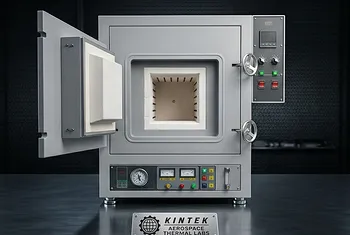
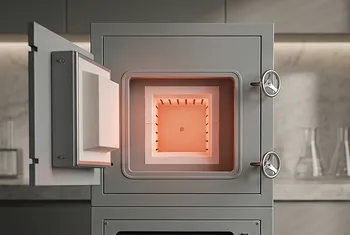
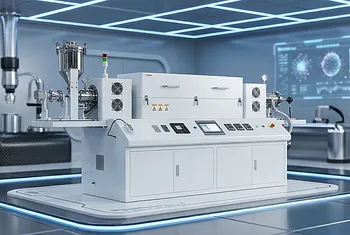
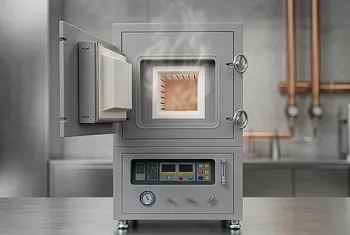
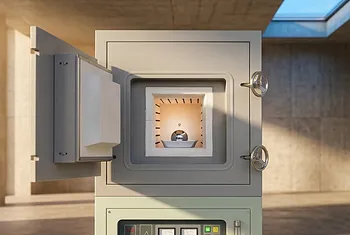
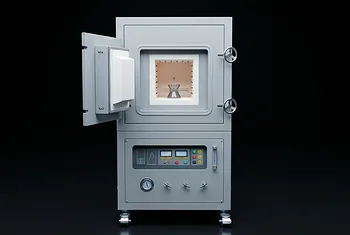
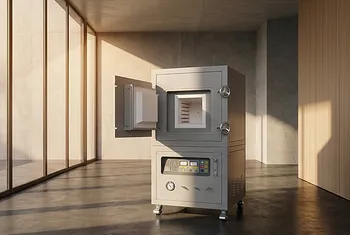
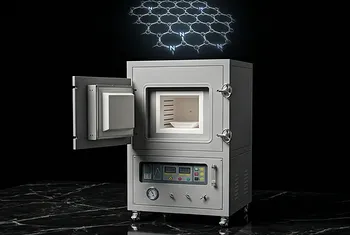
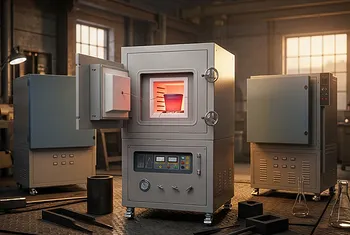
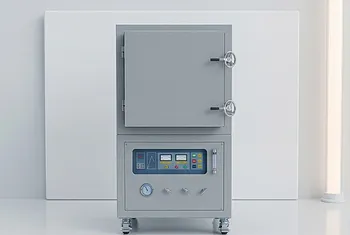
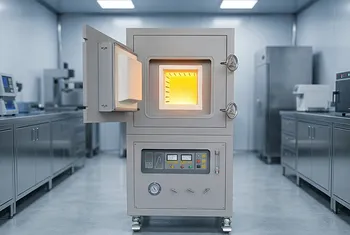
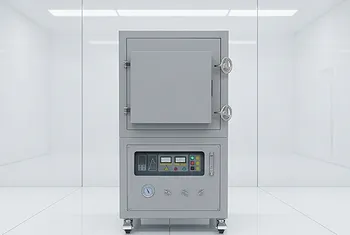
Thematics Rotary Tube Furnace

rotary tube furnace

Rotary tube furnaces are essential for applications requiring uniform heating and continuous mixing, such as powder metallurgy, material blending, and chemical reactions. Our product line includes:

  • Vacuum Sealed Continuous Working Rotary Tube Furnace: Precision processing up to 1600°C, ideal for calcination and sintering.
  • Laboratory Vacuum Tilt Rotary Tube Furnace: Customizable solutions with vacuum & controlled atmosphere for enhanced research.
  • Split Multi Heating Zone Rotary Tube Furnace: Adjustable tilt, 360° rotation, and customizable heating zones for high-temperature material processing.
  • Inclined Rotary PECVD Tube Furnace: Advanced thin film deposition with uniform heating and RF plasma source.
  • Electric Rotary Kiln: High-efficiency solutions for activated carbon regeneration and biomass pyrolysis.

Advanced Rotary Tube Furnaces for Precision High-Temperature Processing

KINTEK's rotary tube furnaces are engineered to deliver exceptional performance in high-temperature applications, offering uniform heating, continuous processing, and customizable solutions for diverse laboratory and industrial needs.

Key Features and Benefits

  1. Uniform Heating and Mixing: The rotating mechanism ensures consistent temperature distribution and prevents sample settling, crucial for reliable results in material research and processing.
  2. Customizable Heating Zones: Our furnaces feature 1 to 5 heated zones with lengths ranging from 205mm to 440mm and diameters from 40mm to 100mm, adaptable to your specific requirements.
  3. High-Temperature Capability: With maximum temperatures reaching up to 1700°C, our furnaces are suitable for a wide range of high-temperature processes, including calcination, sintering, and CVD.
  4. Versatile Applications: Ideal for powder metallurgy, chemical reactions, biomass pyrolysis, and thin film deposition, our furnaces support both small-scale research and large-scale production.
  5. Enhanced Heat Transfer Efficiency: The rotatable and tiltable furnace tube design improves heat transfer, reducing processing times and energy consumption.

How It Works

Rotary tube furnaces operate on the principle of indirect firing, where heat is transferred from a heating coil to the process materials via a rotating tube. The continuous thermal system with multiple control zones ensures uniform heating and processing. The rotating action not only enhances heat distribution but also facilitates continuous mixing of samples, making it perfect for granular or powdery materials.

Why Choose KINTEK?

  • Precision Engineering: Our furnaces are designed for accuracy and reliability, with advanced temperature control systems and durable construction.
  • Custom Solutions: We offer tailored designs to meet unique experimental and production requirements, including vacuum and controlled atmosphere options.
  • Expert Support: Backed by our extensive R&D and manufacturing expertise, we provide comprehensive support from installation to maintenance.

Applications

  • Material Research: Uniform heating for synthesis, sintering, and thermal analysis.
  • Chemical Processing: Continuous mixing for reactions and catalyst testing.
  • Energy and Environment: Biomass pyrolysis and activated carbon regeneration.
  • Semiconductor and Thin Films: PECVD for advanced material deposition.

Get Started Today

Ready to enhance your high-temperature processing with KINTEK's rotary tube furnaces? Contact us to discuss your specific needs and discover how our customizable solutions can optimize your research or production. Our team of experts is here to help you find the perfect furnace for your application.

Explore our full range of rotary tube furnaces and take the next step in precision heating technology with KINTEK.

FAQ

What Are The Main Applications Of A Rotary Tube Furnace?

Rotary tube furnaces are widely used in powder metallurgy, material blending, and chemical reactions where uniform heating and continuous mixing are essential. They are particularly effective for processing granular or powdery materials.

What Are The Key Features Of A Rotary Tube Furnace?

A rotary tube furnace features a rotating mechanism that ensures uniform heat distribution and thorough mixing of samples. It is designed for continuous processing and can accommodate various sample volumes. The furnace typically includes multiple heated zones, a rotatable and tiltable furnace tube, and can reach temperatures up to 1200°C.

How Does A Rotary Tube Furnace Work?

Rotary tube furnaces operate on the principle of indirect firing, where heat is transferred from a heat source to the materials via a rotating tube. They use a continuous thermal system with multiple control zones to ensure uniform heating. The furnace burns pulverized, solid, gaseous, or liquid fuel in its working section, creating heating gases that flow towards the sample. The rotating drum, lined with refractory material and mounted at an angle, facilitates this process.

What Are The Advantages Of Using A Rotary Tube Furnace?

The rotary tube furnace offers several advantages, including uniform temperature distribution due to its rotating action, which prevents sample settling and ensures consistent processing. It enhances heat transfer efficiency, leading to faster processing times and more uniform results. Additionally, its design allows for excellent efficiency in heat transfer and can be customized with multiple heated zones to suit specific needs.

What Temperature Can A Rotary Tube Furnace Reach?

A rotary tube furnace can reach a maximum temperature of 1200°C, making it suitable for high-temperature applications such as calcination, sintering, and heat treatment.

What Types Of Materials Can Be Processed In A Rotary Tube Furnace?

Rotary tube furnaces are ideal for processing granular or powdery materials. They are commonly used in applications involving powder metallurgy, material blending, and chemical reactions where uniform heating and continuous mixing are required.

REQUEST A QUOTE

Our professional team will reply to you within one business day. Please feel free to contact us!


Related Articles

Beyond 1200°C: The Hidden Engineering Behind Vacuum Furnace Hot Zones

Beyond 1200°C: The Hidden Engineering Behind Vacuum Furnace Hot Zones

A deep dive into the critical choice between graphite and all-metal vacuum furnace hot zones, balancing cost, purity, and performance.

Read more
The Alchemy of Control: Mastering Material Properties with High-Temperature Tube Furnaces

The Alchemy of Control: Mastering Material Properties with High-Temperature Tube Furnaces

Discover how tube furnaces enable material transformation by precisely controlling heat, atmosphere, and time—the keys to repeatable science.

Read more
From Brute Force to Perfect Control: The Physics and Psychology of Vacuum Furnaces

From Brute Force to Perfect Control: The Physics and Psychology of Vacuum Furnaces

Discover how vacuum furnaces transform heat treatment from an unpredictable art into a precise science, offering unparalleled control and material purity.

Read more
Beyond Heat: The Unseen Power of Environmental Control in Tube Furnaces

Beyond Heat: The Unseen Power of Environmental Control in Tube Furnaces

Discover why the true value of a tube furnace isn't just temperature, but the absolute environmental control it offers for repeatable science.

Read more
The Physics of Perfection: How a Vacuum Furnace Creates Order from Chaos

The Physics of Perfection: How a Vacuum Furnace Creates Order from Chaos

Discover how vacuum furnaces achieve material perfection by removing atmospheric chaos, ensuring unparalleled purity, control, and repeatability in heat treatment.

Read more
Beyond the Scrubber: Why Your Furnace Design is the Real Key to Environmental Compliance

Beyond the Scrubber: Why Your Furnace Design is the Real Key to Environmental Compliance

Stop struggling with complex exhaust systems. Discover how the right furnace design inherently minimizes emissions and simplifies compliance.

Read more
The Controlled Void: How Vacuum Furnaces Forge the Materials of Tomorrow

The Controlled Void: How Vacuum Furnaces Forge the Materials of Tomorrow

A vacuum furnace is more than an absence of air; it's a tool for precise control over a material's fundamental chemical and physical properties.

Read more
Why Your High-Temperature Synthesis Results Are Unreliable—And How to Fix It

Why Your High-Temperature Synthesis Results Are Unreliable—And How to Fix It

Struggling with inconsistent results in material synthesis, CVD, or annealing? Discover the hidden cause of failure is your furnace's environment, not your process.

Read more
Beyond Temperature: The Art and Science of Thermal Control in Vacuum Furnaces

Beyond Temperature: The Art and Science of Thermal Control in Vacuum Furnaces

Perfect heat treatment isn't just about hitting a temperature; it's a mastery of closed-loop control, thermal uniformity, and the full thermal cycle.

Read more
The Hidden Flaw in Your Heat Treatment: It’s Not the Temperature, It’s the Air

The Hidden Flaw in Your Heat Treatment: It’s Not the Temperature, It’s the Air

Discover why your heat-treated components fail despite perfect recipes. The root cause isn't temperature—it's the atmosphere. Learn how to fix it.

Read more
The Anatomy of Speed: Deconstructing Vacuum Furnace Pump-Down Times

The Anatomy of Speed: Deconstructing Vacuum Furnace Pump-Down Times

Pump-down time is a deceptive metric. True throughput depends on a staged system of pumps, cooling, and overcoming the physics of outgassing.

Read more
Beyond the Program: Why Your Sintering Fails and How to Guarantee Uniformity

Beyond the Program: Why Your Sintering Fails and How to Guarantee Uniformity

Struggling with cracked or inconsistent parts? Discover why your furnace's thermal environment, not just your program, is the real culprit and how to fix it.

Read more
Beyond Clean: How Vacuum Furnaces Redefine Perfection in Metal Joining

Beyond Clean: How Vacuum Furnaces Redefine Perfection in Metal Joining

Vacuum brazing isn't just clean; it prevents contamination at a molecular level. Discover how this shift from cure to prevention creates superior joints.

Read more
Why Your High-Temp Experiments Fail: It’s Not the Heat, It’s the Atmosphere

Why Your High-Temp Experiments Fail: It’s Not the Heat, It’s the Atmosphere

Frustrated by inconsistent results? Discover why the furnace atmosphere, not just temperature, is the key to success in heat treatment and materials science.

Read more
Beyond the Batch: How Continuous Vacuum Furnaces Redefine Industrial Scale

Beyond the Batch: How Continuous Vacuum Furnaces Redefine Industrial Scale

Discover how multi-chamber continuous vacuum furnaces move beyond batch processing to unlock unprecedented throughput and efficiency in manufacturing.

Read more
Why Your High-Temperature Furnace Fails (Even When the Temperature Is Right)

Why Your High-Temperature Furnace Fails (Even When the Temperature Is Right)

Discover why your high-temp experiments fail despite correct settings. Learn how the heating element material—not just temperature—is the key to success.

Read more
The Physics of Perfection: Deconstructing Temperature Control in a Vacuum Furnace

The Physics of Perfection: Deconstructing Temperature Control in a Vacuum Furnace

Vacuum furnace precision is a system, not a feature. It's a concert of PID control, electric elements, and vacuum physics mastering heat.

Read more
The Invisible Contaminant: Why Your Furnace Atmosphere is Sabotaging Your Results

The Invisible Contaminant: Why Your Furnace Atmosphere is Sabotaging Your Results

Struggling with inconsistent results from your high-temp processes? Discover the hidden contaminant sabotaging your work and how to fix it for good.

Read more
Mastering the Void: How Custom Vacuum Furnaces Forge the Future of Materials

Mastering the Void: How Custom Vacuum Furnaces Forge the Future of Materials

Explore how custom-designed vacuum furnaces provide unparalleled control over thermal processes, enabling breakthroughs in advanced material manufacturing.

Read more
Why Your High-Temperature Furnace Fails: It’s Not the Heating Element, It’s the Physics

Why Your High-Temperature Furnace Fails: It’s Not the Heating Element, It’s the Physics

Tired of replacing burnt-out furnace heating elements? Discover the hidden thermal physics that causes premature failure and learn how a systems approach ensures reliability.

Read more