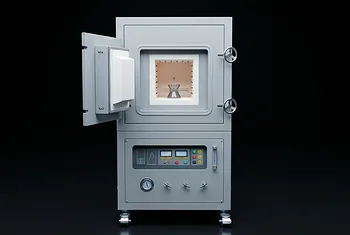
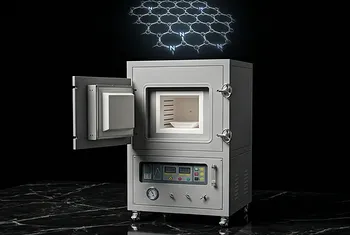
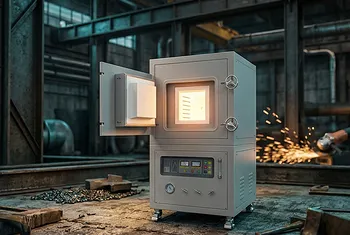
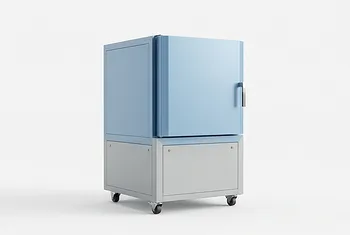
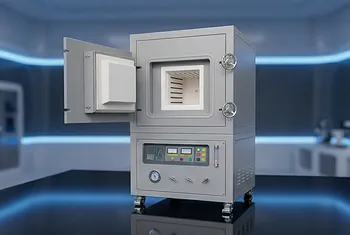
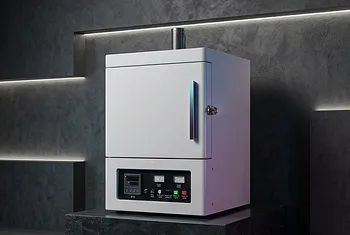
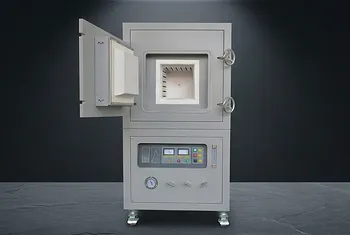
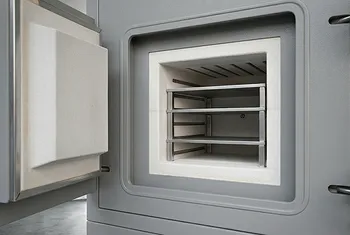
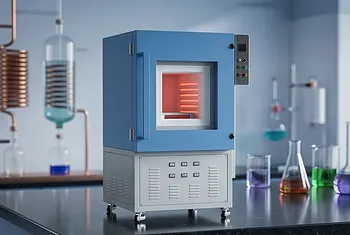
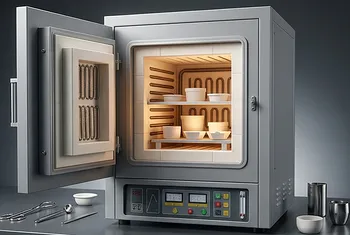
Thematics Continuous Furnace

continuous furnace

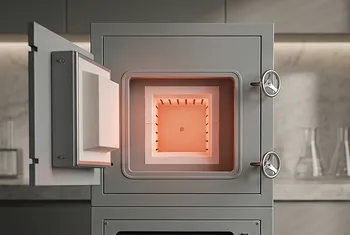
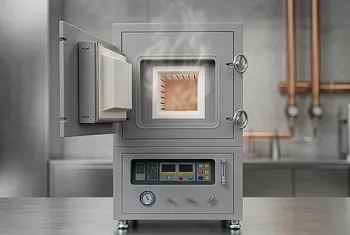
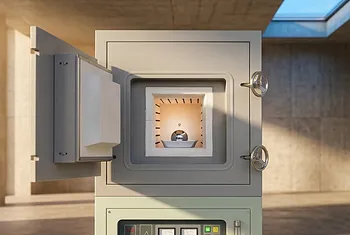
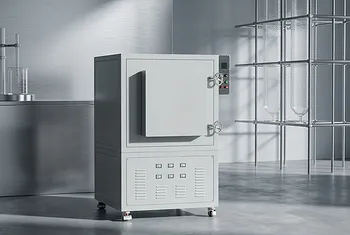
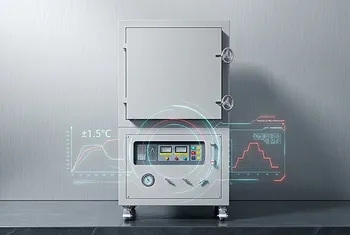
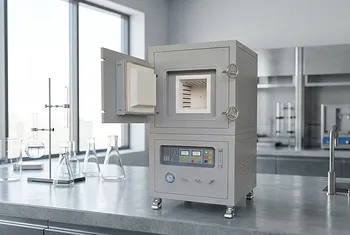
Continuous furnaces are essential for industrial and laboratory applications requiring uninterrupted thermal processing. KINTEK's range includes:

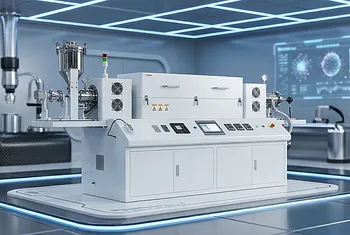
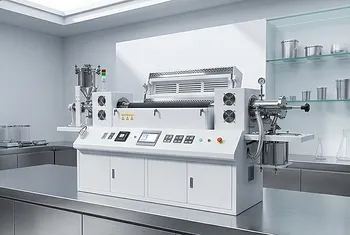
  • Vacuum Sealed Continuous Working Rotary Tube Furnace: Perfect for calcination, sintering, and heat treatment in vacuum environments, with customizable temperatures up to 1600℃.
  • Electric Rotary Kiln: Designed for pyrolysis, calcination, and drying processes, offering efficient heating up to 1100°C, ideal for both lab and production settings.

These furnaces are widely used in vacuum brazing, powder metallurgy sintering, metal heat treatment, and electronic device manufacturing.


Advanced Continuous Furnace Solutions for High-Volume Thermal Processing

KINTEK's continuous furnaces are engineered to meet the rigorous demands of modern industrial and research applications. Our Vacuum Sealed Continuous Working Rotary Tube Furnace and Electric Rotary Kiln represent the pinnacle of thermal processing technology, combining precision, efficiency, and versatility.

Key Features and Benefits

  1. High-Temperature Performance: Our rotary tube furnace operates up to 1600℃, ensuring optimal conditions for calcination, sintering, and heat treatment. The electric rotary kiln reaches 1100°C, making it ideal for pyrolysis and drying processes.

  2. Vacuum and Atmosphere Control: The sealed rotary tube furnace maintains precise vacuum conditions, crucial for processes like vacuum brazing and powder metallurgy sintering. This feature minimizes oxidation and ensures consistent, high-quality results.

  3. Continuous Operation: Designed for uninterrupted production, our furnaces enhance efficiency by eliminating the need for batch processing. This is particularly beneficial for high-volume manufacturing environments.

  4. Customizable Designs: We understand that every application has unique requirements. Our furnaces can be tailored to specific temperature ranges, chamber sizes, and processing needs, ensuring perfect alignment with your operational goals.

  5. Energy Efficiency: Advanced insulation and heating elements reduce energy consumption, lowering operational costs while maintaining superior performance.

  6. Durability and Low Maintenance: Built with high-quality materials, our furnaces are designed for long-term reliability, minimizing downtime and maintenance expenses.

Applications Across Industries

  • Vacuum Brazing: Achieve strong, clean joints in aerospace and automotive components.
  • Powder Metallurgy: Perfect for sintering metal powders into dense, high-strength parts.
  • Heat Treatment: Enhance the mechanical properties of metals through controlled heating and cooling.
  • Pyrolysis and Drying: Efficiently process materials in chemical and environmental applications.
  • Electronic Device Manufacturing: Ensure precise thermal processing for components requiring vacuum conditions.

Why Choose KINTEK?

With decades of expertise in high-temperature furnace design and manufacturing, KINTEK stands out for:

  • In-House R&D: Our team continuously innovates to deliver cutting-edge solutions.
  • Proven Reliability: Trusted by laboratories and industries worldwide for consistent performance.
  • Comprehensive Support: From initial consultation to after-sales service, we’re with you every step of the way.

Get Started with Your Custom Solution

Ready to enhance your thermal processing capabilities? Contact us today to discuss your requirements. Our experts will work with you to design a continuous furnace solution that meets your exact needs, ensuring optimal performance and efficiency.

Elevate your production with KINTEK’s advanced continuous furnaces – where precision meets productivity.

FAQ

What Are The Main Applications Of Continuous Furnaces?

Continuous furnaces are widely used in various industrial processes including vacuum brazing, vacuum sintering of powder metallurgy materials, vacuum heat treatment of metal materials, and vacuum exhaust and sealing of electronic devices and stainless steel heat preservation containers.

What Are The Key Features Of Continuous Furnaces?

Continuous furnaces, especially continuous vacuum furnaces, are known for their enhanced production efficiency, reduced operating costs, and suitability for high-volume manufacturing. They also offer environmental benefits and versatility in processing different materials.

What Should Be Considered When Choosing A Continuous Furnace?

When selecting a continuous furnace, important factors include the need for high production efficiency, cost-effectiveness, environmental benefits, and versatility in processing. However, potential users should also consider the higher complexity, initial cost, and maintenance requirements associated with these furnaces.

What Are The Advantages Of Using A Continuous Furnace?

Continuous furnaces provide several advantages such as improved production efficiency, lower operating costs, and the ability to handle high-volume manufacturing. They are also environmentally friendly and can be adapted for a variety of processing needs.

Can Continuous Furnaces Be Customized For Specific Industrial Needs?

Yes, continuous furnaces can be customized to meet specific industrial requirements. For example, they can be designed to operate at different temperature ranges, such as up to 1600℃ for calcination and sintering, or up to 1100°C for pyrolysis and drying processes.

REQUEST A QUOTE

Our professional team will reply to you within one business day. Please feel free to contact us!


Related Articles

The Alchemy of Control: Mastering Material Properties with High-Temperature Tube Furnaces

The Alchemy of Control: Mastering Material Properties with High-Temperature Tube Furnaces

Discover how tube furnaces enable material transformation by precisely controlling heat, atmosphere, and time—the keys to repeatable science.

Read more
Beyond the Batch: How Continuous Vacuum Furnaces Redefine Industrial Scale

Beyond the Batch: How Continuous Vacuum Furnaces Redefine Industrial Scale

Discover how multi-chamber continuous vacuum furnaces move beyond batch processing to unlock unprecedented throughput and efficiency in manufacturing.

Read more
Why Your High-Temperature Furnace Fails (Even When the Temperature Is Right)

Why Your High-Temperature Furnace Fails (Even When the Temperature Is Right)

Discover why your high-temp experiments fail despite correct settings. Learn how the heating element material—not just temperature—is the key to success.

Read more
The Invisible Contaminant: Why Your Furnace Atmosphere is Sabotaging Your Results

The Invisible Contaminant: Why Your Furnace Atmosphere is Sabotaging Your Results

Struggling with inconsistent results from your high-temp processes? Discover the hidden contaminant sabotaging your work and how to fix it for good.

Read more
The Paradox of Strength: Why Graphite Dominates High-Temperature Vacuum Furnaces

The Paradox of Strength: Why Graphite Dominates High-Temperature Vacuum Furnaces

Graphite's unique physics—increasing strength with heat and chemical inertness—makes it the predictable choice for high-purity, extreme-temp processes.

Read more
Why Your High-Purity Metals Oxidize in a Perfect Vacuum—And How to Stop It

Why Your High-Purity Metals Oxidize in a Perfect Vacuum—And How to Stop It

Frustrated by oxidized metals from your vacuum furnace? Discover the real culprit isn't the vacuum but the cooling phase, and how to fix it.

Read more
Why Your Tube Furnace Is Failing Your Experiments (And It’s Not the Temperature)

Why Your Tube Furnace Is Failing Your Experiments (And It’s Not the Temperature)

Discover the hidden reason your high-temperature experiments fail. It's not your process; it's a material mismatch inside your furnace. Learn how to fix it.

Read more
Why Your Sintered Parts Fail: It’s Not Just About Heat, But Pressure and Purity

Why Your Sintered Parts Fail: It’s Not Just About Heat, But Pressure and Purity

Struggling with porous, weak, or contaminated sintered materials? Discover why simply raising the temperature isn't the answer and how the interplay of heat, pressure, and vacuum is the key.

Read more
Why Your Thermal Processing Fails: The Hidden Mismatch in Your Furnace

Why Your Thermal Processing Fails: The Hidden Mismatch in Your Furnace

Struggling with inconsistent furnace results? Discover the hidden design mismatch sabotaging your experiments and learn how to choose the right furnace for success.

Read more
Beyond Temperature: Why Your Material Processing Fails and How to Fix It

Beyond Temperature: Why Your Material Processing Fails and How to Fix It

Frustrated by inconsistent material processing? Discover the real reason your results fail and how a furnace designed for synergy is the key to control.

Read more
Why Your High-Purity Metal Distillation Fails: It’s Not Your Process, It’s Your Furnace

Why Your High-Purity Metal Distillation Fails: It’s Not Your Process, It’s Your Furnace

Struggling with inconsistent metal purification? Discover why the root cause is often your furnace architecture, not your process, and how to fix it.

Read more
Why Your High-Temperature Experiments Fail: It’s Not the Heat, It’s the Atmosphere

Why Your High-Temperature Experiments Fail: It’s Not the Heat, It’s the Atmosphere

Struggling with inconsistent, oxidized results from your furnace? Discover the root cause isn't temperature, but atmosphere control, and how to fix it.

Read more
The Real Reason Your High-Performance Materials Are Failing (And It’s Not the Alloy)

The Real Reason Your High-Performance Materials Are Failing (And It’s Not the Alloy)

Tired of inconsistent heat treatment? Discover the two invisible culprits sabotaging your materials and how a vacuum furnace provides the control to fix it for good.

Read more
Why Your High-Temperature Experiments Are Inconsistent—And Why It’s Probably Your Furnace

Why Your High-Temperature Experiments Are Inconsistent—And Why It’s Probably Your Furnace

Tired of inconsistent results in your high-temp lab? Discover the hidden culprit in basic furnaces and learn how precise thermal control unlocks reproducible success.

Read more
Why Your High-Temperature Materials Fail: The Hidden Enemy in Your Furnace

Why Your High-Temperature Materials Fail: The Hidden Enemy in Your Furnace

Discover why your heat treatments yield inconsistent results. It's not just the heat—it's the uncontrolled atmosphere. Learn how to fix it.

Read more
Beyond the Operator: The Real Reason Your Heat Treatment Results Are Unpredictable

Beyond the Operator: The Real Reason Your Heat Treatment Results Are Unpredictable

Struggling with inconsistent heat treatment? Discover why manual control is the hidden culprit and how computer-controlled furnaces ensure perfect repeatability.

Read more
Why Your High-Temperature Experiments Are Failing—And It's Not What You Think

Why Your High-Temperature Experiments Are Failing—And It's Not What You Think

Frustrated with inconsistent results from your furnace? Discover why max temperature isn't the problem and how to achieve perfect thermal uniformity.

Read more
Why Your High-Temperature Experiments Fail—And How to Fix Them for Good

Why Your High-Temperature Experiments Fail—And How to Fix Them for Good

Struggling with inconsistent furnace results? Discover the hidden design trade-offs causing failures and learn how to select a furnace engineered for success.

Read more
Beyond the Void: Mastering Rapid Cooling in Vacuum Furnaces

Beyond the Void: Mastering Rapid Cooling in Vacuum Furnaces

Learn how inert gas circulation transforms slow vacuum cooling into rapid, controlled convective heat transfer for precise material property control.

Read more
Your Furnace Isn't Just a Heater: Why 'Good Enough' Equipment Is Sabotaging Your Advanced Materials Research

Your Furnace Isn't Just a Heater: Why 'Good Enough' Equipment Is Sabotaging Your Advanced Materials Research

Struggling with inconsistent results from your tube furnace? Discover why standard equipment fails and how a modular, customizable approach is key to success.

Read more