Within 8 hours on working days, 24 hours on holidays
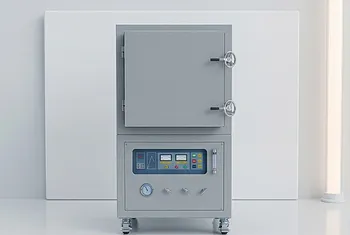
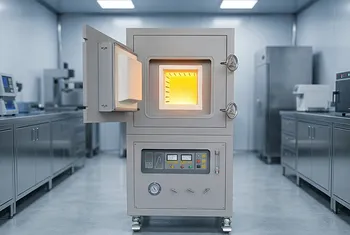
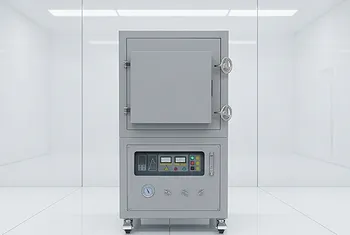
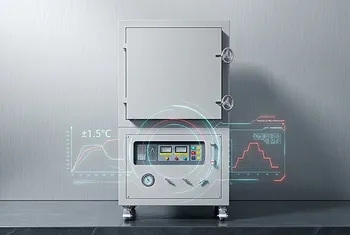
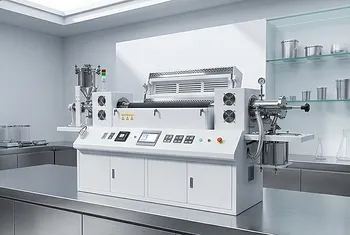
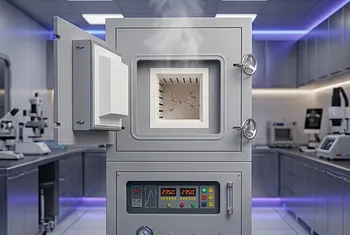
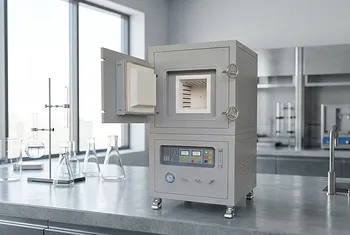
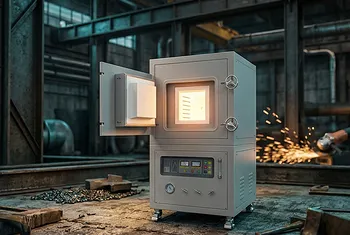
multi zone tube furnace
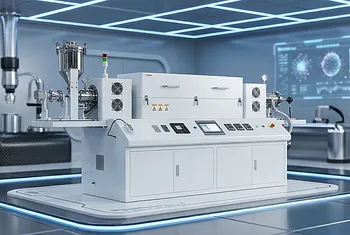
Multi-zone tube furnaces are essential for advanced material research and industrial processes, offering precise temperature control across multiple heating zones. Our product line includes:
Split Multi Heating Zone Rotary Tube Furnace: Features adjustable tilt and 360° rotation for uniform heating
Multi-Zone Laboratory Quartz Tube Furnace: Vacuum-ready with 1-10 customizable zones up to 1700°C
RTP Heating Tubular Furnace: Delivers rapid heating up to 100°C/sec for time-sensitive processes
CVD Tube Furnaces: Specialized for chemical vapor deposition with precise temperature gradients
PECVD Tube Furnaces: Designed for plasma-enhanced thin film deposition at low temperatures
Advanced Multi-Zone Tube Furnace Solutions for Precision Research
KINTEK's multi-zone tube furnaces represent the pinnacle of thermal processing technology, combining precise temperature control with unparalleled flexibility for advanced material research and industrial applications. Our systems are engineered to meet the most demanding requirements in semiconductor manufacturing, battery research, aerospace materials testing, and nanotechnology development.
Cutting-Edge Technology for Complex Thermal Processing
Our multi-zone tube furnaces utilize advanced heating element configurations and sophisticated control systems to create:
Precise Temperature Gradients: Ideal for CVD film growth and controlled crystallization processes
Extended Uniform Heating Zones: Multiple independently controlled zones create longer constant temperature areas than single-zone systems
Rapid Thermal Processing (RTP): Some models achieve heating rates up to 100°C/sec for time-sensitive applications
Versatile Atmosphere Control: Compatible with vacuum, inert gas, and reactive gas environments
Unmatched Customization Capabilities
Every KINTEK multi-zone tube furnace can be tailored to your specific research needs:
Zone Configuration: Choose from 1-10 heating zones with individual temperature control
Temperature Range: Standard models reach 1200-1700°C, with custom options available
Tube Materials: Select from quartz, alumina, or other specialized materials
Atmosphere Systems: Vacuum, gas flow, and pressure control options
Sample Handling: Rotary, tilt, or static configurations for optimal processing
Industry-Leading Performance Features
Our tube furnaces incorporate innovative design elements that deliver superior results:
Uniform Heating: Advanced element placement ensures ±1°C temperature uniformity
Energy Efficiency: Optimized insulation reduces power consumption by up to 30%
Safety Systems: Comprehensive over-temperature protection and gas monitoring
User-Friendly Controls: Intuitive touchscreen interfaces with programmable recipes
Durability: High-quality materials ensure long service life even at maximum temperatures
Applications Across Scientific Disciplines
KINTEK multi-zone tube furnaces support groundbreaking research in:
Semiconductor Development: Precise doping and thin film deposition
Energy Materials: Battery electrode processing and fuel cell component testing
Nanotechnology: Carbon nanotube synthesis and graphene production
Metallurgy: Controlled annealing and sintering of advanced alloys
Ceramics Research: High-purity oxide processing and composite development
Why Choose KINTEK for Your Thermal Processing Needs?
With decades of experience in high-temperature furnace design, KINTEK offers:
In-House Engineering: Complete control over design and manufacturing
Rapid Prototyping: Custom solutions developed in weeks, not months
Global Support: Installation, training, and maintenance services worldwide
Continuous Innovation: Regular updates incorporating the latest technological advances
Ready to Advance Your Research?
Our team of thermal processing experts is ready to help you configure the perfect multi-zone tube furnace for your application. Contact us today to discuss your requirements and discover how KINTEK's customizable solutions can accelerate your research breakthroughs.
For laboratories demanding the highest precision and flexibility in thermal processing, KINTEK's multi-zone tube furnaces deliver unmatched performance. Let us help you push the boundaries of materials science with equipment designed to meet your exact specifications.
FAQ
What Are The Main Applications Of Multi-zone Tube Furnaces?
Multi-zone tube furnaces are used in various commercial and research applications, including semiconductor and battery production, thermocouple and mineral-insulated cable manufacturing, vacuum brazing and heat treatment, vacuum curing and sintering, water/waste/soil testing, aerospace ceramic and metals testing, oil and gas analysis, solid oxide fuel cells, and polymer composites/graphene production. They're also used for metal heat treatments (quenching, tempering, annealing), preheating for welding, ceramic/powder metallurgy sintering, coating treatments, and material research experiments.
What Are The Key Features Of Multi-zone Tube Furnaces?
Key features include: 1) Flexible annealing and chemical vapor deposition capabilities, 2) Accommodation of samples up to 60mm (2 inches), 3) Built-in manifold for easy gas delivery, 4) Natural temperature gradients with cooler ends and uniform heating in the center, 5) Adaptability for various gases or vacuum conditions, and 6) Multiple independently controlled heating zones for precise temperature profiles.
How Does A Multi-zone Tube Furnace Work?
A multi-zone tube furnace works by: 1) Generating heat through multiple independently controlled heating elements, 2) Transferring this heat uniformly through the furnace tube to the workpiece, 3) Creating either precise temperature gradients (for processes like CVD film growth) or extended constant-temperature zones (when multiple zones are set to the same temperature), and 4) Maintaining stable heating conditions suitable for various industrial processes.
What Are The Advantages Of Using A Multi-zone Tube Furnace?
Advantages include: 1) Mature, reliable technology with simple furnace structure, 2) Low power consumption with high thermal efficiency, 3) Easy operation and precise control, 4) Capability for continuous production, 5) Ability to create extended uniform heating zones or precise temperature gradients, 6) Higher product yields in chemical processes, 7) Ability to recover process gases, 8) Broad raw material applicability, and 9) Scalability through furnace combination for large-scale production.
What Types Of Multi-zone Tube Furnaces Are Available?
Available types include: 1) Split multi-heating zone rotary tube furnaces (with tilt and rotation capabilities), 2) Laboratory quartz tube furnaces (up to 1700°C with 1-10 zones), 3) Rapid thermal processing (RTP) furnaces with fast heating rates, 4) CVD tube furnaces for chemical vapor deposition, 5) PECVD furnaces for plasma-enhanced processes, 6) Vacuum tube furnaces, and 7) High-pressure tube furnaces. These come in various configurations with customizable zone numbers, temperature ranges, and special features like vacuum/atmosphere control.
This website uses cookies to enhance your browsing experience,
analyze site traffic, and serve better user experiences. By continuing to use this site, you consent to our use of
cookies. Learn more in our cookie policy.