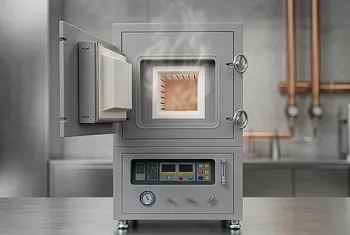
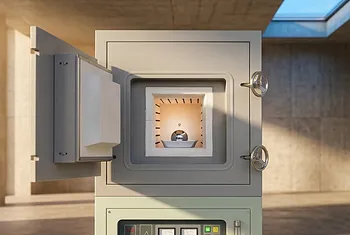
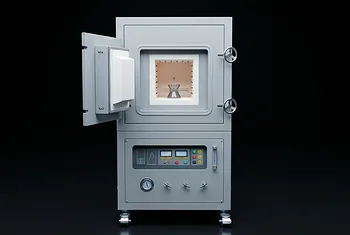
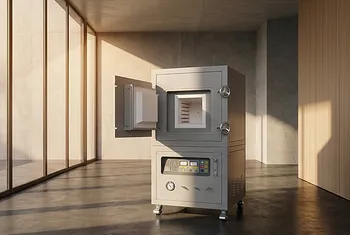
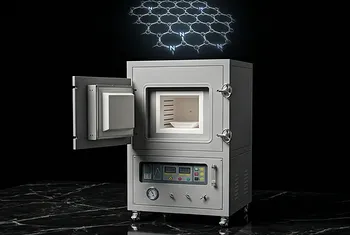
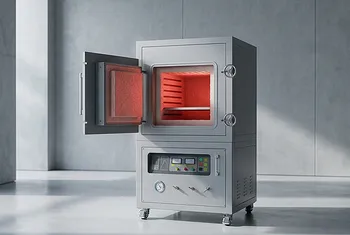
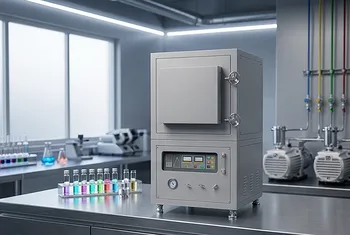
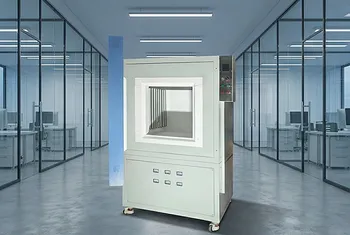
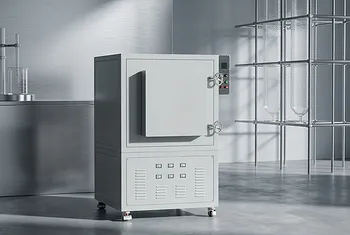
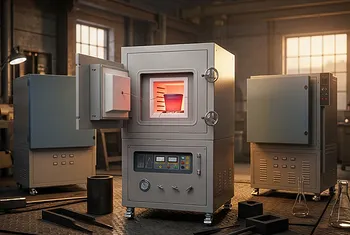
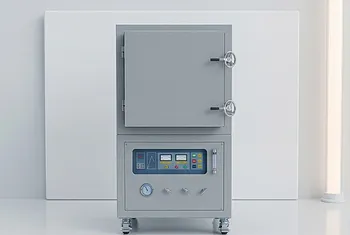
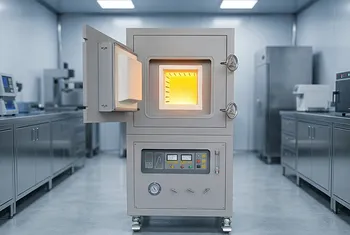
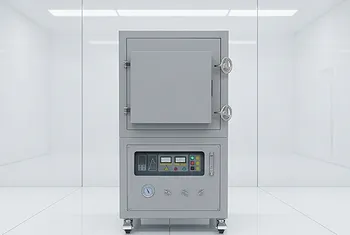
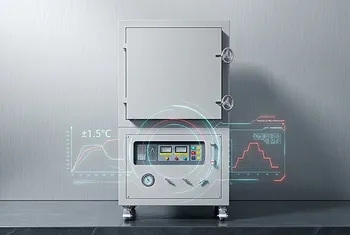
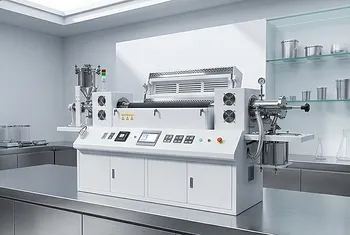
Thematics Dental Furnace

dental furnace

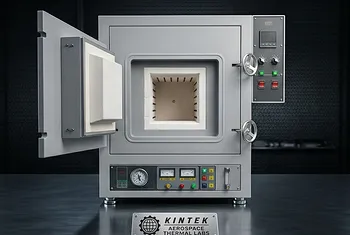
KINTEK's dental furnaces are essential for modern dental laboratories, offering precision and reliability in ceramic restorations. Our product line includes:

  • Vacuum Dental Porcelain Sintering Furnace: Ideal for high-quality ceramic restorations with advanced firing control.
  • Dental Porcelain Zirconia Sintering Ceramic Vacuum Press Furnace: Features ±1°C accuracy and customizable solutions.
  • Chairside Dental Porcelain Zirconia Sintering Furnace: Speedy 9-minute zirconia sintering with SiC heaters.
  • High Temperature Muffle Oven Furnace: Perfect for laboratory debinding and pre-sintering processes.

These furnaces are designed to meet the rigorous demands of dental laboratories, ensuring consistent and predictable results.


Advanced Dental Furnaces for Precision and Reliability

KINTEK's dental furnaces are engineered to deliver exceptional performance in the creation of high-quality dental restorations. Our furnaces incorporate cutting-edge technology to ensure precise temperature control, uniform heating, and consistent results, making them indispensable tools for dental laboratories.

Key Features of Our Dental Furnaces

  1. Precision Temperature Control: Our furnaces offer ±1°C accuracy, ensuring that each restoration is fired at the exact temperature required for optimal results.
  2. Vacuum Technology: Advanced vacuum systems eliminate air pockets and bubbles, resulting in denser and stronger ceramic restorations.
  3. User-Friendly Interfaces: Intuitive controls and programmable settings make our furnaces easy to operate, reducing the learning curve for new users.
  4. Safety Features: Over-temperature protection, automatic shut-off, and emergency stop buttons ensure safe operation at all times.
  5. Customizable Solutions: We understand that every dental lab has unique needs, and our furnaces can be tailored to meet specific requirements.

Applications of Dental Furnaces

Our dental furnaces are versatile and can be used for a variety of applications, including:

  • Sintering Zirconia: Achieve high-strength zirconia restorations with precise temperature control.
  • Ceramic Firing: Create aesthetically pleasing ceramic crowns, bridges, and veneers.
  • Debinding and Pre-Sintering: Prepare materials for final sintering with our high-temperature muffle ovens.
  • Brazing and Heat Treating: Join metals and alloys with clean, strong bonds.

Advantages of Choosing KINTEK

  • Consistent Results: Our furnaces deliver predictable outcomes, reducing the need for adjustments or remakes.
  • Time and Cost Savings: Efficient heating and cooling systems minimize processing time, boosting productivity.
  • Durability: Built with high-quality materials, our furnaces are designed to withstand the rigors of daily use.
  • Versatility: From single-unit restorations to large-scale production, our furnaces can handle it all.

Why Trust KINTEK?

With years of experience in high-temperature furnace solutions, KINTEK combines exceptional R&D with in-house manufacturing to deliver products that meet the highest standards. Our deep customization capability ensures that we can address your unique experimental and production needs.

Get Started Today

Ready to enhance your dental lab with KINTEK's advanced dental furnaces? Contact us today to discuss your requirements and discover how our solutions can benefit your workflow. Our team of experts is here to help you find the perfect furnace for your needs.

Invest in precision, reliability, and innovation with KINTEK's dental furnaces. Let us help you achieve superior results in your dental restorations.

FAQ

What Is A Dental Furnace Used For?

A dental furnace is primarily used in dental laboratories for sintering dental ceramics, such as zirconia, to create high-quality dental restorations like crowns, bridges, and implants. It ensures precise temperature control and consistent results for durable and aesthetically pleasing prosthetics.

What Are The Key Features Of A Dental Furnace?

Key features of a dental furnace include precise temperature range and control, programmability, vacuum technology for contamination-free processing, efficient cooling systems, and user-friendly interfaces. Safety features like automatic shutdown, emergency stop buttons, and overheating protection are also essential.

How Does A Dental Furnace Work?

A dental furnace works by applying controlled high temperatures to dental ceramics in a vacuum or controlled atmosphere environment. This process, known as sintering, bonds ceramic particles together to form strong, dense restorations. The furnace's advanced controls ensure uniform heating and cooling for consistent results.

What Are The Advantages Of Using A Dental Furnace?

The advantages of using a dental furnace include precise temperature and heating control, consistent and predictable results, time and cost savings by reducing the need for adjustments or remakes, and the ability to create various types of dental restorations. These features ensure high-quality, durable, and aesthetically pleasing dental prosthetics.

What Safety Features Should A Dental Furnace Have?

A dental furnace should include safety features such as over-temperature protection, automatic shut-off systems, emergency stop buttons, and overheating protection. These features ensure the safety of users and prevent damage to the equipment during operation.

What Types Of Dental Furnaces Are Available?

Dental furnaces come in various types, including vacuum porcelain sintering furnaces, zirconia sintering furnaces, and vacuum press furnaces. Some models offer rapid sintering capabilities, while others provide high-pressure or multi-functional processing for different dental ceramic materials.

REQUEST A QUOTE

Our professional team will reply to you within one business day. Please feel free to contact us!


Related Articles

Why Your High-Temperature Metamaterials Are Failing—And the Vacuum Secret to Solving It

Why Your High-Temperature Metamaterials Are Failing—And the Vacuum Secret to Solving It

Discover why high-temperature stability testing for metamaterials often fails and how high-vacuum annealing furnaces protect refractory metals from oxidation.

Read more
Why Your 80W–20Re Alloy Sintering Fails to Reach Full Density—and the Hidden Role of the Mold

Why Your 80W–20Re Alloy Sintering Fails to Reach Full Density—and the Hidden Role of the Mold

Discover why graphite molds are critical for Pulsed Plasma Sintering (PPS) of 80W-20Re alloys. Learn how thermal-mechanical coupling ensures full densification.

Read more
Why Your Vacuum Furnace Temperature is "Lying" to You—and How Multi-Point Mapping Fixes It

Why Your Vacuum Furnace Temperature is "Lying" to You—and How Multi-Point Mapping Fixes It

Discover why single-point temperature readings lead to batch failures and how multi-point measurement ensures AMS2750D compliance in vacuum heat treatment.

Read more
Why Your EBSD Maps Go Dark After Annealing—and How to Fix the Signal Loss

Why Your EBSD Maps Go Dark After Annealing—and How to Fix the Signal Loss

Learn why surface oxidation ruins quasi-in-situ EBSD analysis of Fe81Ga19 alloys and how high-vacuum annealing (better than 2x10^-4 Pa) ensures clear crystal mapping.

Read more
Is Your Drying Process Destroying Your Nanomaterials? Why Vacuum Technology is the Critical Final Step in Synthesis

Is Your Drying Process Destroying Your Nanomaterials? Why Vacuum Technology is the Critical Final Step in Synthesis

Discover why standard drying fails nanomaterials like CdS nanorods and how vacuum ovens prevent oxidation and agglomeration to preserve surface activity.

Read more
From Hours to Minutes: How Resistance Sintering Solves the Tungsten-Rhenium Productivity Gap

From Hours to Minutes: How Resistance Sintering Solves the Tungsten-Rhenium Productivity Gap

Discover how electric field-assisted resistance sintering transforms 80W–20Re alloy production, slashing cycle times and optimizing microstructure.

Read more
Why Your Copper Composites Are Brittle: The Hidden Battle Against High-Temperature Oxidation

Why Your Copper Composites Are Brittle: The Hidden Battle Against High-Temperature Oxidation

Discover why traditional sintering fails copper-based composites and how a vacuum-argon environment is the key to achieving superior mechanical and thermal performance.

Read more
Why Your SiC Fiber Performance Hits a Ceiling—and How LCVD Breaks Through

Why Your SiC Fiber Performance Hits a Ceiling—and How LCVD Breaks Through

Discover how Laser Chemical Vapor Deposition (LCVD) overcomes the limitations of traditional SiC fiber synthesis by providing unmatched control over stoichiometry and crystallinity.

Read more
Patience vs. Power: Choosing Between Hot Wall and Cold Wall Vacuum Furnaces

Patience vs. Power: Choosing Between Hot Wall and Cold Wall Vacuum Furnaces

Hot wall furnaces trade speed for perfect thermal uniformity, making them ideal for sensitive, long-duration processes like nitriding and tempering.

Read more
Beyond Purity: The Hidden Trade-offs in Choosing a Vacuum Furnace

Beyond Purity: The Hidden Trade-offs in Choosing a Vacuum Furnace

Choosing a vacuum furnace isn't just about purity; it's a critical trade-off between material integrity, speed, temperature, and cost.

Read more
The Physics of Trust: Why Uniformity Outweighs Power in Vacuum Furnaces

The Physics of Trust: Why Uniformity Outweighs Power in Vacuum Furnaces

True vacuum furnace performance isn't about peak specs, but about the guaranteed effective working area and its absolute temperature uniformity.

Read more
The Anatomy of Choice: Configuring a Vacuum Furnace for Precision, Not Just Price

The Anatomy of Choice: Configuring a Vacuum Furnace for Precision, Not Just Price

Learn to configure a vacuum furnace by choosing the right heating elements, controls, and insulation. Tailor your system for precision and repeatability.

Read more
The Pursuit of Purity: Why High-Vacuum Furnaces Are Non-Negotiable for Advanced Materials

The Pursuit of Purity: Why High-Vacuum Furnaces Are Non-Negotiable for Advanced Materials

High-vacuum furnaces are essential not for a specific list of materials, but for outcomes where purity and structural integrity are paramount.

Read more
The Architect of Emptiness: Mastering Material Purity in Vacuum Furnaces

The Architect of Emptiness: Mastering Material Purity in Vacuum Furnaces

A vacuum pump does more than remove air; it creates a controlled void that prevents oxidation, degasses metals, and enables high-purity metallurgy.

Read more
The Controlled Atmosphere: Why Low-Vacuum Furnaces Aren't About the Vacuum

The Controlled Atmosphere: Why Low-Vacuum Furnaces Aren't About the Vacuum

Discover the engineering truth: low-vacuum furnaces use vacuum not as an environment, but as a tool to purge air for a protective inert atmosphere.

Read more
The Pursuit of Purity: Why a Vacuum Furnace is a Tool for Control, Not Emptiness

The Pursuit of Purity: Why a Vacuum Furnace is a Tool for Control, Not Emptiness

A vacuum furnace isn't an empty box; it's a tool for absolute control, eliminating atmospheric chaos to achieve material purity and integrity.

Read more
Elegance in Sufficiency: The Engineering Wisdom Behind Low Vacuum Furnaces

Elegance in Sufficiency: The Engineering Wisdom Behind Low Vacuum Furnaces

Discover why low vacuum furnaces use simple rotary vane pumps—a lesson in matching engineering tools to process needs for optimal results.

Read more
The Protective Cloak: Deconstructing the 'Vacuum' in Low Vacuum Furnaces

The Protective Cloak: Deconstructing the 'Vacuum' in Low Vacuum Furnaces

Discover why low vacuum furnaces aren't about creating a void, but about deploying an inert gas cloak to prevent oxidation in heat treatment.

Read more
The Physics of Absence: How Vacuum Furnaces Forge Superior Metals

The Physics of Absence: How Vacuum Furnaces Forge Superior Metals

Discover how vacuum environments purify metals by removing volatile impurities, dissolved gases, and preventing oxidation, enhancing material integrity.

Read more
The Alchemist's Dilemma: A Decision Framework for Box, Tube, and Vacuum Furnaces

The Alchemist's Dilemma: A Decision Framework for Box, Tube, and Vacuum Furnaces

Learn the critical differences between box, tube, and vacuum furnaces to select the right thermal processing tool for your material science application.

Read more