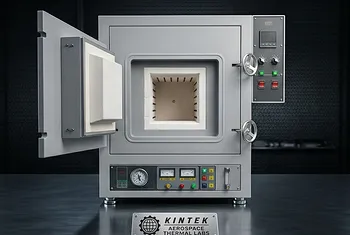
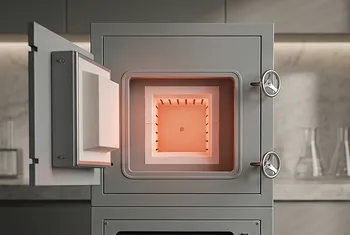
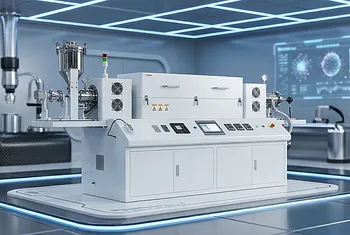
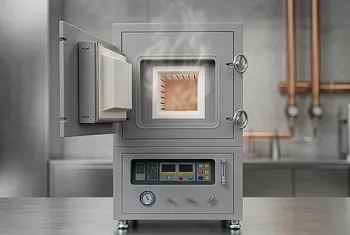
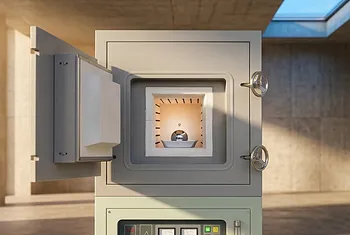
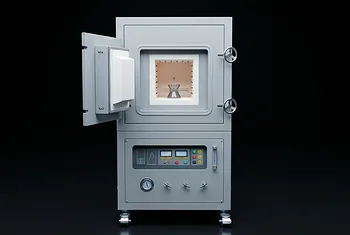
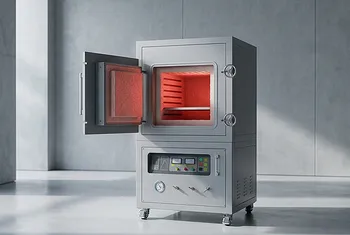
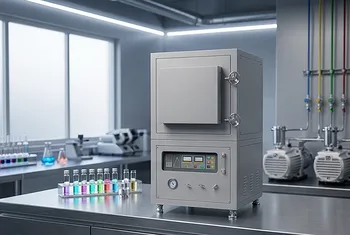
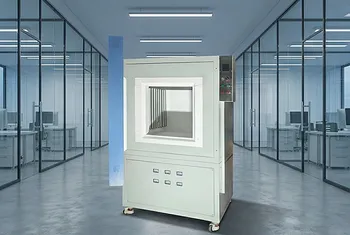
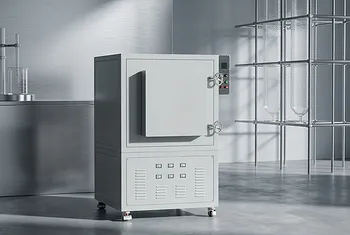
Thematics Muffle Furnace

muffle furnace

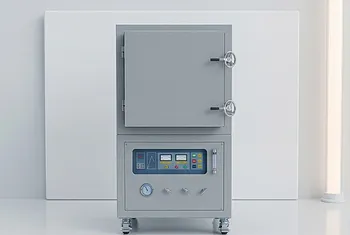
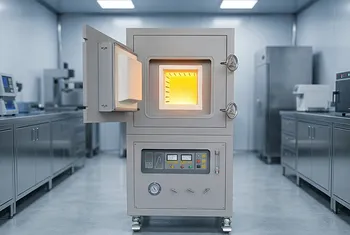
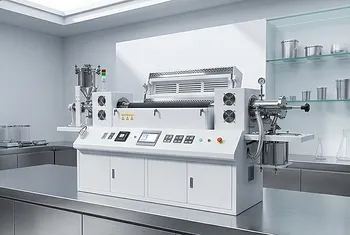
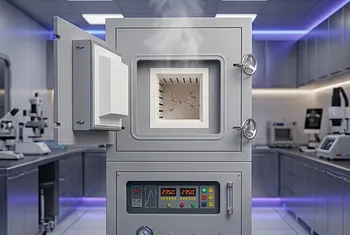
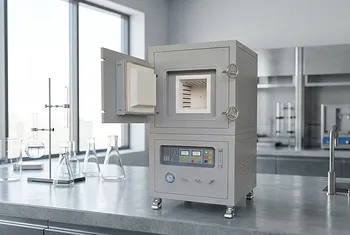
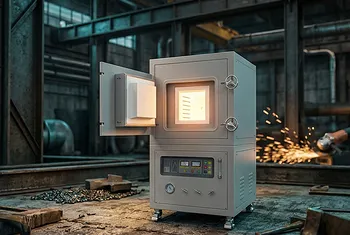
Muffle furnaces are essential for high-temperature processes across industries like metallurgy (annealing, hardening), ceramics (sintering), and pharmaceuticals (ashing, quality control). Our product line includes:

  • KT-MD Debinding & Pre-Sintering Furnace: Precision up to 1600°C for ceramics, with energy-efficient design.
  • KT-BL Bottom Lifting Furnace: 1600°C uniformity for material science, featuring ergonomic loading.
  • KT-12M/14M Series: 1200°C–1400°C models with PID control, ideal for rapid, uniform heating.
  • KT-17M/1800°C Furnaces: Advanced 1700°C–1800°C solutions for sintering and research.

Advanced Muffle Furnaces for Precision High-Temperature Applications

KINTEK’s muffle furnaces combine cutting-edge technology with robust design to meet diverse laboratory and industrial needs. Our furnaces operate on the principle of electrically heated elements (silicon carbide or nichrome) that transfer heat uniformly through an insulated chamber, ensuring contamination-free results. Key features include:

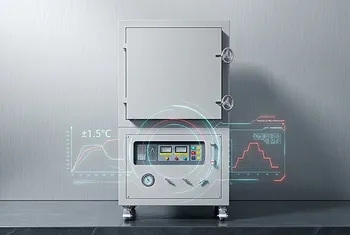
  • Temperature Precision: PID-controlled systems with J-type sensors achieve ±1°C accuracy, critical for reproducible experiments.
  • Uniform Heating: Advanced chamber designs and imported glass wool insulation guarantee even heat distribution, eliminating hotspots.
  • Safety & Efficiency: SSR-based heaters and auto-tuning PID controllers reduce energy consumption by 30% while maintaining safety with isolated heating elements.
  • Customization: Tailored chamber sizes, temperature ranges (up to 1800°C), and optional vacuum/atmosphere compatibility for specialized workflows.

Why Choose KINTEK?

  1. Versatility: From debinding ceramics (KT-MD) to glass fusing (KT-14M), our furnaces support applications in aerospace, biomedicine, and environmental testing.
  2. Durability: High-density refractory materials extend service life, reducing long-term costs.
  3. Innovation: Proprietary insulation technology minimizes heat loss, achieving faster ramp rates without compromising stability.

Explore Custom Solutions

Need a furnace for unique research? Our engineers specialize in modifying:

  • Heating elements (MoSi2 for 1800°C+)
  • Gas inlet systems for controlled atmospheres
  • Data logging integrations

Boost your lab’s capabilities today! Contact our team to discuss your project or request a quote for a tailored muffle furnace solution.

FAQ

What Are The Main Applications Of A Muffle Furnace?

Muffle furnaces are widely used in various industries including metallurgy for heat treatment processes like annealing and hardening metals; ceramics and glass for sintering and melting processes; biomedical for material analysis and drug testing; pharmaceuticals for ashing and quality control of samples; and environmental testing for analyzing ash content in materials and conducting water quality assessment. In the glass industry, they are used for melting glass during recycling, molding glass into shapes, toughening glass products, and analyzing raw material characteristics.

What Are The Key Features Of A Muffle Furnace?

Key features of a muffle furnace include a high temperature range (typically from 800°C to 1800°C), uniform heating for accurate results, isolated heating elements to prevent chemical reactions, and precise digital temperature control. Additional features often include temperature sensing through J-type sensors, PID control for temperature regulation, high-grade insulation materials like imported glass wool blanket for maximum thermal efficiency, SSR-based heaters, and an auto-tuning advanced PID controller.

How Does A Muffle Furnace Work?

A muffle furnace operates by using heating elements, such as silicon carbide or nichrome wires, which line the walls of the chamber. When electrical current flows through these elements, they generate heat, which is transferred through the chamber lining into the insulated space where samples are placed. The insulated chamber minimizes heat loss and maintains a steady, even temperature distribution, allowing precise control over the heating process without contaminating the sample.

What Are The Advantages Of Using A Muffle Furnace?

The advantages of using a muffle furnace include high precision and control with accurate temperature management, reduced contamination due to an isolated chamber, versatile applications across scientific and industrial tasks, energy efficiency from effective insulation, and enhanced safety due to reduced external heat exposure. They are also cost-effective due to their long service life and energy efficiency, offer high temperature resistance, ensure temperature uniformity with even heat distribution, and minimize heat loss compared to conventional heating methods.

What Types Of Muffle Furnaces Are Available?

Muffle furnaces come in various types based on their maximum temperature capabilities and design features. Examples include high-temperature models (up to 1800°C) for sintering and annealing, models with bottom lifting mechanisms for easy loading, and those with specific features like PID control and energy-efficient designs. They can also vary in size and customization options to suit different laboratory and industrial needs.

REQUEST A QUOTE

Our professional team will reply to you within one business day. Please feel free to contact us!


Related Articles

Why Your High-Temperature Metamaterials Are Failing—And the Vacuum Secret to Solving It

Why Your High-Temperature Metamaterials Are Failing—And the Vacuum Secret to Solving It

Discover why high-temperature stability testing for metamaterials often fails and how high-vacuum annealing furnaces protect refractory metals from oxidation.

Read more
Why Your 80W–20Re Alloy Sintering Fails to Reach Full Density—and the Hidden Role of the Mold

Why Your 80W–20Re Alloy Sintering Fails to Reach Full Density—and the Hidden Role of the Mold

Discover why graphite molds are critical for Pulsed Plasma Sintering (PPS) of 80W-20Re alloys. Learn how thermal-mechanical coupling ensures full densification.

Read more
Why Your Vacuum Furnace Temperature is "Lying" to You—and How Multi-Point Mapping Fixes It

Why Your Vacuum Furnace Temperature is "Lying" to You—and How Multi-Point Mapping Fixes It

Discover why single-point temperature readings lead to batch failures and how multi-point measurement ensures AMS2750D compliance in vacuum heat treatment.

Read more
Why Your EBSD Maps Go Dark After Annealing—and How to Fix the Signal Loss

Why Your EBSD Maps Go Dark After Annealing—and How to Fix the Signal Loss

Learn why surface oxidation ruins quasi-in-situ EBSD analysis of Fe81Ga19 alloys and how high-vacuum annealing (better than 2x10^-4 Pa) ensures clear crystal mapping.

Read more
Is Your Drying Process Destroying Your Nanomaterials? Why Vacuum Technology is the Critical Final Step in Synthesis

Is Your Drying Process Destroying Your Nanomaterials? Why Vacuum Technology is the Critical Final Step in Synthesis

Discover why standard drying fails nanomaterials like CdS nanorods and how vacuum ovens prevent oxidation and agglomeration to preserve surface activity.

Read more
From Hours to Minutes: How Resistance Sintering Solves the Tungsten-Rhenium Productivity Gap

From Hours to Minutes: How Resistance Sintering Solves the Tungsten-Rhenium Productivity Gap

Discover how electric field-assisted resistance sintering transforms 80W–20Re alloy production, slashing cycle times and optimizing microstructure.

Read more
Why Your Copper Composites Are Brittle: The Hidden Battle Against High-Temperature Oxidation

Why Your Copper Composites Are Brittle: The Hidden Battle Against High-Temperature Oxidation

Discover why traditional sintering fails copper-based composites and how a vacuum-argon environment is the key to achieving superior mechanical and thermal performance.

Read more
Why Your SiC Fiber Performance Hits a Ceiling—and How LCVD Breaks Through

Why Your SiC Fiber Performance Hits a Ceiling—and How LCVD Breaks Through

Discover how Laser Chemical Vapor Deposition (LCVD) overcomes the limitations of traditional SiC fiber synthesis by providing unmatched control over stoichiometry and crystallinity.

Read more
Patience vs. Power: Choosing Between Hot Wall and Cold Wall Vacuum Furnaces

Patience vs. Power: Choosing Between Hot Wall and Cold Wall Vacuum Furnaces

Hot wall furnaces trade speed for perfect thermal uniformity, making them ideal for sensitive, long-duration processes like nitriding and tempering.

Read more
Beyond Purity: The Hidden Trade-offs in Choosing a Vacuum Furnace

Beyond Purity: The Hidden Trade-offs in Choosing a Vacuum Furnace

Choosing a vacuum furnace isn't just about purity; it's a critical trade-off between material integrity, speed, temperature, and cost.

Read more
The Physics of Trust: Why Uniformity Outweighs Power in Vacuum Furnaces

The Physics of Trust: Why Uniformity Outweighs Power in Vacuum Furnaces

True vacuum furnace performance isn't about peak specs, but about the guaranteed effective working area and its absolute temperature uniformity.

Read more
The Anatomy of Choice: Configuring a Vacuum Furnace for Precision, Not Just Price

The Anatomy of Choice: Configuring a Vacuum Furnace for Precision, Not Just Price

Learn to configure a vacuum furnace by choosing the right heating elements, controls, and insulation. Tailor your system for precision and repeatability.

Read more
The Pursuit of Purity: Why High-Vacuum Furnaces Are Non-Negotiable for Advanced Materials

The Pursuit of Purity: Why High-Vacuum Furnaces Are Non-Negotiable for Advanced Materials

High-vacuum furnaces are essential not for a specific list of materials, but for outcomes where purity and structural integrity are paramount.

Read more
The Architect of Emptiness: Mastering Material Purity in Vacuum Furnaces

The Architect of Emptiness: Mastering Material Purity in Vacuum Furnaces

A vacuum pump does more than remove air; it creates a controlled void that prevents oxidation, degasses metals, and enables high-purity metallurgy.

Read more
The Controlled Atmosphere: Why Low-Vacuum Furnaces Aren't About the Vacuum

The Controlled Atmosphere: Why Low-Vacuum Furnaces Aren't About the Vacuum

Discover the engineering truth: low-vacuum furnaces use vacuum not as an environment, but as a tool to purge air for a protective inert atmosphere.

Read more
The Pursuit of Purity: Why a Vacuum Furnace is a Tool for Control, Not Emptiness

The Pursuit of Purity: Why a Vacuum Furnace is a Tool for Control, Not Emptiness

A vacuum furnace isn't an empty box; it's a tool for absolute control, eliminating atmospheric chaos to achieve material purity and integrity.

Read more
Elegance in Sufficiency: The Engineering Wisdom Behind Low Vacuum Furnaces

Elegance in Sufficiency: The Engineering Wisdom Behind Low Vacuum Furnaces

Discover why low vacuum furnaces use simple rotary vane pumps—a lesson in matching engineering tools to process needs for optimal results.

Read more
The Protective Cloak: Deconstructing the 'Vacuum' in Low Vacuum Furnaces

The Protective Cloak: Deconstructing the 'Vacuum' in Low Vacuum Furnaces

Discover why low vacuum furnaces aren't about creating a void, but about deploying an inert gas cloak to prevent oxidation in heat treatment.

Read more
The Physics of Absence: How Vacuum Furnaces Forge Superior Metals

The Physics of Absence: How Vacuum Furnaces Forge Superior Metals

Discover how vacuum environments purify metals by removing volatile impurities, dissolved gases, and preventing oxidation, enhancing material integrity.

Read more
The Alchemist's Dilemma: A Decision Framework for Box, Tube, and Vacuum Furnaces

The Alchemist's Dilemma: A Decision Framework for Box, Tube, and Vacuum Furnaces

Learn the critical differences between box, tube, and vacuum furnaces to select the right thermal processing tool for your material science application.

Read more