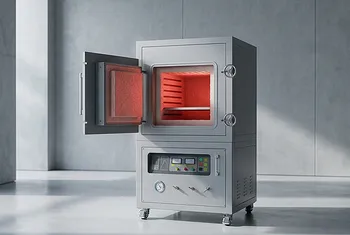
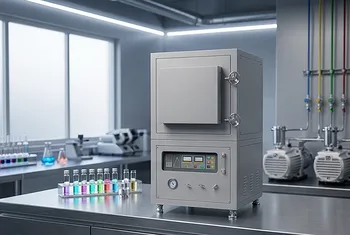
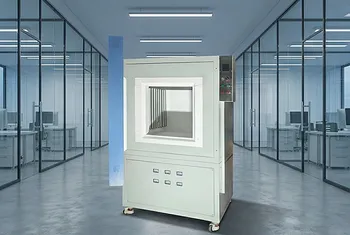
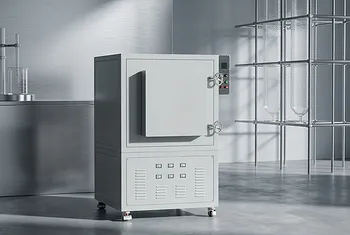
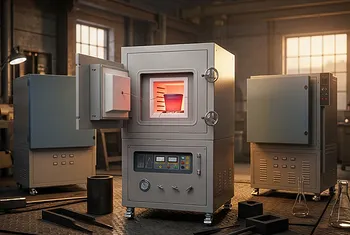
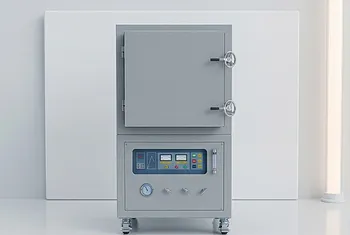
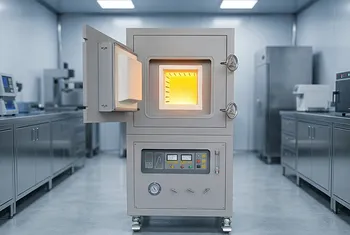
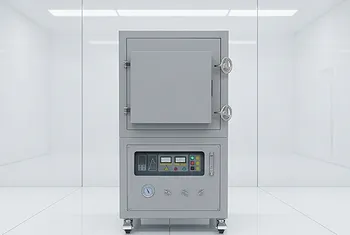
Thematics Vertical Tube Furnace

vertical tube furnace

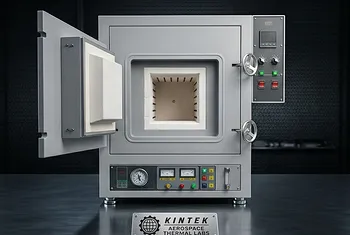
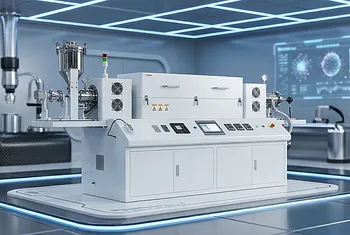
Vertical tube furnaces are essential for advanced material research and industrial processes requiring precise temperature control. KINTEK's range includes:

  • Vertical Laboratory Quartz Tube Furnace: Ideal for CVD and crystal growth with 1800℃ heating
  • RTP Heating Tubular Furnace: Features rapid heating up to 100°C/sec for time-sensitive applications
  • Split Chamber CVD Tube Furnace: High precision 1200°C furnace with vacuum capabilities
  • Multi-Zone CVD Tube Furnaces: Precision temperature control for thin film deposition
  • Rotary Tube Furnaces: Adjustable tilt and rotation for uniform material processing

These furnaces serve industries from chemical engineering to metallurgy, offering customizable solutions for unique research needs.


Advanced Vertical Tube Furnace Solutions for Precision Research

KINTEK's vertical tube furnaces represent the pinnacle of thermal processing technology, combining innovative engineering with practical laboratory needs. Our vertical orientation design offers distinct advantages over traditional horizontal furnaces, particularly in space-constrained laboratory environments.

Core Technology and Design Principles

Our vertical tube furnaces operate on advanced heat transfer principles, where thermal energy is generated by high-efficiency heating elements and uniformly distributed through precisely engineered furnace tubes. The vertical configuration naturally facilitates:

  • Gravity-assisted processes where sample introduction or gas flow benefits from top-down orientation
  • Enhanced temperature uniformity through optimized convection currents
  • Reduced footprint while maintaining generous tube diameters
  • Simplified sample loading/unloading for improved workflow efficiency

Precision Temperature Control Systems

Every KINTEK vertical tube furnace features our proprietary temperature management system:

  1. Multi-zone PID controllers with ±1°C stability
  2. Rapid thermal processing (RTP) capabilities up to 100°C/sec
  3. Programmable heating profiles with 100+ segment memory
  4. Real-time temperature monitoring via calibrated thermocouples

These systems ensure reproducible results for sensitive processes like:

  • Chemical vapor deposition (CVD)
  • Nanomaterial synthesis
  • Crystal growth
  • Thermal annealing
  • Catalyst testing

Customizable Solutions for Specialized Applications

Understanding that research needs vary, we offer extensive customization options:

  • Tube materials: Quartz, alumina, or specialized alloys
  • Atmosphere control: Vacuum, inert gas, or reactive environments
  • Heating configurations: Single-zone to 10-zone designs
  • Accessory integration: Gas delivery systems, vacuum pumps, sample rotation

Our engineering team collaborates closely with researchers to develop solutions for:

  • Semiconductor device fabrication
  • Solar cell development
  • Battery material research
  • Ceramic processing

Safety and Reliability Features

KINTEK furnaces incorporate multiple protection mechanisms:

  • Over-temperature automatic shutdown
  • Emergency power-off circuits
  • Leak-tested gas handling systems
  • Reinforced high-temperature insulation
  • CE and UL certified components

Why Choose KINTEK Vertical Tube Furnaces?

  1. Space Efficiency: Vertical design saves valuable lab real estate
  2. Energy Savings: Optimized thermal design reduces power consumption
  3. Process Flexibility: Adaptable to diverse research requirements
  4. Technical Support: Expert assistance from specification to operation
  5. Quality Assurance: Rigorous testing before delivery

Our vertical tube furnaces have empowered research at leading universities and industrial laboratories worldwide. Whether you're developing next-generation materials or optimizing production processes, we have the thermal solution to accelerate your work.

Ready to enhance your research capabilities? Contact our technical team today to discuss your specific requirements. Our experts will help you configure the ideal vertical tube furnace solution, complete with installation support and operational training.

For immediate assistance, call our technical hotline or request a virtual demonstration. Let KINTEK's vertical tube furnaces elevate your research to new heights!

FAQ

What Is A Vertical Tube Furnace?

A vertical tube furnace is a high-temperature heating device designed in a vertical orientation, offering precise temperature control, uniform heating, and efficient energy usage. Its vertical design is space-saving and particularly useful for processes that benefit from a vertical setup.

What Are The Applications Of A Vertical Tube Furnace?

Vertical tube furnaces are widely used in material testing, thermal processing, and chemical reactions requiring controlled heating and cooling rates. They are also used in chemical engineering for producing synthetic resins, rubber, paints, and dyes; in the food industry for baking, drying, and sterilization; and in metallurgy for smelting, melting, and heat treatment processes.

What Are The Advantages Of A Vertical Tube Furnace?

Vertical tube furnaces offer several advantages, including a smaller footprint compared to horizontal furnaces, making them ideal for laboratories with limited space. They also provide efficient and energy-saving operation, precise temperature control, flexibility in use, ease of operation, safety, reliability, and compliance with environmental standards.

How Does A Vertical Tube Furnace Work?

A vertical tube furnace generates heat through a heat source and transfers this heat to the heated workpiece or medium via the furnace tube. This process ensures stable and uniform heating, making it suitable for various industrial applications.

What Types Of Vertical Tube Furnaces Are Available?

Vertical tube furnaces come in various types, including those with single or multiple heating zones, rapid thermal processing (RTP) capabilities, vacuum stations, and customizable solutions for specific lab needs such as CVD (Chemical Vapor Deposition) and PECVD (Plasma Enhanced Chemical Vapor Deposition).

Why Choose A Vertical Tube Furnace Over A Horizontal One?

A vertical tube furnace is chosen over a horizontal one primarily for its space-saving design and the ability to benefit from gravity-assisted processes. The vertical setup can aid in even heat and material distribution, making it ideal for specific experiments or manufacturing processes.

What Temperature Ranges Can Vertical Tube Furnaces Achieve?

Vertical tube furnaces can achieve high temperatures, typically up to 1800°C, depending on the model and configuration. They are designed for precision heating and can be customized to meet specific temperature requirements for various applications.

Are Vertical Tube Furnaces Customizable?

Yes, vertical tube furnaces are highly customizable. They can be tailored with features such as multiple heating zones, rapid heating capabilities, vacuum systems, and specific atmosphere controls to meet the unique needs of different research and industrial applications.

REQUEST A QUOTE

Our professional team will reply to you within one business day. Please feel free to contact us!


Related Articles

Why Your Superelastic Alloys Fail to Perform—And How Solid-State Precision Fixes It

Why Your Superelastic Alloys Fail to Perform—And How Solid-State Precision Fixes It

Discover why traditional casting fails Ti-Ni-X superelastic alloys and how Spark Plasma Sintering (SPS) provides precise composition control and fine microstructure.

Read more
Why Your High-Temperature Metamaterials Are Failing—And the Vacuum Secret to Solving It

Why Your High-Temperature Metamaterials Are Failing—And the Vacuum Secret to Solving It

Discover why high-temperature stability testing for metamaterials often fails and how high-vacuum annealing furnaces protect refractory metals from oxidation.

Read more
Why Your 80W–20Re Alloy Sintering Fails to Reach Full Density—and the Hidden Role of the Mold

Why Your 80W–20Re Alloy Sintering Fails to Reach Full Density—and the Hidden Role of the Mold

Discover why graphite molds are critical for Pulsed Plasma Sintering (PPS) of 80W-20Re alloys. Learn how thermal-mechanical coupling ensures full densification.

Read more
Why Your Vacuum Furnace Temperature is "Lying" to You—and How Multi-Point Mapping Fixes It

Why Your Vacuum Furnace Temperature is "Lying" to You—and How Multi-Point Mapping Fixes It

Discover why single-point temperature readings lead to batch failures and how multi-point measurement ensures AMS2750D compliance in vacuum heat treatment.

Read more
Why Your EBSD Maps Go Dark After Annealing—and How to Fix the Signal Loss

Why Your EBSD Maps Go Dark After Annealing—and How to Fix the Signal Loss

Learn why surface oxidation ruins quasi-in-situ EBSD analysis of Fe81Ga19 alloys and how high-vacuum annealing (better than 2x10^-4 Pa) ensures clear crystal mapping.

Read more
Is Your Drying Process Destroying Your Nanomaterials? Why Vacuum Technology is the Critical Final Step in Synthesis

Is Your Drying Process Destroying Your Nanomaterials? Why Vacuum Technology is the Critical Final Step in Synthesis

Discover why standard drying fails nanomaterials like CdS nanorods and how vacuum ovens prevent oxidation and agglomeration to preserve surface activity.

Read more
From Hours to Minutes: How Resistance Sintering Solves the Tungsten-Rhenium Productivity Gap

From Hours to Minutes: How Resistance Sintering Solves the Tungsten-Rhenium Productivity Gap

Discover how electric field-assisted resistance sintering transforms 80W–20Re alloy production, slashing cycle times and optimizing microstructure.

Read more
Why Your Copper Composites Are Brittle: The Hidden Battle Against High-Temperature Oxidation

Why Your Copper Composites Are Brittle: The Hidden Battle Against High-Temperature Oxidation

Discover why traditional sintering fails copper-based composites and how a vacuum-argon environment is the key to achieving superior mechanical and thermal performance.

Read more
Why Your SiC Fiber Performance Hits a Ceiling—and How LCVD Breaks Through

Why Your SiC Fiber Performance Hits a Ceiling—and How LCVD Breaks Through

Discover how Laser Chemical Vapor Deposition (LCVD) overcomes the limitations of traditional SiC fiber synthesis by providing unmatched control over stoichiometry and crystallinity.

Read more
Patience vs. Power: Choosing Between Hot Wall and Cold Wall Vacuum Furnaces

Patience vs. Power: Choosing Between Hot Wall and Cold Wall Vacuum Furnaces

Hot wall furnaces trade speed for perfect thermal uniformity, making them ideal for sensitive, long-duration processes like nitriding and tempering.

Read more
Beyond Purity: The Hidden Trade-offs in Choosing a Vacuum Furnace

Beyond Purity: The Hidden Trade-offs in Choosing a Vacuum Furnace

Choosing a vacuum furnace isn't just about purity; it's a critical trade-off between material integrity, speed, temperature, and cost.

Read more
The Physics of Trust: Why Uniformity Outweighs Power in Vacuum Furnaces

The Physics of Trust: Why Uniformity Outweighs Power in Vacuum Furnaces

True vacuum furnace performance isn't about peak specs, but about the guaranteed effective working area and its absolute temperature uniformity.

Read more
The Anatomy of Choice: Configuring a Vacuum Furnace for Precision, Not Just Price

The Anatomy of Choice: Configuring a Vacuum Furnace for Precision, Not Just Price

Learn to configure a vacuum furnace by choosing the right heating elements, controls, and insulation. Tailor your system for precision and repeatability.

Read more
The Pursuit of Purity: Why High-Vacuum Furnaces Are Non-Negotiable for Advanced Materials

The Pursuit of Purity: Why High-Vacuum Furnaces Are Non-Negotiable for Advanced Materials

High-vacuum furnaces are essential not for a specific list of materials, but for outcomes where purity and structural integrity are paramount.

Read more
The Architect of Emptiness: Mastering Material Purity in Vacuum Furnaces

The Architect of Emptiness: Mastering Material Purity in Vacuum Furnaces

A vacuum pump does more than remove air; it creates a controlled void that prevents oxidation, degasses metals, and enables high-purity metallurgy.

Read more
The Controlled Atmosphere: Why Low-Vacuum Furnaces Aren't About the Vacuum

The Controlled Atmosphere: Why Low-Vacuum Furnaces Aren't About the Vacuum

Discover the engineering truth: low-vacuum furnaces use vacuum not as an environment, but as a tool to purge air for a protective inert atmosphere.

Read more
The Pursuit of Purity: Why a Vacuum Furnace is a Tool for Control, Not Emptiness

The Pursuit of Purity: Why a Vacuum Furnace is a Tool for Control, Not Emptiness

A vacuum furnace isn't an empty box; it's a tool for absolute control, eliminating atmospheric chaos to achieve material purity and integrity.

Read more
Elegance in Sufficiency: The Engineering Wisdom Behind Low Vacuum Furnaces

Elegance in Sufficiency: The Engineering Wisdom Behind Low Vacuum Furnaces

Discover why low vacuum furnaces use simple rotary vane pumps—a lesson in matching engineering tools to process needs for optimal results.

Read more
The Protective Cloak: Deconstructing the 'Vacuum' in Low Vacuum Furnaces

The Protective Cloak: Deconstructing the 'Vacuum' in Low Vacuum Furnaces

Discover why low vacuum furnaces aren't about creating a void, but about deploying an inert gas cloak to prevent oxidation in heat treatment.

Read more
The Physics of Absence: How Vacuum Furnaces Forge Superior Metals

The Physics of Absence: How Vacuum Furnaces Forge Superior Metals

Discover how vacuum environments purify metals by removing volatile impurities, dissolved gases, and preventing oxidation, enhancing material integrity.

Read more