The Invisible Threat
Imagine an engineer designing a turbine blade for a jet engine. It will spin thousands of times per minute, enduring temperatures that would melt lesser metals. A single, microscopic flaw—a slight impurity on the surface, an invisible pocket of trapped gas—could propagate into a catastrophic failure.
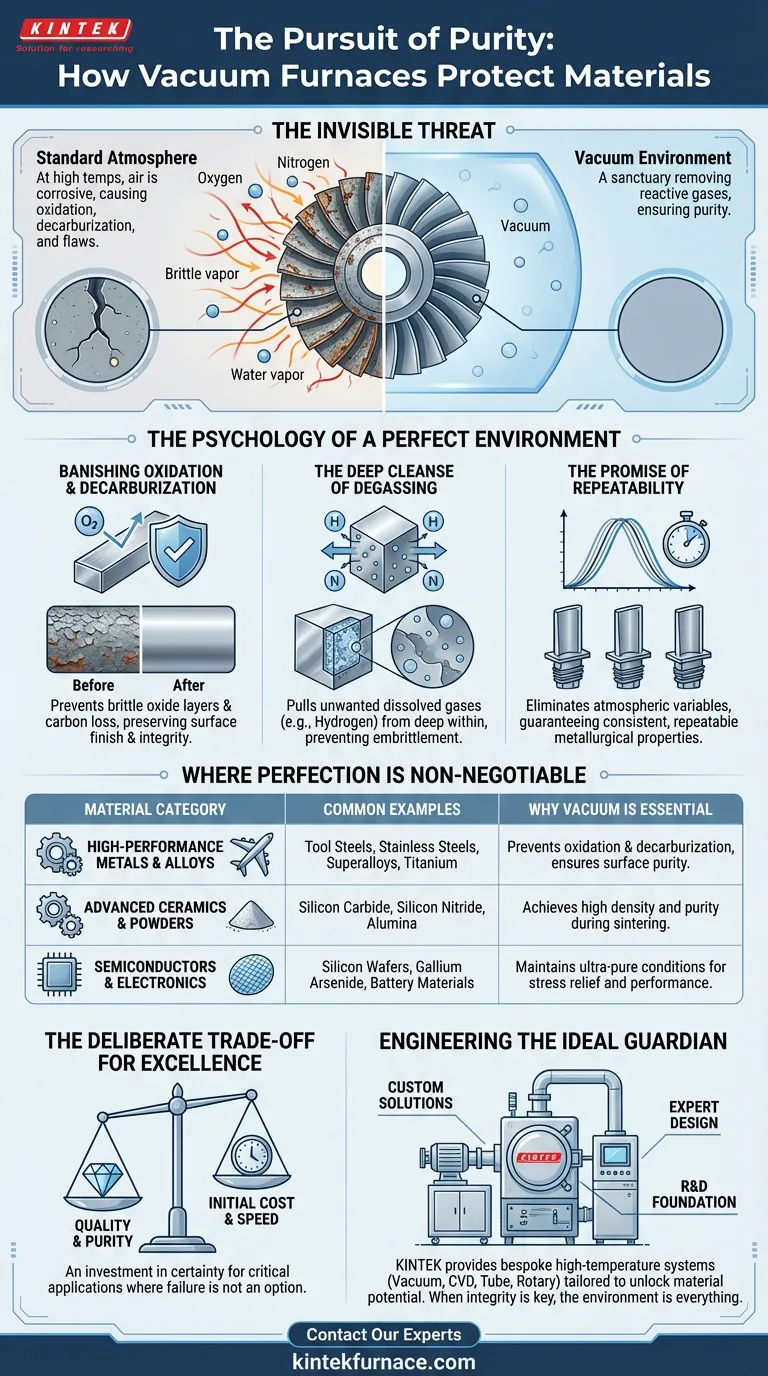
The engineer’s greatest challenge is not just shaping the metal, but protecting it during its creation. At high temperatures, materials are at their most vulnerable. The very air we breathe becomes a corrosive agent, an invisible threat ready to undo all the careful work of design and composition.
This is the fundamental problem that vacuum heat treatment solves. It’s a decision to control the uncontrollable.
The Psychology of a Perfect Environment
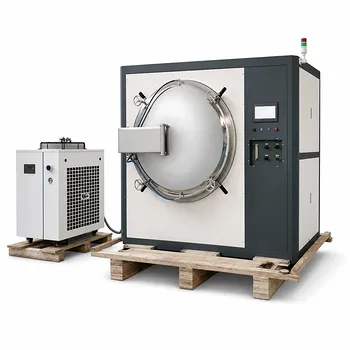
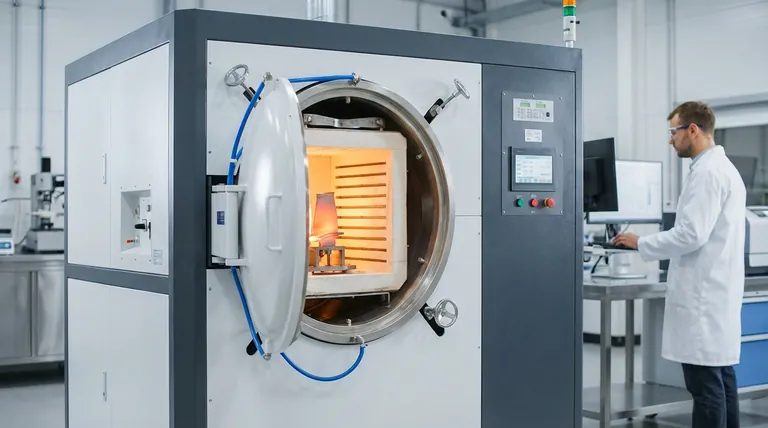
A vacuum furnace is often misunderstood. Its purpose is not to create emptiness, but to create a sanctuary—an environment where the only variable is the one you deliberately apply: heat.
By removing reactive gases like oxygen, nitrogen, and water vapor, you remove uncertainty. This is a profound psychological shift. Instead of defending against random atmospheric attacks, you are curating a perfect, predictable space for transformation.
Banishing Oxidation and Decarburization
At high temperatures, oxygen aggressively bonds with most metals, forming a brittle, flaky layer of oxide (scale). This ruins surface finish, alters precise dimensions, and compromises the material's integrity.
For high-carbon steels, the atmosphere can literally steal carbon from the surface, a process called decarburization. This creates a soft, weak outer layer, drastically reducing fatigue life and wear resistance. A vacuum simply removes the reactants from the equation.
The Deep Cleanse of Degassing
A vacuum does more than just protect the surface; it actively purifies the bulk material.
The low-pressure environment pulls unwanted dissolved gases, like hydrogen and nitrogen, out from deep within the metal's structure. This is critical for preventing hydrogen embrittlement, a notorious failure mechanism where trapped hydrogen atoms make strong alloys dangerously brittle.
The Promise of Repeatability
When you eliminate the variable of atmospheric interaction, you achieve unparalleled process control. The heating and cooling profile you design is exactly what the material experiences.
This ensures that every part in a batch—and every batch over months—achieves the exact same metallurgical properties. Deformation is minimized, and results are perfectly repeatable.
Where Perfection is Non-Negotiable
The decision to use a vacuum furnace is driven by the material's sensitivity and the final application's demand for perfection. For certain classes of materials, it is the only viable path.
-
High-Performance Metals & Alloys: This is the classic application. Tool steels, stainless steels, and the superalloys used in aerospace and medical implants are highly reactive. A vacuum is essential to preserve their strength and corrosion resistance.
-
Sintering of Advanced Materials: Sintering fuses powders into a solid, high-density mass. For advanced ceramics (e.g., silicon carbide) or powder metallurgy components, a vacuum prevents contamination and ensures the particles bond perfectly.
-
Semiconductors and Electronics: In this world, any foreign atom is a potential defect. Vacuum annealing is used to relieve stress in silicon wafers and activate dopants in an environment of absolute purity.
The Deliberate Trade-Off for Excellence
Vacuum furnaces represent a significant investment. They are more complex, have longer cycle times due to the pump-down process, and require diligent maintenance to ensure the integrity of the seals and pumps.
But this isn't a flaw; it's a deliberate choice.
Choosing a vacuum furnace is a declaration that quality, purity, and predictable performance are more important than initial cost or throughput speed. It's an investment in certainty, made when the cost of failure is unthinkably high.
| Material Category | Common Examples | Why Vacuum is Essential |
|---|---|---|
| High-Performance Metals & Alloys | Tool Steels, Stainless Steels, Superalloys, Titanium | Prevents oxidation & decarburization, ensures surface purity. |
| Advanced Ceramics & Powders | Silicon Carbide, Silicon Nitride, Alumina | Achieves high density and purity during sintering. |
| Semiconductors & Electronics | Silicon Wafers, Gallium Arsenide, Battery Materials | Maintains ultra-pure conditions for stress relief and performance. |
Engineering the Ideal Guardian
Achieving the perfect vacuum environment is not a one-size-fits-all task. The ideal thermal profile and vacuum level for sintering a ceramic are vastly different from those needed for brazing a superalloy. The furnace itself must be an instrument of precision, engineered for a specific purpose.
This is where expert design and manufacturing become as critical as the process itself. With a deep foundation in R&D, KINTEK provides laboratories with a range of high-temperature systems—from Vacuum and CVD furnaces to Tube and Rotary models—that serve as the ultimate guardians for sensitive materials.
Because every experiment and every material has unique demands, the ability to customize a furnace to meet those specific needs is paramount. An off-the-shelf solution often means compromise, but a bespoke system ensures that the environment is perfectly tailored to unlock the material's full potential.
When material integrity is the final measure of success, the environment you create is everything. To engineer a system that matches your specific materials and performance targets, Contact Our Experts.
Visual Guide
Related Products
- Vacuum Hot Press Furnace Machine Heated Vacuum Press Tube Furnace
- Vacuum Hot Press Furnace Machine Heated Vacuum Press
- 600T Vacuum Induction Hot Press Vacuum Heat Treat and Sintering Furnace
- 2200 ℃ Tungsten Vacuum Heat Treat and Sintering Furnace
- Vacuum Heat Treat Sintering Furnace with Pressure for Vacuum Sintering
Related Articles
- How Vacuum Hot Press Furnaces Transform Advanced Material Engineering
- How to Select the Right Vacuum Hot Pressing Furnace Temperature for Your Materials
- Beyond the Parts List: The Real Reason Your Vacuum Hot Press Fails (And How to Fix It)
- Why Your High-Temperature Materials Fail: The Hidden War Inside Your Furnace
- Is Your Material Data Real? Why Temperature Gradients Are Sabotaging Your Cu2Se Resistivity Measurements