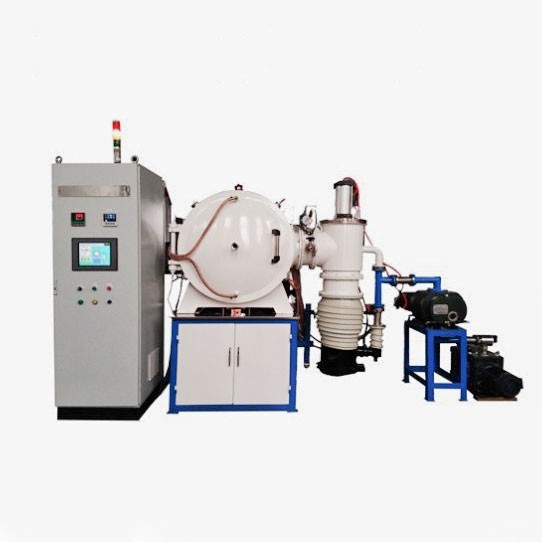
Vacuum Furnace
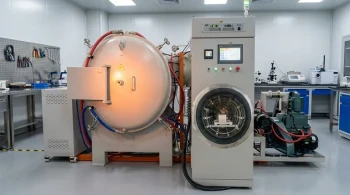
2200 ℃ Graphite Vacuum Heat Treat Furnace
Item Number : KT-VG
Price varies based on specs and customizations
- Max. temperature
- 2200 ℃
- Max. Vacuum Level
- 6*10^-3Pa
- Temperature control accuracy
- ±1℃

Shipping:
Contact us to get shipping details Enjoy On-time Dispatch Guarantee.
Why Choose Us
Easy ordering process, quality products, and dedicated support for your business success.
Discover the 2200℃ Graphite Vacuum Furnace
The KINTEK 2200℃ Graphite Vacuum Furnace is engineered for demanding high-temperature processes in vacuum or controlled atmospheres. Utilizing graphite felt for thermal insulation and robust graphite resistant rods as heating elements, this furnace achieves a maximum working temperature of 2200℃, making it an indispensable tool for advanced material research and production.
Key Features & Benefits
- Extreme Temperature Capability: Reaches up to 2200℃, ideal for sintering tungsten alloy, silicon carbide, molybdenum alloy, titanium alloy, cemented carbide, and carbon materials.
- Superior Vacuum Performance: Achieves a high vacuum level up to 6*10-3Pa with no high-temperature gassing, ensuring process purity.
- Excellent Vacuum Integrity: Maintains a stable vacuum environment with a low pressure rise rate of 0.67Pa/h, critical for consistent results.
- Efficient Cooling System: Features a vacuum shell body with a double-layer water-cooling jacket for rapid cooling and a lower outer shell surface temperature, enhancing safety and operational comfort.
- Precise Temperature Control: Equipped with a PID programmable microprocessor system for accurate temperature management (±1℃), optimizing process outcomes.
- Durable Heating Elements: Professionally configured graphite heating elements are optimized for heat radiation and extended service life.
- Controlled Atmosphere Ready: Independent air input and output ports allow for operation under various protective or reactive atmospheres.
- Flexible Vacuum Control: Optional manual and automatic pneumatic vacuum valves cater to diverse operational requirements and automation levels.
- Comprehensive Safety Systems:
- Overcurrent protection and over-temperature alarm with automatic power-off.
- Built-in thermocouple detection with automatic heating stoppage and alarm upon breakage or failure.
- Safety interlock system powers off the furnace if the door is opened, or in cases of over-temperature or sensor failure.
- Power failure restarting function to resume heating programs post-interruption.
Technical Specifications
| Furnace model | KT-VG | ||
| Max. temperature | 2200 ℃ | ||
| Constant work temperature | 2100 ℃ | ||
| Chamber insulation material | Graphite felt | ||
| Heating element | Graphite resistant rod | ||
| Heating rate | 0-10℃/min | ||
| Temperature sensor | T/R thermocouple and infrared thermometer | ||
| Temperature controller | Touch screen PID controller with PLC | ||
| Temperature control accuracy | ±1℃ | ||
| Max. Vacuum Level | 6*10-3Pa (No-load, cold state) | ||
| Vacuum Pressure Rise Rate | 0.67Pa/h | ||
| Electric power supply | AC110-440V,50/60HZ (Customizable) | ||
| Standard Chamber Sizes (Customizable) | |||
| Chamber size (mm) (WxDxH or Dia.xH) | Effective volume (L) | Chamber size (mm) (WxDxH or Dia.xH) | Effective volume (L) |
| 200x200x300 | 12 | 400x400x600 | 96 |
| 300x300x400 | 36 | 500x500x700 | 150 |
| KINTEK welcomes custom design requirements for chamber size and volume. | |||
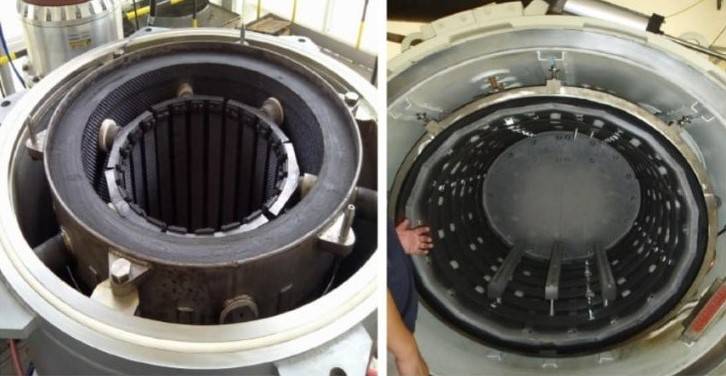
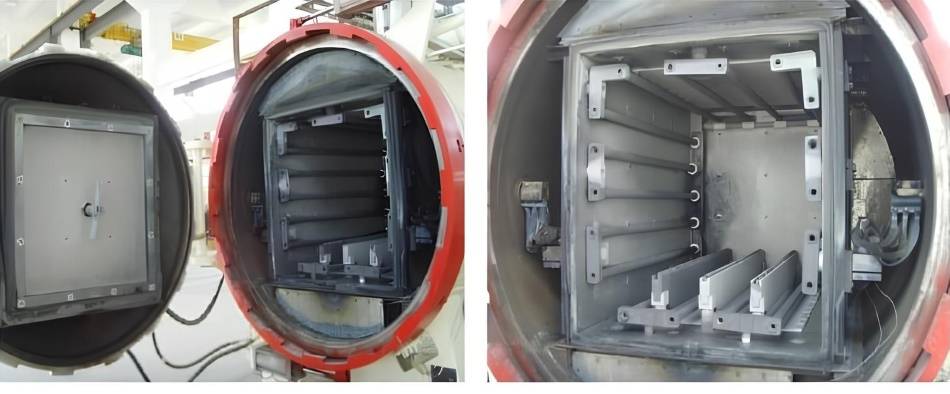
Chamber Design Options
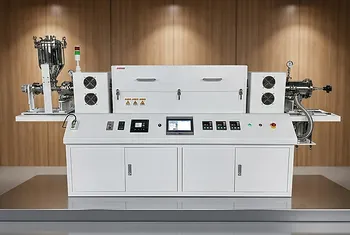
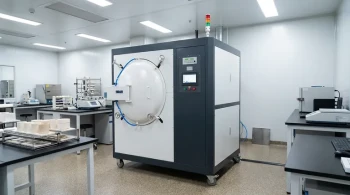
Our graphite vacuum furnaces are available with versatile chamber configurations to suit your specific process needs, including vertical and horizontal orientations.
Wide Range of Applications
The KT-VG Graphite Vacuum Furnace is extensively used across various industries for critical high-temperature material treatments in vacuum or protective atmospheres. Key applications include:
- Vacuum reaction sintering of materials like tungsten alloy, silicon carbide, molybdenum alloy, titanium alloy, cemented carbide, and carbon materials.
- High-temperature brazing and soldering.
- Annealing and comprehensive heat treatment of metals and alloys.
- Debinding and sintering of advanced ceramic materials.
- Crystal growth processes.
- Vacuum coating and deposition techniques.
- Pioneering research and development of new materials.
Operating Principle
The 2200℃ Graphite Vacuum Furnace employs a high-temperature graphite heating element housed within an insulated graphite chamber. This specialized design ensures precise temperature control and uniform heat distribution. Operations are conducted under vacuum conditions, facilitating controlled atmosphere processing of materials at elevated temperatures. The vacuum environment is crucial for minimizing gas contamination, oxidation, and degassing, thereby preserving the purity and integrity of the treated materials.
Optional Customizations & Setup
Tailor the furnace to your exact needs with our range of optional features:
- Independent furnace temperature monitoring and recording systems.
- RS 485 communication port for PC remote control and seamless data exporting.
- Optional pneumatic vacuum valve linkage integrated with the temperature controller for automated processes.
- Advanced touch screen temperature controller with versatile, operator-friendly functions.
- Dedicated cold water circulation cooling machine for the furnace shell jacket cooling system.
Your Partner for Advanced High-Temperature Solutions
At KINTEK, we leverage exceptional R&D capabilities and in-house manufacturing to provide diverse laboratories and industries with cutting-edge high-temperature furnace solutions. While this page details our 2200℃ Graphite Vacuum Furnace, our full product line includes Muffle Furnaces, Tube Furnaces, Rotary Furnaces, other Vacuum & Atmosphere Furnaces, and specialized CVD/PECVD/MPCVD Systems.
Our core strength lies in deep customization. We are committed to understanding your unique experimental requirements and engineering a furnace that precisely meets your needs. Whether you require modifications to standard models or a completely bespoke design, our team is ready to collaborate with you.
Ready to discuss your high-temperature application or need a custom furnace solution? We're here to help. Please reach out to us by filling out our Contact Form, and one of our specialists will get back to you shortly.
Trusted by Industry Leaders
FAQ
What Are The Main Applications Of A Vacuum Furnace?
What Is The Principle Of A Hot Press Furnace?
What Is An Atmosphere Furnace Used For?
What Is A Vacuum Induction Furnace?
What Are The Key Features Of A Vacuum Furnace?
What Are The Applications Of A Hot Press Furnace?
What Are The Key Features Of An Atmosphere Furnace?
What Are The Main Applications Of Vacuum Induction Furnaces?
How Does A Vacuum Furnace Work?
What Are The Features Of A Hot Press Furnace?
How Does An Atmosphere Furnace Work?
How Does A Vacuum Induction Furnace Work?
What Are The Advantages Of Using A Vacuum Furnace?
Why Is A Vacuum Environment Used In Hot Press Furnaces?
What Are The Advantages Of Using An Atmosphere Furnace?
What Are The Advantages Of Using A Vacuum Induction Furnace?
What Types Of Materials Can Be Processed In A Vacuum Furnace?
What Materials Are Commonly Processed In Hot Press Furnaces?
What Types Of Gases Can Be Used In An Atmosphere Furnace?
What Types Of Vacuum Induction Furnaces Are Available?
What Is The Difference Between Hot Wall And Cold Wall Vacuum Furnaces?
What Safety Features Are Available In Advanced Atmosphere Furnaces?
Why Is Temperature Control Important In Vacuum Induction Furnaces?
Can Vacuum Furnaces Be Customized For Specific Applications?
What Materials Can Be Processed In A Vacuum Induction Furnace?
How Does The Vacuum Environment Benefit Material Processing?
REQUEST A QUOTE
Our professional team will reply to you within one business day. Please feel free to contact us!
Related Products

2200 ℃ Tungsten Vacuum Heat Treat and Sintering Furnace
2200°C Tungsten Vacuum Furnace for high-temperature materials processing. Precise control, superior vacuum, customizable solutions. Ideal for research & industrial applications.

Vacuum Heat Treat Sintering Furnace with Pressure for Vacuum Sintering
KINTEK's Vacuum Pressure Sintering Furnace offers 2100℃ precision for ceramics, metals, and composites. Customizable, high-performance, and contamination-free. Get a quote now!

Vacuum Heat Treat Sintering Furnace Molybdenum Wire Vacuum Sintering Furnace
KINTEK's Vacuum Molybdenum Wire Sintering Furnace excels in high-temperature, high-vacuum processes for sintering, annealing, and material research. Achieve precise 1700°C heating with uniform results. Custom solutions available.

Molybdenum Vacuum Heat Treat Furnace
High-performance molybdenum vacuum furnace for precise 1400°C heat treatment. Ideal for sintering, brazing, and crystal growth. Durable, efficient, and customizable.

Vacuum Heat Treat Sintering and Brazing Furnace
KINTEK Vacuum Brazing Furnaces deliver precision, clean joints with superior temperature control. Customizable for diverse metals, ideal for aerospace, medical, and thermal applications. Get a quote!
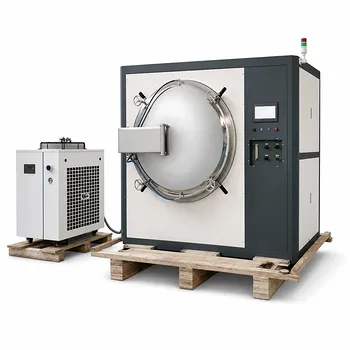
Vacuum Heat Treat Furnace with Ceramic Fiber Liner
KINTEK's Vacuum Furnace with Ceramic Fiber Lining offers precise high-temperature processing up to 1700°C, ensuring uniform heat distribution and energy efficiency. Ideal for labs and production.

9MPa Air Pressure Vacuum Heat Treat and Sintering Furnace
Achieve superior ceramic densification with KINTEK's advanced air pressure sintering furnace. High-pressure up to 9MPa, precise 2200℃ control.

Small Vacuum Heat Treat and Tungsten Wire Sintering Furnace
Compact vacuum tungsten wire sintering furnace for labs. Precise, mobile design with superior vacuum integrity. Ideal for advanced material research. Contact us!

600T Vacuum Induction Hot Press Vacuum Heat Treat and Sintering Furnace
600T Vacuum Induction Hot Press Furnace for precise sintering. Advanced 600T pressure, 2200°C heating, vacuum/atmosphere control. Ideal for research & production.

Vacuum Hot Press Furnace Machine Heated Vacuum Press
KINTEK Vacuum Hot Pressing Furnace: Precision heating & pressing for superior material density. Customizable up to 2800°C, ideal for metals, ceramics, and composites. Explore advanced features now!

Vacuum Hot Press Furnace Machine Heated Vacuum Press Tube Furnace
Discover KINTEK's advanced Vacuum Tube Hot Press Furnace for precise high-temperature sintering, hot pressing, and material bonding. Customizable solutions for labs.

High Temperature Muffle Oven Furnace for Laboratory Debinding and Pre Sintering
KT-MD Debinding & Pre-Sintering Furnace for ceramics - precise temperature control, energy-efficient design, customizable sizes. Boost your lab efficiency today!

Laboratory Quartz Tube Furnace RTP Heating Tubular Furnace
KINTEK's RTP Rapid Heating Tube Furnace delivers precise temperature control, rapid heating up to 100°C/sec, and versatile atmosphere options for advanced lab applications.

1400℃ High Temperature Laboratory Tube Furnace with Alumina Tube
KINTEK's Tube Furnace with Alumina Tube: Precision high-temperature processing up to 2000°C for labs. Ideal for material synthesis, CVD, and sintering. Customizable options available.

Vertical Laboratory Quartz Tube Furnace Tubular Furnace
Precision KINTEK Vertical Tube Furnace: 1800℃ heating, PID control, customizable for labs. Ideal for CVD, crystal growth & materials testing.

High Pressure Laboratory Vacuum Tube Furnace
KINTEK High Pressure Tube Furnace: Precision heating up to 1100°C with 15Mpa pressure control. Ideal for sintering, crystal growth, and lab research. Customizable solutions available.

1700℃ High Temperature Laboratory Tube Furnace with Alumina Tube
KINTEK's Tube Furnace with Alumina Tube: Precision heating up to 1700°C for material synthesis, CVD, and sintering. Compact, customizable, and vacuum-ready. Explore now!

1400℃ Controlled Inert Nitrogen Atmosphere Furnace
KT-14A Controlled Atmosphere Furnace for labs & industry. 1400°C max temp, vacuum sealing, inert gas control. Customizable solutions available.

Multi Heating Zones CVD Tube Furnace Machine for Chemical Vapor Deposition Equipment
KINTEK's Multi-Zone CVD Tube Furnaces offer precision temperature control for advanced thin film deposition. Ideal for research and production, customizable for your lab needs.

1800℃ High Temperature Muffle Oven Furnace for Laboratory
KINTEK Muffle Furnaces: Precision 1800°C heating for labs. Energy-efficient, customizable, with PID control. Ideal for sintering, annealing, and research.
Related Articles
Why Your Ti-6Al-4V Parts Crack Under Pressure—The Hidden Science of Vacuum Heat Treatment
Discover why Ti-6Al-4V components fail after 3D printing and how high-vacuum heat treatment prevents embrittlement while maximizing material ductility.
Why Your High-Strength Titanium Biomaterials Are Brittle—and How Vacuum Heat Treatment Fixes It
Discover why titanium biomaterials become brittle during processing and how high-temperature vacuum heat treatment ensures purity, strength, and ductility.
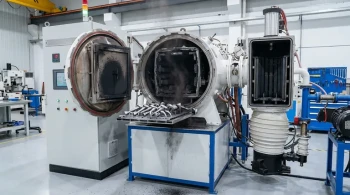
The Unseen Failure Point: Why Your Vacuum Furnace's Graphite Is Costing You More Than You Think
Uncoated graphite's particle shedding and oxidation secretly drive up costs. Advanced SiC coatings offer a solution by creating a durable shield.
Why Your 3D-Printed Maraging Steel Parts Aren't Performing—And How to Fix the Structural Weakness
Discover why post-processing is critical for 3D-printed Maraging steel and how vacuum heat treatment eliminates stress and oxidation for peak performance.
The Art of Absence: How Vacuum Furnaces Forge Material Perfection
Discover how vacuum graphite furnaces control the chemical environment to prevent oxidation and achieve unparalleled material purity at extreme temperatures.
Strength in the Heat: The Counterintuitive Physics of Graphite in Vacuum Furnaces
Discover why graphite's unique physics—gaining strength with heat—makes it the essential material for high-purity processing in advanced vacuum furnaces.
Why Your Advanced Coatings Fail Under Stress—And How High-Vacuum Treatment Fixes the Root Cause
Discover how high-vacuum heat treatment prevents oxidation and drives microstructural transformation in Cr-Al-BN coatings for superior durability.
Why Your Alloy Phase Separation Observations Are Inconsistent—And the "Invisible" Variable You’re Missing
Discover why atmospheric contamination ruins alloy phase separation studies and how high-temperature vacuum furnaces provide the precision needed for reliable R&D.
Heat, Void, and Control: Designing the Heart of a High-Temperature Vacuum Furnace
Explore direct resistive heating in vacuum furnaces, where managing a graphite hot zone is a delicate balance of efficiency, purity, and thermal physics.
The Unseen Engine: Why Graphite Dominates High-Temperature Vacuum Furnaces
Graphite gets stronger with heat, making it the superior choice for vacuum furnaces. Explore its unique physics, applications, and critical trade-offs.
The Paradox of Strength: Why Graphite Dominates High-Temperature Vacuum Furnaces
Graphite's unique physics—increasing strength with heat and chemical inertness—makes it the predictable choice for high-purity, extreme-temp processes.
Your Furnace Reached Temperature. So Why Did Your Experiment Fail?
Discover the hidden reason your high-temperature vacuum experiments fail despite hitting specs. Learn how heating element choice impacts purity and success.