The Invisible Flaw in Your Modern Heat Treatment
Imagine this: your vacuum tempering furnace has been running for hours. The digital controller shows a perfect, steady 600°C. According to the screen, everything is going exactly to plan. Yet, when the batch of aerospace components or high-capacity batteries comes out, the results are inconsistent. Some parts are perfectly tempered; others are brittle or under-treated.
You check the heating elements, you calibrate the main thermocouple, and you run it again. The results are the same. This is the "Ghost in the Chamber"—a phenomenon where the temperature you see on the dashboard doesn't match the thermal reality inside your loading area. For many labs and manufacturing facilities, this discrepancy is the difference between a successful production run and a costly pile of scrap.
The Cost of "Good Enough" Measurement
When faced with temperature variance, many teams attempt the "soak and pray" method—simply increasing the dwell time in hopes that the heat will eventually even out. Others try placing a secondary probe in a different spot, only to find a completely different reading that complicates the data further.
These "band-aid" solutions come with heavy business consequences:
- Failed Certifications: If you operate in the aerospace or medical sectors, failing to meet standards like AMS2750D can disqualify you from major contracts.
- Material Waste: Especially in high-value industries like battery production, a variance of just a few degrees can ruin an entire batch of specialized materials.
- Inefficiency: Longer soak times mean higher energy bills and slower throughput, eating into your profit margins.
The reality is that traditional measurement methods, like displacement testing (moving a single probe around) or differential methods, often fail because they are too slow to catch real-time fluctuations or actually interfere with the furnace's internal environment.
The Science of the "Cold Corner"
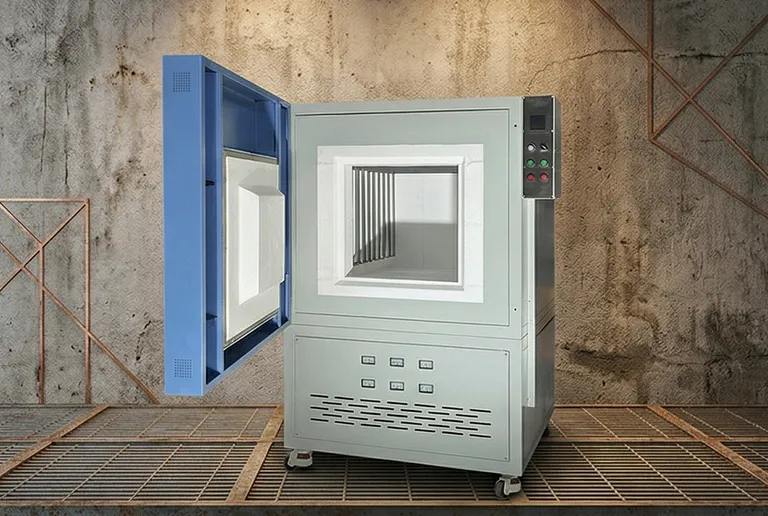
Why does a furnace display "600°C" when the corner of the rack is only at 585°C? In a vacuum environment, heat transfer behaves differently than in atmospheric furnaces. Without air to circulate, you lose the benefit of natural convection. Instead, you rely heavily on radiation and conduction.
This creates complex "turbulent fields" and thermal gradients. When you use a single-point sensor or a displacement method (moving a sensor during the cycle), you are essentially trying to map a mountain range with a single photograph. Even worse, the act of moving sensors can disturb the very heat distribution you are trying to measure.
The root cause of your inconsistency isn't usually a "broken" furnace; it’s a lack of visibility into the dynamic heat diffusion process. Without knowing how heat moves from the center to the edges in real-time, you are essentially flying blind.
The 9-Point Strategy: Seeing in Three Dimensions
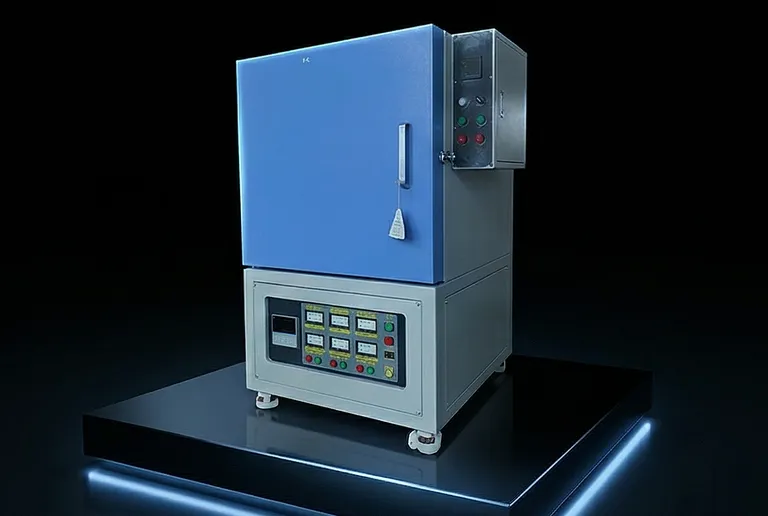
To solve this, industry leaders have moved toward the multi-point measurement method. Instead of guessing where the heat is, this method places high-precision sensors at the geometric critical points of the loading area: the center and the eight vertices of the rectangular work zone.
This isn't just "more sensors"; it’s a strategic map. At KINTEK, we design our vacuum furnaces to integrate seamlessly with this multi-point approach for several reasons:
- Zero Interference: Unlike displacement methods, fixed multi-point sensors have the least impact on the turbulent field inside the chamber, ensuring the data you see is the true state of your materials.
- Real-Time Validation: You can monitor the dynamic diffusion of heat from the center to the edges as it happens. This validates your digital simulations with physical reality.
- Tight Tolerances: For critical applications like battery production, this method ensures that temperature differences across all nine points remain within a razor-thin margin (e.g., ±3°C).
- Instant Compliance: This rigorous mapping is the standard required to meet AMS2750D, providing you with a "paper trail" of precision that auditors and clients demand.
Beyond the Fix: New Frontiers in Thermal Precision
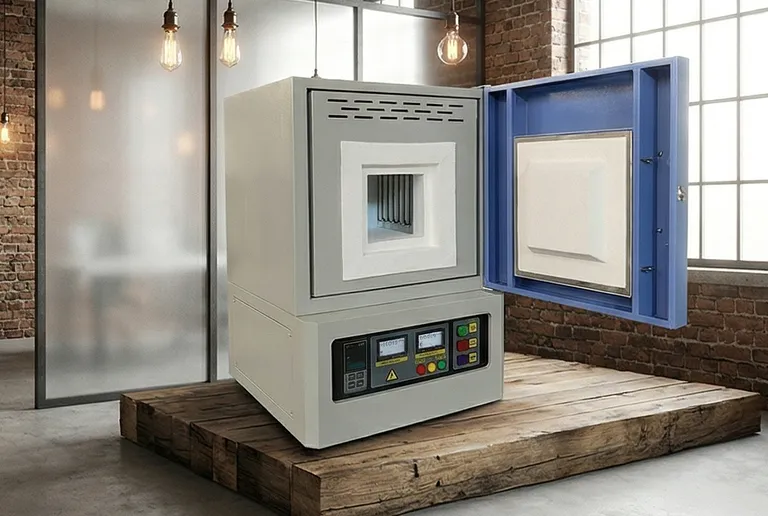
Once you move from "guessing" to "mapping," the bottleneck in your production disappears. Solving the temperature uniformity problem does more than just stop the scrap—it unlocks new capabilities.
With a KINTEK vacuum furnace and a robust multi-point measurement strategy, you can push the boundaries of what’s possible. You can work with more sensitive, next-generation materials that require precise thermal windows. You can accelerate your R&D cycles because you no longer have to wonder if a failed experiment was due to your chemistry or a "cold spot" in the furnace. You gain the confidence to scale up production, knowing that the tenth batch will be identical to the first.
Precision isn't just about avoiding errors; it’s about creating a foundation for innovation. If you are struggling with inconsistent results or need to meet stringent industry certifications, your equipment should be your greatest asset, not your biggest question mark. Our team specializes in tailoring high-temperature solutions that bring absolute clarity to your thermal processes. Let’s work together to ensure your next project is defined by its success, not its variables.
Related Products
- Vacuum Hot Press Furnace Machine Heated Vacuum Press Tube Furnace
- Vacuum Hot Press Furnace Machine Heated Vacuum Press
- 600T Vacuum Induction Hot Press Vacuum Heat Treat and Sintering Furnace
- 2200 ℃ Tungsten Vacuum Heat Treat and Sintering Furnace
- Vacuum Heat Treat Sintering Furnace with Pressure for Vacuum Sintering
Related Articles
- How Vacuum Hot Press Furnaces Transform Advanced Material Engineering
- How to Select the Right Vacuum Hot Pressing Furnace Temperature for Your Materials
- Beyond the Parts List: The Real Reason Your Vacuum Hot Press Fails (And How to Fix It)
- Why Your High-Temperature Materials Fail: The Hidden War Inside Your Furnace
- Is Your Material Data Real? Why Temperature Gradients Are Sabotaging Your Cu2Se Resistivity Measurements