Blog Is Your Material Data Real? Why Temperature Gradients Are Sabotaging Your Cu2Se Resistivity Measurements
Is Your Material Data Real? Why Temperature Gradients Are Sabotaging Your Cu2Se Resistivity Measurements

Is Your Material Data Real? Why Temperature Gradients Are Sabotaging Your Cu2Se Resistivity Measurements

8 hours ago

In the high-stakes world of thermoelectric materials research, Copper Selenide (Cu2Se) has emerged as a "superionic" star. Researchers chasing the "Great Seebeck Effect" often find themselves on the verge of a breakthrough, only to be met with a frustrating reality: data that refuses to replicate. You might see a spike in resistivity that suggests a revolutionary "self-tuning" carrier effect, but when the experiment is repeated, the numbers shift.

Is the material behaving differently, or is your equipment lying to you?

The Frustration of "Phantom" Data

When measuring the electrical resistivity of Cu2Se, most researchers follow the standard protocols. They prepare the sample, apply the current, and monitor the thermal environment. Yet, many face a recurring nightmare: inconsistent carrier distribution that seems to fluctuate for no apparent reason.

To compensate, teams often try to insulate their samples more heavily or use complex software algorithms to "math away" the noise. These workarounds are not only time-consuming but also dangerous. They treat the symptoms rather than the cause, leading to project delays, wasted high-purity precursors, and—most damagingly—conclusions based on experimental artifacts rather than physical reality.

The Hidden Culprit: The Vertical Temperature Gradient
Is Your Material Data Real? Why Temperature Gradients Are Sabotaging Your Cu2Se Resistivity Measurements 1

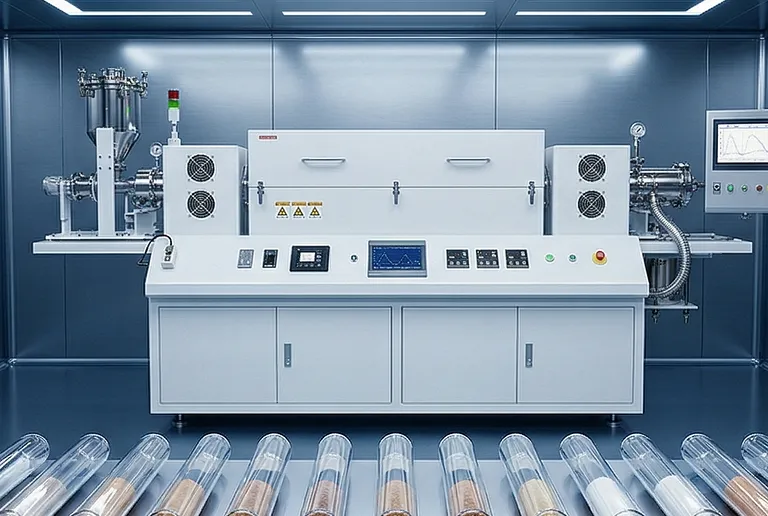
The reason these common fixes fail is that they ignore a fundamental physical phenomenon occurring inside the heating chamber: the vertical temperature gradient.

In a standard furnace, heat is rarely perfectly uniform. A difference of just a few degrees between the top and bottom of a sample might seem negligible, but for a material like Copper Selenide, it is catastrophic for data integrity. Cu2Se is a liquid-like conductor with high carrier mobility. When a temperature gradient exists, it triggers a redistribution of charge carriers.

This means that what you are measuring as a "self-tuning carrier concentration effect" might actually just be carriers physically migrating because one side of your sample holder is 5°C hotter than the other. If you cannot eliminate the gradient, you cannot prove that your Seebeck Effect results are genuine.

The Vacuum Tube Furnace: A Sanctuary of Uniformity
Is Your Material Data Real? Why Temperature Gradients Are Sabotaging Your Cu2Se Resistivity Measurements 2

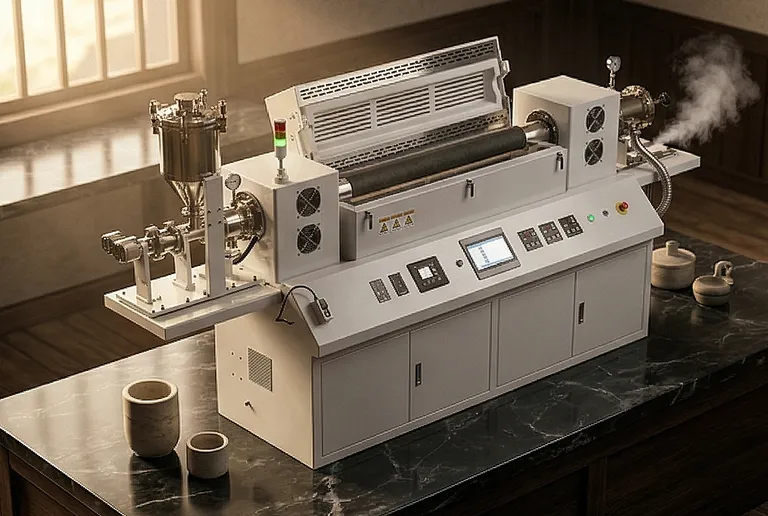
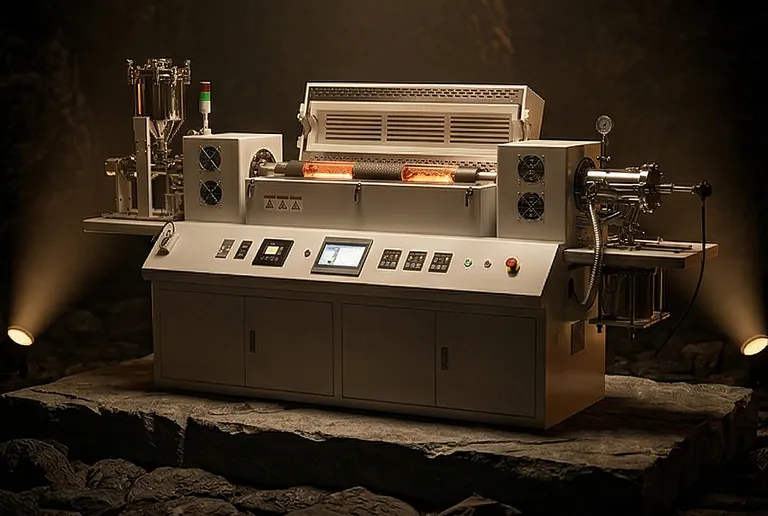
To isolate the true properties of Cu2Se, you need to remove the variable of thermal unevenness. This is why the vacuum tube furnace has become the gold standard for comparative experiments in this field.

Unlike open-chamber furnaces, a vacuum tube furnace utilizes a sealed quartz or corundum tube, encased in a precisely controlled heating element. This design serves two critical functions:

  1. Thermal Equilibrium: The geometry of the tube, combined with programmable heating zones, creates a highly uniform environment. By eliminating vertical temperature gradients, it ensures that carrier distribution is governed solely by the material’s intrinsic properties, not by "thermal tilt" in the lab.
  2. Controlled Atmosphere & Vacuum: By using stainless steel sealing flanges, researchers can evacuate the air or introduce specific inert gases. This is vital for Cu2Se, which is sensitive to oxidation at high temperatures. As noted in technical benchmarks, maintaining a stable environment—such as a constant 400°C air atmosphere for oxidation testing or a high-vacuum state—allows for the precise evaluation of weight-gain rates and phase transition behaviors without external interference.

At KINTEK, our vacuum tube furnaces are engineered specifically to provide this "thermal sanctuary." Whether you are using a single-zone furnace for stable 750°C Chemical Vapor Deposition (CVD) of thin films or a multi-zone system for resistivity testing, the focus remains on eliminating the "noise" that plagues less precise setups.

From Verifying Data to Scaling Breakthroughs
Is Your Material Data Real? Why Temperature Gradients Are Sabotaging Your Cu2Se Resistivity Measurements 3

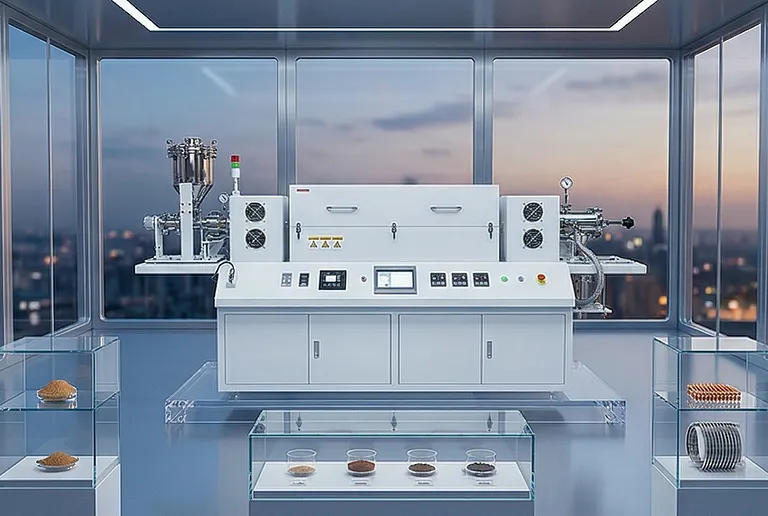
When you solve the problem of thermal gradients, you do more than just fix a chart; you unlock a new level of research velocity.

With a stable and uniform heating environment, the path from "hypothesis" to "verified material property" becomes a straight line. Researchers can move beyond simple resistivity measurements to exploring the complex phase transitions and thermal stability of nanomaterials, ceramics, and high-temperature superconductors.

By ensuring your Cu2Se measurements are free from vertical gradient bias, you can confidently proceed to scaling your processes—whether that involves high-quality conformal film growth or the development of next-generation energy harvesting devices.

At KINTEK, we understand that your research is only as good as the environment it’s conducted in. We specialize in providing the precision high-temperature tools needed to turn complex material theories into reliable, repeatable data. If you are struggling with inconsistent results or need a customized thermal solution for your next project, our team is ready to help you bridge the gap between experimental uncertainty and scientific certainty.

Contact Our Experts to discuss how our customizable vacuum tube furnaces can bring precision to your specific research challenges.

Related Products

Related Articles

Related Products

Vacuum Hot Press Furnace Machine Heated Vacuum Press Tube Furnace

Vacuum Hot Press Furnace Machine Heated Vacuum Press Tube Furnace

Discover KINTEK's advanced Vacuum Tube Hot Press Furnace for precise high-temperature sintering, hot pressing, and material bonding. Customizable solutions for labs.

Vacuum Sealed Continuous Working Rotary Tube Furnace Rotating Tube Furnace

Vacuum Sealed Continuous Working Rotary Tube Furnace Rotating Tube Furnace

Precision rotary tube furnace for continuous vacuum processing. Ideal for calcination, sintering, and heat treatment. Customizable up to 1600℃.

High Pressure Laboratory Vacuum Tube Furnace Quartz Tubular Furnace

High Pressure Laboratory Vacuum Tube Furnace Quartz Tubular Furnace

KINTEK High Pressure Tube Furnace: Precision heating up to 1100°C with 15Mpa pressure control. Ideal for sintering, crystal growth, and lab research. Customizable solutions available.

Laboratory Vacuum Tilt Rotary Tube Furnace Rotating Tube Furnace

Laboratory Vacuum Tilt Rotary Tube Furnace Rotating Tube Furnace

KINTEK Laboratory Rotary Furnace: Precision heating for calcination, drying, sintering. Customizable solutions with vacuum & controlled atmosphere. Enhance research now!

Magnesium Extraction and Purification Condensing Tube Furnace

Magnesium Extraction and Purification Condensing Tube Furnace

Magnesium purification tube furnace for high-purity metal production. Achieve ≤10Pa vacuum, dual-zone heating. Ideal for aerospace, electronics, and lab research.

Split Chamber CVD Tube Furnace with Vacuum Station CVD Machine

Split Chamber CVD Tube Furnace with Vacuum Station CVD Machine

Split Chamber CVD Tube Furnace with Vacuum Station - High precision 1200°C lab furnace for advanced materials research. Customizable solutions available.

Vacuum Heat Treat Sintering Furnace Molybdenum Wire Vacuum Sintering Furnace

Vacuum Heat Treat Sintering Furnace Molybdenum Wire Vacuum Sintering Furnace

KINTEK's Vacuum Molybdenum Wire Sintering Furnace excels in high-temperature, high-vacuum processes for sintering, annealing, and material research. Achieve precise 1700°C heating with uniform results. Custom solutions available.

Small Vacuum Heat Treat and Tungsten Wire Sintering Furnace

Small Vacuum Heat Treat and Tungsten Wire Sintering Furnace

Compact vacuum tungsten wire sintering furnace for labs. Precise, mobile design with superior vacuum integrity. Ideal for advanced material research. Contact us!

Custom Made Versatile CVD Tube Furnace Chemical Vapor Deposition CVD Equipment Machine

Custom Made Versatile CVD Tube Furnace Chemical Vapor Deposition CVD Equipment Machine

KINTEK's CVD Tube Furnace offers precision temperature control up to 1600°C, ideal for thin film deposition. Customizable for research and industrial needs.

Slide PECVD Tube Furnace with Liquid Gasifier PECVD Machine

Slide PECVD Tube Furnace with Liquid Gasifier PECVD Machine

KINTEK Slide PECVD Tube Furnace: Precision thin film deposition with RF plasma, rapid thermal cycling, and customizable gas control. Ideal for semiconductors and solar cells.

Vacuum Heat Treat Furnace with Ceramic Fiber Liner

Vacuum Heat Treat Furnace with Ceramic Fiber Liner

KINTEK's Vacuum Furnace with Ceramic Fiber Lining offers precise high-temperature processing up to 1700°C, ensuring uniform heat distribution and energy efficiency. Ideal for labs and production.

Vacuum Heat Treat Sintering Furnace with Pressure for Vacuum Sintering

Vacuum Heat Treat Sintering Furnace with Pressure for Vacuum Sintering

KINTEK's Vacuum Pressure Sintering Furnace offers 2100℃ precision for ceramics, metals, and composites. Customizable, high-performance, and contamination-free. Get a quote now!

Vertical Laboratory Quartz Tube Furnace Tubular Furnace

Vertical Laboratory Quartz Tube Furnace Tubular Furnace

Precision KINTEK Vertical Tube Furnace: 1800℃ heating, PID control, customizable for labs. Ideal for CVD, crystal growth & materials testing.

600T Vacuum Induction Hot Press Vacuum Heat Treat and Sintering Furnace

600T Vacuum Induction Hot Press Vacuum Heat Treat and Sintering Furnace

600T Vacuum Induction Hot Press Furnace for precise sintering. Advanced 600T pressure, 2200°C heating, vacuum/atmosphere control. Ideal for research & production.

Molybdenum Vacuum Heat Treat Furnace

Molybdenum Vacuum Heat Treat Furnace

High-performance molybdenum vacuum furnace for precise 1400°C heat treatment. Ideal for sintering, brazing, and crystal growth. Durable, efficient, and customizable.

1700℃ High Temperature Laboratory Tube Furnace with Alumina Tube

1700℃ High Temperature Laboratory Tube Furnace with Alumina Tube

KINTEK's Tube Furnace with Alumina Tube: Precision heating up to 1700°C for material synthesis, CVD, and sintering. Compact, customizable, and vacuum-ready. Explore now!

Vacuum Hot Press Furnace Machine Heated Vacuum Press

Vacuum Hot Press Furnace Machine Heated Vacuum Press

KINTEK Vacuum Hot Pressing Furnace: Precision heating & pressing for superior material density. Customizable up to 2800°C, ideal for metals, ceramics, and composites. Explore advanced features now!

1400℃ High Temperature Laboratory Tube Furnace with Alumina Tube

1400℃ High Temperature Laboratory Tube Furnace with Alumina Tube

KINTEK's Tube Furnace with Alumina Tube: Precision high-temperature processing up to 2000°C for labs. Ideal for material synthesis, CVD, and sintering. Customizable options available.

Multi Heating Zones CVD Tube Furnace Machine for Chemical Vapor Deposition Equipment

Multi Heating Zones CVD Tube Furnace Machine for Chemical Vapor Deposition Equipment

KINTEK's Multi-Zone CVD Tube Furnaces offer precision temperature control for advanced thin film deposition. Ideal for research and production, customizable for your lab needs.

2200 ℃ Tungsten Vacuum Heat Treat and Sintering Furnace

2200 ℃ Tungsten Vacuum Heat Treat and Sintering Furnace

2200°C Tungsten Vacuum Furnace for high-temperature materials processing. Precise control, superior vacuum, customizable solutions. Ideal for research & industrial applications.


Leave Your Message


















