Within 8 hours on working days, 24 hours on holidays
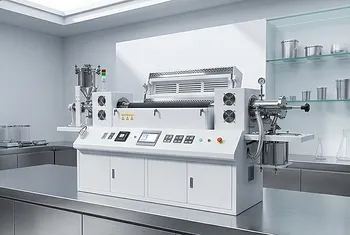
tube furnace
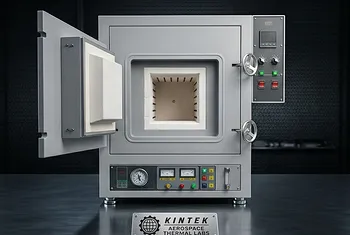
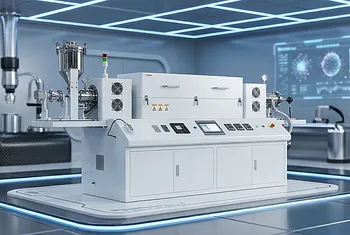
KINTEK's tube furnaces are essential for advanced laboratory applications requiring precise temperature control and versatile atmosphere options. Our product line includes:
RTP Rapid Heating Tube Furnace: Delivers rapid heating up to 100°C/sec for time-sensitive processes
Multi-Zone Tube Furnace: Offers precise 1700℃ heating with customizable 1-10 zones
PECVD Tube Furnace: Ideal for thin film deposition in semiconductor and solar cell research
Vacuum Tube Furnace: Perfect for high-temperature sintering and material bonding under controlled atmospheres
Rotary Tube Furnace: Features 360° rotation and adjustable tilt for uniform heat treatment
Each model is designed to meet specific research needs with exceptional precision and reliability.
Advanced Tube Furnace Solutions for Precision High-Temperature Processing
KINTEK's tube furnaces represent the pinnacle of thermal processing technology, combining cutting-edge design with unparalleled performance. Our comprehensive range of tube furnaces is engineered to meet the most demanding laboratory and industrial requirements, offering precise temperature control, uniform heating, and exceptional versatility.
Core Technology and Working Principles
At the heart of every KINTEK tube furnace lies an advanced heating system that generates and transfers heat efficiently to your samples. The temperature control system utilizes high-precision thermocouples or infrared sensors to monitor furnace conditions continuously. This data feeds back to our sophisticated PID controllers, which adjust power output with exceptional accuracy to maintain your desired temperature profile.
Our tube furnaces employ several heating methodologies:
Resistance Heating: Using high-quality heating elements (MoSi2, SiC, or metal alloys) for consistent, reliable heat
Rapid Thermal Processing (RTP): Achieving heating rates up to 100°C/sec for time-sensitive applications
Multi-Zone Configuration: Independent control of multiple heating zones for complex thermal profiles
Rotary Mechanism: Ensuring uniform heat distribution through 360° sample rotation
Unmatched Product Features
KINTEK tube furnaces stand out through these exceptional characteristics:
Temperature Range: From 1200°C to 1700°C options, with custom solutions available
Atmosphere Control: Vacuum, inert gas, or reactive gas environments (up to 15MPa pressure)
Heating Uniformity: ±1°C temperature consistency across the hot zone
Custom Tube Options: Quartz, alumina, or specialized alloy tubes to suit your process
Advanced Safety: Over-temperature protection, gas monitoring, and emergency cooling
Modular Design: Split chambers, vertical/horizontal configurations, and easy sample loading
Specialized Applications
Our tube furnaces serve diverse scientific and industrial processes:
Materials Science
Crystal growth and annealing
Nanomaterial synthesis
Powder sintering and calcination
Semiconductor Technology
Chemical Vapor Deposition (CVD)
Plasma-Enhanced CVD (PECVD)
Diffusion doping and oxidation
Energy Research
Battery material development
Solar cell fabrication
Fuel cell component testing
Advanced Manufacturing
Ceramic and metal composite production
Glass tempering and processing
Catalysts and zeolite synthesis
Why Choose KINTEK Tube Furnaces?
Precision Engineering: Every furnace undergoes rigorous testing to ensure performance specifications
Deep Customization: Tailored solutions for unique research requirements
Advanced Control Systems: Intuitive interfaces with programmable recipes and data logging
Superior Build Quality: Robust construction with premium materials for long service life
Global Support: Expert technical assistance and responsive customer service
Our commitment to innovation means we continuously refine our tube furnace technology. Recent advancements include:
AI-assisted temperature profiling
Remote monitoring and control capabilities
Enhanced gas delivery systems
Improved energy efficiency designs
Custom Solutions for Your Research
At KINTEK, we understand that standard solutions don't always fit specialized research needs. Our engineering team works closely with you to develop custom tube furnace configurations:
Unique tube diameters and lengths
Specialized gas handling systems
Custom sample holders and rotation mechanisms
Integration with existing lab equipment
Process-specific modifications
Whether you need a compact benchtop unit or a large-scale production system, we can design the perfect tube furnace solution.
Get Started with KINTEK Today
Ready to enhance your thermal processing capabilities? Our team of experts is standing by to help you select or design the ideal tube furnace for your application. Contact us today to discuss your requirements and discover how KINTEK's advanced tube furnace solutions can power your research forward.
For immediate assistance, request a product consultation or ask about our customization services. Let's collaborate to create the perfect thermal processing solution for your laboratory's unique challenges.
FAQ
What Is A Tube Furnace And How Does It Work?
A tube furnace is a heating device that generates heat through a heat source and transfers this heat to the workpiece or medium via the furnace tube. It provides stable and uniform heating suitable for various industrial applications. The temperature control system monitors the furnace temperature using thermocouples or other sensors, feeding the signal back to the controller which adjusts the power output of the heating elements to maintain precise temperature control.
What Are The Main Applications Of Tube Furnaces?
Tube furnaces are widely used for gas quenching tests under vacuum or atmospheric conditions, heat treatment applications including syntheses and purifications, oxidation, diffusion, calcination, and thermal annealing of inorganic or organic compounds. They are also used in material testing, thermal processing, and chemical reactions where controlled heating and cooling rates are required. Vertical tube furnaces are particularly suitable for processes where samples need to be dropped into the furnace from the top.
What Are The Advantages Of Using A Tube Furnace?
Tube furnaces offer several advantages including mature technology, simple furnace structure, low power consumption, high thermal efficiency, ease of operation and control, continuous production capability, precise temperature control, uniform temperature distribution, and adaptability to different atmospheres. They also enable higher yield of products, high product concentration, and the ability to recover most cracked gas and flue gas. Multiple furnaces can be combined for large-scale production.
What Types Of Tube Furnaces Are Available?
There are various types of tube furnaces including laboratory quartz tube furnaces, split multi-heating zone rotary tube furnaces, multi-zone tube furnaces, high temperature tube furnaces (up to 1700°C), PECVD tube furnaces for thin film deposition, vacuum tube furnaces, and vertical tube furnaces. These come with different features like rapid heating, adjustable tilt, 360° rotation, customizable heating zones, and vacuum readiness to suit different applications.
What Temperature Ranges Can Tube Furnaces Achieve?
Tube furnaces are available in various temperature ranges to suit different applications. Standard models typically reach up to 1200°C, while high-temperature models can achieve 1400°C to 1700°C. Some specialized models can even reach up to 2000°C. The temperature capability depends on the heating elements and furnace tube materials used (such as quartz or alumina).
Can Tube Furnaces Operate Under Different Atmospheres?
Yes, tube furnaces are versatile and can operate under various atmospheres including air, inert gases (like argon or nitrogen), vacuum, and specialized gas mixtures. This makes them suitable for a wide range of processes including oxidation, reduction, annealing, and chemical vapor deposition (CVD). Many models come with vacuum-ready designs and gas control systems for precise atmosphere management.
What Makes KINTEK Tube Furnaces Special?
KINTEK tube furnaces stand out for their precision temperature control (with some models offering rapid heating up to 100°C/sec), customizable heating zones (from 1 to 10 zones), vacuum-ready designs, and safety certifications. They offer versatile solutions for advanced applications like material synthesis, CVD, sintering, and semiconductor research, with options for rotary mechanisms, split chambers, and plasma-enhanced configurations.
This website uses cookies to enhance your browsing experience,
analyze site traffic, and serve better user experiences. By continuing to use this site, you consent to our use of
cookies. Learn more in our cookie policy.