The Illusion of Emptiness
At its heart, the pursuit of materials science is a battle against variables. We fight against the chaotic influence of the atmosphere—the oxygen that tarnishes, the nitrogen that reacts, the humidity that contaminates. We strive to impose order on matter at the atomic level.
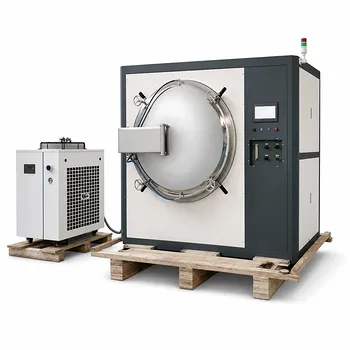
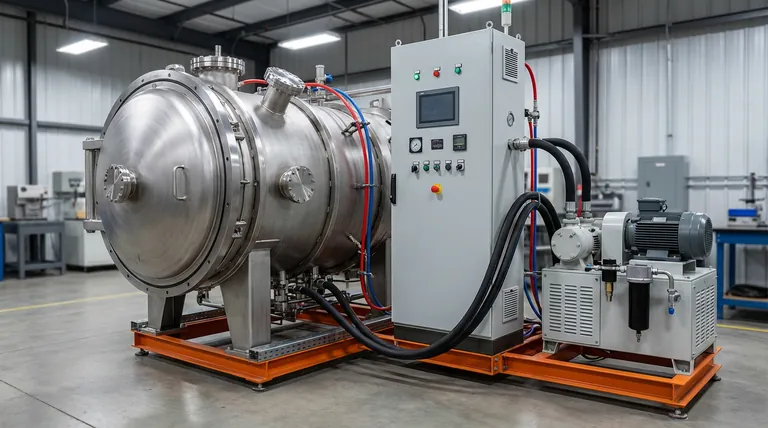
A vacuum furnace is the ultimate expression of this desire. It’s not simply a box that gets hot; it is a meticulously engineered environment. Its primary function isn't just to apply heat, but to first create a pocket of near-nothingness, a controlled void where materials can be transformed perfectly.
To understand its power, you must see it not as a single object, but as a symphony of interlocking systems.
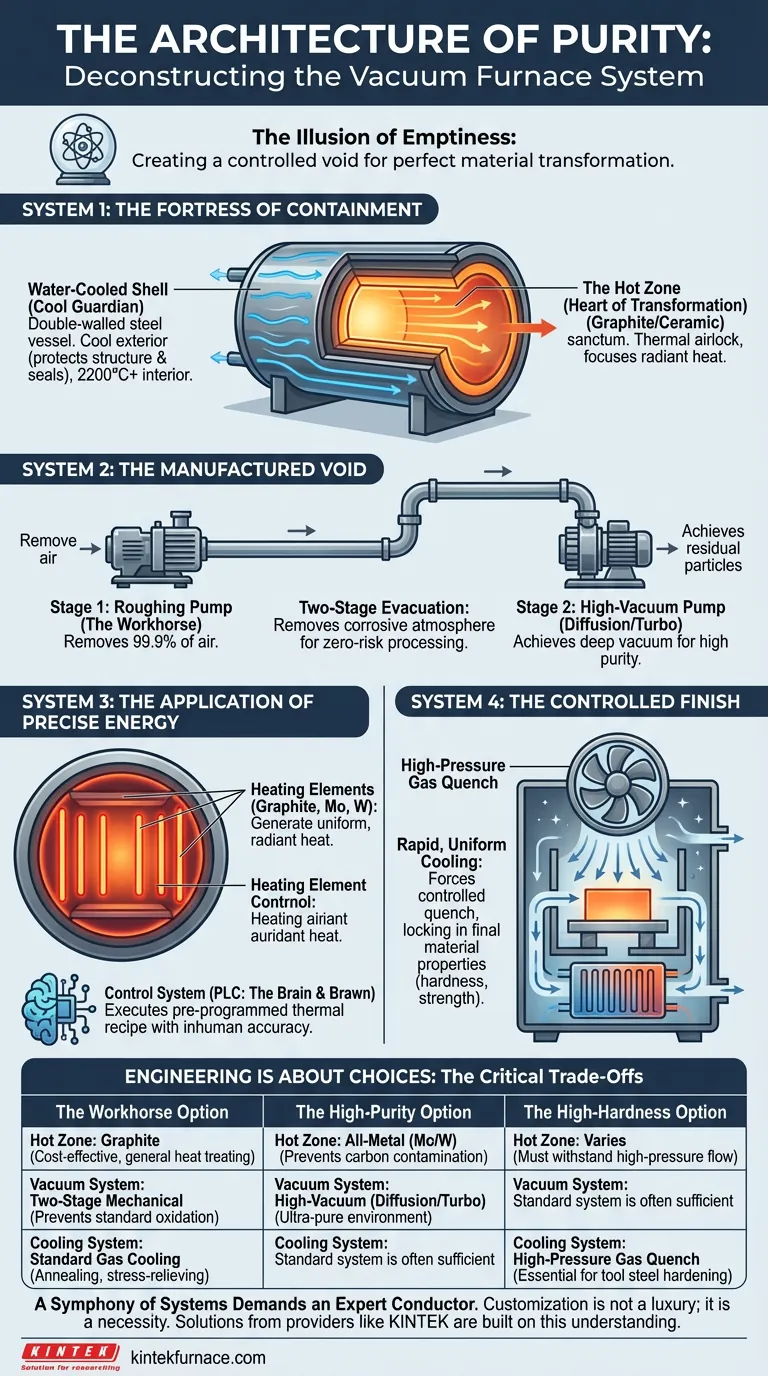
System 1: The Fortress of Containment
Before you can create a void, you must build a fortress capable of holding it. This is the furnace chamber and its internal hot zone.
The Cool Guardian: A Water-Cooled Shell
The outer body of the furnace is a paradox. It’s a double-walled steel vessel, cool to the touch, while inside temperatures can exceed 2200°C. Water constantly circulates between these walls, forming a cooling jacket.
This isn't just for safety. This constant cooling protects the vessel's structural integrity, the integrity of the vacuum seals, and the sensitive instrumentation from the brutal thermal energy being unleashed within. It is a calm exterior harnessing a star.
The Hot Zone: The Heart of Transformation
Nestled inside this cool shell is the hot zone. This is the inner sanctum, lined with high-performance insulation like graphite felt or ceramic fibers.
Its job is twofold: contain the intense radiant heat, focusing it on the workpiece for maximum efficiency, and prevent that same heat from ever reaching the water-cooled shell. It's a thermal airlock, separating the world of extreme temperature from the world of controlled engineering.
System 2: The Manufactured Void
This is what defines the furnace. The vacuum system's goal is elegantly simple: remove the atmosphere. The execution is a multi-stage act of precision.
The Psychology of Absence
Why go to such lengths? Because at high temperatures, ordinary air becomes a corrosive agent. Oxygen molecules, benign at room temperature, become aggressive attackers, causing oxidation and compromising a material's surface and structural properties.
Creating a vacuum is about risk removal. It's about ensuring the only thing that influences your material is the precise thermal energy you choose to apply.
The Two-Stage Evacuation
Creating a high vacuum is a process of diminishing returns, requiring a one-two punch:
- The Roughing Pump: This is the workhorse. A mechanical pump removes over 99.9% of the air from the chamber, creating a "rough" vacuum. It does the heavy lifting.
- The High-Vacuum Pump: Once the roughing pump has done its job, a more sensitive pump (like a diffusion or turbomolecular pump) takes over. It hunts down the remaining stray molecules, achieving the deep vacuum needed for high-purity processes.
System 3: The Application of Precise Energy
With the environment controlled, the heating system can do its work with surgical precision.
The Engines of Transformation
Positioned within the hot zone, heating elements made of graphite, molybdenum, or tungsten generate uniform, radiant heat. These aren't just simple coils; they are sophisticated components designed to withstand colossal temperatures and deliver energy exactly where it's needed.
The Brain and the Brawn
This raw power is governed by the furnace's control system. A Programmable Logic Controller (PLC) acts as the brain, executing a pre-programmed thermal recipe with inhuman accuracy. It dictates the rate of heating, the duration of the soak at temperature, and the exact moment to initiate the final, critical step: cooling.
System 4: The Controlled Finish
How a material cools is just as important as how it was heated. The final properties—its hardness, its strength, its very nature—are locked into place during these final moments.
A modern vacuum furnace doesn't just let the material cool. It forces a controlled quench.
The chamber is backfilled with a high-pressure inert gas, like nitrogen or argon. A powerful fan then circulates this gas at high speed through a heat exchanger, pulling thermal energy away from the workpiece rapidly and uniformly. This high-pressure gas quench is the final, deliberate act of control that determines the material's fate.
Engineering is About Choices: The Critical Trade-Offs
The specific construction of these systems defines the furnace's capability. The choices are a masterclass in engineering trade-offs.
| Feature Area | The Workhorse Option | The High-Purity Option | The High-Hardness Option |
|---|---|---|---|
| Hot Zone | Graphite: Cost-effective, robust, ideal for general heat treating. | All-Metal (Mo/W): Prevents any carbon contamination. Essential for medical and aerospace. | Varies, but must withstand high-pressure gas flow. |
| Vacuum System | Two-Stage Mechanical: Sufficient for preventing standard oxidation. | High-Vacuum (Diffusion/Turbo): Creates an ultra-pure environment for sensitive alloys. | Standard system is often sufficient. |
| Cooling System | Standard Gas Cooling: Perfect for annealing or stress-relieving cycles. | Standard system is often sufficient. | High-Pressure Gas Quench: Essential for achieving the rapid cooling required for hardening tool steels. |
A Symphony of Systems Demands an Expert Conductor
A vacuum furnace is not a commodity. It is an instrument. Each system—containment, vacuum, heating, and cooling—must be perfectly matched to the others and, most importantly, to your specific application. A high-pressure quench system is useless without a chamber built to withstand it. An all-metal hot zone is overkill if your process is tolerant of carbon.
This is why deep customization, backed by expert R&D and manufacturing, is not a luxury; it is a necessity. Solutions from providers like KINTEK are built on this understanding. Whether you require the absolute purity of a CVD system or the hardening capability of a high-pressure quench furnace, the goal is to engineer an integrated system where every component works in concert to achieve your desired outcome.
If your work demands this level of systemic control to transform materials with absolute precision, you need a furnace that is engineered, not just assembled. Contact Our Experts
Visual Guide
Related Products
- Vacuum Hot Press Furnace Machine Heated Vacuum Press Tube Furnace
- Vacuum Hot Press Furnace Machine Heated Vacuum Press
- 600T Vacuum Induction Hot Press Vacuum Heat Treat and Sintering Furnace
- 2200 ℃ Tungsten Vacuum Heat Treat and Sintering Furnace
- Vacuum Heat Treat Sintering Furnace with Pressure for Vacuum Sintering
Related Articles
- How Vacuum Hot Press Furnaces Transform Advanced Material Engineering
- How to Select the Right Vacuum Hot Pressing Furnace Temperature for Your Materials
- Beyond the Parts List: The Real Reason Your Vacuum Hot Press Fails (And How to Fix It)
- Why Your High-Temperature Materials Fail: The Hidden War Inside Your Furnace
- Is Your Material Data Real? Why Temperature Gradients Are Sabotaging Your Cu2Se Resistivity Measurements