The Choice That Defines Everything
In the world of thermal processing, we often focus on the grand variables: the vacuum level, the temperature ramp rate, the final product's crystalline structure. But deep inside the furnace, one component quietly dictates the boundaries of what’s possible.
The heating element.
Choosing this component is not like picking a part from a catalog. It’s a philosophical commitment. It’s a decision that reveals your primary objective—be it raw temperature, absolute purity, or operational economy. This single choice will define your furnace's capability, its limitations, and its long-term cost of ownership.
Two Paths to High Temperature
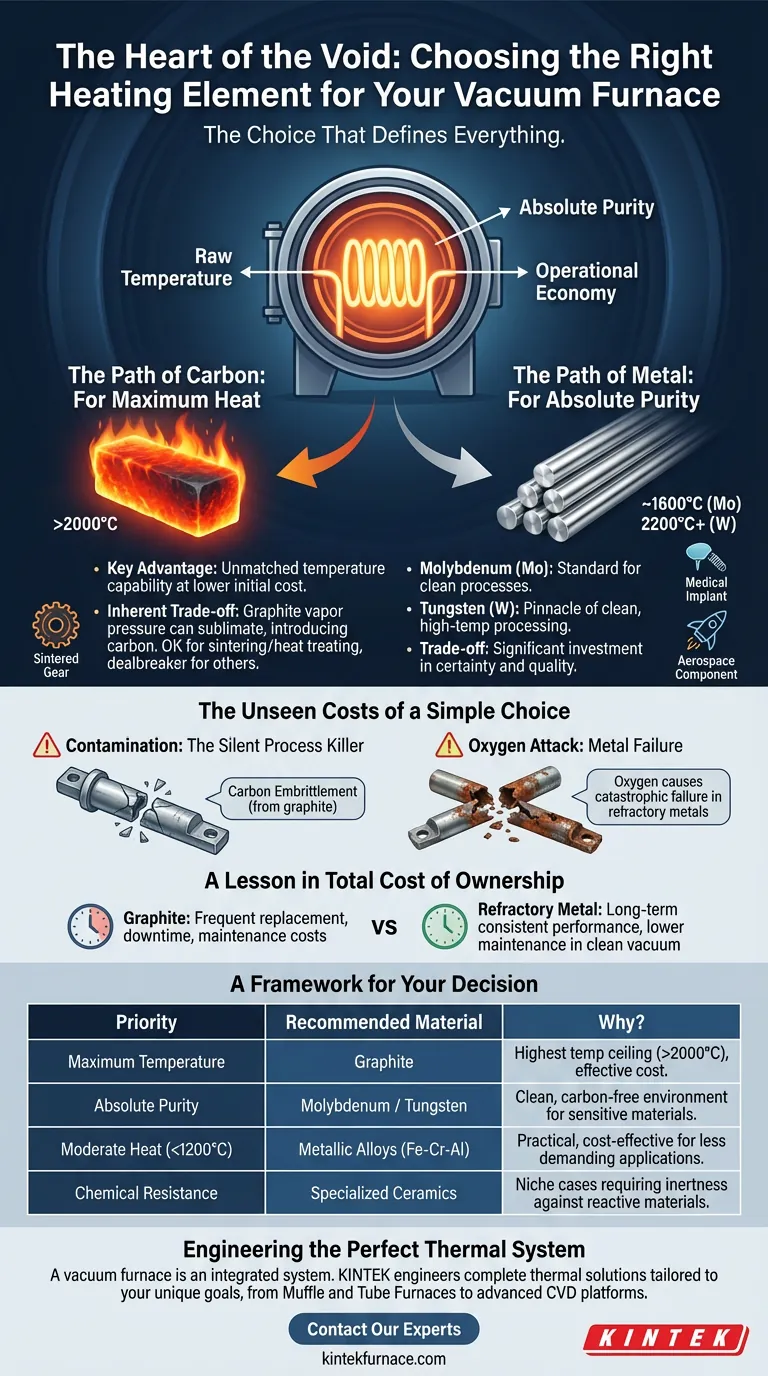
In the vacuum, nearly all high-temperature heating element decisions boil down to two fundamental material philosophies: Carbon or Metal.
The Path of Carbon: For Maximum Heat
Graphite is the workhorse of the ultra-high-temperature world. It's relatively inexpensive, easy to machine, and can be pushed to temperatures exceeding 2000°C with confidence. It is the default choice when the primary goal is to get incredibly hot, efficiently.
- Key Advantage: Unmatched temperature capability at a lower initial cost.
- The Inherent Trade-off: Graphite has a vapor pressure. At high temperatures in a vacuum, it can sublimate, introducing carbon into the atmosphere and potentially onto your product. For many processes like sintering or heat treating certain alloys, this is a non-issue. For others, it’s a dealbreaker.
The Path of Metal: For Absolute Purity
When the process cannot tolerate even trace amounts of carbon contamination, you walk the path of refractory metals. These materials are the choice for medical implants, aerospace components, and sensitive electronic materials.
- Molybdenum (Mo): The standard for clean processes up to ~1600°C. It offers a pristine heating environment, ensuring the final product's integrity.
- Tungsten (W): When you need both extreme purity and temperatures beyond molybdenum's limit (up to 2200°C+), tungsten is the answer. It represents the pinnacle of clean, high-temperature processing.
The trade-off here is cost. Refractory metals are a significant investment. But it’s an investment in certainty and quality.
The Unseen Costs of a Simple Choice
The initial price tag is a dangerously simple metric. The true cost of a heating element emerges over thousands of operational hours.
Contamination: The Silent Process Killer
Imagine running a multi-hour cycle to process a batch of high-purity titanium alloy, only to find it has become brittle. The culprit? Carbon embrittlement from a graphite element, which was chosen to save a few hundred dollars on the initial build.
Conversely, a small leak in a vacuum system can be fatal for refractory metals. Oxygen, even at trace levels, will aggressively oxidize hot molybdenum or tungsten, causing them to become brittle and fail catastrophically. The element choice is inextricably linked to the integrity of the entire system.
A Lesson in Total Cost of Ownership
Graphite elements can be more fragile and may require more frequent replacement, leading to downtime and maintenance costs. A well-maintained refractory metal element, operating in a clean, stable vacuum, can last for years, delivering consistent and reliable performance.
The more valuable your end product and the more sensitive it is to contamination, the more the scales tip in favor of the higher initial investment in refractory metals.
A Framework for Your Decision
Your choice should be guided by your single most important process constraint.
| Priority | Recommended Material | Why? |
|---|---|---|
| Maximum Temperature | Graphite | Offers the highest temperature ceiling (>2000°C) at the most effective cost. |
| Absolute Purity | Molybdenum / Tungsten | Provides a clean, carbon-free environment critical for sensitive materials. |
| Moderate Heat (<1200°C) | Metallic Alloys (Fe-Cr-Al) | A practical, cost-effective solution for less demanding applications. |
| Chemical Resistance | Specialized Ceramics | Used for niche cases requiring inertness against specific reactive materials. |
Engineering the Perfect Thermal System
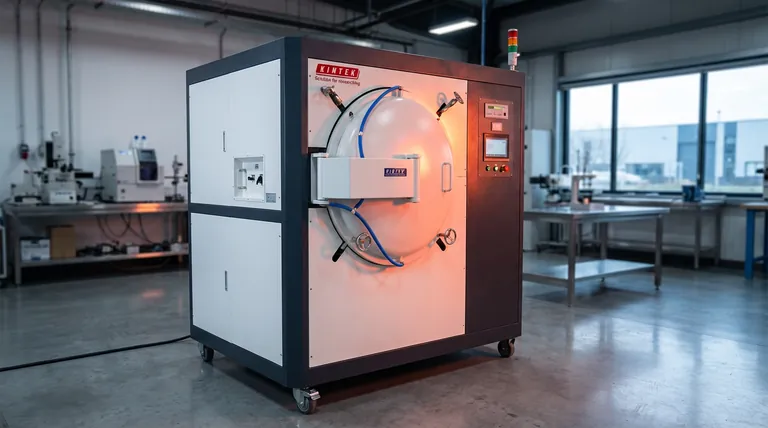
A vacuum furnace is more than a box with a heater. It is an integrated system where the heating element, insulation, power supply, and vacuum pumps must work in perfect harmony. The wrong combination leads to inefficiency, contamination, and premature failure.
This is why a one-size-fits-all approach doesn't work. At KINTEK, we understand that every thermal process is unique. Our expertise isn't just in building furnaces; it's in engineering complete thermal solutions tailored to specific goals. Whether you need a CVD system for advanced coatings or a vacuum furnace for metallurgical research, the design starts with a deep understanding of your process requirements.
By leveraging our deep customization capabilities across a wide range of systems—from Muffle and Tube Furnaces to advanced CVD platforms—we ensure the heart of your furnace is perfectly matched to its purpose. The right choice isn't just about the material; it's about matching the furnace's core technology to your specific ambition. Contact Our Experts
Visual Guide
Related Products
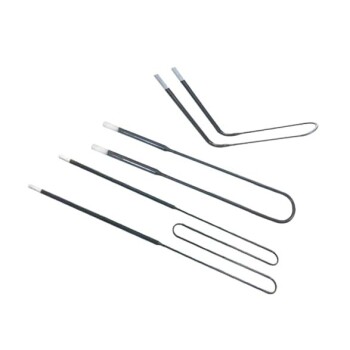
- Molybdenum Disilicide MoSi2 Thermal Heating Elements for Electric Furnace
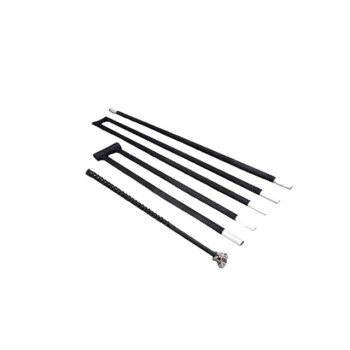
- Silicon Carbide SiC Thermal Heating Elements for Electric Furnace
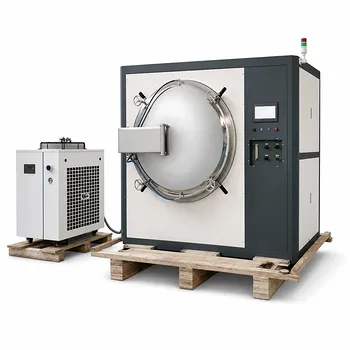
- 2200 ℃ Graphite Vacuum Heat Treat Furnace
- Vacuum Heat Treat Furnace with Ceramic Fiber Liner
- 2200 ℃ Tungsten Vacuum Heat Treat and Sintering Furnace