The Invisible Flaw in "Perfect" Forged Parts
You’ve optimized your powder blend, perfected your green compact density, and calibrated your forging press to the kilonewton. Yet, during final inspection or—worse—after a few hundred hours of field service, the failure reports start coming in. Surface micro-cracks. Residual porosity. Premature fatigue failure in critical components like bearing rings.
When a high-performance part fails, the natural instinct is to blame the material purity or the forging pressure. But often, the real culprit isn't what's happening inside the metal; it’s what’s happening at the very moment the metal touches the mold.
The Frustrating Cycle of Surface Defects
In the quest for higher-quality powder forged steel, many engineers find themselves stuck in a loop of trial and error. You might try increasing the forging temperature or slowing down the cycle time to give the material more "breathing room."
The consequences of these surface-level fixes are often disappointing. Increasing heat across the board can lead to grain growth or oxidation, while slower cycles eat into your profit margins and throughput. Meanwhile, the core problem remains: the surface layer of your part is brittle, and no amount of extra pressure can force it to be ductile if the thermal physics are working against you. This leads to high scrap rates, project delays, and a product that simply cannot meet the high contact fatigue strength required for modern industrial applications.
The "Chilling Effect": Why Your Mold Is Your Enemy

To understand why these defects occur, we have to look at the "temperature gradient."
When your high-temperature porous green compact is moved into the forging press, it is at its most vulnerable. If the mold walls are significantly cooler than the compact, a phenomenon known as the "chilling effect" occurs. The moment the hot powder touches the cold mold, the surface temperature of the compact plummets.
This rapid temperature drop causes a localized loss of plasticity. In simple terms: the surface of the part "freezes" and becomes brittle while the core is still hot and moving. As the press applies force, this brittle "skin" cannot deform properly. Instead of flowing into the mold's intricacies, it develops micro-cracks and retains tiny pores. These microscopic flaws act as stress concentrators, drastically reducing the contact fatigue strength of the final component.
The Solution: Bridging the Thermal Gap at 600°C
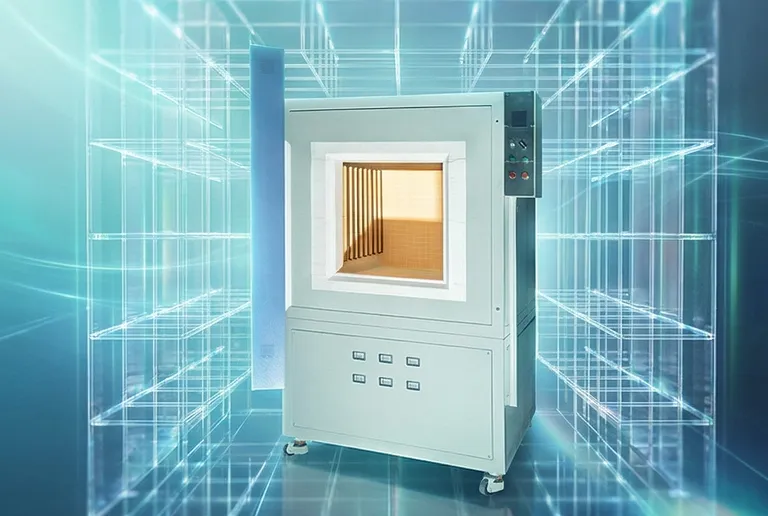
The secret to eliminating these defects lies in narrowing the temperature gap. By preheating your molds to 600°C, you fundamentally change the thermodynamics of the forging process.
Preheating to 600°C significantly reduces the temperature gradient between the compact and the mold. This suppressed chilling effect ensures that the surface of the steel retains its plasticity throughout the entire forging stroke. Without that sudden "thermal shock," the material flows smoothly, closing residual pores and preventing the formation of micro-cracks.
To achieve this level of precision, you need more than just a heater; you need a controlled thermal environment. This is where KINTEK’s high-temperature furnace technology becomes essential. Our range of specialized muffle, atmosphere, and vacuum furnaces are designed to provide the uniform, stable heating required to bring molds to a precise 600°C.
Whether you are working with complex geometries or specialized powder alloys, our customizable furnace solutions ensure that your mold temperature is never the "weak link" in your production line. By treating the mold as an active participant in the metallurgical process—rather than just a container—you solve the root cause of surface failure.
From Survival to Superiority: What Happens When You Solve the Heat Problem?

Once you master the thermal gradient, the "impossible" becomes routine. By eliminating surface micro-cracks and ensuring a dense, high-quality surface layer, you unlock the full potential of your powder steel components.
- Enhanced Fatigue Life: Components like bearing rings can now withstand significantly higher cycles of stress without failure.
- Greater Design Freedom: With increased surface plasticity, you can forge more complex shapes with tighter tolerances that were previously prone to cracking.
- Reduced Total Cost of Quality: Lower scrap rates and fewer field failures mean your ROI improves with every part produced.
By solving the 600°C challenge today, you aren't just fixing a crack in a part; you are strengthening the reliability of your entire brand.
Every high-temperature application carries its own set of unique variables, and a "one-size-fits-all" approach rarely delivers peak performance. At KINTEK, we specialize in translating complex thermal requirements into robust, customizable furnace solutions that address your specific engineering hurdles. Whether you’re looking to optimize mold preheating or exploring advanced CVD and vacuum processes, our team is ready to help you engineer a more reliable future. Contact Our Experts today to discuss how we can tailor our high-temperature technology to your unique project needs.
Related Products
- Molybdenum Vacuum Heat Treat Furnace
- High Temperature Muffle Oven Furnace for Laboratory Debinding and Pre Sintering
- 1700℃ High Temperature Muffle Oven Furnace for Laboratory
- 1800℃ High Temperature Muffle Oven Furnace for Laboratory
- 1400℃ Muffle Oven Furnace for Laboratory
Related Articles
- Why Your Ti-6Al-4V Parts Crack Under Pressure—The Hidden Science of Vacuum Heat Treatment
- Why Your High-Strength Titanium Biomaterials Are Brittle—and How Vacuum Heat Treatment Fixes It
- Why Your 3D-Printed Maraging Steel Parts Aren't Performing—And How to Fix the Structural Weakness
- Why Your Alloy Phase Separation Observations Are Inconsistent—And the "Invisible" Variable You’re Missing
- Why Your Advanced Coatings Fail Under Stress—And How High-Vacuum Treatment Fixes the Root Cause