Within 8 hours on working days, 24 hours on holidays
heater element
Heater elements are critical components in high-temperature applications, widely used in industries such as glass manufacturing, ceramics, metallurgy, and semiconductor production. Our product line includes:
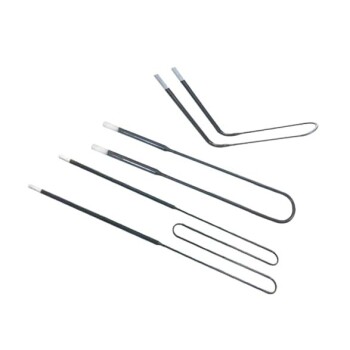
Molybdenum Disilicide (MoSi2) Heating Elements: Ideal for temperatures up to 1800°C, these elements offer superior oxidation resistance and are perfect for research and production in glass, ceramics, and semiconductor materials.
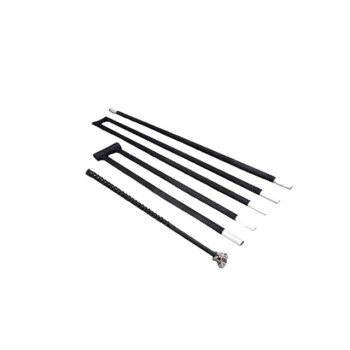
Silicon Carbide (SiC) Heating Elements: Operating between 600-1600°C, these elements provide energy efficiency, long lifespan, and precision for various industrial and laboratory applications.
Advanced Heater Elements for High-Temperature Applications
Our heater elements are engineered to meet the rigorous demands of high-temperature environments, ensuring reliability, efficiency, and longevity. Below, we delve into the characteristics, principles, and advantages of our MoSi2 and SiC heating elements.
Molybdenum Disilicide (MoSi2) Heating Elements
Characteristics:
High-Temperature Performance: Capable of reaching up to 1800°C, MoSi2 elements are ideal for extreme heat applications.
Oxidation Resistance: Forms a protective silicon dioxide layer at high temperatures, enhancing durability.
Customizable: Available in various shapes and sizes to fit specific furnace designs.
Principles:
MoSi2 elements operate on the principle of resistive heating, where electrical energy is converted into heat. Their unique composition allows them to maintain stability and performance even under prolonged exposure to high temperatures.
Advantages:
Long Lifespan: Reduced wear and tear due to excellent oxidation resistance.
Versatility: Suitable for a wide range of applications, including glass melting, ceramic sintering, and semiconductor processing.
Energy Efficiency: Optimized design ensures minimal energy wastage.
Silicon Carbide (SiC) Heating Elements
Characteristics:
Broad Temperature Range: Operates effectively between 600-1600°C, making it versatile for various applications.
High Thermal Conductivity: Ensures uniform heating and rapid temperature adjustments.
Robust Construction: Resistant to thermal shock and mechanical stress.
Principles:
SiC elements also utilize resistive heating. Their high thermal conductivity and low thermal expansion coefficient make them stable and efficient across a wide temperature spectrum.
Advantages:
Durability: Exceptional resistance to thermal cycling and chemical corrosion.
Precision Heating: Provides consistent and accurate temperature control.
Cost-Effective: Long operational life reduces replacement and maintenance costs.
Why Choose KINTEK Heater Elements?
At KINTEK, we combine cutting-edge R&D with in-house manufacturing to deliver heater elements that exceed industry standards. Our deep customization capability ensures that each element is tailored to your specific requirements, whether you need unique dimensions, special materials, or specific performance criteria.
Professional Support:
Our team of experts is available to assist you in selecting the right heater elements for your application. From initial consultation to after-sales support, we are committed to your success.
Custom Solutions:
No two applications are the same. We work closely with you to develop customized solutions that address your unique challenges, ensuring optimal performance and efficiency.
Get in Touch:
Ready to enhance your high-temperature processes with our advanced heater elements? Contact us today to discuss your needs and discover how KINTEK can provide the perfect solution for your laboratory or industrial furnace.
FAQ
What Are The Main Applications Of Heater Elements Like MoSi2 And SiC?
Heater elements such as Molybdenum Disilicide (MoSi2) and Silicon Carbide (SiC) are widely used in high-temperature applications including heat treatment furnaces, glass manufacturing, ceramic production, refractory materials, metallurgy, steel-making, crystal growth, electronic parts manufacturing, and semiconductor materials processing.
What Are The Advantages Of Using MoSi2 Heating Elements?
MoSi2 heating elements offer high-performance with the ability to reach temperatures up to 1800°C. They have superior oxidation resistance, are durable, reliable, and can be customized for specific high-temperature applications.
What Are The Benefits Of SiC Heating Elements?
Silicon Carbide (SiC) heating elements provide high-performance heating with a temperature range of 600-1600°C. They are known for their precision, energy efficiency, long lifespan, and the availability of customizable solutions for various industrial needs.
Why Are Ceramic And Semiconductor Heating Elements Like MoSi2 And SiC Suitable For High-temperature Environments?
Ceramic and semiconductor heating elements such as MoSi2 and SiC have moderate density and high melting points, making them ideal for high-temperature environments. They form protective silicon dioxide layers at high temperatures, which enhances their durability and resistance to oxidation.
Can MoSi2 And SiC Heating Elements Be Customized?
Yes, both MoSi2 and SiC heating elements can be customized to meet specific requirements of different high-temperature applications, ensuring optimal performance and efficiency for various industrial processes.
This website uses cookies to enhance your browsing experience,
analyze site traffic, and serve better user experiences. By continuing to use this site, you consent to our use of
cookies. Learn more in our cookie policy.