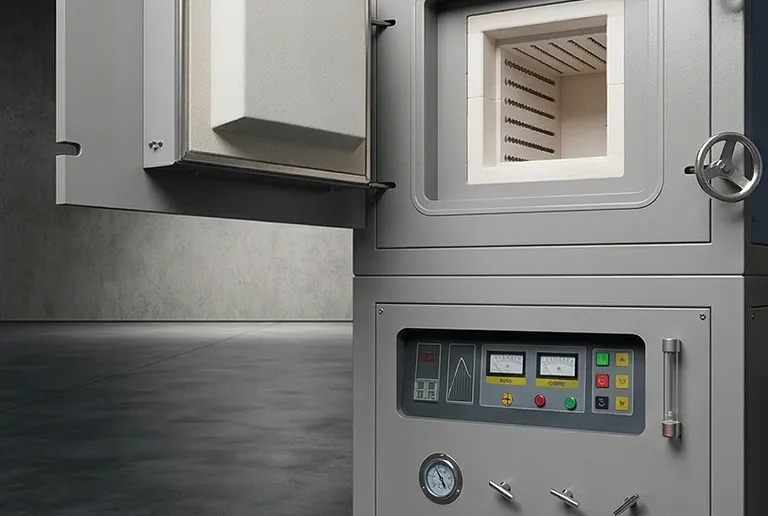
The Heartbreak of the Brittle Scaffold
Imagine spending weeks precision-engineering a titanium scaffold for a bone graft or a high-performance aerospace component. On paper, your design is perfect—the porosity is ideal, and the geometry is optimized. But when it comes out of the sintering furnace, the result is a disaster. Instead of a strong, metallic structure, you have a material that is dark, discolored, and so brittle it snaps under the slightest pressure.
The failure isn't in your design; it's in the environment where that design was brought to life. For researchers and manufacturers working with titanium, this "brittleness" is a common, costly, and deeply frustrating roadblock.
Why "Clean Enough" Isn't Enough for Titanium
When a sintering run fails, many labs attempt to solve the problem by increasing the flow of inert gases like argon or by scrubbing their existing chambers. They assume that if they can just "flush out" the air, the titanium will remain pure.
However, these common workarounds often fail. Despite using high-purity gases, the scaffold still suffers from surface oxidation or internal contamination. The business consequences are immediate: weeks of research time are lost, expensive titanium powder is wasted, and project deadlines for critical medical or industrial applications slip further away. The reality is that "clean enough" is an impossible standard when dealing with the unique chemistry of titanium.
The Oxygen Sponge: Why Heat is Titanium’s Greatest Danger
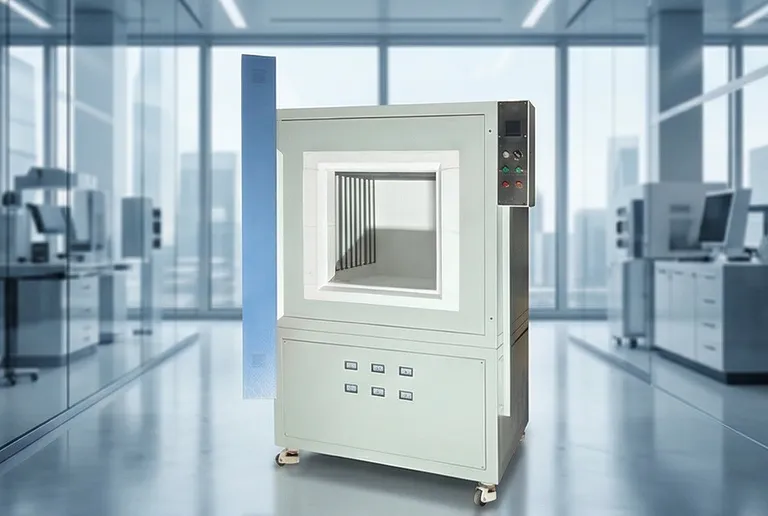
To solve this, we must look at the underlying science of the material. Titanium and its alloys (like Ti-6Al-4V) are what scientists call "highly reactive." They are effectively "oxygen sponges."
As you heat titanium to the temperatures required for sintering—typically around 1200°C—its affinity for oxygen, nitrogen, and carbon skyrockets. Even at extremely low concentrations, these gaseous molecules don't just sit on the surface; they migrate into the metal lattice. These are known as "interstitial elements."
When oxygen enters the titanium lattice, it disrupts the metallic bonding and creates a brittle compound. If the partial pressure of oxygen in your furnace is even slightly too high, the titanium particles will form an oxide film before they can bond together. This prevents "neck growth"—the essential process where particles fuse into a solid, mechanical skeleton. Instead of a metallurgical bond, you get a collection of oxidized particles that lack any structural integrity.
Precision Engineering: How High Vacuum Saves the Metal
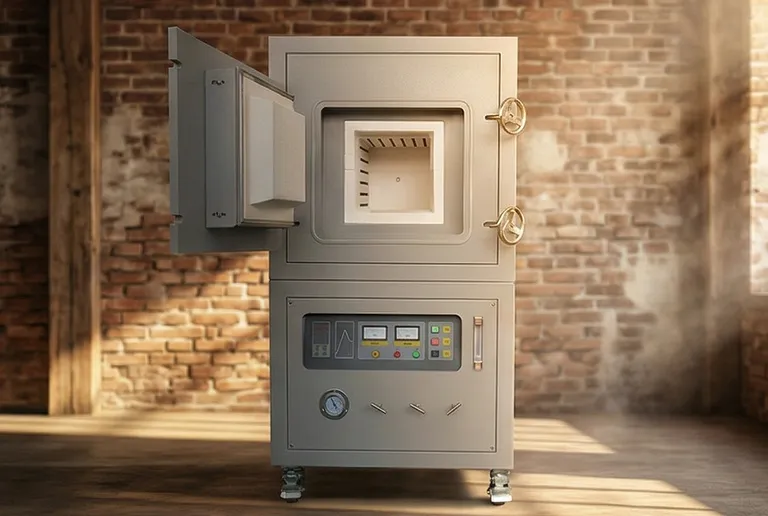
The only way to stop this reaction is to remove the oxygen molecules entirely before the heat does its damage. This is the primary function of a high vacuum furnace.
To achieve the ductility and strength required for a medical scaffold, the environment must reach a vacuum level of at least $10^{-5}$ mbar (approximately 0.013 Pa). A KINTEK high vacuum sintering furnace is engineered specifically to create this extreme low-pressure environment. By reducing the residual gases to these near-total levels, the furnace accomplishes three critical tasks:
- Isolation: It isolates the reactive titanium from impurity gases (oxygen, nitrogen, and carbon) that cause embrittlement.
- De-gassing: It helps remove any impurity gases already trapped within the powder particles.
- Solid-State Diffusion: It provides a "clean" path for titanium atoms to migrate between particles, ensuring effective metallurgical bonding and high mechanical strength without the interference of oxide films.
By controlling the environment to this degree, the furnace ensures that the final product maintains its metallic characteristics and chemical purity.
From Lab Failure to Bio-Medical Innovation
When you move from an "adequate" furnace to a high-vacuum system, you aren't just solving a technical glitch; you are unlocking new manufacturing potential.
With the threat of oxidation removed, you can begin to explore more complex porous structures that were previously too fragile to survive the sintering process. You can achieve higher relative density, better electrical conductivity, and the predictable mechanical properties required for FDA-cleared implants or aerospace-grade components.
The transition from brittle failures to consistent, high-strength results allows your team to move past the troubleshooting phase and focus on what really matters: innovating the next generation of life-changing materials.
If you are struggling with inconsistent sintering results or material embrittlement in your titanium projects, our team is ready to help you optimize your thermal processing environment. Whether you need a standard high-vacuum solution or a custom-engineered furnace for unique scaffold geometries, we can provide the technical expertise to ensure your materials perform as designed. Contact Our Experts to discuss your specific project requirements today.
Related Products
- 2200 ℃ Tungsten Vacuum Heat Treat and Sintering Furnace
- 9MPa Air Pressure Vacuum Heat Treat and Sintering Furnace
- 2200 ℃ Graphite Vacuum Heat Treat Furnace
- Vacuum Heat Treat Sintering Furnace Molybdenum Wire Vacuum Sintering Furnace
- 600T Vacuum Induction Hot Press Vacuum Heat Treat and Sintering Furnace
Related Articles
- Why Your High-Strength Titanium Biomaterials Are Brittle—and How Vacuum Heat Treatment Fixes It
- Why Your Alloy Phase Separation Observations Are Inconsistent—And the "Invisible" Variable You’re Missing
- The Unseen Engine: Why Graphite Dominates High-Temperature Vacuum Furnaces
- Heat, Void, and Control: Designing the Heart of a High-Temperature Vacuum Furnace
- The Paradox of Strength: Why Graphite Dominates High-Temperature Vacuum Furnaces



















