The Mystery of the Underperforming Composite
Imagine you have engineered an Aluminum Matrix Composite (AMC) with the perfect ratio of reinforcements. On paper, it should be lightweight, exceptionally stiff, and incredibly strong. However, once it leaves the furnace, the results are baffling: one batch is brittle and cracks under pressure, while the next is unexpectedly soft, failing to meet your hardness specifications.
You’ve checked the material composition and the casting process, yet the performance remains a "moving target." If your lab is struggling with inconsistent mechanical properties, the culprit likely isn't the material itself—it’s the way you are managing its microscopic "metabolism" during heat treatment.
The Cost of "Close Enough" Thermal Processing
In many laboratories and production facilities, heat treatment is often viewed simply as "cooking" the material at a high temperature. When a T6 cycle fails to deliver, the common reaction is to increase the "soak time" or slightly bump up the temperature.
These trial-and-error adjustments are not just inefficient; they are costly. Inconsistent batches lead to scrapped materials, delayed project timelines, and—most dangerously—unreliable components that could fail in critical aerospace or automotive applications. The "common" solution of using a standard utility furnace often fails because it lacks the thermal precision required for the delicate T6 process. Without exact control, you aren't just heating the metal; you are risking surface oxidation or, worse, the accidental melting of low-melting-point eutectic phases within the alloy.
The Root of the Problem: A Delicate Dance of Solutes
To solve the consistency problem, we must look at the atomic level. The T6 process is not a single step; it is a two-act play consisting of Solution Treatment and Artificial Aging.
The goal of T6 is "Precipitation Hardening." In the first stage (Solutionizing), you must heat the composite to a specific temperature—for example, exactly 540°C for certain Al-Mg-Si alloys. At this precise heat, alloying elements like Copper or Magnesium must fully dissolve into the aluminum matrix. If the temperature is even a few degrees too low, these elements won't dissolve; if it’s too high, the material begins to melt internally at the grain boundaries.
The second stage (Aging) is even more sensitive. After quenching, the material is reheated to a much lower temperature (e.g., 155°C to 160°C). Here, the dissolved atoms begin to "precipitate" out, forming a uniform cloud of nanometer-sized particles like Al2Cu or Mg2Si. These precipitates act as microscopic anchors, "pinning" the structure together to increase hardness and strength.
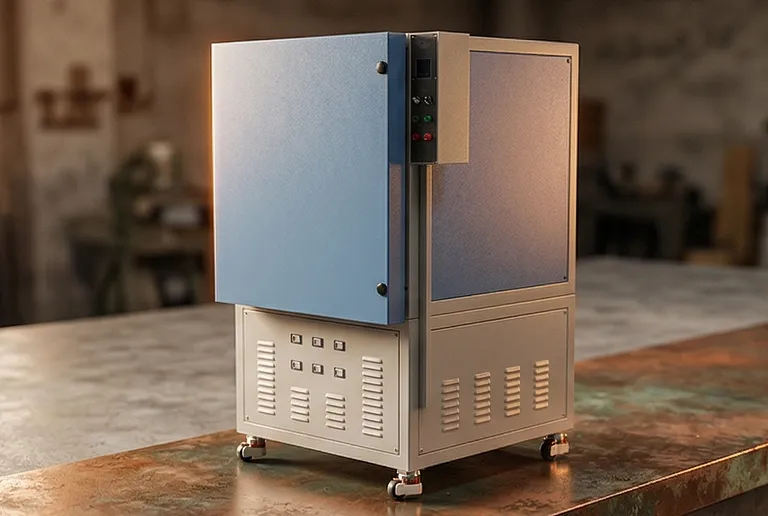
The fundamental reason most treatments fail is temperature non-uniformity. If your furnace has "hot spots" or "cold zones," one part of your component is over-aging (becoming brittle) while another is under-aging (remaining soft). You are left with a composite that is functionally compromised because its microstructure is a chaotic mix of different states.
The Solution: Engineering the Thermal Field
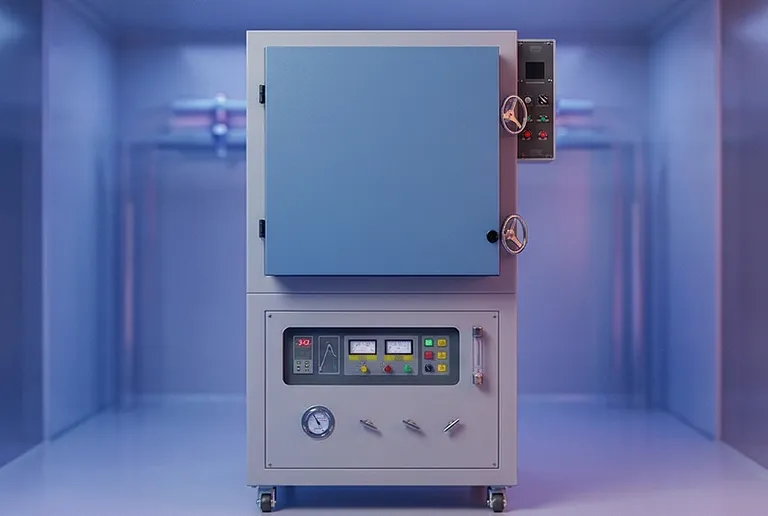
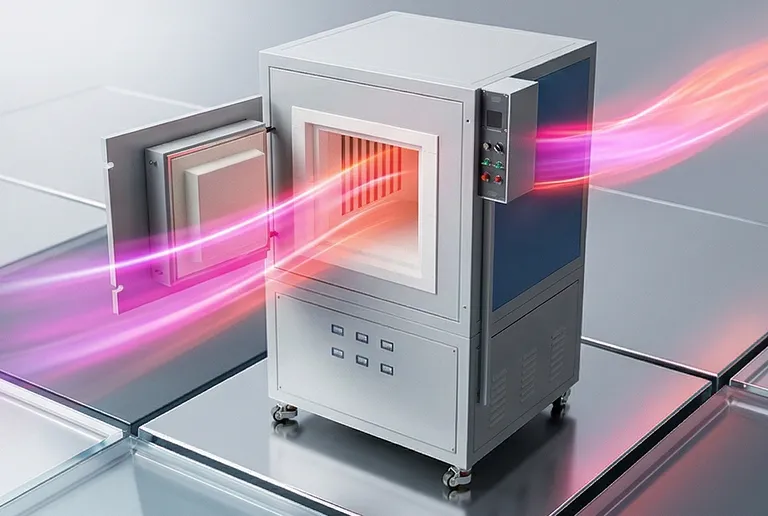
Achieving the perfect T6 result requires a tool designed for metallurgical precision rather than just raw heat. This is where KINTEK’s specialized furnace technology changes the equation.
To truly address the root cause of inconsistent mechanical properties, your furnace must provide:
- Absolute Uniformity: Our tube and muffle furnaces are engineered to maintain a stable, uniform thermal field. This ensures that every millimeter of your composite undergoes the same solutionizing and aging cycle, transforming coarse particles into the fine, spherical grains necessary for high-performance bonding.
- Atmospheric Integrity: For sensitive composites, surface oxidation is a silent killer of quality. KINTEK’s vacuum and atmosphere-controlled furnaces allow you to evacuate oxygen and backfill with inert gases like Argon. This creates a pristine environment that protects the material's surface while the internal chemistry stabilizes.
- Dual-Stage Precision: The transition from high-temperature solutionizing (e.g., 535°C) to low-temperature aging (e.g., 160°C) requires a controller that can manage complex thermal ramps without overshooting. KINTEK furnaces are built to handle these transitions with repeatable accuracy, ensuring that strengthening phases like MgZn2 precipitate exactly as intended.
Beyond the Fix: Unlocking New Material Potential
When you move from "guessing" to "controlling" your T6 cycles, the bottleneck in your research or production disappears. Solving the problem of thermal inconsistency does more than just save a batch of parts; it opens the door to new possibilities.
With a stable and predictable heat treatment process, you can begin to explore more advanced, high-performance alloys like the 7000-series. You can achieve higher interfacial bonding strengths that were previously thought impossible, leading to thinner, lighter, and stronger components. Whether you are accelerating a new product's time-to-market or pushing the boundaries of material science, the right furnace transforms heat treatment from a source of frustration into a competitive advantage.
Our team at KINTEK understands that your work depends on the precision of the "micro-world." We specialize in tailoring high-temperature solutions that match the specific metallurgical needs of your unique projects. Let us help you turn your complex thermal challenges into consistent, high-performance results.
Related Products
- 2200 ℃ Tungsten Vacuum Heat Treat and Sintering Furnace
- Vacuum Heat Treat Furnace with Ceramic Fiber Liner
- 2200 ℃ Graphite Vacuum Heat Treat Furnace
- Vacuum Heat Treat Sintering Furnace with Pressure for Vacuum Sintering
- Vacuum Heat Treat Sintering Furnace Molybdenum Wire Vacuum Sintering Furnace
Related Articles
- Why Your High-Strength Titanium Biomaterials Are Brittle—and How Vacuum Heat Treatment Fixes It
- Why Your Alloy Phase Separation Observations Are Inconsistent—And the "Invisible" Variable You’re Missing
- The Unseen Engine: Why Graphite Dominates High-Temperature Vacuum Furnaces
- Heat, Void, and Control: Designing the Heart of a High-Temperature Vacuum Furnace
- The Paradox of Strength: Why Graphite Dominates High-Temperature Vacuum Furnaces