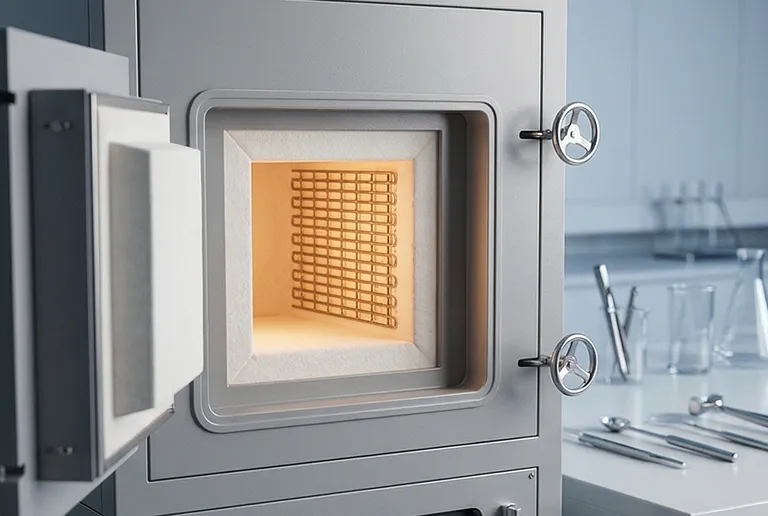
The High-Stakes Failure You Didn't See Coming
Imagine this: your team has spent months developing a high-performance Fe-Cr-Al (Iron-Chromium-Aluminum) coating designed to protect critical turbine components. On paper, the chemistry is perfect. Initial lab tests look promising. But when the material enters a 1,100°C simulation, the coating begins to flake, or "spall," far earlier than predicted.
The data is a mess. One sample shows a massive weight gain; another shows almost none. You’re left with a choice: delay the project for months of re-testing or risk a catastrophic failure in the field. This isn't just a technical glitch—it’s a commercial bottleneck that drives up R&D costs and pushes product launches into the "red zone."
The Trap of "Good Enough" Lab Equipment
When researchers face inconsistent oxidation data, the "common sense" approach is to adjust the coating chemistry or increase the soak time. Many labs attempt to solve the problem by simply running their existing muffle furnaces for longer cycles—sometimes 20 or 100 hours at a time—hoping that "more data" will lead to "better data."
However, these common workarounds often fail because they don't address the underlying environment. If your furnace has even a slight temperature gradient or poor recovery time after a cooling cycle, your "controlled" experiment is anything but controlled. What follows is a cycle of frustration: inconsistent results lead to over-engineering, which makes the final product more expensive and less competitive, yet still fails to guarantee reliability in extreme environments like gas turbines or cement kilns.
The Science of Failure: It’s All in the Layer
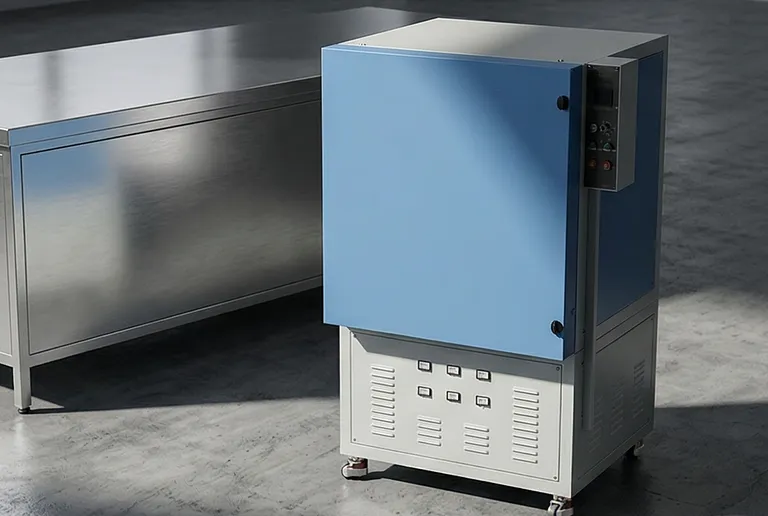
The true performance of an Fe-Cr-Al coating depends on a hidden biological-like process: the growth of a Thermally Grown Oxide (TGO) layer. Specifically, the coating must form a dense, stable alpha-alumina ($\alpha$-Al₂O₃) protective film.
The root cause of most testing failures isn't the coating itself, but the thermal field instability of the furnace. Here is why:
- Kinetic Turbulence: For the $ \alpha $-Al₂O₃ film to form properly, the temperature must be absolutely uniform. If the furnace fluctuates, the transition from amorphous alumina to the stable alpha phase becomes uneven.
- The Stress Paradox: High-temp cyclic oxidation (e.g., at 1100°C) is designed to test how the coating handles the internal stress of heating and cooling. If your furnace cannot precisely maintain a "static" environment during the 400-hour soak, you aren't testing the coating's durability; you are testing its reaction to your furnace’s flaws.
- Oxygen Control: During pre-treatment or annealing at 800°C, if the oxygen partial pressure isn't perfectly controlled (or removed via vacuum), you get "premature oxidation." This creates internal stresses and brittle FeAl intermetallic compounds before the actual test even begins.
The Tool Built for Microscopic Precision
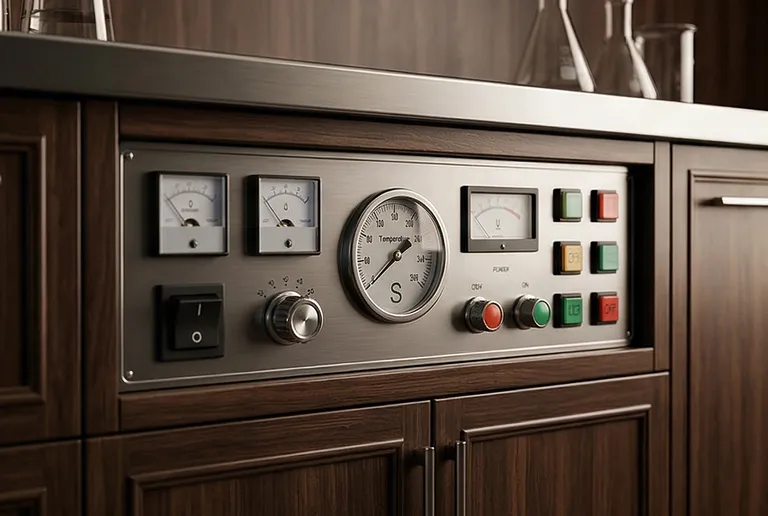
Solving this requires more than just a heater; it requires a precision instrument designed to simulate the brutal reality of service environments. To achieve repeatable, bankable data, you need a system that treats "temperature uniformity" as a scientific necessity rather than a marketing slogan.
KINTEK’s high-temperature muffle and vacuum furnaces are engineered specifically to eliminate these variables. By providing a rock-solid, uniform thermal field up to 1800°C, our equipment ensures that the mass changes you measure are a result of the material’s chemistry, not the furnace’s inconsistency.
Our systems allow for:
- Precise Heating Curves: Essential for simulating the specific sintering and shaping conditions of industrial kilns.
- Advanced Atmosphere Control: Whether it's the high-vacuum environment needed to prevent premature oxidation during annealing or the stable airflow required for 400-hour oxidation trials, the environment remains constant.
- Integrated Cycling: We design for the rigors of thermal shock stability, ensuring your samples move through heating and cooling phases with mathematical precision.
Beyond the Fix: Unlocking New Material Frontiers
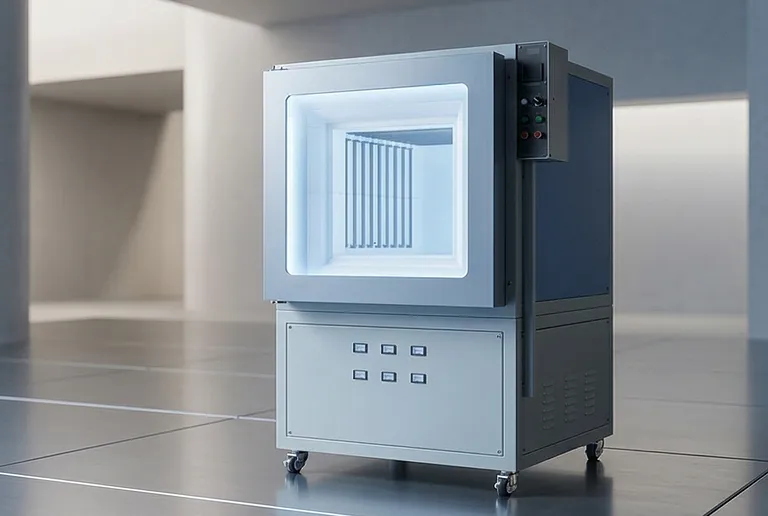
When you stabilize your testing environment, you do more than just "fix a problem." You unlock the ability to innovate faster.
With a KINTEK furnace, you can transition from "guessing" the lifespan of a coating to "verifying" it. You can confidently explore thinner, more efficient coatings or new nickel-based substrates because you know your baseline data is accurate. In the competitive world of aerospace and heavy industry, the ability to shave weeks off a testing cycle while increasing the reliability of your results is the ultimate ROI. You aren't just buying a furnace; you are buying the certainty that your materials will survive where it matters most.
Whether you are conducting static oxidation tests at 800°C or simulating the extreme thermal cycles of a gas turbine at 1200°C, our team can help you configure a thermal solution that matches your specific research goals. Let’s ensure your coatings perform as well in the field as they do in your vision.
Contact Our Experts to discuss your unique high-temperature testing requirements.
Related Products
- Laboratory Muffle Oven Furnace with Bottom Lifting
- 1200℃ Muffle Oven Furnace for Laboratory
- High Temperature Muffle Oven Furnace for Laboratory Debinding and Pre Sintering
- 1400℃ Muffle Oven Furnace for Laboratory
- 1800℃ High Temperature Muffle Oven Furnace for Laboratory
Related Articles
- Why Your Muffle Furnace Might Be Masking Your Alloy Kinetics—And How to Fix It
- Why Your Ceramic Sintering Fails Before It Even Starts—And How Strategic Pretreatment Rescues Your Yields
- Why High-Purity Gas Fails Your High-Temp Brazing—And How Mono-Silane Doping Fixes It
- Why Your High-Temperature Experiments Fail: The Hidden Flaw in Your Furnace
- The Hidden Saboteur in Your HT-LiCoO2 Synthesis: Why Precise Ramp Rates Can Make or Break Your Battery Materials



















