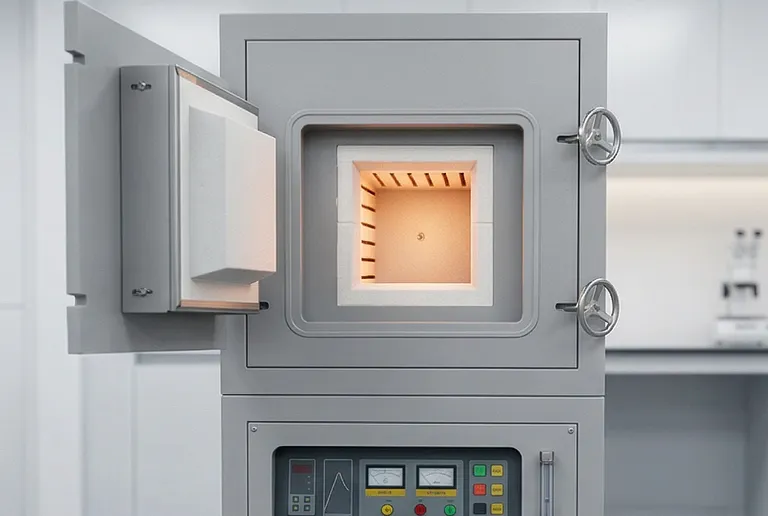
The Frustration of the "Brittle" Batch
Imagine your team has spent weeks preparing a specific blend of 80% Tungsten and 20% Rhenium. You’ve followed the temperature ramp precisely, reaching that critical 1650°C threshold. Yet, when the parts emerge from the furnace, the result is a disappointment: the alloy is porous, the density is below spec, or worse, the material is brittle and fails the first mechanical stress test.
In the world of refractory metals, "hitting the temperature" is only half the battle. For specialized alloys like 80W–20Re, the environment in which that heat is applied is often more important than the heat itself.
The Common Struggle: Why Standard Sintering Often Fails
When working with high-performance alloys, many laboratories attempt to use traditional atmosphere furnaces or standard shielding gases. On the surface, this seems logical—if you provide enough heat and a flow of argon or nitrogen, the particles should fuse, right?
Unfortunately, this approach often leads to several costly "invisible" failures:
- Oxidative Loss: Even trace amounts of oxygen at 1650°C cause Tungsten and Rhenium to oxidize rapidly. These oxides are often volatile or prevent proper bonding, leading to a loss of expensive raw materials.
- Persistent Porosity: Without a vacuum to "pull" trapped gases out of the powder compact, the final product remains riddled with microscopic voids, compromising its structural integrity.
- Compromised Composition: If the Rhenium oxidizes and escapes as a gas, your 80/20 ratio is ruined, leaving you with a material that no longer meets aerospace or electronic grade specifications.
These failures aren't just technical setbacks; they represent project delays, wasted budgets on precious metals like Rhenium, and a loss of confidence in the final product’s reliability.
The Science of the "Oxygen Thief"
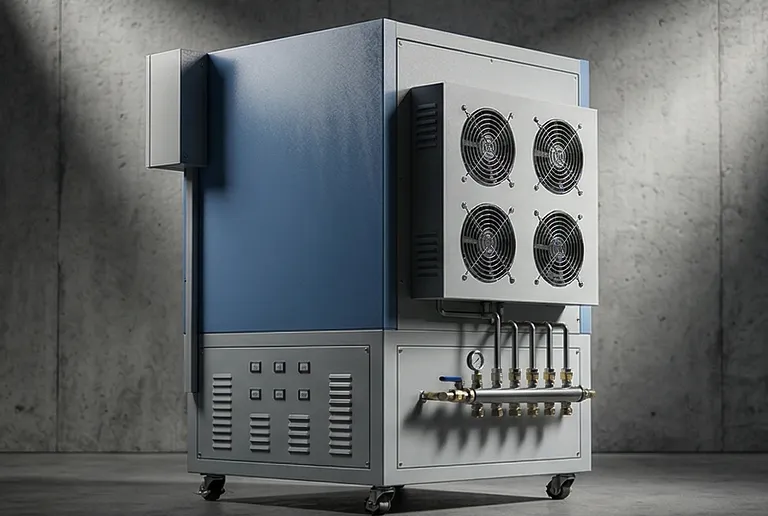
To understand why these failures happen, we have to look at the underlying physics of solid-state diffusion.
For an alloy like 80W–20Re to become fully dense, atoms must move across the boundaries of individual powder particles to fill in gaps. This process requires a clean metallic surface. At high temperatures, Tungsten and Rhenium have an extremely high affinity for oxygen. If even a microscopic layer of oxide forms on the surface of the powder particles, it acts as a physical barrier.
In a standard furnace, oxygen is the "thief" that steals your material’s density. Standard shielding gases often contain enough residual oxygen or water vapor to trigger this oxidation. The "common solution" of just increasing the temperature only accelerates this damage. To solve the problem, you don't need more heat; you need a near-total absence of oxygen.
The Solution: Precision Vacuum Environments
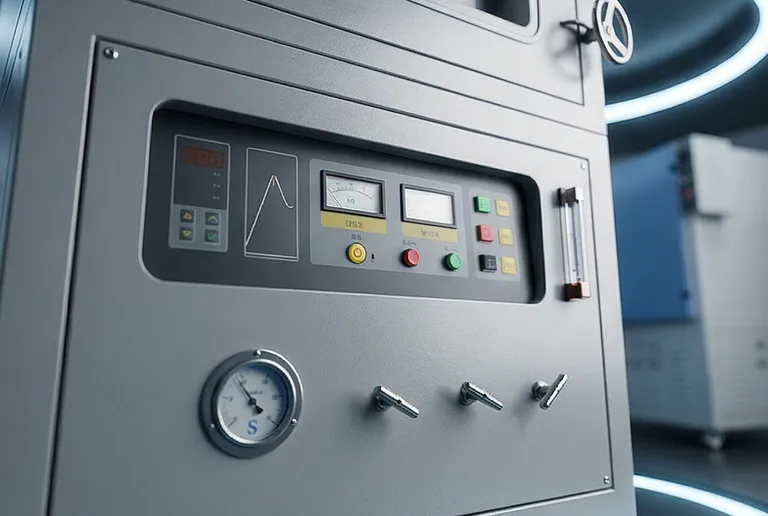
This is where the high-temperature vacuum furnace becomes an indispensable tool rather than a luxury. It addresses the root cause of alloy failure through two critical mechanisms:
- Extreme Oxygen Suppression: By operating in a high vacuum, the partial pressure of oxygen is lowered to a point where oxidation simply cannot occur. This preserves the purity of the Tungsten and Rhenium, allowing for a clean metallurgical bond.
- Facilitated Outgassing: The vacuum environment actively draws out impurity gases and moisture trapped within the metal powder. This ensures that when solid-state diffusion occurs at 1650°C, the particles can achieve "deep densification," resulting in a purer, stronger, and more uniform product.
At KINTEK, our vacuum furnaces are engineered specifically for these delicate balances. We understand that for materials like W-Re or W-Si, being off by just a few degrees or a few pascals of pressure can mean the difference between a high-performance component and a pile of scrap. Our systems provide the stable, ultra-low oxygen environment required to ensure your 120-minute soak at 1650°C actually delivers the density you calculated on paper.
Unlocking New Potential in Refractory Metals
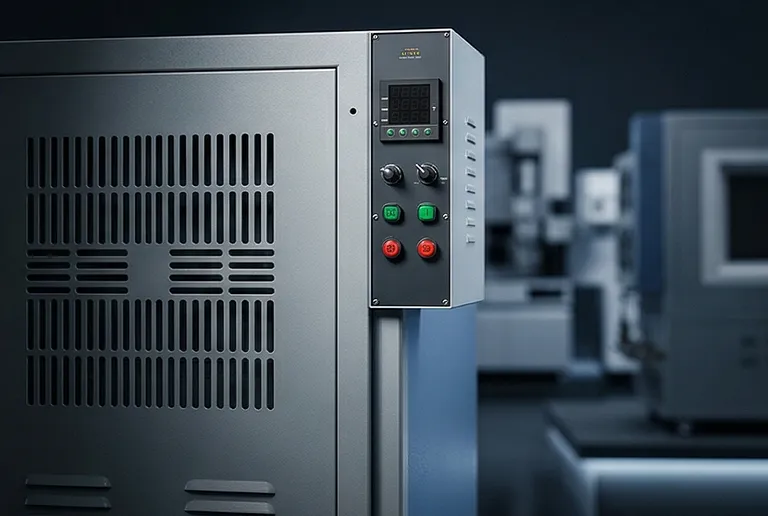
When you solve the problem of oxidation and inconsistent density, you unlock a new level of engineering possibility. With reliably sintered 80W–20Re alloys, you are no longer just "trying to get a good batch"—you are producing materials capable of surviving the most extreme environments on Earth (and beyond).
By mastering the vacuum sintering process, you can:
- Accelerate R&D: Move from prototyping to production faster with predictable, repeatable material properties.
- Enhance Performance: Produce aerospace components with superior thermal stability and corrosion resistance.
- Optimize Costs: Eliminate the waste of expensive Rhenium and reduce the rate of rejected parts.
Whether you are developing next-generation electronic substrates or high-strength aerospace alloys, the right thermal environment is the foundation of your success.
The challenges of sintering complex alloys shouldn't be a roadblock to your innovation. Our team at KINTEK specializes in helping laboratories transition from "unstable results" to "precision manufacturing" through our customizable range of high-temperature vacuum and atmosphere furnaces. If you are struggling with material density, oxidation, or inconsistent mechanical properties, let’s explore a solution tailored to your specific alloy requirements. Contact Our Experts today to discuss your project.
Related Products
- Vacuum Heat Treat Sintering Furnace with Pressure for Vacuum Sintering
- 9MPa Air Pressure Vacuum Heat Treat and Sintering Furnace
- Vacuum Heat Treat Sintering Furnace Molybdenum Wire Vacuum Sintering Furnace
- Controlled Inert Nitrogen Hydrogen Atmosphere Furnace
- 2200 ℃ Tungsten Vacuum Heat Treat and Sintering Furnace
Related Articles
- Why Your Sintered Parts Fail: It’s Not Just About Heat, But Pressure and Purity
- Why Your Stainless Steel Parts Fail Pressure Tests—and How Vacuum Sintering Fixes the Density Gap
- Why Your Electrochromic Electrodes Fail During Sintering—And How Vacuum Control Restores Transparency
- Why Your 3D-Printed Maraging Steel Parts Aren't Performing—And How to Fix the Structural Weakness
- How Vacuum Pressure Sintering Furnaces Elevate Material Performance Across Industries



















