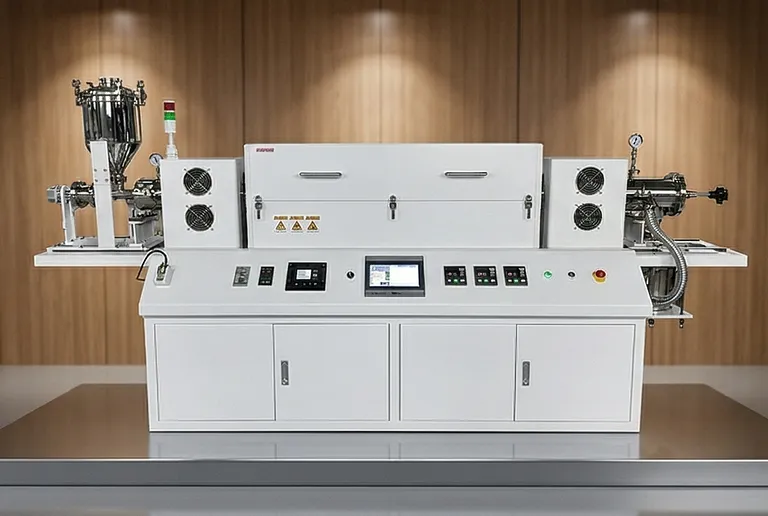
The "Hidden Defect" in Your High-Performance Metal Prints
You’ve successfully printed a complex Maraging steel component. Geometrically, it’s a masterpiece—sharp edges, intricate internal channels, and lightweight structures that traditional machining couldn’t touch. But there is a problem. Despite the visual perfection, the part is brittle, its internal stresses are a ticking time bomb, and the mechanical properties are nowhere near the material’s theoretical limits.
For many engineers and lab managers, this is the "valley of despair" in additive manufacturing (AM). You have the right design and the right material, but the finished product fails during testing or lacks the fatigue strength required for critical applications. The reason isn't the printer; it’s what happens—or doesn't happen—after the print is finished.
The Trap of Traditional Post-Processing
When faced with a brittle or unstable part, the instinct is to "heat it up" to relieve stress. However, Maraging steel is a sophisticated alloy. If you attempt to treat these parts in a standard atmosphere furnace, you often exchange one problem for two new ones:
- Surface Oxidation and Decarburization: At the high temperatures required for treatment, oxygen is the enemy. It reacts with the metal surface, creating a scale that ruins dimensional accuracy and depletes the carbon content (decarburization), leading to a soft, "dead" outer layer that compromises the part’s integrity.
- Dimensional Instability: Without precise temperature control and uniform heating, the very act of heating can cause the part to warp or crack, negating the precision of the 3D printing process.
The result? Scrapped parts, delayed project timelines, and a significant waste of expensive metal powders.
Why the "As-Printed" Microstructure Is Your Biggest Obstacle
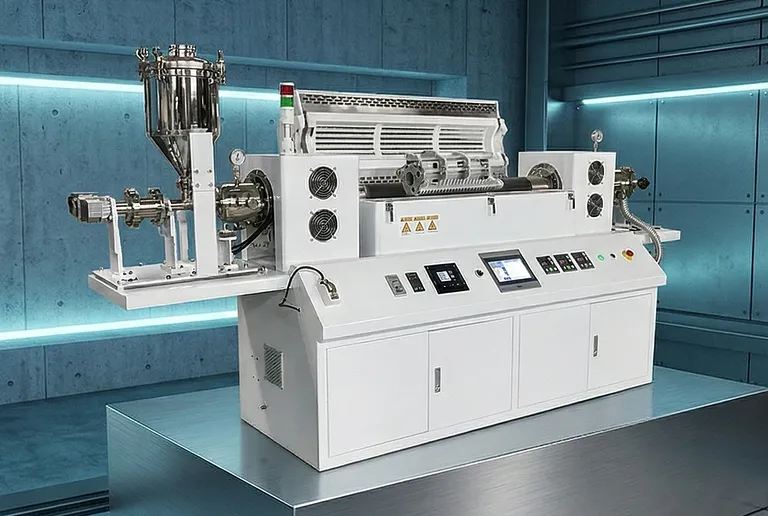
To understand why simple heating fails, we must look at the science of the print. During the additive manufacturing process, the metal undergoes rapid melting and cooling. This creates a highly non-uniform, "as-printed" microstructure filled with residual stresses and metastable phases.
In Maraging steel, this non-uniformity prevents the material from reaching its signature high strength and toughness. To fix this, the material’s "DNA" needs a total reset. This requires Solution Treatment—typically heating the part to a precise range between 960°C and 1038°C.
At this temperature, the chaotic, as-printed grain structure is transformed into a uniform austenite structure. This isn't just a minor tweak; it is a fundamental reconfiguration of the material. This uniform state is the essential foundation. Without it, subsequent hardening and aging steps will fail to produce the desired mechanical properties.
Precision Vacuum Heat Treatment: The Scientific Reset Button
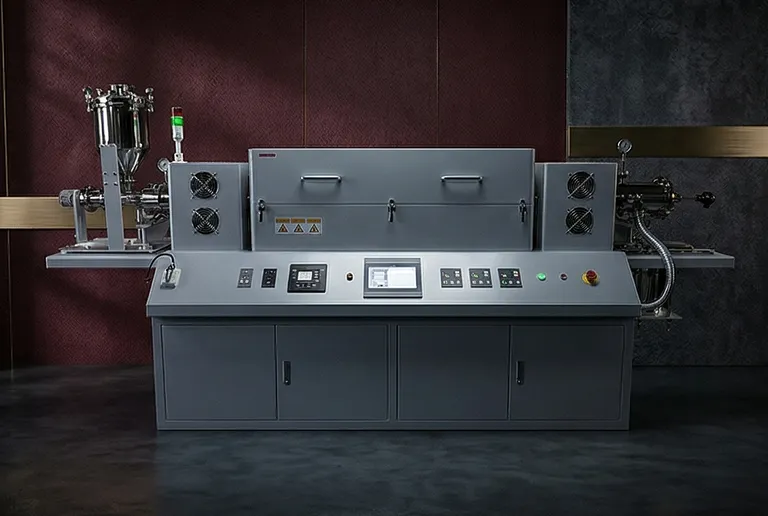
Solving the structural issues of Maraging steel requires an environment where physics is under your absolute control. This is where an industrial vacuum heat treatment furnace becomes the indispensable final stage of the production line.
By removing the air entirely, a vacuum furnace addresses the root cause of post-processing failure:
- Total Atmospheric Isolation: In a vacuum, there is no oxygen to react with. This effectively prevents oxidation and decarburization, ensuring the part comes out as clean and chemically precise as it went in.
- Uniform Thermal Cycles: Modern vacuum furnaces allow for multi-stage cycles—such as homogenization at 1200°C followed by solution treatment at 980°C. This level of control ensures that even the most complex internal geometries reach the target temperature simultaneously, eliminating the internal "tug-of-war" of residual stress.
- Repeatable Excellence: Unlike manual or open-air methods, vacuum technology offers unparalleled repeatability. Whether you are treating a single prototype or a full batch of dental implants or aerospace components, the metallurgical result remains identical.
Unlocking the Full Potential of Additive Manufacturing
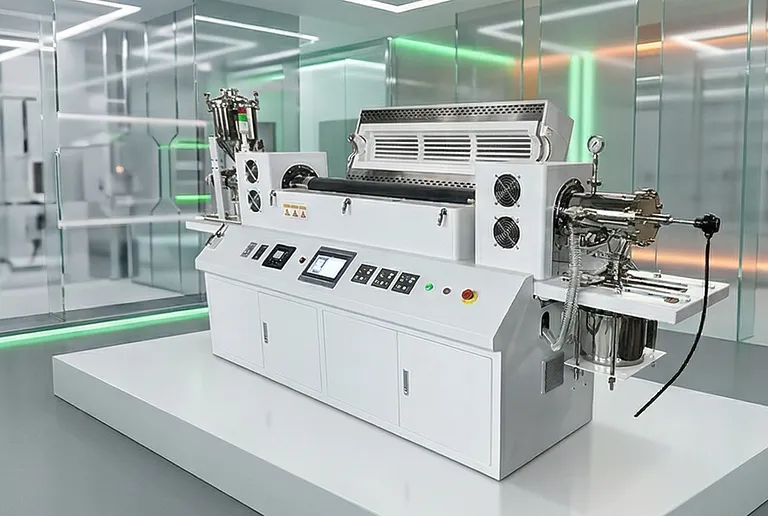
Once the hurdle of post-processing is cleared, the possibilities for your laboratory or production facility expand dramatically. By mastering the microstructure of Maraging steel (and other alloys like Ti6Al4V or IN718), you move beyond "making parts" to "engineering performance."
With a stabilized, stress-free microstructure, you can now produce components that boast superior fatigue strength and dimensional stability. You can confidently deploy 3D-printed parts in high-stakes environments—from high-pressure hydraulic manifolds to precision tooling and medical-grade instruments—knowing they will perform exactly as the material science intended.
At KINTEK, we don't just provide furnaces; we provide the thermal precision required to turn a 3D-printed "shape" into a high-performance industrial component. Whether you need a customizable vacuum tube furnace for R&D or an industrial-grade atmosphere furnace for production-scale solution treatments, our team is ready to help you overcome your toughest material challenges. Let’s work together to ensure your additive manufacturing projects reach their full potential.
Contact Our Experts today to discuss your specific heat treatment requirements.
Related Products
- Vacuum Heat Treat Furnace with Ceramic Fiber Liner
- 2200 ℃ Graphite Vacuum Heat Treat Furnace
- Molybdenum Vacuum Heat Treat Furnace
- 2200 ℃ Tungsten Vacuum Heat Treat and Sintering Furnace
- Vacuum Heat Treat Sintering Furnace with Pressure for Vacuum Sintering
Related Articles
- Why Your Ti-6Al-4V Parts Crack Under Pressure—The Hidden Science of Vacuum Heat Treatment
- From Brute Force to Perfect Control: The Physics and Psychology of Vacuum Furnaces
- The Most Important Number in a Vacuum Furnace Isn't Its Temperature
- Mastering the Void: How Custom Vacuum Furnaces Forge the Future of Materials
- Why Your Advanced NiTi Coatings Fail Post-Deposition—and How to Fix It



















