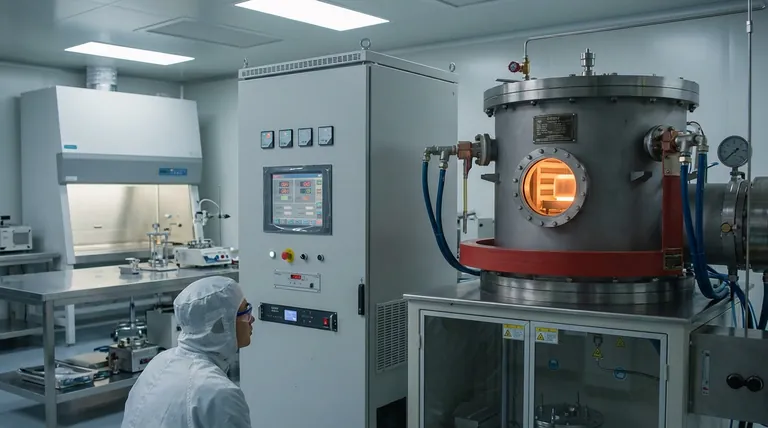
The Allure of a Simple Number
Ask an engineer about a new furnace, and the first question is almost always, "What's its max temp?"
It's a natural human impulse. We crave simple, powerful metrics. A higher number feels like a better capability. A car's top speed, a processor's clock rate, a furnace's maximum temperature.
But in the world of advanced materials, focusing solely on temperature is like judging a surgeon by the sharpness of their scalpel. It matters, but it misses the entire point of the operation.
The most critical variable in a vacuum furnace is not the heat you put in, but the air you take out.
The Physics of Nothingness
At the temperatures required to harden steel, braze complex alloys, or sinter ceramics, common air becomes a corrosive agent. Oxygen, the gas that gives us life, becomes a source of contamination and failure.
Preventing the Unseen Enemy: Oxidation
Heat accelerates chemical reactions. At 1000°C, a pristine metal surface will react with oxygen in seconds, forming a brittle, discolored oxide layer. This isn't just a cosmetic issue; it fundamentally degrades the material's structural integrity, electrical properties, and performance.
A vacuum furnace's primary job is to create an environment where this can't happen. By pumping out the atmosphere, it removes the reactive gases, creating a near-perfectly inert stage for thermal processing. The result is a bright, clean component, free from the contamination of a conventional furnace.
The Deep Clean: Outgassing
The vacuum does more than just shield the material from the outside. As a component heats up in a low-pressure environment, the vacuum actively pulls trapped gases and volatile impurities out from within the material itself.
This process, called outgassing, is a form of purification. It increases the final density and purity of the component in a way that is simply impossible in an atmospheric furnace. The void isn't just a shield; it's a purifier.
Temperature as a Tool, Not a Goal
Once this pristine, inert environment is established, temperature becomes the precision tool to transform the material. The required temperature is dictated entirely by the physics of the process, not by a desire for the highest number.
- The Workhorse Range (800°C - 1650°C): This covers the vast majority of industrial applications, including heat treating steel alloys, annealing sensitive components, and brazing complex assemblies.
- The Frontier (Beyond 2000°C): Processing advanced materials requires far more extreme conditions. Sintering technical ceramics or processing refractory metals like tungsten demands furnaces that can reach and sustain temperatures as high as 3000°C.
| Application | Typical Temperature Range | Key Benefit of the Vacuum Environment |
|---|---|---|
| Steel Heat Treating | 1000°C - 1350°C (1832°F - 2400°F) | Oxidation-free hardening & annealing |
| High-Strength Brazing | Up to 1650°C (3000°F) | Strong, clean joints in complex assemblies |
| Sintering / Refractories | 1300°C - 3000°C (2400°F - 5400°F) | High-purity, high-density material processing |
The Hallmarks of Mastery: Precision and Uniformity
A truly great vacuum furnace is defined not by its peak temperature, but by its control. It's the difference between a bonfire and a surgeon's laser.
Two metrics reveal this mastery:
- Temperature Uniformity: The ability to maintain a consistent temperature—often within +/- 5°C—across the entire workload. This ensures that every part of a component receives the exact same thermal treatment.
- Setpoint Controllability: The precision to hit and hold a target temperature, sometimes to within +/- 1°C. This guarantees that the process is repeatable, reliable, and scientifically valid.
Choosing Your Instrument
Selecting a furnace begins by understanding your process, not by chasing a temperature spec. The trade-offs are significant. The cost of a furnace increases exponentially with its temperature capability, as more exotic heating elements and insulation materials are required. Cycle times are long, and the maintenance of high-vacuum systems demands specialized expertise.
This complexity means choosing a partner is as important as choosing a machine. You need a solution tailored to your specific material and processing goals.
KINTEK's foundation in R&D and manufacturing allows for precisely this. We build systems designed for specific outcomes, whether it's a customizable Tube or Muffle furnace for foundational research or a highly specialized CVD or high-temperature vacuum system for processing next-generation materials. We understand that the perfect outcome depends on a perfect, controlled environment.
If you are ready to move beyond simple numbers and achieve truly precise, contamination-free results, we can help design the right instrument for your work. Contact Our Experts.
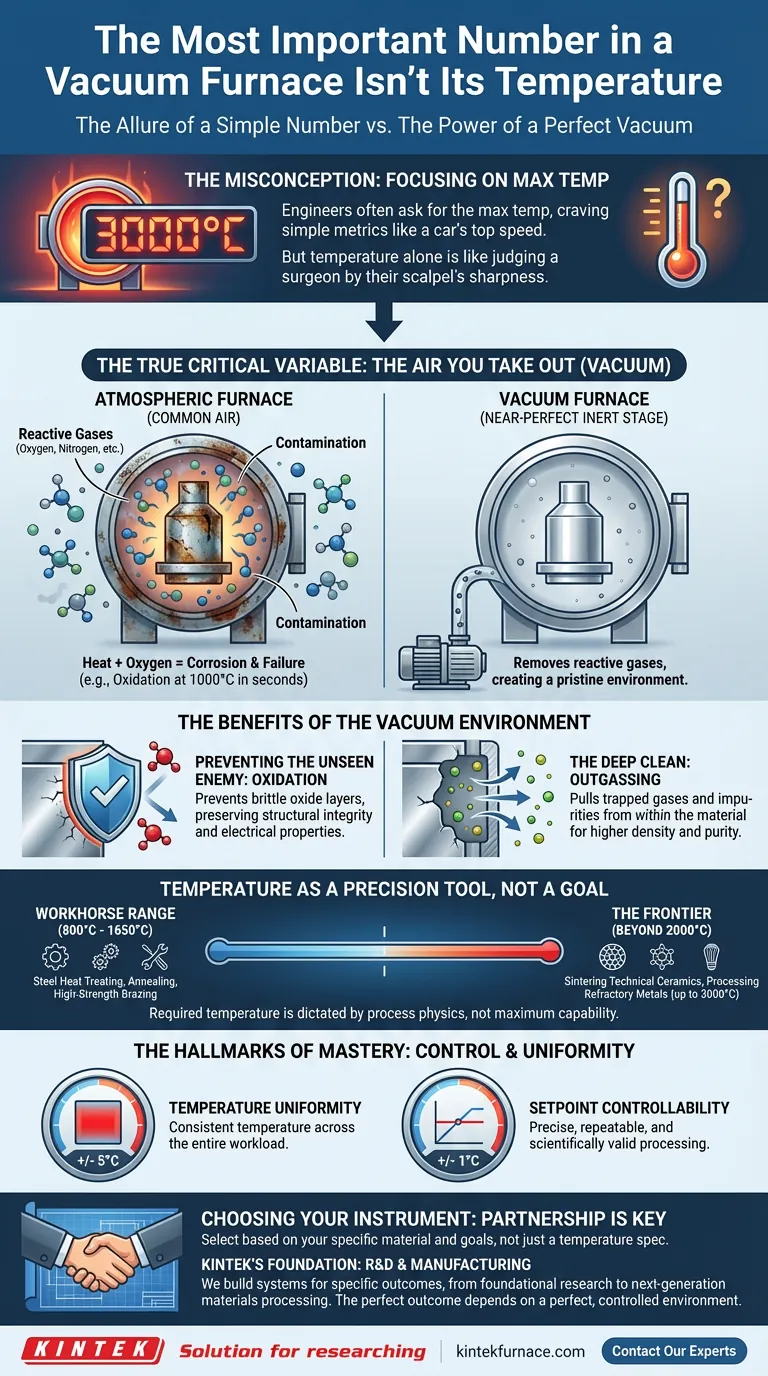
Visual Guide
Related Products
- 600T Vacuum Induction Hot Press Vacuum Heat Treat and Sintering Furnace
- Vacuum Hot Press Furnace Machine Heated Vacuum Press
- 2200 ℃ Tungsten Vacuum Heat Treat and Sintering Furnace
- Vacuum Hot Press Furnace Machine Heated Vacuum Press Tube Furnace
- Vacuum Heat Treat Furnace with Ceramic Fiber Liner
Related Articles
- How Vacuum Hot Press Furnaces Transform Advanced Material Engineering
- How to Select the Right Vacuum Hot Pressing Furnace Temperature for Your Materials
- How Vacuum Pressure Sintering Furnaces Elevate Material Performance Across Industries
- Beyond the Parts List: The Real Reason Your Vacuum Hot Press Fails (And How to Fix It)
- Why Your High-Temperature Materials Fail: The Hidden War Inside Your Furnace



















