Why Your High-Performance Coating Still Cracks Under Pressure
You’ve invested significant time and resources into perfecting your spraying process—perhaps using HVOF or plasma spraying—to apply a Fe-Cr-Al (Iron-Chromium-Aluminum) coating. On paper, this coating is the perfect shield against high-temperature corrosion. But then comes the post-treatment annealing.
Instead of a dense, stress-free protective layer, you find the coating is brittle, shows signs of premature "peeling," or the microstructural analysis reveals a chaotic mess of oxides rather than the stable phases you expected. It is a frustrating and costly setback. Why does a process meant to "heal" the material often end up compromising it?
The Paradox of Protection: When Standard Heating Fails
Most engineers and lab technicians recognize that annealing is necessary to eliminate internal stresses and promote the formation of strengthening phases like FeAl intermetallic compounds. However, the common struggle lies in the environment where this heating happens.
Many attempt to solve this using standard muffle furnaces or "inert" gas environments. The logic seems sound: "If I use Argon, the material won't oxidize." Unfortunately, in the world of advanced metallurgy, "mostly pure" isn't enough. At temperatures like 800°C or 1050°C, even trace amounts of oxygen in a gas-purged furnace are enough to trigger uncontrolled oxidation.
The consequences are severe:
- Chemical Degradation: The very aluminum meant to protect the alloy is "stolen" by trace oxygen to form surface oxides before it can diffuse into the structure.
- Mechanical Failure: Internal stresses from the spraying process remain trapped because the microstructure couldn't evolve properly.
- Project Delays: Failed batches mean repeating expensive coating cycles and missing critical research or production deadlines.
The Invisible Enemy: Oxygen Partial Pressure
The root of the problem isn't the temperature; it’s the Oxygen Partial Pressure. To understand why your coatings are failing, we have to look at the physics of the furnace environment.
For Fe-Cr-Al alloys and high-entropy alloys (like AlCoCrFeNi), the aluminum and chromium atoms are highly reactive. At high temperatures, they have a higher "affinity" for oxygen than they do for the metal lattice. In a standard atmosphere, or even a low-grade vacuum, the oxygen partial pressure is high enough to form an oxide barrier on the surface of every grain and powder particle.
This oxide barrier acts like a wall, preventing atomic diffusion. Without diffusion, atoms cannot rearrange themselves into the Body-Centered Cubic (BCC) or Face-Centered Cubic (FCC) dual-phase structures required for mechanical toughness. To stop this, you don't just need "less" air; you need a high-vacuum environment—often reaching levels of $10^{-2}$ Pa or even $10^{-5}$ torr.
By stripping the environment of oxygen molecules, you allow the atoms the "freedom" to move. This facilitates:
- Stable Phase Formation: Promoting FeAl intermetallics that provide the coating's core strength.
- Stress Relief: Allowing the metal lattice to relax and eliminate the "quenched-in" stresses from the spraying process.
- Impurity Removal: Driving out adsorbed gases and volatile impurities that would otherwise create pores and weak spots at the grain boundaries.
Engineering the Void: KINTEK Vacuum Furnaces as a Precision Tool
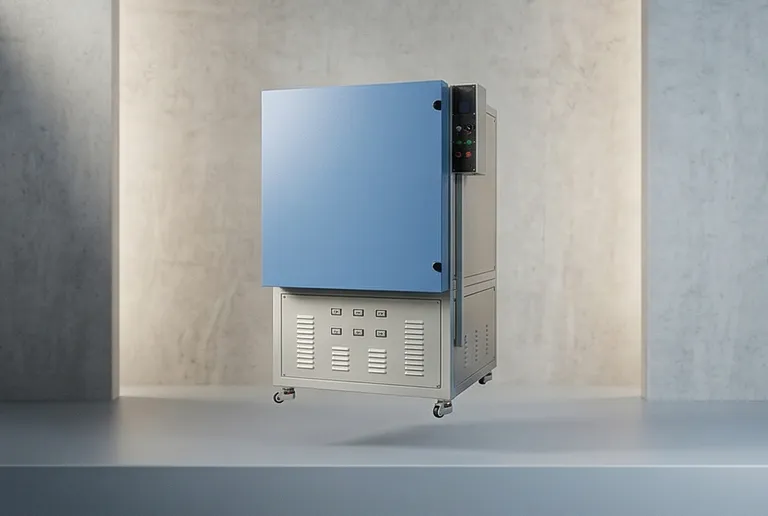
Solving the oxidation problem requires more than just a heater; it requires a tool designed to manage the "void." KINTEK High-Temperature Vacuum Furnaces are engineered specifically to address these metallurgical hurdles.
Our systems—ranging from vacuum tube furnaces for controlled atmosphere research to high-capacity vacuum muffle and hot press furnaces—are built to maintain the ultra-low oxygen partial pressures necessary for sensitive alloys.
- Precision Control: Our furnaces can maintain environments $\le 10^{-2}$ Pa, ensuring that materials like Al0.3CoCrFeNiMo0.75 transition from a metastable state to an equilibrium microstructure without chemical degradation.
- Thermal Uniformity: High-temperature stability (up to 1100°C and beyond) ensures that diffusion occurs evenly across the entire component, preventing "patchy" microstructures.
- Multi-Functional Design: Whether you need a vacuum hot press to remove adsorbed gases from powder surfaces or a tube furnace to manage precise nitrogen-to-hydrogen ratios for grain boundary strengthening (like Fe0.64N0.36 formation), KINTEK equipment provides the flexibility to match your specific chemical path.
Unlocking New Potential in Material Science
When you eliminate the "invisible enemy" of premature oxidation, the possibilities for your materials expand dramatically. A properly vacuum-annealed Fe-Cr-Al coating isn't just a layer; it’s a high-density, corrosion-resistant shield with excellent fracture toughness.
Beyond simply "fixing" the oxidation problem, high-vacuum thermal processing allows you to:
- Explore New Alloys: Confidently work with high-entropy alloys and nanocrystalline ribbons that are otherwise impossible to treat.
- Enhance Electrical Performance: In 2D materials like ReSe2/h-BN heterostructures, vacuum annealing reduces interfacial contact resistance by driving out residual air.
- Achieve Superior Density: In vacuum hot pressing, the removal of surface oxides allows for better grain boundary bonding, leading to near-theoretical material density.
At KINTEK, we understand that your work isn't just about heating metal—it's about mastering the delicate balance of chemistry and physics to create the next generation of high-performance materials. Our team of specialists is ready to help you configure a vacuum solution that turns your technical challenges into competitive advantages. Contact Our Experts today to discuss how we can optimize your annealing and sintering protocols.
Related Products
- 2200 ℃ Tungsten Vacuum Heat Treat and Sintering Furnace
- High Pressure Laboratory Vacuum Tube Furnace
- 9MPa Air Pressure Vacuum Heat Treat and Sintering Furnace
- 2200 ℃ Graphite Vacuum Heat Treat Furnace
- 1400℃ Controlled Inert Nitrogen Atmosphere Furnace
Related Articles
- Why Your High-Strength Titanium Biomaterials Are Brittle—and How Vacuum Heat Treatment Fixes It
- Why Your Alloy Phase Separation Observations Are Inconsistent—And the "Invisible" Variable You’re Missing
- The Unseen Engine: Why Graphite Dominates High-Temperature Vacuum Furnaces
- Heat, Void, and Control: Designing the Heart of a High-Temperature Vacuum Furnace
- The Paradox of Strength: Why Graphite Dominates High-Temperature Vacuum Furnaces



















