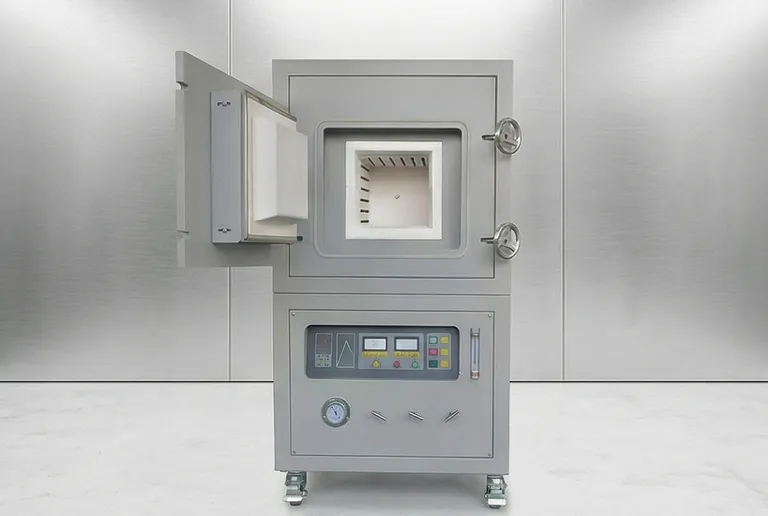
The Frustration of the "Perfect" Temperature and the Failed Result
You have meticulously prepared your wurtzite boron nitride (wBN) powder. You have dialed in the exact sintering temperature and pressure recommended by the literature. You place the sample into the furnace, eager to produce a bulk material with the legendary hardness and thermal stability wBN is known for.
Yet, when the cycle ends, the results are underwhelming. The bulk is surprisingly brittle. The hardness values are inconsistent across the sample. Under the microscope, instead of a dense, uniform microstructure, you see irregular, elongated grains that look more like a mess of rods than a cohesive solid.
Where did it go wrong? Often, the culprit isn't the temperature you reached, but how fast you got there.
The High Cost of the "Efficiency" Trap
In a busy laboratory or production environment, time is the most expensive resource. It is tempting to push the limits of your equipment, cranking up the heating ramp to reach sintering temperatures as quickly as possible. The logic seems sound: "The sooner we hit the target temperature, the sooner the sintering begins."
However, this "efficiency" often leads to a cascade of technical failures:
- Structural Distortion: Rapid heating creates massive temperature gradients between the surface and the core of your sample.
- Internal Cracking: As seen in carbonization processes, excessive internal local pressure from uneven thermal expansion or gas evolution can literally tear a material apart from the inside.
- Microstructural Chaos: In materials like wBN, "fast" is synonymous with "uncontrolled."
The business consequences are clear: wasted precursor materials, weeks of lost research time, and products that fail to meet the rigorous thermomechanical stability standards required for extreme industrial applications.
The Science of Sintering: Why Speed Destroys Hardness
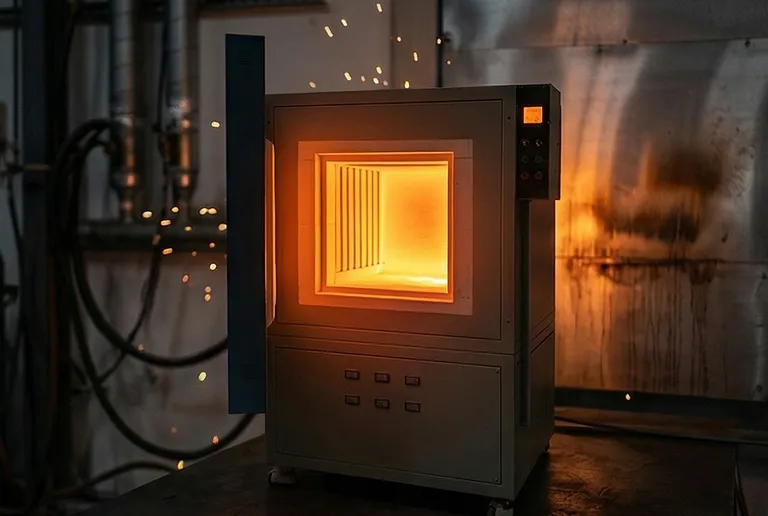
To understand why a rapid heating rate—even one that seems moderate—can ruin a sample, we have to look at the sintering kinetics at the microscopic level.
When sintering wurtzite boron nitride, the goal is to promote the thorough rearrangement and bonding of powder particles. This requires a delicate balance. If the heating rate exceeds a critical threshold (typically 100°C per minute, though often much lower for specific composites), the material enters a state of abnormal grain growth.
Instead of the particles bonding into a tight, uniform matrix, certain grains begin to grow at the expense of others at an uncontrollable speed. In wBN, this manifests as undesirable long rod-like morphologies. Because these rods do not pack efficiently and create stress concentrators, the overall hardness of the material plummets.
Furthermore, precise control (often as granular as 7.5°C to 10°C per minute) is required to ensure that any binders or volatile components decompose uniformly. Without this "slow-motion" transition, the internal pressure can cause structural collapse or leave behind large pores that act as "seeds" for future fractures.
Precision Control: The Bridge Between Powder and Performance
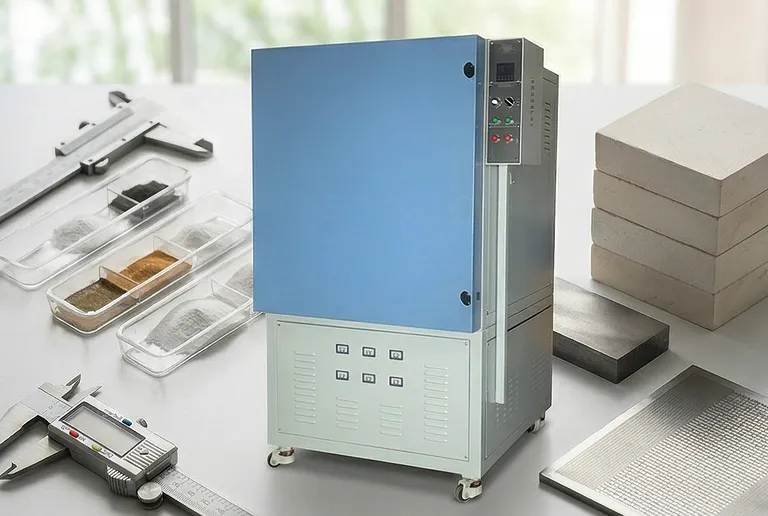
The solution to these microscopic failures is not found in the chemistry of the powder, but in the intelligence of the furnace. To achieve the "ideal" microstructure, you need a thermal system that views the heating rate not as a secondary setting, but as a primary tool for material design.
This is where KINTEK’s precision programmed control systems become indispensable. Our high-temperature furnaces—whether vacuum, tube, or muffle—are engineered to handle the strict limitations required for advanced ceramics and nanolattices.
By utilizing a KINTEK programmed controller, you can:
- Enforce Strict Ramp Limits: Precisely maintain rates below 100°C/min for wBN, or as low as 8°C/min for delicate vacuum sintering, preventing thermal shock and local overheating.
- Optimize Pore Evolution: Facilitate the controlled development of microstructures, ensuring high dispersion of species and beneficial gas diffusion paths.
- Stabilize Microstructures: Use automated dwell times to ensure the completeness of reactions, reducing residual stresses that lead to structural failure.
Our furnaces aren't just heating boxes; they are precision instruments designed to manage the kinetic path of your material from start to finish.
From Solving Problems to Unlocking Potential
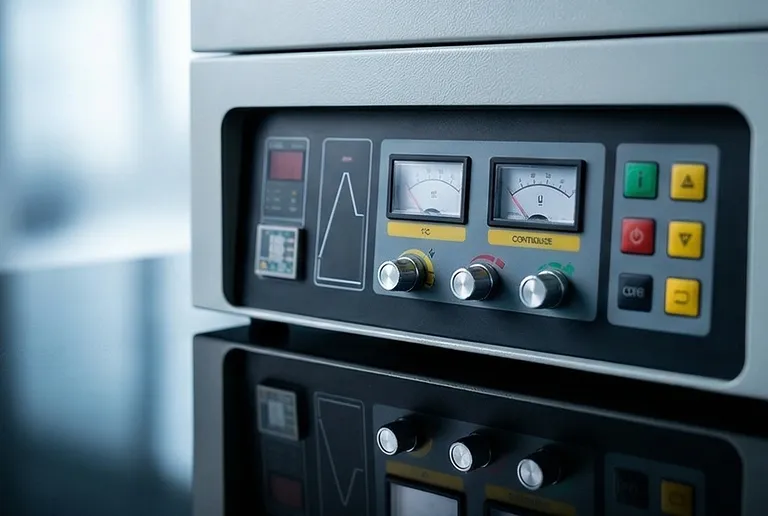
When you master the heating rate, the focus of your work shifts from "troubleshooting failures" to "pushing boundaries."
By eliminating abnormal grain growth and internal defects through precise thermal management, you unlock the full potential of your materials. For wBN, this means achieving maximum theoretical hardness consistently. For composite materials and nanolattices, it means reaching levels of thermomechanical stability that were previously impossible.
You can now scale your research with confidence, knowing that the microstructure you achieved in the lab will be the same microstructure you see in production. Whether you are developing the next generation of super-hard cutting tools or advanced catalysts, the secret to your success lies in the discipline of the ramp.
At KINTEK, we understand that your research depends on more than just "high heat"—it depends on absolute control over the thermal journey of your materials. Our team of experts specializes in customizing furnace solutions that meet the specific kinetic requirements of your most challenging projects, from CVD applications to complex vacuum sintering. Let us help you transform your technical hurdles into a competitive advantage. Contact Our Experts
Related Products
- 2200 ℃ Tungsten Vacuum Heat Treat and Sintering Furnace
- High Temperature Muffle Oven Furnace for Laboratory Debinding and Pre Sintering
- 2200 ℃ Graphite Vacuum Heat Treat Furnace
- 1700℃ Controlled Inert Nitrogen Atmosphere Furnace
- Vacuum Heat Treat Sintering Furnace Molybdenum Wire Vacuum Sintering Furnace
Related Articles
- Why Your High-Strength Titanium Biomaterials Are Brittle—and How Vacuum Heat Treatment Fixes It
- Why Your Alloy Phase Separation Observations Are Inconsistent—And the "Invisible" Variable You’re Missing
- The Unseen Engine: Why Graphite Dominates High-Temperature Vacuum Furnaces
- Heat, Void, and Control: Designing the Heart of a High-Temperature Vacuum Furnace
- The Paradox of Strength: Why Graphite Dominates High-Temperature Vacuum Furnaces



















