The Invisible Saboteur in Your High-Temperature Lab
You have spent weeks preparing your ceramic precursors and silicon wafers. You set your furnace to the exact temperature required for sintering, expecting a high-performance bond. But when the cooling cycle ends, the results are a disaster: the material is brittle, the interface is discolored with a "glassy" layer, and the electrical or mechanical properties are nowhere near your theoretical models.
What went wrong? In high-temperature materials science, heat is only half the equation. The other half is the environment. If you are working with silicon-based ceramics and your furnace cannot achieve a "pure" environment, you aren't actually measuring a material reaction—you are measuring the catastrophic effects of contamination.
The Common Struggle: Why "Hot Enough" Isn't Good Enough
Many researchers and engineers attempt to solve interface issues by adjusting the temperature ramp or increasing the dwell time. However, if the fundamental atmosphere is compromised, these adjustments only accelerate the failure.
When working with materials like Silicon Carbide (SiC) or Silicon Nitride ($Si_3N_4$), the most common "solutions"—such as using a standard furnace with a basic seal—often lead to several critical business and technical failures:
- Material Degradation: At high temperatures, SiC reacts greedily with even trace amounts of oxygen to form Silicon Dioxide ($SiO_2$). This "glass" layer prevents direct bonding between grains, leading to poor mechanical strength.
- Inconsistent Data: Without a controlled environment, every test run produces different results based on the humidity or oxygen levels in the lab that day, rendering your R&D data useless for scaling.
- Thermal Decomposition: Silicon nitride is thermodynamically unstable at extreme heats; without precise partial pressure control, it can literally decompose into silicon and nitrogen gas, destroying the lattice structure you worked so hard to build.
The Root of the Problem: Atmosphere Interference
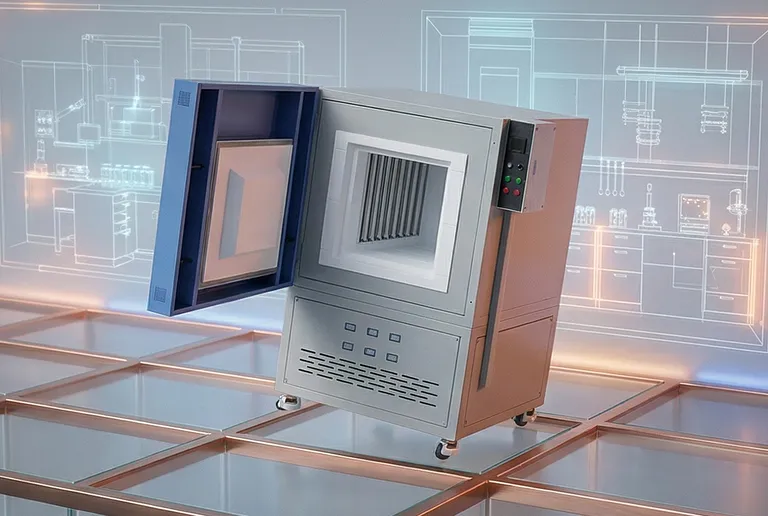
The reason your tests fail is simple: High-temperature chemistry is highly sensitive to oxygen partial pressure.
Standard laboratory air contains moisture and oxygen that are "poison" to silicon-ceramic reactions. To truly observe the interaction between a silicon wafer and a ceramic interface, you must first create a "void"—a space where no outside actors can interfere.
The science requires a two-step environmental mastery:
- Vacuum Pre-treatment ($10^{-6}$ Torr): High vacuum is not just for insulation. Achieving vacuum levels of approximately $10^{-6}$ Torr is the only effective way to "scrub" the system of residual oxygen and moisture trapped in the chamber and on the specimen's surface.
- Inert Atmosphere Protection: Once the contaminants are removed, introducing high-purity Argon (Ar) provides a controlled, inert environment. This ensures that any observed defects or diffusion products are the result of the silicon and the ceramic interacting—not the silicon and the air.
Without these steps, you are effectively trying to perform surgery in a dusty room.
The Solution: Not Just a Furnace, But a Controlled Ecosystem
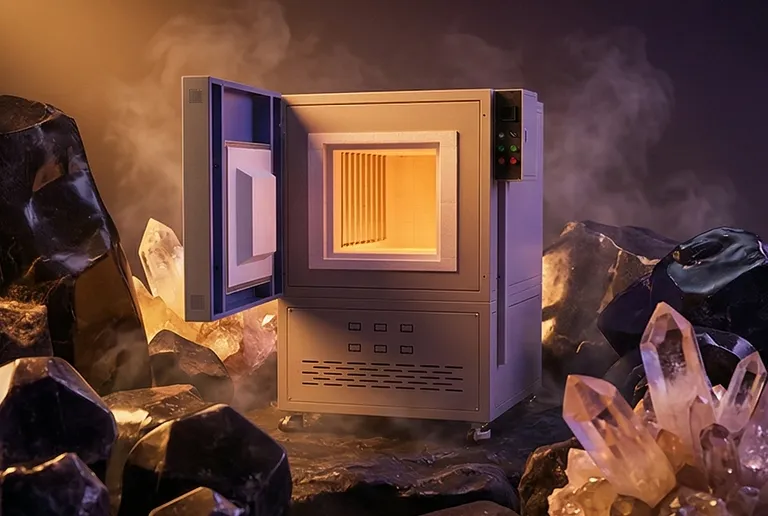
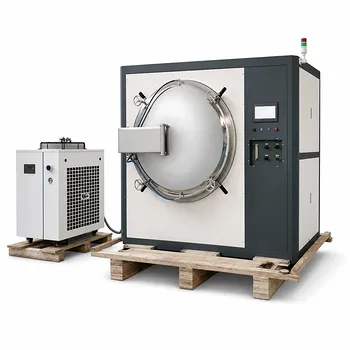
To solve the root cause of oxidation and decomposition, you need a tool designed for environmental integrity. KINTEK’S high-temperature vacuum and atmosphere-controlled furnaces are engineered specifically to be that "controlled ecosystem."
Our systems aren't just heaters; they are precision instruments for atmosphere management:
- High-Vacuum Capability: Our furnaces reach the $10^{-6}$ Torr threshold required to evacuate volatiles and oxygen before the heat cycle addresses the material.
- Precise Gas Management: Integrated mass flow controllers allow for the seamless introduction of high-purity argon or nitrogen, maintaining the exact partial pressure needed to inhibit the thermal decomposition of $Si_3N_4$ or prevent the oxidation of SiC.
- Narrow Thermal Windows: For processes like Vacuum Hot Pressing (VHP) of aluminum-silicon composites, where exceeding a specific temperature (like 655°C) can cause brittle phase formation or melting, our furnaces provide the stability to stay within that narrow success window.
Beyond the Fix: Unlocking New Material Possibilities
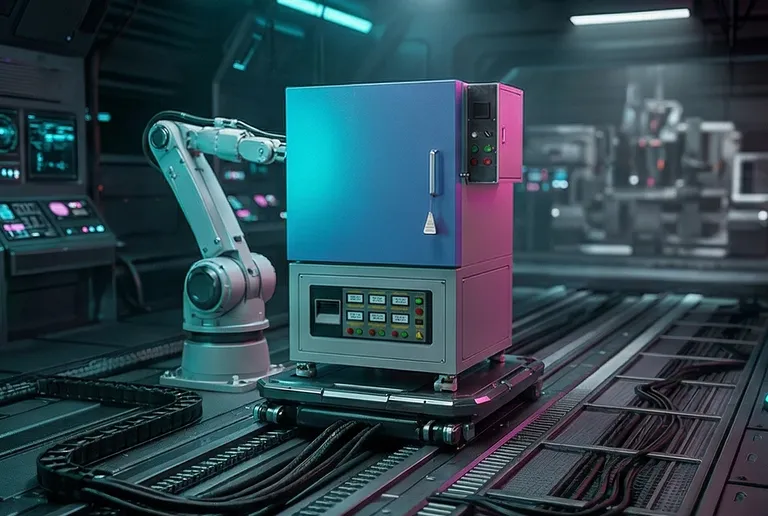
When you eliminate the "noise" of unintended oxidation, you open the door to a new level of materials engineering. By mastering the furnace environment, you can move beyond simple troubleshooting and start exploring advanced horizons:
- Polymer Infiltration and Pyrolysis (PIP): Successfully decompose polyamide templates in oxygen-free conditions to create amorphous SiC matrices with zero degradation.
- High-Entropy Ceramics: Sinter Diboride ceramics that are notoriously sensitive to oxygen, ensuring the purity of the high-entropy solid solution phase.
- Direct Diffusion Bonding: Achieve "perfect" interfaces in ceramics for aerospace or semiconductor applications where thermal conductivity is paramount.
Solving the vacuum and atmosphere challenge doesn’t just fix a failed experiment—it accelerates your entire R&D lifecycle by providing results you can trust the first time, every time.
At KINTEK, we understand that your research is only as good as the environment you conduct it in. Whether you are dealing with challenging silicon-ceramic interfaces or looking to scale a complex sintering process, our team is ready to help you engineer a solution tailored to your specific atmosphere requirements. Contact Our Experts today to discuss how our customizable high-temperature vacuum systems can provide the clarity your project deserves.
Related Products
- 1400℃ Muffle Oven Furnace for Laboratory
- 2200 ℃ Tungsten Vacuum Heat Treat and Sintering Furnace
- Molybdenum Vacuum Heat Treat Furnace
- 2200 ℃ Graphite Vacuum Heat Treat Furnace
- Vacuum Heat Treat Sintering Furnace Molybdenum Wire Vacuum Sintering Furnace
Related Articles
- Why Your Muffle Furnace Might Be Masking Your Alloy Kinetics—And How to Fix It
- Why Your Ceramic Sintering Fails Before It Even Starts—And How Strategic Pretreatment Rescues Your Yields
- The Hidden Saboteur in Your HT-LiCoO2 Synthesis: Why Precise Ramp Rates Can Make or Break Your Battery Materials
- Why High-Purity Gas Fails Your High-Temp Brazing—And How Mono-Silane Doping Fixes It
- Why Your High-Temperature Experiments Fail: The Hidden Flaw in Your Furnace