Blog Stop Losing Your Thin Films to Oxidation: Why Ultra-High Vacuum RTA is the Key to Unlocking Material Stability
Stop Losing Your Thin Films to Oxidation: Why Ultra-High Vacuum RTA is the Key to Unlocking Material Stability

Stop Losing Your Thin Films to Oxidation: Why Ultra-High Vacuum RTA is the Key to Unlocking Material Stability

1 day ago

The High-Stakes Game of Thin Film Research

Imagine spending weeks in a cleanroom, meticulously growing a Cobalt Nitride (CoN) thin film only a few nanometers thick. You are on the verge of a breakthrough in magnetic storage or microelectronics. All you need to do is determine the exact temperature at which this film transitions from a nitride to metallic cobalt.

You place the sample in a standard laboratory furnace, heat it up, and wait. But when the sample comes out, the data is a mess. Instead of a clean phase transformation, your film has reacted with trace oxygen, or the slow heating process has caused the film to degrade before you could capture the transition point.

In the world of advanced materials, the difference between a successful experiment and a wasted month often comes down to two factors: speed and environment.

The Hidden Saboteurs: Oxidation and Thermal Lag

Most researchers facing inconsistent data in thin film studies are battling two invisible enemies.

First, there is oxidation. At high temperatures, even a tiny amount of ambient air acts like an acid, turning specialized nitrides into generic oxides. Second, there is the problem of thermal "smearing." Traditional furnaces heat up slowly. During that slow ramp-up, the material undergoes multiple, overlapping structural changes. This makes it nearly impossible to pinpoint the exact temperature where a specific phase transformation—like CoN decomposing into metallic cobalt—actually begins.

The business consequence is clear: delayed R&D cycles, higher costs per sample, and a lack of reproducible data that can stall a project's move from the lab to the production line.

Why "Good Enough" Vacuum Isn't Enough
Stop Losing Your Thin Films to Oxidation: Why Ultra-High Vacuum RTA is the Key to Unlocking Material Stability 1

To understand why standard heating fails, we have to look at the underlying physics. In a material like Cobalt Nitride, the nitrogen atoms are held in a delicate balance. As heat increases, these bonds break, and metallic cobalt begins to precipitate.

If your vacuum isn't "Ultra-High" (UHV), the residual oxygen molecules in the chamber will collide with the film surface faster than the nitrogen can escape. You aren't studying CoN anymore; you are studying an uncontrolled chemical reaction.

Furthermore, traditional heating is too slow to isolate kinetics. If you want to study the thermal stability of a film, you need to reach your target temperature almost instantly. This "thermal shock" allows you to bypass intermediate, unwanted reactions and observe the material's behavior at a specific, targeted energy state.

The Solution: Speed and Purity Combined
Stop Losing Your Thin Films to Oxidation: Why Ultra-High Vacuum RTA is the Key to Unlocking Material Stability 2

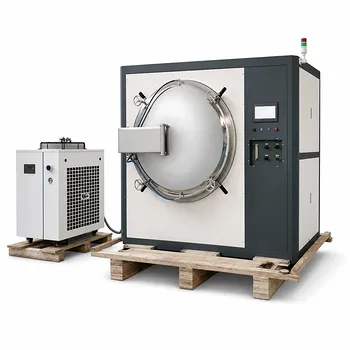
This is where the Ultra-High Vacuum Rapid Thermal Annealing (RTA) system changes the game. It isn't just a furnace; it is a precision instrument designed to solve the two problems of oxidation and thermal smearing simultaneously.

By utilizing high-intensity lamps or induction heating, an RTA system can ramp temperatures at hundreds of degrees per second. When combined with an ultra-high vacuum environment, it provides a "pristine" stage for material science:

  1. Instantaneous Transformation: It hits the target temperature so fast that you can capture the exact moment CoN begins to decompose, providing a clear map of its thermal limits.
  2. Atmospheric Isolation: The UHV environment ensures that the only thing changing in your sample is the crystal structure, not the chemical purity.
  3. Atomic Reorganization: As seen in Silicon Nitride (SiN) research, RTA doesn't just "heat" the material; it induces rapid atomic reorganization. It can drive out weakly bonded hydrogen and densify the material, turning a non-luminescent film into a stable single-photon emitter for quantum applications.

Beyond the Fix: Unlocking New Material Frontiers
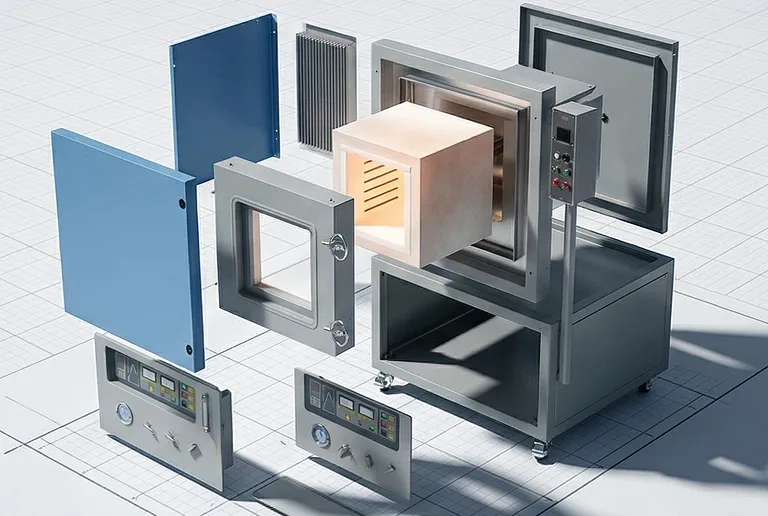
Stop Losing Your Thin Films to Oxidation: Why Ultra-High Vacuum RTA is the Key to Unlocking Material Stability 3

When you solve the problem of thermal instability, you aren't just getting better charts—you are opening doors to new technologies.

With a controlled UHV RTA process, researchers can now create materials with significantly higher refractive indices and stable luminescent characteristics that were previously thought impossible to achieve. You can move from simply observing material failure to engineering material performance. Whether it’s densifying films for better semiconductors or activating emission centers for quantum computing, the ability to control heat and vacuum with precision is the ultimate competitive advantage.

At KINTEK, we understand that no two thin film projects are identical. Our expertise in high-temperature vacuum systems allows us to customize RTA solutions that match your specific ramp rates, vacuum levels, and material requirements. Don’t let oxidation or inconsistent heating hold back your next breakthrough. Contact our team today to discuss your unique thermal processing challenges and let us help you build a system that delivers the precision your research deserves. [Contact Our Experts](#ContactForm)

Related Products

Related Articles

Related Products

Laboratory Quartz Tube Furnace RTP Heating Tubular Furnace

Laboratory Quartz Tube Furnace RTP Heating Tubular Furnace

KINTEK's RTP Rapid Heating Tube Furnace delivers precise temperature control, rapid heating up to 100°C/sec, and versatile atmosphere options for advanced lab applications.

Ultra High Vacuum Observation Window Stainless Steel Flange Sapphire Glass Sight Glass for KF

Ultra High Vacuum Observation Window Stainless Steel Flange Sapphire Glass Sight Glass for KF

KF flange observation window with sapphire glass for ultra-high vacuum. Durable 304 stainless steel, 350℃ max temperature. Ideal for semiconductor and aerospace.

2200 ℃ Tungsten Vacuum Heat Treat and Sintering Furnace

2200 ℃ Tungsten Vacuum Heat Treat and Sintering Furnace

2200°C Tungsten Vacuum Furnace for high-temperature materials processing. Precise control, superior vacuum, customizable solutions. Ideal for research & industrial applications.

2200 ℃ Graphite Vacuum Heat Treat Furnace

2200 ℃ Graphite Vacuum Heat Treat Furnace

2200℃ Graphite Vacuum Furnace for high-temperature sintering. Precise PID control, 6*10⁻³Pa vacuum, durable graphite heating. Ideal for research & production.

9MPa Air Pressure Vacuum Heat Treat and Sintering Furnace

9MPa Air Pressure Vacuum Heat Treat and Sintering Furnace

Achieve superior ceramic densification with KINTEK's advanced air pressure sintering furnace. High-pressure up to 9MPa, precise 2200℃ control.

Vacuum Heat Treat Sintering Furnace Molybdenum Wire Vacuum Sintering Furnace

Vacuum Heat Treat Sintering Furnace Molybdenum Wire Vacuum Sintering Furnace

KINTEK's Vacuum Molybdenum Wire Sintering Furnace excels in high-temperature, high-vacuum processes for sintering, annealing, and material research. Achieve precise 1700°C heating with uniform results. Custom solutions available.

Vacuum Hot Press Furnace Machine for Lamination and Heating

Vacuum Hot Press Furnace Machine for Lamination and Heating

KINTEK Vacuum Lamination Press: Precision bonding for wafer, thin-film & LCP applications. 500°C max temp, 20-ton pressure, CE certified. Custom solutions available.

Controlled Inert Nitrogen Hydrogen Atmosphere Furnace

Controlled Inert Nitrogen Hydrogen Atmosphere Furnace

Discover KINTEK's Hydrogen Atmosphere Furnace for precise sintering & annealing in controlled environments. Up to 1600°C, safety features, customizable.

High Pressure Laboratory Vacuum Tube Furnace Quartz Tubular Furnace

High Pressure Laboratory Vacuum Tube Furnace Quartz Tubular Furnace

KINTEK High Pressure Tube Furnace: Precision heating up to 1100°C with 15Mpa pressure control. Ideal for sintering, crystal growth, and lab research. Customizable solutions available.

Vacuum Heat Treat Sintering and Brazing Furnace

Vacuum Heat Treat Sintering and Brazing Furnace

KINTEK Vacuum Brazing Furnaces deliver precision, clean joints with superior temperature control. Customizable for diverse metals, ideal for aerospace, medical, and thermal applications. Get a quote!

1400℃ High Temperature Laboratory Tube Furnace with Alumina Tube

1400℃ High Temperature Laboratory Tube Furnace with Alumina Tube

KINTEK's Tube Furnace with Alumina Tube: Precision high-temperature processing up to 2000°C for labs. Ideal for material synthesis, CVD, and sintering. Customizable options available.

Vertical Laboratory Quartz Tube Furnace Tubular Furnace

Vertical Laboratory Quartz Tube Furnace Tubular Furnace

Precision KINTEK Vertical Tube Furnace: 1800℃ heating, PID control, customizable for labs. Ideal for CVD, crystal growth & materials testing.

Vacuum Heat Treat Sintering Furnace with Pressure for Vacuum Sintering

Vacuum Heat Treat Sintering Furnace with Pressure for Vacuum Sintering

KINTEK's Vacuum Pressure Sintering Furnace offers 2100℃ precision for ceramics, metals, and composites. Customizable, high-performance, and contamination-free. Get a quote now!

High Temperature Muffle Oven Furnace for Laboratory Debinding and Pre Sintering

High Temperature Muffle Oven Furnace for Laboratory Debinding and Pre Sintering

KT-MD Debinding & Pre-Sintering Furnace for ceramics - precise temperature control, energy-efficient design, customizable sizes. Boost your lab efficiency today!

1700℃ High Temperature Laboratory Tube Furnace with Alumina Tube

1700℃ High Temperature Laboratory Tube Furnace with Alumina Tube

KINTEK's Tube Furnace with Alumina Tube: Precision heating up to 1700°C for material synthesis, CVD, and sintering. Compact, customizable, and vacuum-ready. Explore now!

600T Vacuum Induction Hot Press Vacuum Heat Treat and Sintering Furnace

600T Vacuum Induction Hot Press Vacuum Heat Treat and Sintering Furnace

600T Vacuum Induction Hot Press Furnace for precise sintering. Advanced 600T pressure, 2200°C heating, vacuum/atmosphere control. Ideal for research & production.

Laboratory Vacuum Tilt Rotary Tube Furnace Rotating Tube Furnace

Laboratory Vacuum Tilt Rotary Tube Furnace Rotating Tube Furnace

KINTEK Laboratory Rotary Furnace: Precision heating for calcination, drying, sintering. Customizable solutions with vacuum & controlled atmosphere. Enhance research now!

Vacuum Sealed Continuous Working Rotary Tube Furnace Rotating Tube Furnace

Vacuum Sealed Continuous Working Rotary Tube Furnace Rotating Tube Furnace

Precision rotary tube furnace for continuous vacuum processing. Ideal for calcination, sintering, and heat treatment. Customizable up to 1600℃.

Vacuum Heat Treat Furnace with Ceramic Fiber Liner

Vacuum Heat Treat Furnace with Ceramic Fiber Liner

KINTEK's Vacuum Furnace with Ceramic Fiber Lining offers precise high-temperature processing up to 1700°C, ensuring uniform heat distribution and energy efficiency. Ideal for labs and production.

Split Chamber CVD Tube Furnace with Vacuum Station CVD Machine

Split Chamber CVD Tube Furnace with Vacuum Station CVD Machine

Split Chamber CVD Tube Furnace with Vacuum Station - High precision 1200°C lab furnace for advanced materials research. Customizable solutions available.


Leave Your Message