The Interface Paradox: Why Advanced Composites Often Underperform
You have a clear goal: integrate Zirconium Dioxide ($ZrO_2$) into a Titanium matrix to create a composite with superior hardness, wear resistance, or specific thermal properties. In theory, the $ZrO_2$ particles should reinforce the titanium. In practice, many researchers and engineers hit a wall.
The resulting material often feels "brittle" or fails at the grain boundaries. When you inspect the microstructure, you find that the Zirconia particles are sitting like inert islands in a sea of Titanium. There is no chemical bond, no "interfacial reaction," and therefore, no real reinforcement. You are left with a mixture, not a composite—and a project that isn't meeting its mechanical specifications.
The Traditional Struggle: Choosing Between Chemistry and Microstructure
To make Titanium and Zirconia actually "talk" to each other, you need to break the chemical bonds of the oxide. This requires energy. In a conventional vacuum furnace, the standard approach is to crank up the temperature and wait.
However, this leads to two devastating outcomes:
- Grain Growth: High temperatures held for long durations cause the Titanium grains to grow uncontrollably. While you might eventually get the $ZrO_2$ to react, the surrounding matrix becomes coarse and loses its mechanical integrity.
- Energy Waste: Traditional heating is indirect. You are heating the heating elements, which heat the air (or vacuum radiation), which heats the mold, which finally heats the sample. It is a slow, inefficient process that often takes hours to reach a state that still results in a sub-par product.
The commercial consequences are clear: higher energy costs, longer production cycles, and a product that lacks the "nano-precipitate" phases required for next-generation aerospace or medical applications.
The Breakthrough: Forcing Decomposition Through Pulsed Synergy
The reason conventional methods fail is that they rely on "passive" heat. To solve the bonding problem, we must look at the underlying physics of the interface. This is where Spark Plasma Sintering (SPS) changes the game.
The secret isn't just heat—it's the synergy of pulsed current and synchronized mechanical pressure.
When a high-amperage pulsed current passes directly through the titanium matrix and the $ZrO_2$ particles, it creates "Joule heating" at the points of contact. Unlike a standard furnace, the heat is generated inside the material. This rapid energy discharge induces a thermochemical decomposition of the Zirconia.
By applying axial pressure (often around 60 MPa) simultaneously, the SPS system forces the released Zirconium and Oxygen atoms to migrate. They don't just sit there; they efficiently enter the Titanium lattice via solid-state diffusion. This reaction happens at significantly lower temperatures than traditional sintering, meaning the "Zirconia islands" finally dissolve into the matrix, creating a powerful, atomic-level bond.
The Tool: KINTEK’s SPS System as a Precision Catalyst
To achieve this delicate balance of chemistry and physics, you need a tool designed for more than just "getting hot." KINTEK’s Spark Plasma Sintering systems are engineered to act as a catalyst for these specific interfacial reactions.
Our SPS technology addresses the root cause of composite failure through three core pillars:
- Direct Joule Heating: By passing current through the mold and sample, we achieve heating rates that can reach hundreds of degrees per minute. This allows you to reach the "reaction zone" before grain growth can even begin.
- Synchronized Pressure Control: Our systems maintain precise axial pressure, ensuring that as the $ZrO_2$ decomposes, the atoms are immediately pressed into the Titanium lattice, achieving full densification (often within 5 minutes).
- Thermal Management: Because the process is so fast—holding at peak temperature for only minutes rather than hours—the material retains high-density dislocations and fine nano-precipitates.
For materials like Ti2AlN or Ti-$ZrO_2$, this means completing densification at 1200°C in a fraction of the time required by traditional processes, resulting in a significantly finer, stronger microstructure.
Beyond the Fix: New Frontiers in Material Design
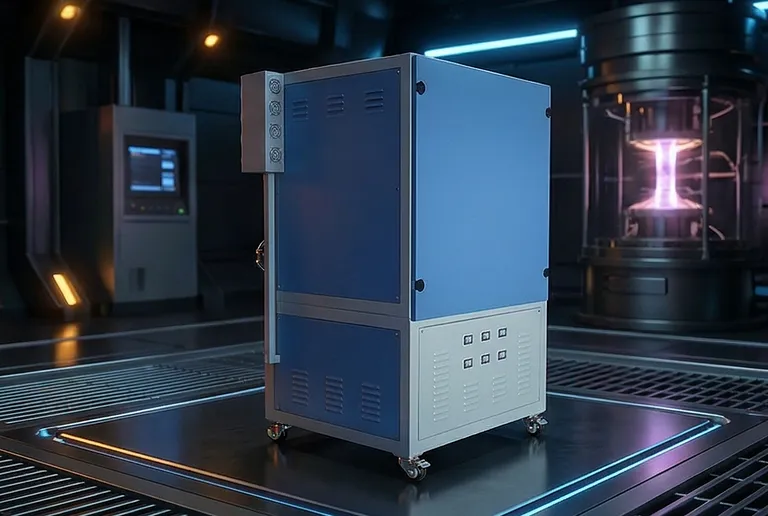
When you solve the problem of interfacial bonding without sacrificing microstructure, you unlock possibilities that were previously impossible.
By using SPS to control the decomposition of additives, you can now produce Titanium composites that maintain high electrical conductivity while significantly enhancing phonon scattering. This is the "holy grail" for thermoelectric materials and high-stress aerospace components where thermal management is as critical as structural strength.
You are no longer limited by the "slow soak" of traditional furnaces. You can experiment with complex alloy systems, create gradient materials, and bring products to market that are lighter, stronger, and more thermally stable than ever before.
To truly push the boundaries of your material science projects, you need a partner who understands the physics behind the furnace. At KINTEK, we don't just provide equipment; we provide the means to overcome your most stubborn technical bottlenecks. Whether you are dealing with inconsistent densification or brittle interfaces, our team is ready to help you configure an SPS solution tailored to your specific matrix-additive challenges. Contact Our Experts to discuss your next breakthrough.
Related Products
- Spark Plasma Sintering SPS Furnace
- Vacuum Heat Treat Sintering Furnace with Pressure for Vacuum Sintering
- 9MPa Air Pressure Vacuum Heat Treat and Sintering Furnace
- 600T Vacuum Induction Hot Press Vacuum Heat Treat and Sintering Furnace
- Vacuum Heat Treat Sintering Furnace Molybdenum Wire Vacuum Sintering Furnace
Related Articles
- Why Your Sintered Parts Fail: It’s Not Just About Heat, But Pressure and Purity
- Beyond the Program: Why Your Sintering Fails and How to Guarantee Uniformity
- Why Your Superelastic Alloys Fail to Perform—And How Solid-State Precision Fixes It
- Solving the Bonding Dilemma: Why High-Strength Alloys Need More Than Just Pressure
- Why Your Electrochromic Electrodes Fail During Sintering—And How Vacuum Control Restores Transparency