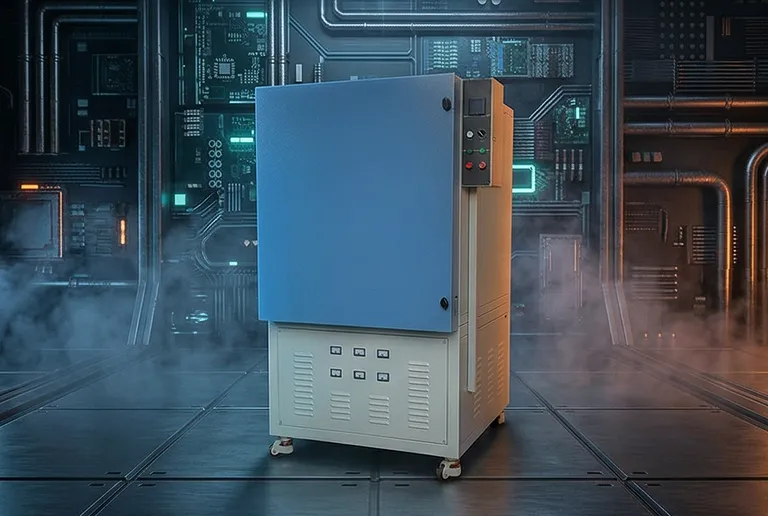
The Heartbreak of the "Crumbled Green Part"
Imagine this: your Binder Jetting (BJP) system has just finished a complex, multi-hour print of a highly detailed metal component. To the naked eye, it looks perfect tucked inside the powder bed. But the moment you attempt to remove the excess powder or move the part to the sintering station, the delicate internal structures collapse. The "green part"—your bridge between a digital design and a finished metal product—has failed before it even reached the furnace.
This is the hidden bottleneck in metal additive manufacturing. Many engineers focus entirely on the printing speed or the final sintering temperature, only to find that their biggest yield losses happen during the seemingly simple curing step.
The Common Struggle: Why "Close Enough" Temperatures Fail
When a part emerges from a Binder Jetting printer, it is held together by a liquid polymer binder. It is effectively a "sandcastle" made of metal powder. To make it handleable, this binder must be cured, typically at around 195°C.
In an attempt to save costs, many labs and production facilities use standard industrial ovens or even high-end domestic equipment to handle this step. On paper, 195°C seems easy to achieve. However, these facilities often face:
- Inconsistent Strength: Parts from the back of the oven are rock-solid, while parts from the front remain brittle and "chalky."
- Warping and Distortion: Uneven heating causes the polymer to contract at different rates, pulling the metal particles out of alignment.
- Detail Loss: Delicate lattices and internal cooling channels collapse because the binder didn't reach the "glass transition" state uniformly.
The business consequence is clear: wasted metal powder, wasted machine time, and the inability to scale from prototypes to reliable production.
The Root Cause: Why 195°C is More Than Just a Number
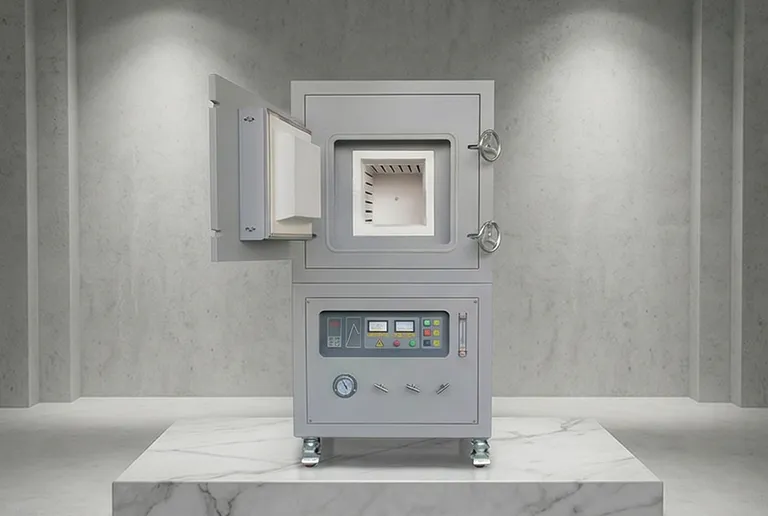
The curing step isn't just about "drying" the part; it is a critical chemical transformation called cross-linking. At approximately 195°C, the polymer chains in the binder begin to form a 3D network, effectively "locking" the metal particles in place.
The physics of this process is unforgiving. If the temperature fluctuates by even a few degrees across the oven chamber, the cross-linking will be uneven.
- Under-heating leaves the binder in a semi-liquid or weak state, leading to structural collapse during depowdering.
- Over-heating can begin to degrade the polymer or cause premature oxidation of the metal powder, interfering with the final sintering quality.
Standard ovens simply lack the thermal uniformity required to ensure that every cubic millimeter of a complex part reaches the exact temperature threshold simultaneously. Without precision airflow and calibrated heat control, the "green strength" of your part—the only thing protecting your investment—remains a gamble.
The Solution: KINTEK Precision Ovens Designed for BJP
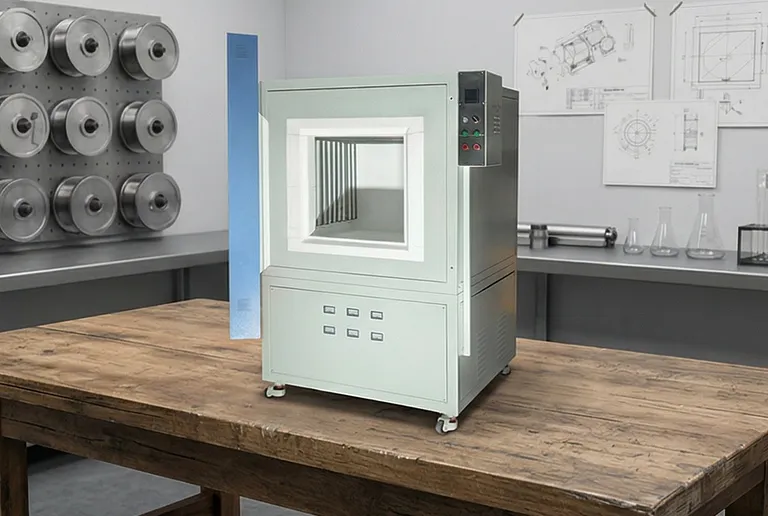
To solve the "green part" crisis, you need a tool designed for the specific rigors of additive manufacturing. KINTEK’s precision ovens are engineered to turn the curing step from a point of failure into a predictable, repeatable process.
Our systems address the root cause of green part failure through:
- Exceptional Thermal Uniformity: Forced convection and advanced insulation ensure that 195°C means 195°C in every corner of the chamber, regardless of part geometry.
- Programmable Thermal Profiles: BJP curing often requires a gradual "ramp-up" and "soak" time to ensure deep heat penetration in thick-walled parts without shocking the edges.
- Atmospheric Integrity: For sensitive metal powders, our ovens can be configured with inert gas environments to prevent oxidation during the curing cycle.
KINTEK doesn't just provide "heat"; we provide the structural foundation your metal parts need to survive the journey from powder to solid metal.
Opening the Door to Complex Geometry
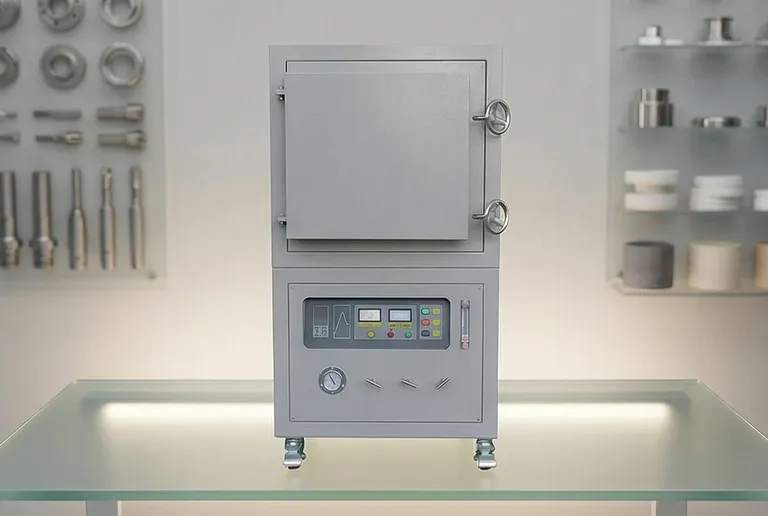
When you master the curing process, the "rules" of what you can print change. You no longer have to design parts with overly thick walls just to survive handling. With guaranteed green strength, you can pursue:
- Ultra-lightweight Lattices: Confidently depowder honeycomb structures that would otherwise be too fragile.
- Intricate Internal Channels: Ensure that the "pipes" inside your metal part don't collapse or clog during powder removal.
- High-Volume Batching: Process dozens of parts in a single curing cycle with the confidence that the part in the center of the tray is just as strong as the one on the edge.
By stabilizing the curing stage, you unlock the true potential of Binder Jetting: the ability to create complex, high-performance metal parts at scale.
Your additive manufacturing success depends on more than just a great 3D printer; it depends on the reliability of your entire thermal workflow. If you are struggling with inconsistent green part strength or looking to optimize your BJP production line, our team of technical experts is ready to help you find the right precision thermal solution for your specific powder and binder chemistry. Contact Our Experts today to discuss how we can improve your part yields and process reliability.
Related Products
- Vacuum Heat Treat Sintering Furnace with Pressure for Vacuum Sintering
- High Temperature Muffle Oven Furnace for Laboratory Debinding and Pre Sintering
- Vacuum Heat Treat Sintering and Brazing Furnace
- Small Vacuum Heat Treat and Tungsten Wire Sintering Furnace
- Mesh Belt Controlled Atmosphere Furnace Inert Nitrogen Atmosphere Furnace
Related Articles
- Why Your Sintered Parts Fail: It’s Not Just About Heat, But Pressure and Purity
- Why Your Stainless Steel Parts Fail Pressure Tests—and How Vacuum Sintering Fixes the Density Gap
- Why Your Electrochromic Electrodes Fail During Sintering—And How Vacuum Control Restores Transparency
- Why Your 3D-Printed Maraging Steel Parts Aren't Performing—And How to Fix the Structural Weakness
- How Vacuum Pressure Sintering Furnaces Elevate Material Performance Across Industries



















