The Frustrating Reality of "Almost Perfect" Alloys
You have spent weeks meticulously calculating the atomic ratios for a new High-Entropy Alloy (HEA). You have sourced high-purity Niobium, Zirconium, and Chromium. But after the final melt, the results are disheartening: the ingot shows unexpected brittle phases, the chemical composition has "drifted" from your calculations, and microscopic analysis reveals interstitial oxygen or ceramic inclusions.
Despite following the recipe to the letter, the material fails to reach its theoretical performance. For many researchers and materials scientists, this isn't just a minor setback—it is a recurring bottleneck that wastes expensive raw materials and months of laboratory time.
The Common Struggle: Why Standard Melting Methods Fail
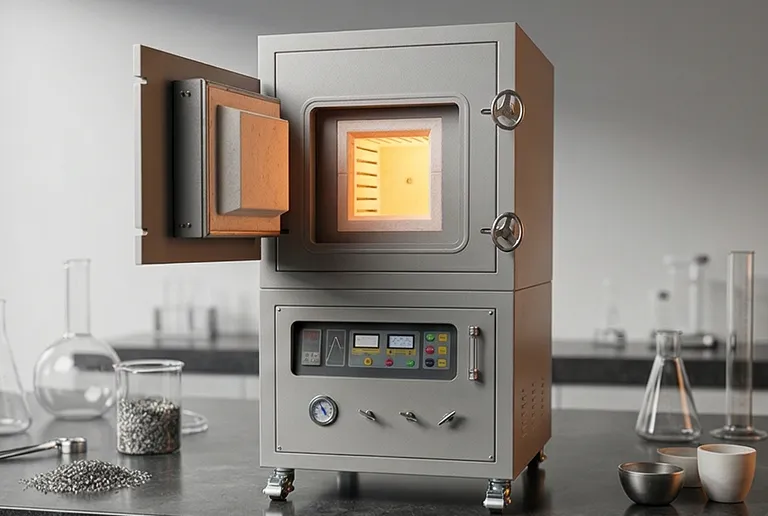
When dealing with HEAs, the complexity isn't just in the math; it’s in the physics of the melt. Most laboratories initially turn to traditional induction or muffle furnaces using ceramic crucibles (like alumina or magnesia). While these are workhorses for standard steels, they often become the "enemy" in HEA synthesis.
At the extreme temperatures required to melt refractory elements like Zirconium or Hafnium, the melt becomes hyper-reactive. It begins to "attack" the crucible walls, leaching oxygen, silicon, or carbon into the alloy. Furthermore, in many standard setups, reactive elements like Chromium oxidize almost instantly if even a trace of oxygen remains in the chamber.
The result is a "contaminated" alloy. You aren't testing the properties of your intended five-element system; you are testing a compromised version of it. These "solutions"—simply trying to use higher-grade ceramics or better lids—only treat the symptoms, never the cause.
The Root Cause: The "Container" Problem
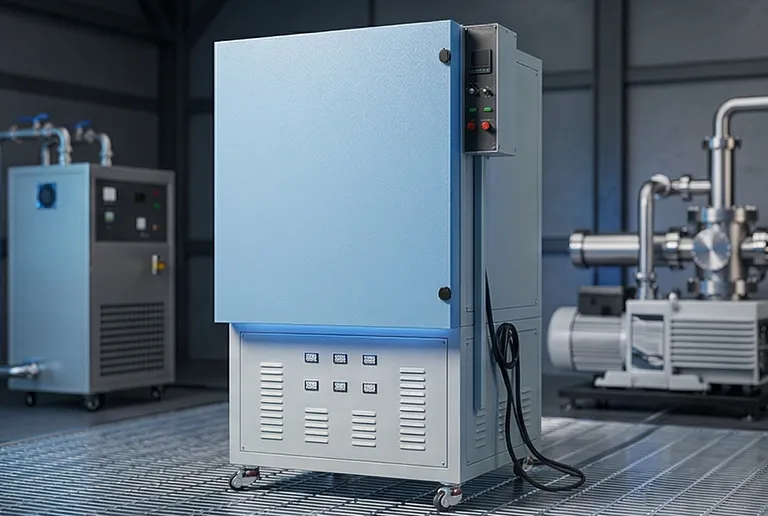
The fundamental problem is that at the temperatures required for HEAs (often exceeding 2000°C), there is no such thing as a truly inert container. Any solid material in contact with the molten alloy will eventually react with it.
To solve this, we must look at the underlying physics. If the container is the problem, we must remove the container's ability to react. This is where the water-cooled copper cold hearth changes the game.
Unlike ceramic crucibles that hold heat, a water-cooled copper hearth stays cold. When the high-temperature electric arc strikes the metal, only the center melts. The metal in direct contact with the copper hearth solidifies instantly, forming a thin, dense "skull" or "self-crucible" of the alloy itself. This means the molten pool is held by a container made of the same material as the melt. Chemical reactions with the vessel become physically impossible, ensuring the highest possible elemental purity.
The Solution: Precision Engineering for Atomic Complexity
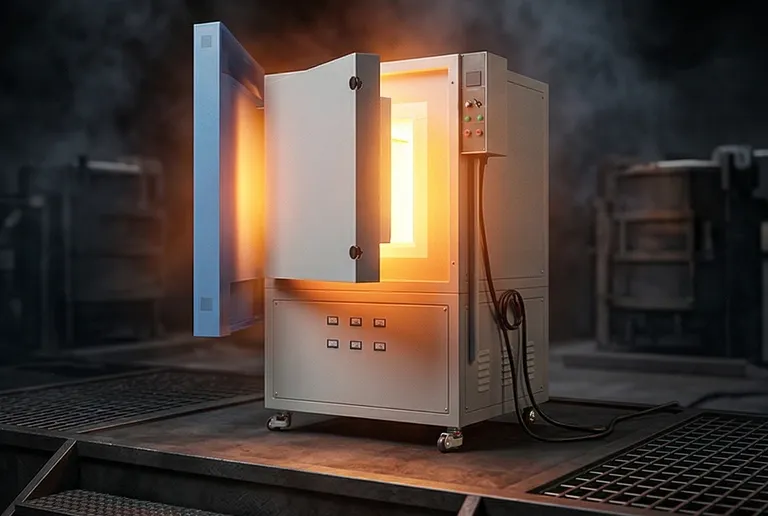
To move from "contaminated samples" to "theoretical perfection," researchers require a tool designed specifically for this "cold hearth" principle. KINTEK’s Vacuum Arc Melting Furnaces are engineered to address the three pillars of HEA synthesis:
1. Absolute Chemical Purity
By utilizing the water-cooled copper crucible and a high-vacuum environment, our furnaces eliminate crucible-born impurities. To go a step further, the integration of a titanium getter—a secondary sacrificial element that "scrubs" any remaining oxygen from the argon atmosphere—ensures that sensitive elements like Chromium and Manganese remain in their metallic state rather than turning into oxides.
2. Microscopic Homogeneity
HEAs are prone to macro-segregation, where heavier elements sink and lighter ones float. KINTEK furnaces feature an integrated flipping mechanism. By repeatedly melting and flipping the ingot, the alloy undergoes intense convective mixing driven by gravity and arc forces. This ensures that your trace additions are distributed consistently throughout the entire matrix.
3. Rapid Solidification for Fine Microstructures
The high cooling rate provided by the water-cooled copper base doesn't just protect the hearth; it also forces the alloy to solidify rapidly. This facilitates the formation of fine, uniform solidified microstructures, which are essential for achieving the high strength and stability HEAs are known for.
Beyond the Fix: Unlocking New Material Frontiers
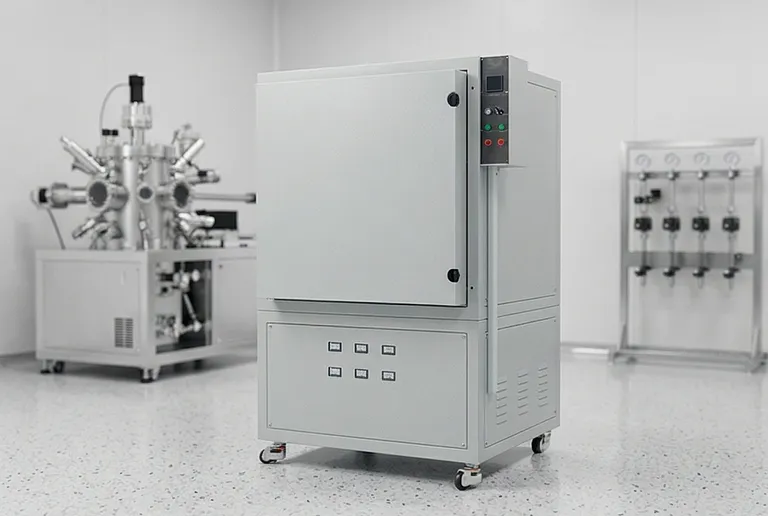
Once the obstacle of contamination is removed, the focus shifts from "fixing mistakes" to "discovering possibilities." When you can trust that your ingot's composition is exactly what you calculated, you can explore the frontier of materials science with confidence.
With a stable and pure synthesis process, you can now produce high-quality samples for studying complex phenomena like sulfur-induced embrittlement or the creation of high-entropy oxides. You can accelerate your R&D cycles, moving from a theoretical design to a physical prototype in a fraction of the time, and with data that is 100% reproducible.
Achieving the next breakthrough in metallurgy requires more than just a heat source; it requires a controlled environment where your chemistry can thrive without interference. At KINTEK, we specialize in tailoring high-temperature solutions to the unique challenges of modern materials science. Whether you are working with refractory metals or sensitive aerospace alloys, our team is ready to help you design a furnace system that turns your theoretical models into high-performance reality.
Contact Our Experts today to discuss your specific HEA synthesis requirements and find the ideal configuration for your lab.
Related Products
- Vacuum Induction Melting Furnace
- High Temperature Muffle Oven Furnace for Laboratory Debinding and Pre Sintering
- Laboratory Muffle Oven Furnace with Bottom Lifting
- Vacuum Heat Treat Sintering Furnace with Pressure for Vacuum Sintering
- 1700℃ Controlled Inert Nitrogen Atmosphere Furnace
Related Articles
- The Physics of Perfection: How Vacuum Furnaces Redefine Material Integrity
- Beyond the Void: Why a Vacuum Furnace Isn't Just a Hot Chamber
- The Anatomy of Precision: A Strategic Framework for Choosing Your Vacuum Furnace
- The Unseen Enemy: How Vacuum Furnaces Redefine Material Perfection
- Why Your High-Purity Metals Oxidize in a Perfect Vacuum—And How to Stop It









