
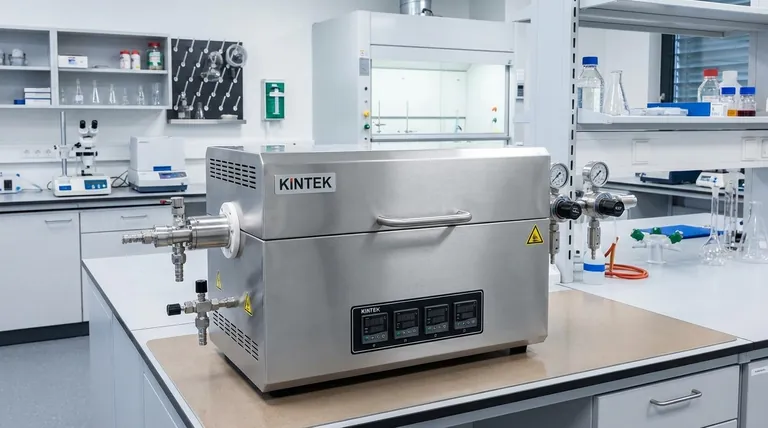
At their core, modern box furnaces are equipped with a multi-layered system of safety features designed to protect against thermal, electrical, and atmospheric hazards. Key safety mechanisms include automatic over-temperature protection, power cut-offs linked to the door opening, insulated construction for reduced external temperatures, and systems to manage hazardous fumes or process atmospheres. These features work in concert to ensure the safety of the operator, the equipment, and the surrounding environment.
The safety features of a box furnace are not just a checklist of components; they represent an integrated design philosophy. The goal is to create a system that automatically mitigates the most common risks, from overheating and electrical faults to operator exposure, ensuring a reliably safe operational cycle.
Protecting Against Thermal Hazards
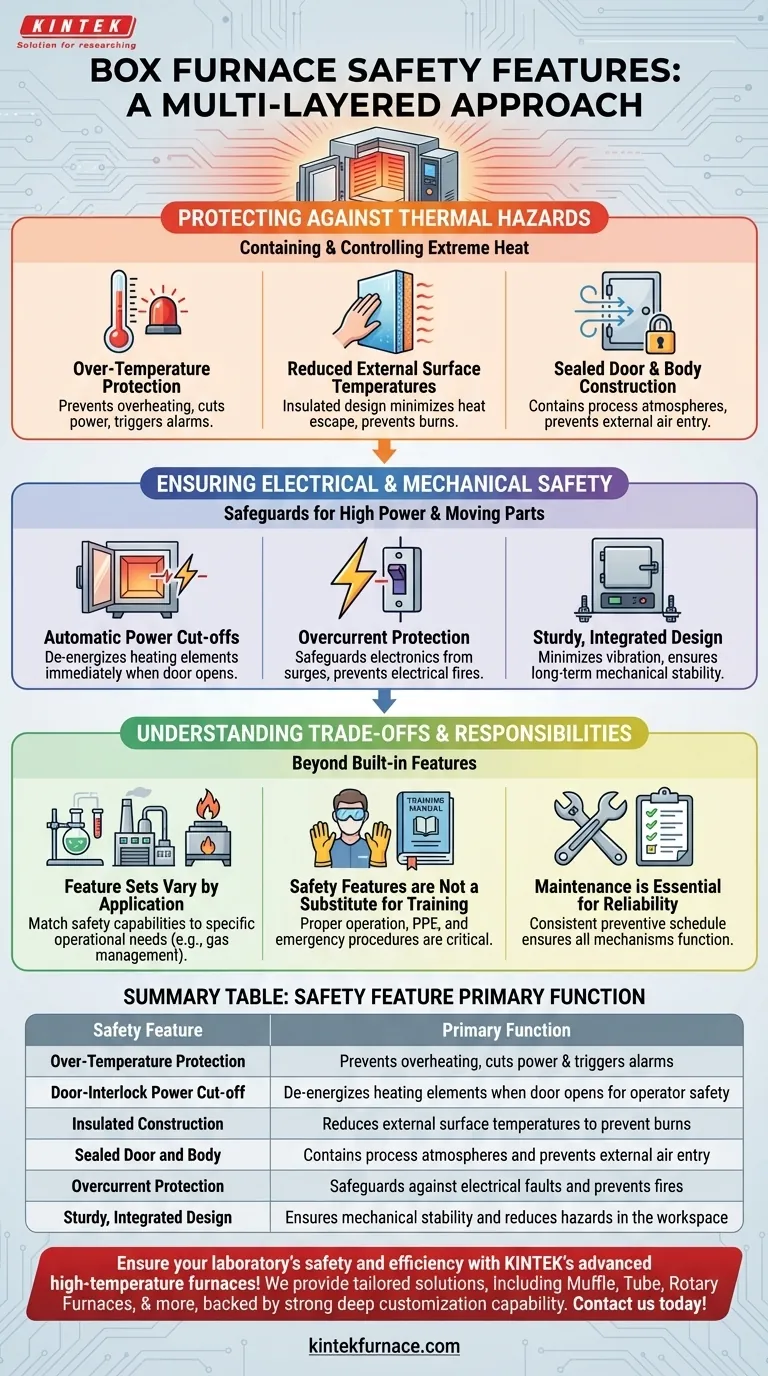
The most immediate risk associated with a box furnace is its extreme heat. Safety features are therefore heavily focused on containing and controlling this thermal energy.
Over-Temperature Protection
An over-temperature alarm is a foundational safety feature. If the furnace exceeds a pre-set maximum temperature due to a control failure, this system triggers an audible or visual alarm and automatically cuts power to the heating elements. This prevents catastrophic damage to the furnace, the product inside, and the facility.
Reduced External Surface Temperatures
Modern furnaces are engineered with a unique outer shell design and internal insulation. This construction minimizes the amount of heat that escapes, which significantly reduces the external surface temperature. This design directly protects operators from accidental contact burns, making the immediate workspace safer.
Sealed Door and Body Construction
To maintain process integrity and safety, box furnaces feature tightly sealed doors and bodies. This design prevents the leakage of process atmospheres (such as inert gases) into the workspace and stops external air from entering the chamber, which could cause a fire or an uncontrolled reaction at high temperatures.
Ensuring Electrical and Mechanical Safety
Beyond heat, the high power requirements and moving parts of a furnace necessitate robust electrical and mechanical safeguards.
Automatic Power Cut-offs
One of the most critical operator safety features is an automatic power cut-off when the furnace door is opened. This interlock immediately de-energizes the heating elements, preventing operator exposure to extreme radiant heat and electrical components. Many systems also include power failure protection that safely shuts down the unit during an outage.
Overcurrent Protection
Similar to a circuit breaker in a building, overcurrent protection safeguards the furnace's sophisticated electronics. If the system draws too much electrical current due to a short circuit or surge, this mechanism automatically shuts down power, preventing damage to internal components and reducing the risk of an electrical fire.
Sturdy, Integrated Design
The physical construction contributes significantly to safety. A sturdy and compact design minimizes vibration and provides long-term stability. This inherent reliability prevents mechanical failures, while an integrated form factor reduces trip hazards and simplifies operation in a busy lab or industrial setting.
Understanding the Trade-offs and Responsibilities
While modern furnaces are incredibly safe, their effectiveness depends on proper selection and use. Relying solely on built-in features without understanding their context can lead to safety gaps.
Feature Sets Vary by Application
Not all box furnaces are created equal. A simple furnace for firing ceramics in an art studio will have different safety features than an industrial furnace used for annealing aerospace components with a flammable hydrogen atmosphere. The latter requires advanced gas leak detectors, fume hoods, and local exhaust systems to manage environmental risk.
Safety Features are Not a Substitute for Training
Automatic shut-offs and alarms are a critical backstop, but they do not replace the need for a well-trained operator. Understanding the specific process, wearing the correct Personal Protective Equipment (PPE), and knowing emergency procedures are non-negotiable aspects of safe operation.
Maintenance is Essential for Reliability
Safety systems are only effective if they work. Sensors can fail, seals can wear out, and interlock switches can become misaligned. A consistent preventive maintenance schedule is crucial to ensure that all safety mechanisms are functioning as designed.
Making the Right Choice for Your Goal
When evaluating a box furnace, match its safety capabilities to your specific operational needs and risks.
- If your primary focus is general laboratory use (e.g., ashing, tempering): Prioritize furnaces with certified over-temperature protection, a door-opening power cut-off, and a cool-touch exterior.
- If your primary focus is industrial material processing (e.g., annealing, sintering): Your requirements must include all basic safety features plus robust atmosphere management, such as sealed chambers and integrated exhaust systems.
- If your primary focus is safety in a multi-user or training environment: Emphasize clear visual alarms, simple controls, and a mechanically stable, integrated design to minimize the potential for operator error.
Ultimately, understanding these integrated safety systems empowers you to select and operate a box furnace with confidence and security.
Summary Table:
| Safety Feature | Primary Function |
|---|---|
| Over-Temperature Protection | Prevents overheating by cutting power and triggering alarms |
| Door-Interlock Power Cut-off | De-energizes heating elements when door opens for operator safety |
| Insulated Construction | Reduces external surface temperatures to prevent burns |
| Sealed Door and Body | Contains process atmospheres and prevents external air entry |
| Overcurrent Protection | Safeguards against electrical faults and prevents fires |
| Sturdy, Integrated Design | Ensures mechanical stability and reduces hazards in the workspace |
Ensure your laboratory's safety and efficiency with KINTEK's advanced high-temperature furnaces! Leveraging exceptional R&D and in-house manufacturing, we provide diverse labs with tailored solutions including Muffle, Tube, Rotary Furnaces, Vacuum & Atmosphere Furnaces, and CVD/PECVD Systems. Our strong deep customization capability precisely meets your unique experimental requirements, enhancing operational security and performance. Contact us today to discuss how our products can benefit your specific applications!
Visual Guide
Related Products
- Vacuum Hot Press Furnace Machine Heated Vacuum Press Tube Furnace
- Mesh Belt Controlled Atmosphere Furnace Inert Nitrogen Atmosphere Furnace
- Vacuum Heat Treat Sintering Furnace with Pressure for Vacuum Sintering
- 600T Vacuum Induction Hot Press Vacuum Heat Treat and Sintering Furnace
- Vacuum Hot Press Furnace Machine Heated Vacuum Press
People Also Ask
- Why use Vacuum Hot Press (VHP) for ZnS Ceramics? Achieve Superior IR Transparency and Mechanical Strength
- What safety features are incorporated in vacuum hot press furnaces? Ensure Operator and Equipment Protection
- What are the benefits of the vacuum environment system in a vacuum hot press furnace? Unlock High-Density Sintering
- What considerations guide the selection of heating elements and pressurization methods for a vacuum hot press furnace?
- How does a vacuum hot press furnace promote densification in the manufacturing of graphite flake/copper composites? Achieve Superior Composite Materials



















