All Questions
What Are The Differences In Process Complexity Between Pvd And Cvd? Uncover Key Trade-Offs For Your Coating Needs
Explore the complexity differences between PVD and CVD processes, including control variables, advantages, and applications for thin-film deposition.
How Do Pvd And Cvd Differ In Terms Of Coating Conformity? Uncover The Best Method For Complex Parts
Explore the key differences between PVD and CVD coating conformity, including line-of-sight vs. gas diffusion, for optimal performance in complex geometries.
What Types Of Materials Are Most Suitable For Pvd And Cvd? Optimize Your Thin Film Deposition Choices
Learn which materials work best with PVD and CVD processes, including metals, nitrides, and carbides, for improved coating performance and efficiency.
How Do The Process Environments Of Pvd And Cvd Differ? Key Differences In Vacuum And Chemical Reactions
Explore the differences between PVD and CVD process environments, including vacuum vs. gas-phase reactions, temperature regimes, and coating conformality for thin-film deposition.
What Are The Key Differences Between Pvd And Cvd In Terms Of Deposition Mechanism? Choose The Right Coating Method For Your Lab
Explore PVD vs CVD differences: PVD uses physical vapor transfer for high purity, while CVD employs chemical reactions for superior conformality on complex shapes.
What Are The Two Primary Methods For Depositing Thin Films? Master Pvd And Cvd For Your Lab
Explore PVD and CVD thin film deposition methods: key differences in temperature, coverage, and purity for materials engineering applications.
What Factors Contribute To The High Cost Of Cvd Processes? Uncover Key Drivers And Cost-Saving Insights
Explore the main factors driving CVD process costs, including equipment, materials, and operational expenses, to optimize your lab budget and efficiency.
What Is The Significance Of Cvd In The Semiconductor Industry? Unlock Precision Thin Film Deposition
Explore how Chemical Vapor Deposition (CVD) enables ultra-thin, high-purity films for semiconductors, driving innovation in ICs, LEDs, and solar cells.
What Are Some Biomedical Applications Of Cvd? Enhance Medical Device Safety And Longevity
Explore how CVD coatings improve biocompatibility, durability, and functionality of medical implants like stents and joints for better patient outcomes.
What Types Of Substrates Are Not Suitable For Cvd? Avoid Thermal And Geometric Pitfalls
Learn which substrates fail in CVD due to thermal instability and complex geometries, and discover solutions for successful film deposition.
How Does Cvd Compare To Pvd In Deposition Rates? Pvd Is Faster, But Cvd Offers Versatility.
Compare CVD and PVD deposition rates: PVD is faster for metals, while CVD excels in material diversity and conformal coating for complex shapes.
What Are The Environmental Concerns Related To Cvd? Managing Risks In Thin Film Coating
Explore environmental concerns of CVD, including toxic by-products, high energy use, and waste management for safer, compliant operations.
What Industries Commonly Use Cvd Processes? Unlock High-Performance Thin Films For Your Sector
Explore how CVD processes are used in semiconductors, aerospace, solar, optics, and biomedical industries for durable coatings and precise thin films.
What Are The Safety Concerns Associated With Cvd Processes? Mitigate Risks With Expert Solutions
Learn key CVD safety hazards: flammable, toxic, and corrosive chemicals, plus high vacuum and temperature risks. Ensure lab protection and compliance.
Why Is Cvd Considered A Scalable Process? Unlock High-Volume, Uniform Coatings For Your Industry
Learn how Chemical Vapor Deposition (CVD) enables scalable, high-throughput production with uniform coatings for large areas and batch processing.
How Does Cvd Achieve High-Purity And Uniform Films? Master Precise Film Deposition For Superior Results
Learn how Chemical Vapor Deposition ensures high-purity, uniform films through ultra-pure precursors, controlled reactions, and precise thermal management for advanced applications.
What Are The Disadvantages Of Chemical Vapor Deposition (Cvd)? Key Challenges And Trade-Offs
Explore the main drawbacks of CVD, including high costs, safety risks, and process complexity, to make informed decisions for your thin-film applications.
What Are The Main Advantages Of Chemical Vapor Deposition (Cvd)? Unlock High-Performance Thin Films
Discover CVD's key benefits: superior purity, conformal coverage, and material versatility for industries like semiconductors and aerospace.
What Are The Disadvantages Of Traditional Cvd For 2D Materials? Overcome High-Temp And Transfer Issues
Explore the drawbacks of traditional CVD for 2D materials, including high temperatures, catalyst dependence, and damaging transfer processes that cause defects and contamination.
What Are The Main Synthetic Methods For 2D Materials? Choose The Right Method For Your Application
Explore mechanical exfoliation, CVD, and solution-based synthesis for 2D materials. Learn trade-offs in quality, scalability, and cost to optimize your research or production.
Why Are Cvd Furnaces Considered Important In Modern Technology? Unlock Precision In Thin-Film Manufacturing
Discover how CVD furnaces enable atomic-level precision for high-performance films in semiconductors, aerospace, and more, driving modern tech advancements.
What Other Specialized Fields Utilize Cvd Furnaces? Explore Aerospace, Optics, Energy & Material Science
Discover how CVD furnaces enable high-purity thin films in aerospace, optics, energy, and material science for enhanced durability and performance.
What Biomedical Applications Do Cvd Furnaces Have? Enhance Implant Safety And Drug Delivery
Explore how CVD furnaces enable biocompatible coatings, antibacterial properties, and advanced drug delivery systems for medical implants and biomaterials.
How Are Cvd Furnaces Utilized In The Energy Sector? Powering Solar And Battery Innovations
Explore how CVD furnaces drive solar cell efficiency and advanced battery materials for clean energy, enhancing performance and sustainability.
What Role Do Cvd Furnaces Play In The Semiconductor Industry? Essential For Precise Thin-Film Deposition In Chip Fabrication
Discover how CVD furnaces enable atomic-level control for depositing insulating, conductive, and semiconducting layers in microchips, ensuring reliability and performance.
What Nanomaterials Can Be Synthesized Using Cvd Furnaces? Unlock Versatile Nanoscale Material Creation
Explore how CVD furnaces synthesize nanomaterials like graphene, carbon nanotubes, and nanoparticles for electronics, catalysis, and coatings.
What Specific Thin Films Can Cvd Furnaces Prepare? Discover Versatile Films For Electronics And Coatings
Learn how CVD furnaces deposit metals, semiconductors, dielectrics, and advanced films like graphene for high-performance applications in electronics and coatings.
How Are Cvd Furnaces Used In Material Preparation? Essential For Thin Films & Nanomaterials
Learn how CVD furnaces enable precise thin-film deposition and nanomaterial synthesis for semiconductors, energy, and nanotechnology applications.
What Are The General Applications Of Cvd Furnaces? Unlock High-Performance Thin Films For Your Industry
Explore CVD furnace uses in semiconductors, advanced materials, energy, and biomedical devices for precise thin-film deposition and enhanced performance.
What Is Atomic Layer Deposition (Ald) And How Does It Relate To Cvd? Unlock Precision Thin Film Technology
Learn the differences between ALD and CVD for thin film deposition, including precision, speed, and applications in semiconductors and coatings.
What Factors Influence The Composition And Morphology Of Layers In Cvd? Master Precise Film Control For Superior Results
Learn how temperature, pressure, precursors, and reactor design affect CVD layer composition and morphology for optimized thin-film deposition.
What Types Of Materials Can Be Synthesized Using Cvd? Unlock High-Purity Films For Electronics And More
Explore CVD materials: silicon for chips, graphene, ceramics, and more. Learn how CVD enables precise synthesis for electronics, coatings, and R&D.
What Are The Advantages Of The Cvd Technique? Achieve High-Purity, Uniform Thin Films For Advanced Manufacturing
Discover the key benefits of Chemical Vapor Deposition (CVD), including high purity, conformal coatings, strong adhesion, and versatility for industries like semiconductors and aerospace.
What Is Chemical Vapor Deposition (Cvd) And What Is It Used For? Unlock High-Performance Thin Films
Learn how Chemical Vapor Deposition (CVD) creates uniform, high-purity thin films for semiconductors, coatings, and optics with precise control.
How Should One Decide Between Pvd And Cvd For A Specific Application? Optimize Your Coating Process With Expert Insights
Learn how to choose between PVD and CVD based on temperature tolerance, part geometry, and film properties for superior coating results in your applications.
What Are Some Common Applications Of Cvd? Discover Versatile Coating Solutions For Your Industry
Explore how Chemical Vapor Deposition (CVD) creates high-performance coatings for aerospace, electronics, medical devices, and optics with precision and durability.
What Are The Disadvantages Of Cvd Coating? High Heat, Toxic By-Products, And Cost Challenges
Explore the drawbacks of CVD coating, including high-temperature limits, hazardous by-products, and equipment complexity, to make informed decisions for your projects.
What Are The Advantages Of Cvd Coating? Achieve Superior, Uniform Coatings For Complex Parts
Discover the key benefits of CVD coatings, including unmatched conformity, superior adhesion, and broad material versatility for high-performance applications.
What Are The Main Differences Between Pvd And Cvd Coating Techniques? Choose The Right Method For Your Application
Explore key differences between PVD and CVD coating techniques, including temperature, uniformity, and substrate compatibility for optimal material performance.
What Are The Advantages Of Cvd Over Pvd? Superior Conformality For Complex Shapes
Discover how CVD excels in uniform coatings on 3D surfaces and material versatility, making it ideal for intricate geometries and high-performance applications.
What Are The Key Differences Between Pvd And Cvd Processes? Choose The Right Thin-Film Deposition Method
Explore PVD vs. CVD differences: process types, temperatures, coating uniformity, and applications for labs and industries.
How Does Chemical Vapour Deposition (Cvd) Differ From Pvd? Key Differences In Thin-Film Coating Methods
Explore the differences between CVD and PVD: CVD offers conformal coatings for complex shapes, while PVD provides high purity at lower temperatures.
What Are The Main Types Of Thin Film Deposition Processes? Compare Pvd Vs. Cvd For Your Lab
Explore the key differences between PVD and CVD thin film deposition, including temperature, coverage, and applications for semiconductors and more.
What Is The Main Development Direction For Improving Chemical Vapor Deposition (Cvd) Technology? Advance With Low-Temperature, High-Vacuum Solutions
Explore how low-temperature, high-vacuum CVD advancements enable coatings on sensitive materials, enhancing applications in semiconductors and more.
What Are The Temperature Ranges Typically Used In Chemical Vapor Deposition (Cvd), And What Challenges Do They Present? Uncover Key Insights For High-Temp Coating Success
Explore CVD temperature ranges of 900°C to 2000°C and their challenges like substrate damage and high costs for better process decisions.
Why Is Cvd Suitable For Dense, Uniform Films On Irregular Surfaces? Master Conformal Coating For Complex Shapes
Learn how Chemical Vapor Deposition (CVD) enables dense, uniform films on irregular surfaces through gas-phase reactions, ideal for microelectronics and optics.
What Are The Four Main Stages Of The Chemical Vapor Deposition (Cvd) Process? Master Thin Film Deposition For Your Lab
Learn the four key stages of CVD: transport, adsorption, reaction, and desorption. Optimize your process for high-quality thin films in microelectronics and optics.
What Is The Principle Behind Chemical Vapor Deposition (Cvd)? Master Thin Film Synthesis For Advanced Materials
Learn how CVD builds high-purity thin films from gases with precise control for semiconductors, coatings, and more. Explore principles and applications.
How Does Chemical Vapor Deposition (Cvd) Differ From Physical Vapor Deposition (Pvd)? Choose The Right Thin-Film Process
Learn the key differences between CVD and PVD for thin-film deposition, including conformality, temperature, and material compatibility for your lab needs.
What Types Of Surface Coatings Can Be Applied Using Cvd Furnaces? Discover Versatile Solutions For Your Needs
Explore CVD furnace coatings: hard ceramics, metals, oxides, and carbon structures for enhanced hardness, conductivity, and performance in various applications.
How Are Cvd Furnaces Used In Nanomaterial Synthesis? Unlock High-Purity Materials For Advanced Applications
Explore how CVD furnaces enable precise synthesis of nanomaterials like graphene and carbon nanotubes for electronics, catalysis, and biomedical uses.
What Are The Main Applications Of Cvd Furnaces In Semiconductor Fabrication? Essential For High-Purity Film Deposition
Explore CVD furnace uses in semiconductor fabrication for depositing ultra-thin films like polysilicon, silicon dioxide, and silicon nitride with precision.
What Customization Options Are Available For Cvd Tube Furnaces? Tailor Your System For Superior Material Synthesis
Explore CVD tube furnace customization for gas delivery, vacuum systems, and software control to enhance film quality and process efficiency in your lab.
What Are The Advantages Of Using Quartz Tubes In Cvd Furnaces? Ensure Purity And Stability For Thin Film Deposition
Discover how quartz tubes in CVD furnaces provide high purity, thermal stability, and chemical inertness for superior thin film deposition and process control.
How Do Gas Diffusers Contribute To The Cvd Process? Ensure Uniform Film Growth And High Yield
Learn how gas diffusers in CVD systems eliminate flow issues for consistent film thickness, quality, and repeatability in semiconductor and material labs.
What Is The High-Temperature Capability Of Specialized Cvd Furnaces? Achieve Up To 1950°C For Advanced Materials
Explore how specialized CVD furnaces reach over 1900°C for next-gen materials, with insights on heating elements, insulation, and precise control.
What Temperature Range Do Standard Cvd Tube Furnaces Operate At? Unlock Precision For Your Material Deposition
Standard CVD tube furnaces operate up to 1200°C, ideal for common materials. Learn about high-temperature options for advanced applications.
Why Is The Tube Design Important In Cvd Furnaces? Ensure Uniform Deposition For High-Quality Films
Learn how CVD furnace tube design impacts gas flow, temperature control, and film uniformity for superior material deposition in labs.
What Is A Chemical Vapor Deposition (Cvd) Furnace Used For? Precision Thin Films For Electronics & Materials
Learn how CVD furnaces create ultra-thin, high-performance coatings for semiconductors, solar cells, and wear-resistant materials through controlled gas reactions.
How Is Cvd Applied In The Production Of Solar Cells? Enhance Efficiency With Precision Film Deposition
Explore how Chemical Vapor Deposition (CVD) and Plasma-Enhanced CVD (PECVD) create essential layers in solar cells for improved light absorption, efficiency, and durability.
What Role Does Cvd Play In Nanotechnology? Essential For Precise Synthesis Of Nanomaterials
Explore how Chemical Vapor Deposition (CVD) enables atomic-level control in nanotechnology for creating graphene, nanotubes, and thin films with tailored properties.
How Is Cvd Utilized In Coating Applications? Unlock High-Performance Surface Engineering
Explore how CVD coatings enhance hardness, electronics, and biocompatibility for tools, optics, and medical devices with uniform, durable films.
What Are Some Common Applications Of Cvd In The Semiconductor Industry? Essential For Thin Film Deposition In Microchips
Explore key CVD uses in semiconductors: depositing insulating and conductive films like SiO₂, Si₃N₄, poly-Si, and metals for ICs.
What Are The Different Types Of Cvd Processes? Explore Key Variants For Thin Film Deposition
Learn about CVD processes like APCVD, LPCVD, PECVD, MOCVD, and ALD, their benefits, and how to choose the right one for your application.
What Are The Key Steps Involved In The Cvd Process? Master Thin Film Deposition For Advanced Materials
Learn the essential CVD process steps: precursor introduction, activation, deposition, and by-product removal for high-purity thin films in labs.
What Is Chemical Vapor Deposition (Cvd) And Its Primary Purpose? Build High-Performance Materials Atom By Atom
Learn how Chemical Vapor Deposition (CVD) creates pure, conformal thin films for semiconductors, optics, and aerospace with precise control and versatility.
What Are The Benefits Of Understanding Cvd Principles And Implementing Advanced Strategies? Boost Component Performance And Reliability
Learn how deep CVD knowledge enhances precision, durability, and versatility in coatings for superior product performance and competitive edge.
What Advanced Strategies Can Be Used To Maximize The Benefits Of Cvd Coatings? Unlock Peak Performance With Expert Collaboration
Discover advanced CVD coating strategies like collaborative design, precise material selection, and optimized fixturing for enhanced durability and efficiency.
What Challenges And Limitations Are Associated With Cvd? Overcome Key Constraints For Better Film Coating
Explore CVD limitations like high temperatures, selective masking issues, and process complexity to optimize your coating applications and material choices.
What Are The Key Characteristics And Advantages Of Cvd Coatings? Enhance Durability And Precision For Complex Parts
Discover how CVD coatings provide uniform coverage, superior adhesion, and tailored properties for enhanced wear resistance and corrosion protection in demanding applications.
What Is Chemical Vapor Deposition (Cvd) And How Does It Work? Discover High-Performance Film Growth For Your Lab
Learn how CVD creates ultra-thin, pure films via gas reactions for semiconductors and more. Explore benefits like uniformity and precise control.
What Assurances Are Provided Regarding The Quality And Reliability Of Cvd Furnaces? Ensure Precision And Durability For Your Lab
Learn how CVD furnace quality is assured through premium materials, strict controls, compliance, warranties, and support for reliable thin-film synthesis.
How Can Cvd Furnaces Be Customized To Meet Specific Needs? Tailor Your System For Peak Performance
Learn how to customize CVD furnaces for specific applications, including reaction chambers, heating, gas delivery, and vacuum systems to optimize your process.
What Advanced Control Features Are Available In Cvd Furnaces? Unlock Precision And Reproducibility
Explore advanced CVD furnace controls: programmable temperature, automated gas/vacuum systems, real-time data logging for precise, repeatable material synthesis.
What Are The Benefits Of Enhanced Growth Rates In Cvd Furnaces? Boost Throughput And Cut Costs
Discover how enhanced CVD furnace growth rates increase production throughput, reduce costs, and maintain quality with advanced control systems.
How Does The Environment Inside A Cvd Furnace Contribute To Material Synthesis? Achieve Atomic Precision In Material Engineering
Learn how CVD furnace environments enable high-purity material synthesis with controlled atmospheres, vacuum, and temperature for superior films and coatings.
What Types Of Materials Can Be Synthesized Using Cvd Furnaces? Discover High-Performance Thin Films And Nanostructures
Explore materials synthesized by CVD furnaces, including graphene, semiconductors, and protective coatings for electronics, tools, and research applications.
What Are The Advantages Of Using Cvd Furnaces For Film Deposition? Achieve High-Quality, Uniform Thin Films
Discover how CVD furnaces enable precise control for superior film purity, uniformity, and material versatility in semiconductor and coating applications.
What Is Chemical Vapor Deposition (Cvd) And Where Is It Commonly Used? Key Applications And Benefits
Learn about Chemical Vapor Deposition (CVD), its process, and uses in semiconductors, protective coatings, and optics for high-performance materials.
How Is The Cvd Process Environment Created? Master Precise Control For Superior Thin Films
Learn how CVD environments use sealed chambers, precursor gases, and energy control to deposit high-quality thin films for various applications.
What Are The Typical Temperature Conditions For The Cvd Process? Optimize Your Thin Film Deposition
Learn about CVD temperature ranges (1000°C-1150°C), their role in film quality, and how to choose the right conditions for your materials.
In Which Industry Is Cvd Frequently Used, And For What Specific Application? Discover Its Role In Semiconductors And Beyond
Explore how Chemical Vapor Deposition (CVD) is used in semiconductors, aerospace, automotive, and biomedical fields for thin films and coatings.
What Is Chemical Vapor Deposition (Cvd) Used For? Unlock High-Performance Thin Films For Your Applications
Discover how Chemical Vapor Deposition (CVD) creates high-purity, conformal coatings for microelectronics, cutting tools, and advanced materials like graphene and diamond.
What Is Chemical Vapor Deposition (Cvd), And How Do Horizontal Furnaces Facilitate It? Unlock High-Purity Thin Films
Learn how Chemical Vapor Deposition (CVD) and horizontal furnaces enable precise thin film growth for semiconductors and advanced materials.
Why Is The Cvd Furnace Considered A Cornerstone Of Advanced Material Synthesis? Unlock Atomic-Level Material Control
Explore how CVD furnaces enable precise synthesis of high-purity thin films for semiconductors, optics, and aerospace with unmatched uniformity and versatility.
What Industries Commonly Use Cvd Furnaces And For What Purposes? Discover Precision Coating Solutions
Explore CVD furnace uses in semiconductors, optics, aerospace, and more for high-performance thin films and coatings.
What Are The Critical Steps In Operating A Chemical Vapor Deposition Furnace? Master Precise Thin-Film Growth
Learn the essential steps for operating a CVD furnace, including preparation, vacuum control, deposition, and cooldown, to achieve high-quality thin films.
What Is A Common Subtype Of Cvd Furnace And How Does It Function? Discover The Cvd Tube Furnace For Uniform Thin Films
Learn about CVD tube furnaces, a key subtype for high-purity thin film deposition, including process variations like LPCVD and PECVD for diverse applications.
Why Is The Cvd System Significant In Modern Industries? Unlock High-Performance Thin Films For Your Innovations
Explore how CVD systems enable precise, pure thin films for semiconductors, aerospace, and more, driving modern industrial advancements.
What Are The Key Advantages Of Cvd Technology? Achieve Superior Thin Films For Advanced Applications
Discover the key advantages of CVD technology, including precise control, conformal coatings, and versatility for high-performance thin films in industries like semiconductors and aerospace.
What Are The Primary Application Areas Of Cvd Technology? Unlock Advanced Thin-Film Solutions For Your Industry
Explore CVD applications in semiconductors, optoelectronics, aerospace, biomedical, and glass industries for precise, high-performance coatings.
How Does The Cvd System Work? Master Thin Film Deposition For Your Lab
Learn how Chemical Vapor Deposition (CVD) systems create high-purity, uniform thin films through controlled gas-phase reactions for advanced materials.
What Are The Main Components Of A Cvd System? Key Parts For Precise Thin Film Deposition
Explore the essential components of a CVD system, including gas delivery, reaction chamber, heating, vacuum, and exhaust systems for high-quality thin films.
What Does Cvd Stand For And What Is Its Primary Function? Discover High-Purity Thin Film Deposition
Learn about Chemical Vapor Deposition (CVD), its process, applications in semiconductors and coatings, and key advantages for material performance.
How Is Argon Used In Physical Vapor Deposition (Pvd) Processes? Enhance Coating Purity And Efficiency
Learn how argon's inert shielding and sputtering roles in PVD ensure pure, high-quality coatings for electronics, optics, and more.
Why Are Copper Films Preferred Over Aluminum In Some Electronic Applications? Discover Key Advantages For High-Performance Ics
Explore why copper films excel in electronics with superior conductivity and electromigration resistance, enhancing IC speed and reliability over aluminum.
What Are The Common Uses Of Aluminum Films In Semiconductor Devices? Discover Key Applications And Benefits
Explore aluminum films in semiconductor devices for interconnects, bond pads, and cost-effective solutions in modern and legacy chip manufacturing.
What Are The Characteristics And Uses Of Diamond-Like Carbon (Dlc) Coatings? Enhance Durability And Efficiency In Your Applications
Explore DLC coatings' key traits: high hardness, low friction, and chemical inertness. Learn uses in automotive, medical, and industrial sectors for improved performance.
Why Are Graphene Nanoribbons Considered Potential Candidates For Digital Devices? Unlock Next-Gen Electronics
Learn how graphene nanoribbons enable digital devices with a tunable bandgap, overcoming graphene's limitations for advanced semiconductor applications.
What Is The Significance Of The Cold Wall Cvd Technique In Graphene Research? Unlock Precision Growth For High-Quality Graphene
Explore how cold wall CVD enables controlled graphene synthesis, enhancing quality for electronics. Learn key advantages and applications in research.
Related Products

Multi Heating Zones CVD Tube Furnace Machine for Chemical Vapor Deposition Equipment

Split Chamber CVD Tube Furnace with Vacuum Station CVD Machine

Custom Made Versatile CVD Tube Furnace Chemical Vapor Deposition CVD Equipment Machine
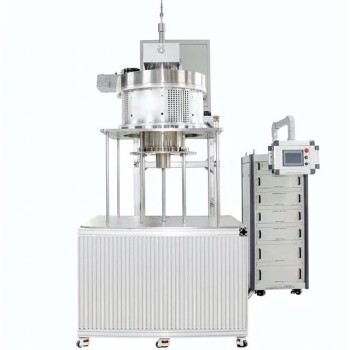
915MHz MPCVD Diamond Machine Microwave Plasma Chemical Vapor Deposition System Reactor
