All Questions
What Is The Composition And Key Properties Of Nickel-Chromium (Nicr) Alloys? Discover High-Performance Heating Solutions
Learn about NiCr alloys' 80/20 composition, high electrical resistance, oxidation resistance, and applications in heating elements for labs and industry.
What Are The Main Types Of Alloys Used For Manufacturing Heating Elements? Discover The Best Alloys For Your Heating Needs
Explore key heating element alloys like NiCr, FeCrAl, and CuNi, their properties, and how to choose the right one for temperature, cost, and precision.
What Are The Key Properties Required In Materials Used For Heating Elements? Choose The Right Material For Efficient, Durable Heating
Learn the essential properties like high melting point, electrical resistivity, and oxidation resistance for selecting optimal heating element materials.
What Is The Basic Principle Behind The Working Of Heating Elements? Discover Joule Heating For Precise Thermal Control
Learn how heating elements use electrical resistance to generate heat via Joule heating, with insights on materials and applications for labs and industries.
What Role Do Composite Heating Elements Play In Specialized Industries? Achieve Durable, Precise Heating For Harsh Environments
Discover how composite heating elements provide superior durability, precise control, and custom integration for demanding industrial applications.
How Do Quartz Halogen Heating Elements Function And Where Are They Used? Discover Rapid, Efficient Radiant Heat Solutions
Learn how quartz halogen heating elements work with tungsten filaments and halogen gas for fast, precise infrared heating in industrial and lab applications.
What Factors Should Be Considered When Selecting A Heating Element? Ensure Optimal Performance And Longevity
Learn key factors for choosing heating elements: material properties, power requirements, and physical design for safety and efficiency in your applications.
What Makes Polymer Ptc Heating Elements Unique? Discover Inherent Safety And Self-Regulation
Explore polymer PTC heating elements' self-regulating properties for fail-safe temperature control, energy efficiency, and simplified design in heating applications.
How Do Thick Film Heating Elements Differ From Other Types? Discover Speed, Precision, And Efficiency
Learn how thick film heaters offer rapid heating, precise control, and high power density compared to traditional elements for better performance in labs and industries.
What Are The Characteristics Of Ceramic And Semiconductor Heating Elements? Discover High-Temp, Stable Heating Solutions
Explore ceramic and semiconductor heating elements: high-temperature resilience, rapid thermal response, and uniform heat for industrial applications like furnaces and manufacturing.
What Are The Main Types Of Metal Heating Elements And Their Properties? Choose The Right Alloy For Your Heating Needs
Learn about nickel-chromium and copper-nickel heating elements, their properties, and how to select the best for high or low-temperature applications.
What Is The Basic Function Of Heating Elements? Convert Electricity To Controlled Heat Efficiently
Learn how heating elements use Joule heating to transform electrical energy into precise, on-demand thermal energy for various applications.
What Materials Are Used In High-Temperature Furnace Heating Elements? Discover The Best Choices For Your Lab
Explore high-temperature furnace heating element materials like Nichrome, SiC, and tungsten, tailored for air, vacuum, or inert atmospheres to boost efficiency.
How Do Ceramic Heating Elements With A Positive Temperature Coefficient Behave? Discover Self-Regulating Safety & Efficiency
Explore PTC ceramic heating elements' self-regulating behavior, ensuring safety, simplified design, and durability for reliable thermal systems.
What Are The Properties And Applications Of Ceramic And Semiconductor Heating Elements? Unlock High-Temp Performance
Explore ceramic and semiconductor heating elements: high-temperature stability, durability, and applications in furnaces, HVAC, and precision heating.
What Are The Advantages Of Etched Foil Heating Elements? Achieve Superior Heat Uniformity And Rapid Response
Discover the key benefits of etched foil heating elements, including exceptional heat uniformity, rapid thermal response, and high design flexibility for precise applications.
What Are The Characteristics And Common Uses Of Metal Resistance Heating Elements? Discover Key Materials For Efficient Heat
Explore metal resistance heating elements: characteristics, uses, and material choices like NiCr and CuNi for high and low-temperature applications.
What Are The Basic Types Of Heating Elements Based On The Materials Used? Choose The Right Material For Your Heating Needs
Explore metallic alloys like Ni-Cr and Fe-Cr-Al, ceramics such as SiC, and polymers for self-regulating heating elements. Learn their applications and trade-offs.
What Is The Process By Which A Heating Element Converts Electrical Energy Into Heat? Discover Joule Heating Essentials
Learn how heating elements use electrical resistance to generate heat via Joule heating, including material properties and applications in labs.
What Are The Applications Of Silicon Carbide And Mosi2 Heating Elements? Optimize Your High-Temp Processes
Explore MoSi2 and SiC heating element uses in high-temperature furnaces for industries like ceramics, metals, and semiconductors. Learn key differences and applications.
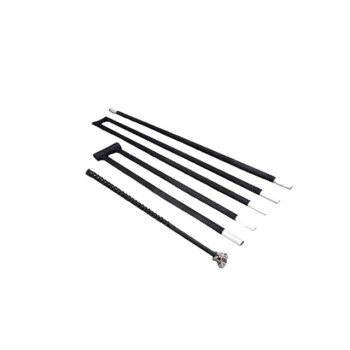
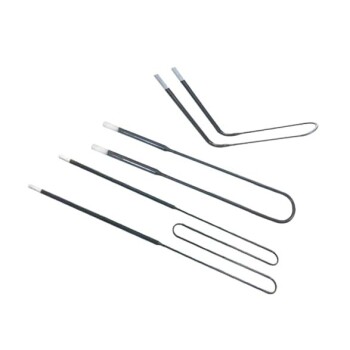
What Are Some Common Types Of Mosi2 Heating Elements And Accessories? Discover Shapes, Grades, And Benefits
Explore common MoSi2 heating element shapes like U, W, L, and rods, plus accessories, grades, and tips for high-temperature furnace efficiency.
What Are The Advantages Of Mosi2 Heating Elements? Achieve Extreme Heat And Longevity For Your Furnace
Discover MoSi2 heating elements' benefits: high-temperature operation up to 1900°C, long service life, and flexibility for labs and industries.
How Do Mosi2 Heating Elements Work? Discover The Self-Healing Tech For High-Temp Stability
Learn how MoSi2 heating elements use self-healing silica layers to achieve high temperatures up to 1700°C, ensuring long life and reliability in labs.
What Are Some Common Types Of Silicon Carbide Heating Elements? Explore Shapes, Coatings, And High-Temp Performance
Learn about SiC heating element types, including rods, U-types, and coated variants for high-temperature furnaces up to 1700°C, with tips on selection and aging management.
What Are The Advantages Of Silicon Carbide Heating Elements? Achieve High-Temp Reliability And Efficiency
Discover the benefits of SiC heating elements: high-temperature operation up to 1700°C, structural stability, rapid heating, and energy savings for labs and industries.
How Do Silicon Carbide Heating Elements Work? Achieve High-Temp Precision & Efficiency
Learn how silicon carbide heating elements use resistive heating for precise temperature control up to 1600°C, ideal for industrial furnaces and kilns.
What Are Two Commonly Used Heating Elements In Industry? Compare Sic And Mosi2 For High-Temp Applications
Explore silicon carbide (SiC) and molybdenum disilicide (MoSi2) heating elements, their properties, and how to choose the right one for industrial processes.
What Is The Primary Function Of Electric Heating Elements? Convert Electricity To Reliable Heat Efficiently
Learn how electric heating elements use Joule heating to convert electrical energy into thermal energy for precise, controllable heat in various applications.
How Do Electrical Heating Elements Work? Master Heat Generation For Your Lab
Learn how electrical heating elements convert energy into heat via Joule heating, material choices, and applications for labs and industry.
What Are The Ideal Applications For Mosi2 Heating Elements? Achieve Reliable High-Temp Performance
Discover MoSi2 heating elements for high-temperature applications up to 1900°C, ideal for glass, ceramics, and metallurgy with superior oxidation resistance.
What Are The Ideal Applications For Sic Heating Elements? Boost Efficiency In High-Temp Processes
Discover SiC heating elements' ideal uses in metal treatment, semiconductor, and glass/ceramics industries for rapid heating and durability up to 1600°C.
Which Heating Element Is More Cost-Effective? Compare Sic Vs. Mosi2 For Your Furnace
Discover cost-effective heating elements: SiC for under 1600°C, MoSi2 for high-temp durability. Learn total ownership costs and ideal applications.
Which Heating Element Has Better Oxidation Resistance? Discover Mosi2'S Superior Protection
Learn why Molybdenum Disilicide (MoSi2) offers better oxidation resistance than Silicon Carbide (SiC) for high-temperature applications.
Which Heating Element Is More Brittle, Sic Or Mosi2? Choose The Right Element For Your High-Temp Needs
Discover why SiC is more brittle than MoSi2 and how to select the best heating element based on temperature, heating speed, and maintenance for your lab furnace.
How Does Thermal Conductivity Differ Between Sic And Mosi2 Heating Elements? Choose The Right Element For Your Furnace
Learn the thermal conductivity differences between SiC and MoSi2 heating elements to optimize furnace performance, efficiency, and temperature stability.
What Is The Temperature Range For Mosi2 Heating Elements? Maximize Lifespan In High-Temp Applications
Learn MoSi2 heating element temperature ranges (1600°C-1800°C furnace, up to 1900°C surface), advantages, and selection tips for labs.
What Is The Temperature Range For Sic Heating Elements? Optimize Your High-Temp Processes With Reliable Performance
Learn the operating range of SiC heating elements (1400°C-1600°C), key properties, and when to choose SiC vs. MoSi2 for cost-effective high-temperature applications.
What Are The Main Differences Between Sic And Mosi2 Heating Elements? Choose The Right Element For Your High-Temp Needs
Compare SiC vs MoSi2 heating elements: temperature range, atmosphere compatibility, and maintenance for optimal furnace performance.
What Factors Should Be Considered When Selecting A Heating Element Material? Optimize Performance And Durability
Learn key factors for choosing heating element materials, including electrical resistivity, temperature limits, and corrosion resistance for reliable thermal solutions.
Why Is Silicon Carbide Used In Corrosive Industrial Applications? Unlock Superior Durability In Harsh Environments
Explore silicon carbide's chemical resistance, thermal stability, and wear resistance for corrosive industrial uses, enhancing performance and longevity.
What Are The Characteristics And Uses Of Molybdenum In Heating Elements? Unlock High-Temp Performance For Your Lab
Explore molybdenum heating elements: pure Mo for vacuum/inert atmospheres up to 1900°C and MoSi₂ for oxidizing environments up to 1850°C, with key benefits and selection tips.
What Makes Tungsten Suitable For High-Temperature Heating Elements? Unlock Extreme Heat Performance
Explore tungsten's high melting point, strength, and low vapor pressure for reliable heating elements in vacuum or inert atmospheres above 1600°C.
What Are The Properties And Applications Of Nickel-Chromium Alloys As Heating Elements? Discover Their High-Temp Efficiency
Explore nickel-chromium alloy properties like high electrical resistance and protective oxide layers for heating elements up to 1200°C in industrial applications.
What Are The Common Materials Used For High-Temperature Heating Elements? Choose The Right Element For Your Process
Explore common high-temperature heating element materials like Ni-Cr, Fe-Cr-Al, SiC, MoSi2, and refractory metals for optimal performance in various atmospheres and temperatures.
What Orientations Can Silicon Carbide Heating Elements Be Used In? Optimize Your Furnace Setup For Maximum Efficiency
Learn how to use silicon carbide heating elements in vertical and horizontal orientations, with tips on support, handling, and lifespan extension.
What Are The Unique Properties Of Silicon Carbide Heating Elements? Key Benefits For High-Temp Performance
Explore silicon carbide heating elements' high-temperature stability, thermal shock resistance, and chemical inertness for reliable industrial furnace applications.
What Are The Safety Considerations When Working With Silicon Carbide Heating Elements? Ensure Safe Operation In High-Temp Labs
Learn key safety tips for silicon carbide heating elements, covering mechanical handling, thermal risks, and electrical hazards to prevent injuries and equipment failure.
In What Industrial Applications Are Silicon Carbide Heating Elements Commonly Used? Essential For High-Temp, Harsh Environments
Explore silicon carbide heating elements' uses in metallurgy, ceramics, semiconductor, and chemical industries for reliable high-temperature performance.
What Is The Maximum Temperature Silicon Carbide Heating Elements Can Withstand? Key Factors For Longevity And Performance
Learn the max temperature of SiC heating elements (1600°C), factors affecting lifespan, and tips for optimal use in industrial furnaces.
What Types Of Designs Are Available For Silicon Carbide Heating Elements? Explore Rod, U, W, And Scr Types
Discover silicon carbide heating element designs: straight rods, U-type, W-type, and SCR-type for efficient furnace heating and precise temperature control.
What Are The Advantages Of Silicon Carbide Heating Elements? Superior High-Temp Performance & Durability
Discover how silicon carbide heating elements outperform traditional ones with higher temperatures, longer lifespan, and resistance to thermal shock and corrosion.
What Material Are Silicon Carbide Heating Elements Made From? Discover High-Temp Solutions
Learn why silicon carbide (SiC) is used for heating elements in high-temperature applications up to 1600°C, offering superior performance in air.
What Are The Key Benefits Of Silicon Carbide Heating Elements? Achieve High-Temp Efficiency And Durability
Discover the advantages of SiC heating elements: high-temperature performance up to 1600°C, rapid heating, and long-lasting reliability for industrial processes.
What Makes Sic Heating Elements Superior For High-Temperature Applications? Unlock Efficiency And Durability
Discover why SiC heating elements excel with high-temperature stability up to 1600°C, superior durability, and chemical resistance for industrial processes.
What Are The Energy Efficiency Benefits Of Sic Heating Elements? Boost Productivity And Cut Costs
Discover how SiC heating elements reduce energy use, speed up processes, and lower costs with high thermal conductivity and rapid cycling for labs.
What Design Advantages Do Sic Heating Elements Offer? Achieve High-Temp Efficiency And Durability
Explore SiC heating element benefits: high-temperature operation, thermal uniformity, oxidation resistance, and long lifespan for industrial applications.
How Do Sic Heating Elements Perform In Harsh Environments? Unlock Durability And Efficiency In Extreme Conditions
Discover how SiC heating elements excel in harsh environments with high chemical resistance, thermal stability up to 1600°C, and superior mechanical durability for reliable performance.
What Are The Thermal Properties Of Sic Heating Elements? Unlock High-Temp Efficiency And Durability
Explore SiC heating elements' high operating temperature, excellent thermal conductivity, and low thermal expansion for enhanced industrial performance.
What Industrial Applications Are Sic Heating Elements Suitable For? Powering High-Temp Processes With Efficiency
Explore SiC heating elements for metallurgy, ceramics, glass, semiconductors, and chemical processing. Achieve high temperatures, durability, and energy savings.
What Temperature Range Can Sic Heating Elements Operate At? Unlock High-Temp Efficiency Up To 1600°C
Discover SiC heating elements' high-temperature range up to 1600°C, offering rapid heating, energy efficiency, and durability for industrial processes.
What Are Sic Heating Elements Made Of And What Are Their Key Characteristics? Discover High-Temp Durability & Efficiency
Learn about SiC heating elements' composition, high-temperature performance up to 1600°C, and benefits like oxidation resistance and durability for industrial applications.
What Are The Operational Advantages Of Silicon Carbide Heating Elements? Achieve High-Temp Efficiency And Durability
Explore the benefits of SiC heating elements: high temperature operation up to 2000°C, long lifespan, thermal shock resistance, and precise control for industrial processes.
What Factors Influence The Lifespan Of Silicon Carbide Heating Elements? Extend Element Life With Expert Tips
Learn how temperature, watt density, atmosphere, and cycling affect SiC heating element lifespan. Get strategies to maximize durability and performance.
What Role Does Recrystallization Play In The Conductivity Of Silicon Carbide Heating Elements? Unlock Key Performance Insights
Explore how recrystallization creates conductive bridges in SiC heating elements, influencing resistance, lifespan, and thermal stability for industrial applications.
Why Are Electric Heating Elements Popular In The Heat-Treating Industry? Unlock Precision And Reliability
Discover why electric heating elements dominate heat treatment with precision, high-temperature performance, and reliability for superior metallurgical outcomes.
What Are The Key Characteristics Of Silicon Carbide That Make It Suitable For Heating Elements? Discover High-Temp Efficiency & Durability
Explore silicon carbide's high-temperature strength, thermal conductivity, and chemical resistance for reliable heating elements in industrial and lab furnaces.
What Safety Measures Are Incorporated Into Heating Elements? Ensure Reliable Protection For Your Applications
Learn key heating element safety measures, including electrical insulation, thermal management, and installation protocols to mitigate risks in labs and industries.
What Are The Common Types Of Heating Element Designs? Discover The Best Fit For Your Heating Needs
Explore common heating element designs like wire, tubular, and ceramic, their applications, and how to choose the right one for durability, temperature, and efficiency.
How Do Heating Elements Convert Electrical Energy Into Heat Energy? Uncover The Science Of Efficient Heating
Learn how heating elements use Joule heating to transform electricity into heat, with insights on materials like nichrome for optimal performance.
What Types Of Materials Are Used In Heating Elements And Why? Discover The Best Choices For Your Application
Learn about heating element materials like nichrome, Kanthal, silicon carbide, and molybdenum disilicide for efficient, high-temperature performance.
What Is The Core Concept That Heating Elements Work Upon? Unlocking The Power Of Joule Heating
Discover how heating elements use Joule heating to convert electrical energy into heat, with insights on materials, control, and efficiency for labs.
What Are The Typical Applications Of Molybdenum Disilicide (Mosi₂)? Unlock High-Temp Heating Solutions
Explore MoSi₂ applications in furnaces for sintering, glass melting, and labs. Learn its high-temperature resistance and self-healing properties for reliable performance.
What Are The Properties And Applications Of Silicon Carbide (Sic)? Unlock High-Temperature Performance
Explore silicon carbide's high thermal conductivity, strength, and chemical resistance for superior heating in industrial and lab applications.
What Are The Benefits Of Silicon Carbide For Extreme Heat Applications? Achieve Unmatched Reliability In High-Temp Environments
Discover silicon carbide's key benefits for extreme heat: thermal stability to 1,600°C, strength retention, oxidation resistance, and thermal shock resilience.
What Are The Applications Of Glass Fiber In Heating Elements? Essential For Flexible, Low-Temp Heating Solutions
Explore how glass fiber enables flexible heating elements for insulation and structural support in industrial and lab applications up to 600°C.
What Are The Properties And Handling Requirements Of Ceramic Sheath Materials? Master High-Temp And Insulation Challenges
Explore ceramic sheath properties like high-temperature resistance up to 1,600°C and electrical insulation, plus essential handling tips to prevent brittleness issues.
What Are The Advantages Of Titanium Alloys In High-Performance Applications? Unlock Superior Strength, Lightweight, And Corrosion Resistance
Explore the key benefits of titanium alloys, including high strength-to-weight ratio, excellent corrosion resistance, and high-temperature stability for aerospace, marine, and industrial uses.
What Makes Nickel Alloys Suitable For Industrial Heating Applications? Discover Their High-Temp Strength & Corrosion Resistance
Learn why nickel alloys excel in industrial heating with superior high-temperature strength, oxidation resistance, and durability for harsh environments.
What Are The Key Selection Considerations For Stainless Steel As A Heating Element Sheath Material? Ensure Longevity And Efficiency In Your Heating Systems
Learn how to choose the right stainless steel grade for heating element sheaths based on corrosion resistance, temperature stability, and cost for optimal performance.
What Are The Properties And Applications Of Molybdenum Disilicide (Mosi₂)? Discover Its High-Temp Stability And Uses
Explore MoSi₂ properties like high melting point, self-healing oxidation layer, and applications in industrial heating elements for extreme temperatures.
What Are The Characteristics Of Aluminum For Heating Applications? Unlock Efficient Heat Transfer Solutions
Explore aluminum's thermal conductivity, lightweight, and cost benefits for heating, plus its temperature limits and applications in labs and industry.
What Are The Benefits And Limitations Of Copper For Heating Elements? Discover Its Ideal Uses And Avoid Costly Failures.
Learn about copper's high conductivity benefits and oxidation limitations for heating elements, helping you choose the right material for low or high-temperature applications.
What Are The Advantages Of Nickel Alloys? Achieve Unmatched Performance In Extreme Environments
Discover the key benefits of nickel alloys, including superior high-temperature strength and corrosion resistance for demanding applications in aerospace and chemical processing.
What Makes Titanium Suitable For Harsh Environments? Unlock Its Corrosion Resistance And Strength
Explore titanium's corrosion resistance, strength-to-weight ratio, and thermal stability for harsh environments. Learn key benefits and limitations for informed decisions.
What Are The Advantages Of Ceramic Materials Like Alumina And Silicon Nitride In Heating Elements? Achieve Superior Heat Treatment Efficiency
Discover how ceramic heating elements offer high-temperature resistance, electrical insulation, and corrosion resistance for safer, longer-lasting industrial applications.
What Are The Typical Applications Of Stainless Steel Sheaths In Heating Elements? Optimize Performance And Durability
Explore stainless steel sheath uses in heating elements for water, air, oil, and high-temp applications. Learn grade selection for corrosion resistance and efficiency.
What Are The Common Sheath Materials For Heating Elements And Their Properties? Choose The Best For Your Lab's Needs
Explore common heating element sheath materials like stainless steel, Inconel, titanium, and ceramics, with properties for temperature, corrosion, and durability.
What Are The Advantages Of Tungsten (W) For High-Temperature Heating Applications? Unlock Superior Performance In Extreme Heat
Explore tungsten's high melting point, low vapor pressure, and strength for reliable heating in vacuum furnaces and high-temperature applications.
What Are The Properties And Applications Of Molybdenum (Mo) In Heating Elements? Choose The Right Element For High-Temp Success
Explore Molybdenum heating elements: properties, applications, and how to select between pure Mo and MoSi₂ for vacuum or oxidizing atmospheres up to 1900°C.
What Are The Characteristics Of Inconel (Nicrfe) As A Heating Element Material? Discover Its High-Temp Reliability
Explore Inconel's key traits: high electrical resistivity, protective oxide layer, stable resistance, and strength for durable heating in harsh environments.
What Are The Key Properties Of Platinum As A Heating Element Material? Unlock High-Temp Stability And Reliability
Explore platinum's high melting point, oxidation resistance, and stable electrical properties for reliable heating in extreme conditions.
What Are The Properties And Uses Of Copper-Nickel (Cuni) Alloy In Heating Elements? Ideal For Corrosive, Moderate-Temp Applications
Explore CuNi alloy's electrical resistivity, corrosion resistance, and uses in marine, food, and medical heating elements for reliable performance.
What Are The Advantages Of Iron-Chrome-Aluminum (Fecral) Alloy For High-Temperature Applications? Superior Durability & Efficiency
Discover why FeCrAl alloys excel in high-temperature applications with unmatched oxidation resistance, thermal stability, and long service life.
What Are The Properties And Applications Of Nickel-Chromium (Nicr) Alloy In Heating Elements? Discover High-Temp Reliability
Explore NiCr alloy's high electrical resistance, oxidation resistance, and applications in furnaces and appliances for durable heating solutions.
What Are The Core Components Of A Heating Element? Master The Design For Efficient Heat Generation
Explore the core components of heating elements: resistive core, protective sheath, insulation, fill material, and terminals for safe, efficient thermal energy conversion.
How Do Environmental Factors Affect Heater Material Selection? Choose The Right Alloy For Your Industrial Heating Needs
Learn how environmental factors like sulfur, chlorine, and atmospheres impact heater material selection to ensure longevity and reliability in industrial applications.
What Is Watt Density And Why Is It Important? Optimize Your Heating System For Safety And Efficiency
Learn how watt density affects heater lifespan and material safety. Discover key trade-offs for efficient thermal system design in various applications.
How Is Power Requirement Determined For Heaters? Calculate Energy Needs For Efficient Heating
Learn to determine heater power requirements by calculating startup energy, heat loss, and latent heat for phase changes, ensuring optimal performance.
What Additional Factors Affect Heater Design Requirements? Optimize Performance And Longevity
Explore key heater design factors like thermal dynamics, system integration, and environmental constraints to ensure reliable industrial heating solutions.
What Are The Components Of A Tubular Heater? Discover Key Parts For Efficient Industrial Heating
Learn about tubular heater components like resistance coils, insulation, sheaths, and terminals for safe, versatile heating in labs and industries.