
At their core, open coil heaters are defined by their simple yet highly effective design: an electrically resistant wire coil is suspended by insulators directly in the path of the airflow it is intended to heat. This construction, typically using nickel-chromium (NiCr) or iron-chromium-aluminum (FeCrAl) alloys for the coil and ceramic or mica for the insulators, allows for immediate and efficient energy transfer from the heating element to the air.
The primary advantage of an open coil heater is its exceptional thermal efficiency and rapid response time. However, this direct-exposure design means its performance and safety are critically dependent on a clean, non-hazardous operating environment.
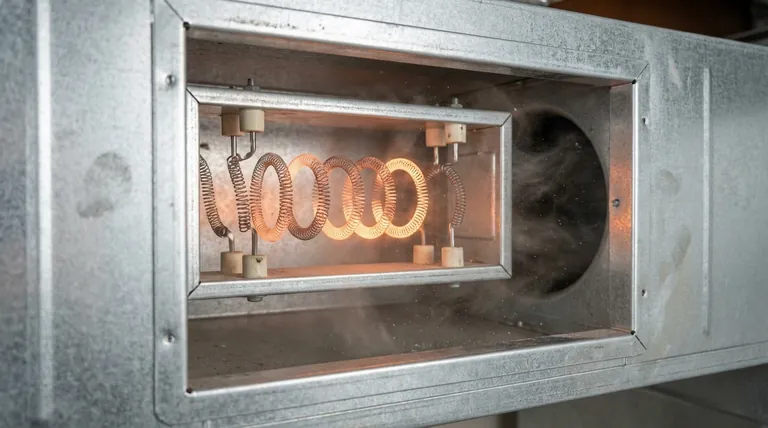
The Anatomy of Performance
Understanding how an open coil heater is constructed reveals why it behaves the way it does. Its characteristics are a direct result of its minimalist and functional design.
The Heating Element: Resistance Coils
The heart of the heater is the coil itself. It is made from specialized alloys like NiCr or FeCrAl, chosen for their ability to resist high temperatures and oxidation while providing the electrical resistance needed to generate heat.
The specific alloy, wire gauge (diameter), and coil dimensions are carefully engineered to achieve the desired wattage output at a specific voltage.
The Support Structure: Insulators
The energized coil cannot touch any conductive surface. It is suspended within a frame using ceramic or mica insulators.
These materials are excellent electrical insulators and are capable of withstanding the high operating temperatures of the coil without degrading, ensuring both safety and structural integrity.
The Principle: Direct Heat Transfer
The defining characteristic of an open coil heater is the direct exposure of the heating element to the medium (usually air).
Unlike sheathed heaters where energy must first conduct through an outer tube and insulation, here the heat radiates directly from the coil's surface into the passing air, enabling maximum efficiency.
Key Operational Characteristics
The design of an open coil heater translates directly into a distinct set of performance benefits that make it the ideal choice for specific applications.
Unmatched Thermal Efficiency
Because there is no intermediate sheath or material to heat up first, virtually all the electrical energy is converted directly into useful heat within the airstream. This results in minimal wasted energy and lower operating costs.
Extremely Rapid Response
The low thermal mass of the thin wire coil allows it to reach operating temperature almost instantly when power is applied. It also cools down very quickly when power is cut, making these heaters ideal for applications requiring precise and rapid temperature control.
Minimal Airflow Obstruction
The "open" structure of the coil assembly presents a very low resistance to airflow. This low-pressure drop is a critical advantage in HVAC systems, duct heaters, and industrial dryers where maintaining high air volume and velocity is essential for performance.
Understanding the Trade-offs
The same design that provides such high efficiency also introduces specific limitations that must be respected. Ignoring these can lead to premature failure and safety hazards.
Sensitivity to Contaminants
The exposed coils are vulnerable. If the airstream contains dust, moisture, or corrosive vapors, these contaminants can accumulate on the hot element. This can create hot spots, cause the element to degrade, or lead to an electrical short.
For this reason, open coil heaters are only suitable for clean-air applications.
Potential Electrical Hazard
Since the heating elements are electrically live and exposed, safety is paramount. The entire heater assembly must be installed within a properly grounded enclosure with safety interlocks (e.g., on access panels) to prevent accidental human contact and the risk of electric shock.
Risk of Element Sag
Over hundreds of heating cycles, the resistance wire can slowly stretch or "sag" under its own weight, especially in horizontally mounted applications. Proper design includes sufficient support points to mitigate this, but if sag occurs, it can cause coils to touch, resulting in a short circuit and immediate failure.
Making the Right Choice for Your Application
Selecting the correct heating technology requires balancing efficiency, durability, and safety against the demands of your project.
- If your primary focus is rapid, precise heating in a clean-air system (like HVAC or process drying): An open coil heater is the most efficient and responsive choice available.
- If your primary focus is durability in a dusty, wet, or mildly corrosive environment: A sheathed or tubular heater is the safer option, as it protects the element from contamination.
- If your primary focus is safety in an easily accessible unit: You must ensure any open coil heater is installed within a robust, interlocked enclosure to eliminate any risk of accidental contact.
By understanding these fundamental characteristics and trade-offs, you can confidently determine if an open coil heater's efficiency meets the specific demands and constraints of your system.
Summary Table:
| Characteristic | Description |
|---|---|
| Thermal Efficiency | High due to direct heat transfer, minimizing energy waste. |
| Response Time | Extremely rapid, with quick heating and cooling for precise control. |
| Airflow Obstruction | Low pressure drop, ideal for high-volume air systems. |
| Sensitivity | Vulnerable to contaminants like dust and moisture; requires clean environments. |
| Safety | Needs proper grounding and safety interlocks to prevent electrical hazards. |
| Element Sag | Risk of wire stretching over time, potentially causing short circuits. |
Need a reliable heating solution for your lab? KINTEK specializes in advanced high-temperature furnaces, including custom designs to meet your unique needs. With our expertise in R&D and in-house manufacturing, we offer products like Muffle, Tube, Rotary Furnaces, Vacuum & Atmosphere Furnaces, and CVD/PECVD Systems. Our deep customization capabilities ensure precise solutions for clean-air applications, enhancing efficiency and safety. Contact us today to discuss how we can support your projects!
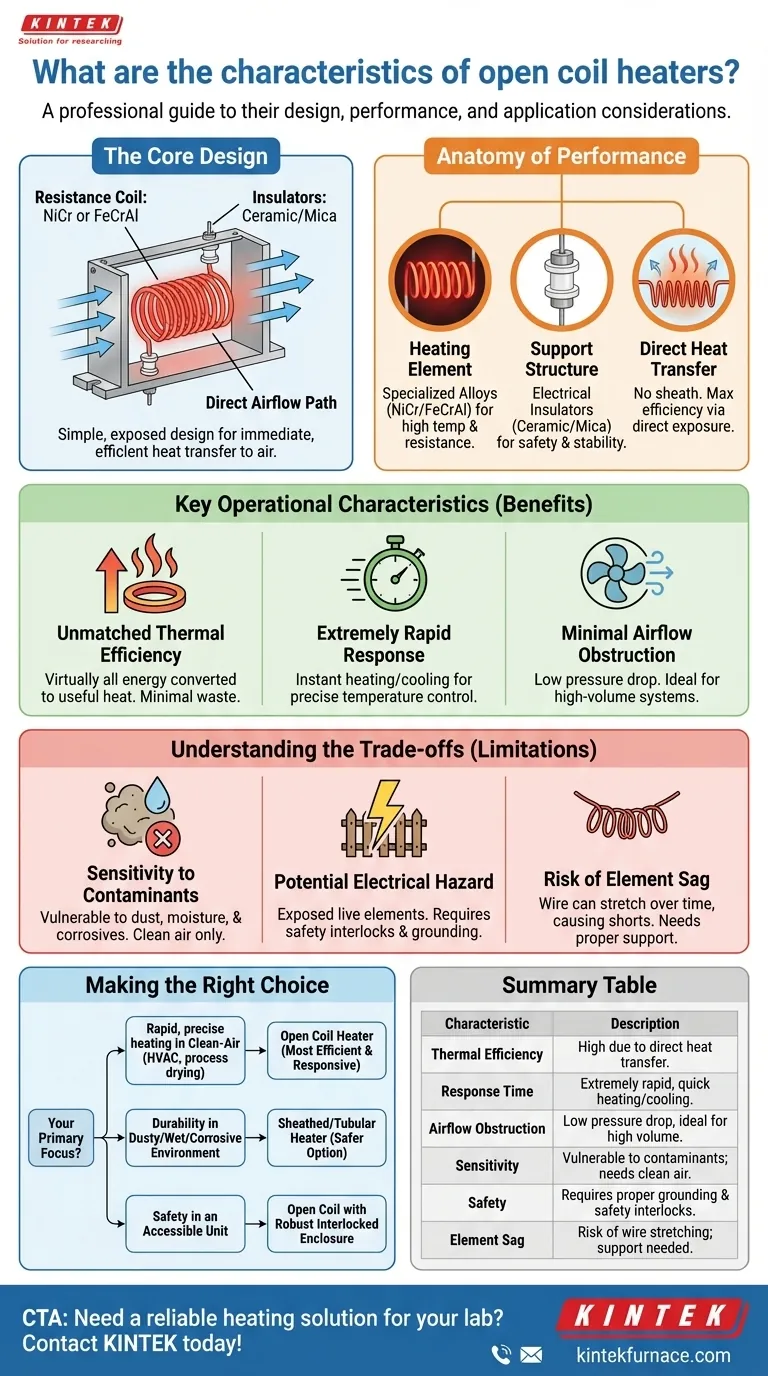
Visual Guide
Related Products
- Silicon Carbide SiC Thermal Heating Elements for Electric Furnace
- Multi Heating Zones CVD Tube Furnace Machine for Chemical Vapor Deposition Equipment
- Molybdenum Disilicide MoSi2 Thermal Heating Elements for Electric Furnace
- Laboratory Quartz Tube Furnace RTP Heating Tubular Furnace
People Also Ask
- How do the different types of silicon carbide heating elements compare in terms of applications? Find the Best Fit for Your High-Temp Needs
- What are the temperature capabilities and mounting options for silicon carbide heating elements? Unlock High-Temp Flexibility and Durability
- What are the advantages of using silicon carbide heating elements in industrial furnaces? Boost Efficiency and Durability
- How do silicon carbide heating elements enhance the heat treatment of alloys? Achieve Superior Temperature Control
- What are the unique properties of silicon carbide heating elements? Key Benefits for High-Temp Performance



