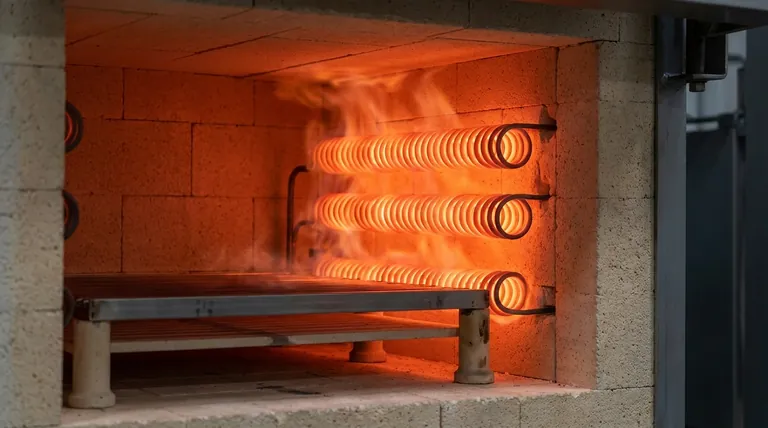
For heating element applications, nickel-chromium (Ni-Cr) alloys are a dominant choice due to their unique combination of high electrical resistance and exceptional high-temperature durability. When an electric current passes through them, this resistance generates significant heat. Simultaneously, the alloy forms a protective surface layer that prevents it from degrading, enabling a long operational life.
The selection of a heating element material is rarely about finding the highest temperature resistance alone. It is a critical trade-off between performance, operational lifespan, and cost, where nickel-chromium alloys provide the optimal balance for the vast majority of industrial and commercial applications.
The Core Principle: Why Ni-Cr Works
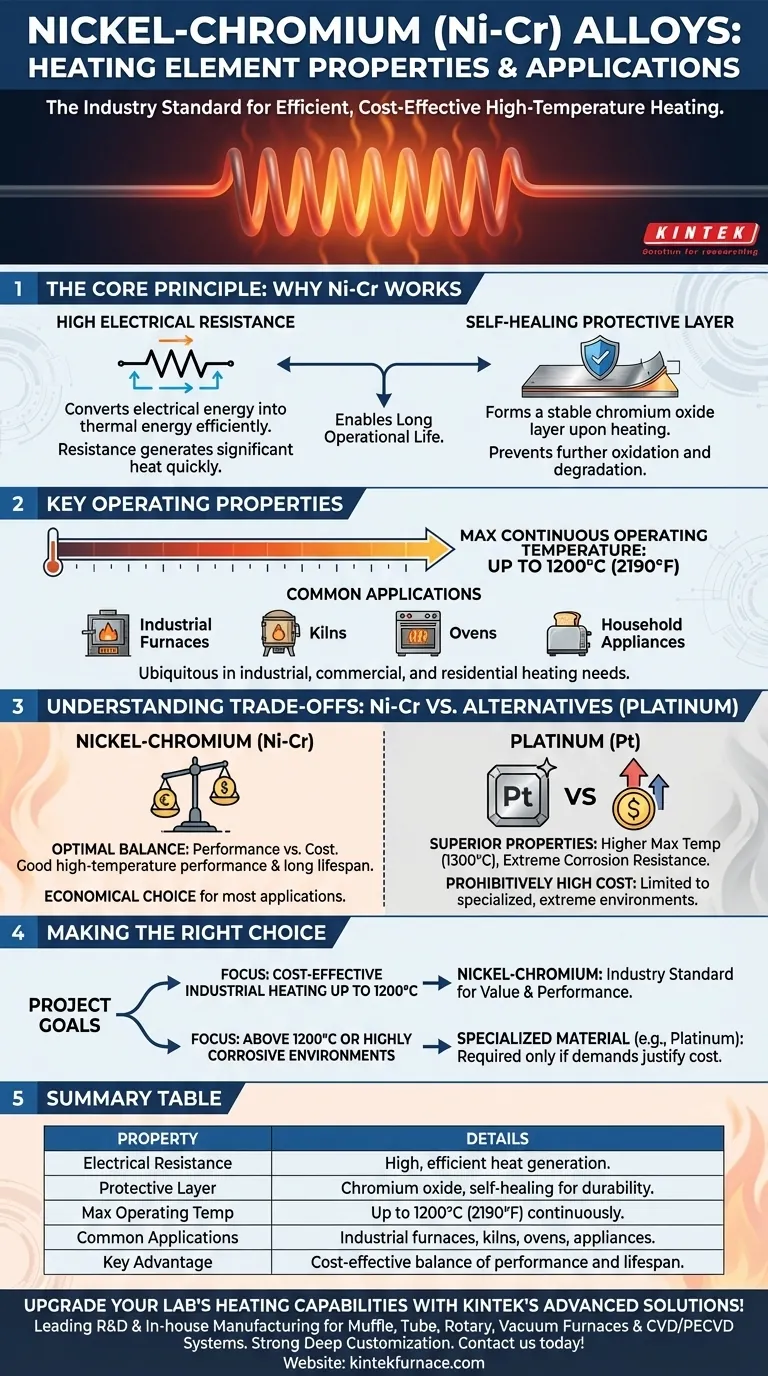
The effectiveness of nickel-chromium alloys as heating elements is rooted in two fundamental material properties that work in tandem.
High Electrical Resistance
Heating elements function by converting electrical energy into thermal energy. The high electrical resistance of Ni-Cr alloys is the key to this process, allowing them to generate heat efficiently and quickly when a current is applied.
The Self-Healing Protective Layer
When first heated in the presence of air, the chromium within the alloy oxidizes. This creates a thin, adherent, and stable layer of chromium oxide on the surface of the element.
This passivating layer is the alloy's most critical feature. It acts as a barrier, preventing atmospheric oxygen from reaching the underlying metal and causing further oxidation or degradation, which would lead to premature failure.
Key Operating Properties
Understanding the practical limits and common uses of Ni-Cr is essential for proper application design.
Maximum Operating Temperature
While the alloy can physically withstand brief temperatures up to 1600°C, its practical continuous operating limit is determined by the stability of the protective oxide layer.
For continuous, reliable operation in most industrial settings, nickel-chromium elements are typically used for temperatures up to 1200°C (2190°F).
Common Applications
The excellent cost-to-performance ratio of Ni-Cr makes it ubiquitous. You will find it in a vast range of applications, from common household appliances to heavy industrial equipment.
Its primary use is in industrial furnaces, kilns, ovens, and any process requiring consistent and reliable electric heat.
Understanding the Trade-offs: Ni-Cr vs. Alternatives
No material is perfect for every scenario. Comparing nickel-chromium to a more specialized material like platinum reveals the critical balance of factors at play.
Performance vs. Cost: The Platinum Example
Platinum (Pt) is a superior material in several respects. It has a higher continuous operating temperature (up to 1300°C), a higher melting point (1768°C), and outstanding resistance to corrosion.
However, these enhanced properties come at a prohibitively high cost. This financial reality limits its use to highly specialized laboratory equipment or applications where extreme chemical inertness is non-negotiable.
The Economic Justification for Ni-Cr
Nickel-chromium offers performance that is "good enough" for the vast majority of heating needs, but at a fraction of the cost of alternatives like platinum.
It strikes the ideal economic balance, providing excellent high-temperature performance and a long service life without the extreme expense of precious metals. This makes it the default, most logical choice for most designs.
Making the Right Choice for Your Application
Your material selection should be driven by the specific goals and constraints of your project.
- If your primary focus is cost-effective industrial heating up to 1200°C: Nickel-chromium is the industry standard, offering the best combination of performance, durability, and value.
- If your primary focus is operating above 1200°C or in a highly corrosive environment: A more specialized and expensive material like platinum may be required, but only if the application's demands justify the significant cost.
Understanding these core material properties empowers you to select the most reliable and economical solution for your specific heating requirements.
Summary Table:
| Property/Application | Details |
|---|---|
| Electrical Resistance | High, enabling efficient heat generation |
| Protective Layer | Chromium oxide, self-healing for durability |
| Max Operating Temp | Up to 1200°C (2190°F) continuously |
| Common Applications | Industrial furnaces, kilns, ovens, appliances |
| Key Advantage | Cost-effective balance of performance and lifespan |
Upgrade your lab's heating capabilities with KINTEK's advanced solutions! Leveraging exceptional R&D and in-house manufacturing, we provide diverse laboratories with high-temperature furnace systems like Muffle, Tube, Rotary, Vacuum & Atmosphere Furnaces, and CVD/PECVD Systems. Our strong deep customization capability ensures precise alignment with your unique experimental needs, enhancing efficiency and reliability. Contact us today to discuss how our tailored heating elements can benefit your specific applications!
Visual Guide
Related Products
- Silicon Carbide SiC Thermal Heating Elements for Electric Furnace
- Molybdenum Disilicide MoSi2 Thermal Heating Elements for Electric Furnace
- Molybdenum Vacuum Heat Treat Furnace
People Also Ask
- How do the different types of silicon carbide heating elements compare in terms of applications? Find the Best Fit for Your High-Temp Needs
- What are the temperature capabilities and mounting options for silicon carbide heating elements? Unlock High-Temp Flexibility and Durability
- What are the advantages of silicon carbide heating elements? Superior High-Temp Performance & Durability
- What is the recommended surface load for silicon carbide heating elements at different furnace temperatures? Maximize Lifespan & Performance
- What are the unique properties of silicon carbide heating elements? Key Benefits for High-Temp Performance