Blog
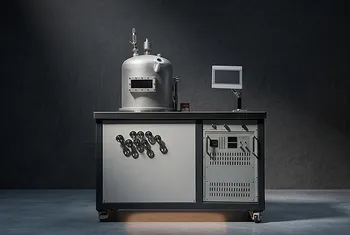
Why Your Copper Foil Diffusion Bonds are Sticking—And the Invisible Layer That Fixes It
1 month agoStruggling with samples sticking to molds in hot-press diffusion bonding? Learn how graphite powder prevents inter-diffusion and protects your equipment.
Learn More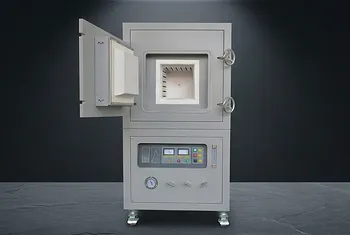
Why Your 3D-Printed Titanium Parts Are Brittle—And How Vacuum Annealing Restores Their Strength
1 month agoLearn why Ti-6Al-4V parts produced via SLM require vacuum annealing to eliminate residual stress, prevent oxidation, and achieve industrial-grade ductility.
Learn More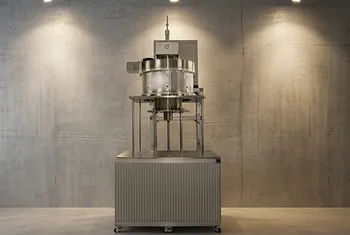
Solving the Purity Puzzle: Why the Right Quartz Reactor is Critical for Diphthalocyanine Synthesis
1 month agoDiscover why high-purity quartz reactors are essential for synthesizing metal-carbon nanocomposite precursors like diphthalocyanines without contamination.
Learn More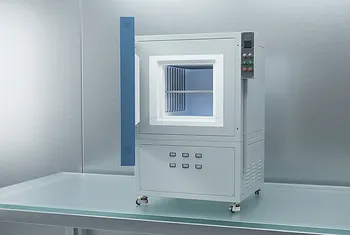
Why Your Superalloy Performance Falls Short: The Invisible Precision Required for Inconel 713C
1 month agoDiscover why precise thermal control at 1176°C is the secret to unlocking Inconel 713C’s creep resistance and how to avoid common heat treatment failures.
Learn More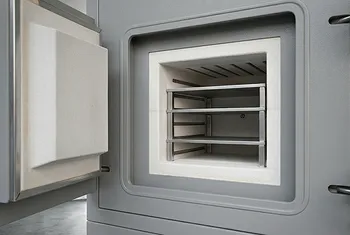
Why Your Ceramic Shells Crack During Dewaxing—And How Precise Thermal Control Saves the Casting
1 month agoDiscover the root cause of ceramic shell cracking during dewaxing and how precise thermal radiation in box resistance furnaces ensures flawless casting results.
Learn More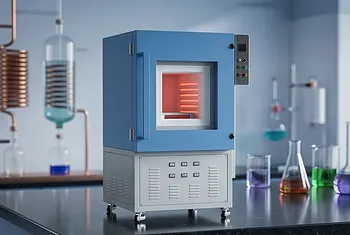
Why Your Stainless Steel Parts Fail Pressure Tests—and How Vacuum Sintering Fixes the Density Gap
1 month agoDiscover why conventional sintering fails to produce high-density stainless steel and how high-temperature vacuum technology eliminates oxidation for superior strength.
Learn More
Why Your Infrared Materials Are Losing Clarity—and the High-Vacuum Secret to Fixing It
1 month agoDiscover why Ge-Se-Te-In materials require high vacuum diffusion pumps to prevent oxidation and ensure the high purity required for infrared optics.
Learn More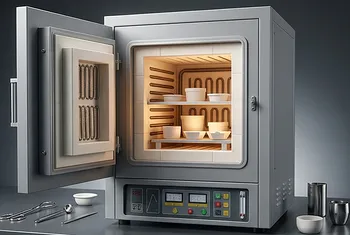
Why Your Iron-Bearing Silicates Are Oxidizing—And How High-Vacuum Environments Stop the Decay
1 month agoDiscover why high-vacuum furnaces are essential for treating iron-bearing silicates and alloys. Learn how to prevent oxidation and ensure material stability.
Learn More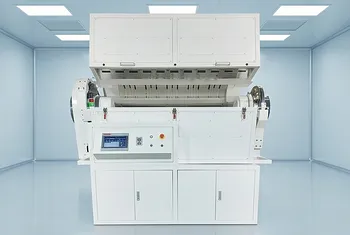
Why Your Advanced Coatings Fail Under Stress—And How High-Vacuum Treatment Fixes the Root Cause
1 month agoDiscover how high-vacuum heat treatment prevents oxidation and drives microstructural transformation in Cr-Al-BN coatings for superior durability.
Learn More
Stopping the Snap: Why Precision Annealing is the Difference Between Success and Scrap
1 month agoDiscover why "good enough" temperature control leads to alloy failure and how precision-controlled muffle furnaces prevent work hardening and cracks.
Learn More
The Invisible Barrier to Optical Clarity: Why Your Ce:YAG Ceramics Aren’t Reaching Full Transparency
1 month agoLearn why 600°C air annealing is the critical missing step in Ce:YAG ceramic production and how atmosphere control prevents carbon contamination.
Learn More
Why Your TiO2 Nanotubes Lack Performance—And the Thermal Secret to Unlocking Their Potential
1 month agoLearn why thermal annealing is the critical bridge between "dead" amorphous TiO2 and high-performance nanoparticles, and how precise furnace control dictates your material's success.
Learn More
Why Your Furnace Control Panel Might Be Lying to You—And How to Fix Your Brazing Yields
1 month agoStop guessing your actual brazing temperatures. Learn how trailing thermocouples reveal the truth about thermal lag and improve your lab's process reliability.
Learn More
Why Your High-Speed Steel Tools Fail Prematurely—And How Plasma Nitriding Rewrites the Science of Durability
1 month agoDiscover why traditional surface treatments often fail high-speed steel tools and how plasma nitriding equipment solves wear and friction at a molecular level.
Learn More
Why 10⁻⁶ mbar Vacuum Isn’t Enough for Perfect Brazing—And the Missing Link to Oxide-Free Surfaces
1 month agoLearn why high vacuum alone fails to prevent metal re-oxidation during brazing and how KINTEK’s advanced furnace technology ensures superior metallurgical bonds.
Learn More
Why Your High-Performance Ceramics Aren't Reaching Their Potential: The Hidden Criticality of Debinding
1 month agoDiscover why debinding is the most critical step in ceramic manufacturing and how precise muffle furnace control prevents defects in transparent and bio-ceramics.
Learn More
Why Standard Resistance Furnaces Fail in Superconducting Crystal Growth—And the High-Vacuum Solution
1 month agoDiscover why precision temperature control and high-vacuum environments are critical for growing defect-free superconducting single crystals and how tungsten mesh technology makes it possible.
Learn More
Why Your PtSe2 Films Aren't Crystallizing: The Hidden Role of Thermal Environment
2 months agoDiscover why precise CVD annealing at 500°C is critical for transforming amorphous Pt-Se into high-quality crystalline PtSe2 and how to avoid common synthesis failures.
Learn More
The Hidden Saboteur in Your HT-LiCoO2 Synthesis: Why Precise Ramp Rates Can Make or Break Your Battery Materials
2 months agoLearn why precise temperature control and slow heating rates are critical for HT-LiCoO2 precursor treatment to prevent structural collapse and ensure high crystallinity.
Learn More
Why Your 718-Type Superalloy Research Might Be Failing at the Melting Stage—and How to Fix It
2 months agoDiscover how vacuum arc melting solves chemical instability and oxidation in 718-type superalloys, ensuring high-purity ingots for advanced R&D.
Learn More
Why Your Aluminum Composites Aren’t Reaching Full Strength: The Hidden Science of T6 Heat Treatment
2 months agoDiscover how precise T6 heat treatment unlocks the maximum mechanical potential of aluminum matrix composites through controlled solutionizing and aging.
Learn More
Why Your Vacuum Furnace Struggles at High Temperatures: The Invisible Power of Molybdenum Heat Shields
2 months agoDiscover why traditional insulation fails in a vacuum and how multi-layer molybdenum heat shields use radiation physics to ensure ±2°C temperature stability.
Learn More
Why Your Ti6Al4V Nitriding Results Vary—and How Gas Precision Solves It
2 months agoDiscover why inconsistent Ti6Al4V hardness layers happen and how precision gas flow regulators stabilize the TiN phase for superior metallurgy.
Learn More
Why Your Silicon Carbide Ceramics Are Brittle: The Invisible Role of Argon Atmosphere
2 months agoDiscover why argon is essential for high-purity Silicon Carbide (SiC) production and how precise atmosphere control prevents material degradation.
Learn More
Why Your Battery Performance Might Be Failing Before It Even Starts: The Critical Role of Vacuum Electrode Pre-treatment
2 months agoDiscover why incomplete electrode drying leads to structural failure and poor electrochemical results, and how vacuum pre-treatment ensures battery stability.
Learn More
Why 1650°C Isn’t Enough: The Hidden Key to Achieving High-Density 80W–20Re Alloys
2 months agoDiscover why vacuum environments are critical for 80W-20Re alloy sintering. Learn how to prevent oxidation, ensure densification, and improve material performance.
Learn More
Cracked Titanium Compacts? How Multi-Turn Coil Design Solves the Internal Gradient Crisis
2 months agoDiscover why titanium powder compacts crack during induction sintering and how multi-turn copper coils ensure uniform heating and microstructural integrity.
Learn More
Stop Losing Your Thin Films to Oxidation: Why Ultra-High Vacuum RTA is the Key to Unlocking Material Stability
2 months agoDiscover how Ultra-High Vacuum Rapid Thermal Annealing (RTA) prevents oxidation and enables precise phase transformation studies in CoN and SiN thin films.
Learn More
Why Your Titanium-Zirconia Composites Lack Strength—And How SPS Breaks the Mechanical Barrier
2 months agoDiscover how Spark Plasma Sintering (SPS) overcomes the limitations of traditional sintering to create high-performance Ti-ZrO2 composites through rapid decomposition.
Learn More
Why Your Ti-35Nb Alloy Integrity Depends on the Step You’re Likely Overlooking
2 months agoDiscover why precision drying at 60ºC is critical for Ti-35Nb alloy production and how KINTEK laboratory ovens prevent oxidation and surface defects.
Learn More