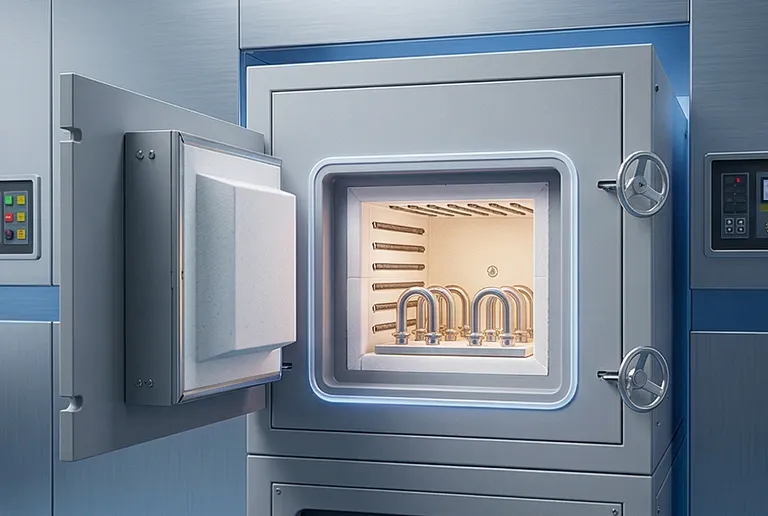
The High Stakes of the "Invisible" Fastener
In the aerospace industry, failure is rarely an option. Imagine a U-shaped component buried deep within a jet engine or a structural frame. These fasteners are small, but they bear the weight of immense thermal stress and mechanical vibration. When a joint fails in these environments, it isn’t just a maintenance headache—it’s a catastrophic risk that can ground a fleet or end a mission.
Many engineering teams find themselves stuck in a cycle of frustration: they design high-performance parts, only to find that the joints connecting them are the "weakest link." The welds look fine on the surface, but under the heat of operation, they crack, oxidize, or simply lose their structural integrity.
The Common Struggle: Why Standard Welding Falls Short
When faced with the challenge of joining aerospace fasteners, the first instinct is often to reach for traditional welding or standard high-temperature adhesives. However, these "go-to" solutions frequently lead to three major business setbacks:
- Oxidation Issues: At high temperatures, oxygen is the enemy. Traditional welding often leaves a thin oxide film at the joint, which acts as a microscopic "perforation line," leading to premature failure.
- Thermal Distortion: High-heat localized welding can warp precision-engineered fasteners, making them impossible to fit into complex aerospace assemblies.
- Inconsistent Strength: Manual or atmospheric welding often results in "cold joints" or uneven penetration, leading to expensive project delays and failed quality audits.
The cost isn't just a broken part; it’s the weeks of rework, the wasted high-value materials, and the soaring costs of safety certifications.
The Science of the "Perfect Bond": Why Ni-B-W Solder Changes the Game
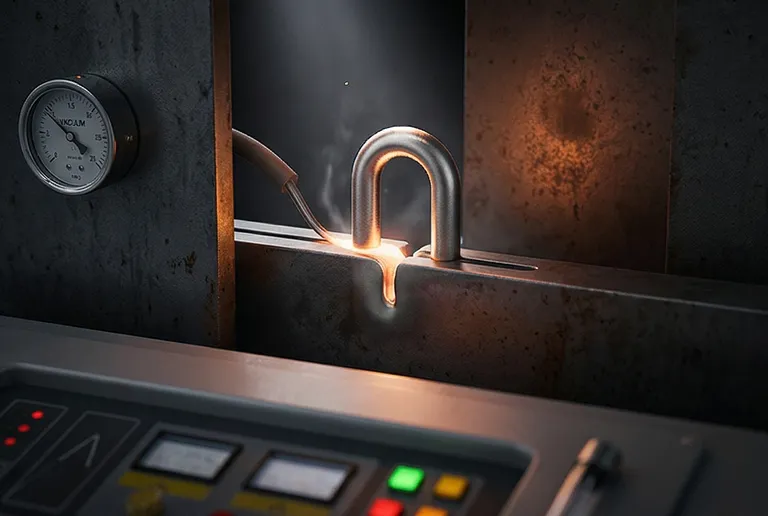
To solve the problem of joint failure, we have to look at the metallurgy. The industry has turned to Ni-B-W (Nickel-Boron-Tungsten) powder solder as the definitive solution for high-temperature vacuum environments. But why does it work when others fail?
The secret lies in its three-part chemical "personality":
- Nickel (Ni): Provides the base for incredible high-temperature resistance and corrosion protection.
- Boron (B): Acts as a "melting point depressant." It allows the alloy to flow at a manageable temperature (around 1350°C) before diffusing into the base metal.
- Tungsten (W): Adds the structural "backbone," ensuring the joint remains strong even as temperatures climb.
At approximately 1350°C in a vacuum, a fascinating physical phenomenon occurs: Capillary Action. The liquid solder is drawn into even the tightest gaps of a U-shaped fastener, filling every microscopic void. Because it happens in a vacuum, there is no oxygen to create a brittle oxide film. Instead, a diffusion reaction occurs—the solder and the base metal actually exchange atoms, creating a continuous, high-strength weld that is virtually indistinguishable from the parts themselves.
The Essential Tool: Why the Solder is Only Half the Story
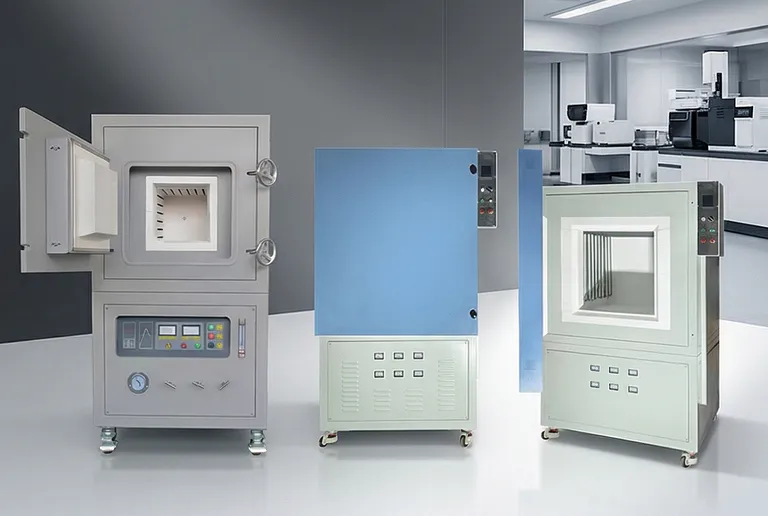
Having the right Ni-B-W solder is like having the right ingredients for a gourmet meal; you still need a world-class oven to make it work. To achieve that 1350°C threshold without oxidation, you need an environment that is perfectly controlled.
This is where the KINTEK Vacuum Furnace becomes the critical factor. To execute a successful Ni-B-W brazing process, the furnace must provide:
- Absolute Vacuum Integrity: Even a trace of oxygen at 1350°C will ruin the diffusion process. Our vacuum systems ensure a pristine environment for oxide-free results.
- Thermal Uniformity: Inconsistent heating causes uneven capillary flow. KINTEK furnaces are engineered to maintain precise temperatures across the entire chamber, ensuring every fastener in a batch is joined with identical strength.
- Customizable Cycles: Every aerospace alloy has a unique "sweet spot." Our customizable ramp-up and cooling cycles allow you to fine-tune the diffusion reaction to your specific material needs.
Beyond the Fix: Opening New Frontiers in Aerospace Design
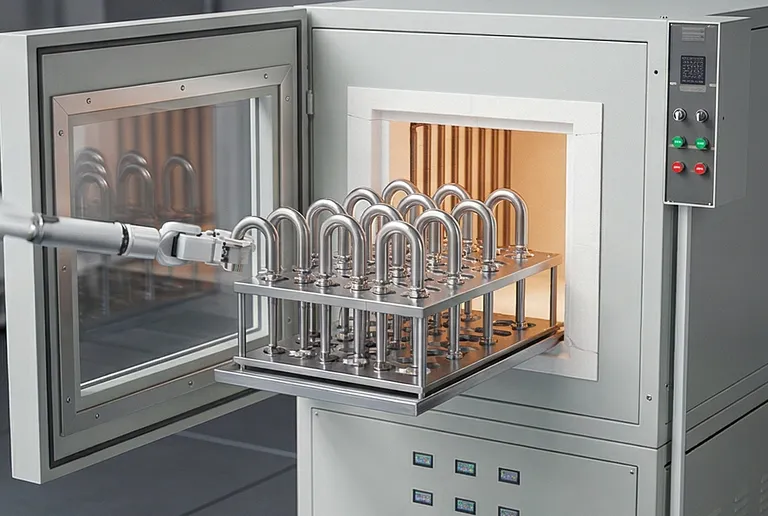
Once you solve the "weak link" problem of high-temperature joints, the possibilities for your engineering team expand exponentially. When you can trust that your fasteners are as strong as the base metal, you can:
- Reduce Weight: Use thinner, more efficient U-shaped components without worrying about joint failure.
- Increase Performance: Operate engines at higher temperatures for better fuel efficiency.
- Accelerate Production: Batch-process hundreds of fasteners at once in a vacuum furnace, rather than welding them one by one.
By understanding the physics of Ni-B-W diffusion and utilizing the right thermal tools, you aren't just fixing a technical problem—you are building a faster, safer, and more innovative future.
Solving complex thermal challenges requires more than just high-quality equipment; it requires a partner who understands the science behind the process. Whether you are struggling with joint integrity in aerospace fasteners or looking to optimize your high-temperature vacuum cycles, our team is ready to help you engineer a more reliable solution. Contact Our Experts today to discuss how we can tailor our furnace technology to your most demanding projects.
Related Products
- Vacuum Heat Treat Sintering and Brazing Furnace
- Vacuum Hot Press Furnace Machine Heated Vacuum Press
- Vacuum Hot Press Furnace Machine Heated Vacuum Press Tube Furnace
- Vacuum Hot Press Furnace Machine for Lamination and Heating
- 600T Vacuum Induction Hot Press Vacuum Heat Treat and Sintering Furnace
Related Articles
- Why 10⁻⁶ mbar Vacuum Isn’t Enough for Perfect Brazing—And the Missing Link to Oxide-Free Surfaces
- Why Your 3D-Printed Maraging Steel Parts Aren't Performing—And How to Fix the Structural Weakness
- Why Your Vacuum Brazed Joints Are Failing—And the Precise Pressure Fix You’ve Been Missing
- Beyond Inert: The Physics and Psychology of Perfecting Joints in a Vacuum Furnace
- The Art of Joining in a Void: Why Critical Components Are Forged in Vacuum Furnaces



















