
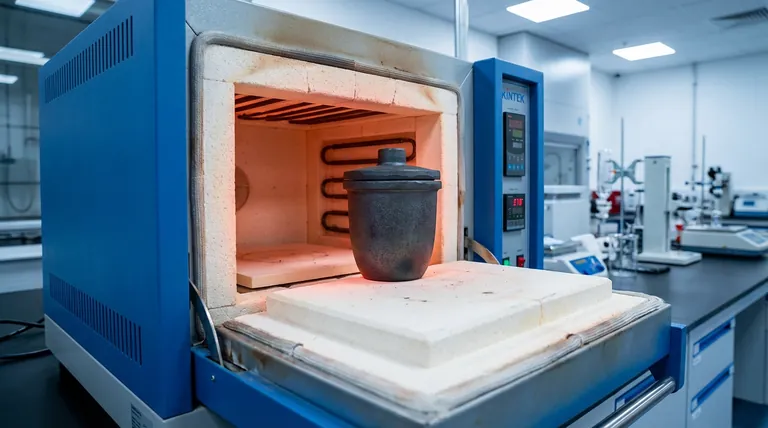
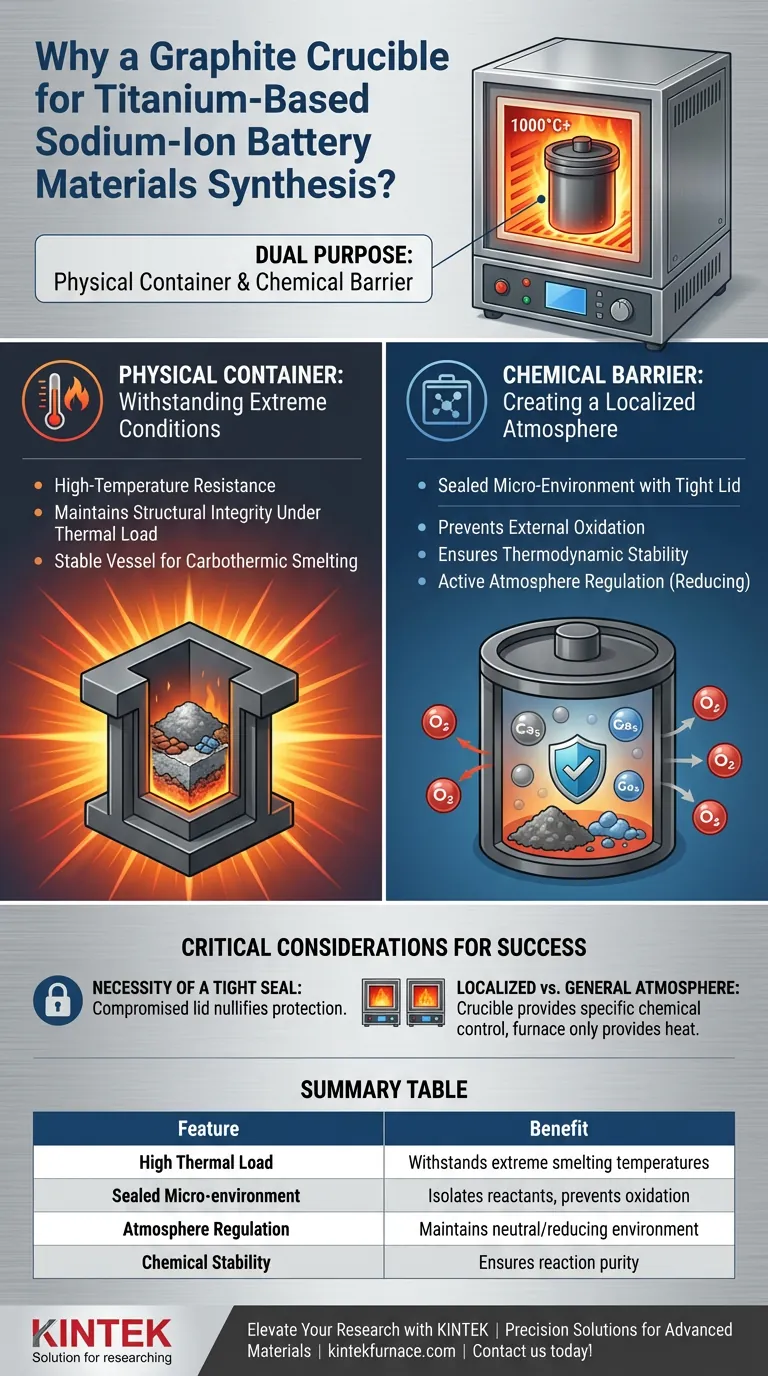
Graphite crucibles are selected primarily for their ability to actively regulate the reaction atmosphere while withstanding extreme heat. In the synthesis of titanium-based sodium-ion battery materials, specifically during carbothermic smelting, these vessels serve a dual purpose: they act as a physical container and a chemical barrier that generates a localized reducing or neutral micro-environment.
The graphite crucible does not merely hold the reactants; it isolates them. By creating a shielded micro-environment, it prevents external oxidation and ensures the carbothermic reduction proceeds strictly according to the intended thermodynamic design.
The Functional Role of the Crucible
Withstanding Extreme Conditions
The primary requirement for this synthesis is high-temperature resistance.
Graphite is chosen because it maintains structural integrity under the intense thermal loads required for carbothermic smelting, serving as a stable vessel for the raw materials.
Creating a Localized Atmosphere
When equipped with a tight graphite lid, the crucible functions as more than a container.
It effectively creates a sealed chamber within the larger muffle furnace. This establishes a specific "micro-environment" that is distinct from the general atmosphere of the furnace.
Chemical Control and Protection
Preventing Material Oxidation
Titanium-based materials are often sensitive to oxygen during synthesis.
The graphite crucible prevents the raw materials from interacting with external air. This physical isolation is critical to avoid unwanted oxidation that would degrade the quality of the final battery material.
Ensuring Thermodynamic Stability
For the synthesis to succeed, the chemical reaction must follow a precise thermodynamic pathway.
By maintaining a neutral or reducing atmosphere, the graphite crucible ensures the carbothermic reduction reaction occurs exactly as calculated, without interference from atmospheric oxygen.
Critical Considerations for Success
The Necessity of a Tight Seal
The benefits of the graphite crucible are entirely dependent on the integrity of the lid.
If the graphite lid is not tight, the localized micro-environment is compromised. This allows external air to infiltrate, effectively nullifying the protective benefits of the vessel.
localized vs. General Atmosphere
It is important to understand that the crucible creates a localized environment.
While the muffle furnace provides the heat, the crucible provides the chemical control. Relying solely on the furnace atmosphere without the specific protection of the graphite vessel may lead to inconsistent results.
Optimizing Your Synthesis Process
To ensure the highest quality titanium-based sodium-ion materials, align your equipment choice with your specific processing needs:
- If your primary focus is Phase Purity: Ensure the graphite lid is perfectly fitted to prevent any oxygen ingress that could form secondary phases.
- If your primary focus is Reaction Control: Rely on the graphite crucible to maintain the strict reducing environment required for the carbothermic pathway.
Success in this synthesis relies on treating the crucible not just as a holder, but as an active component in the chemical process.
Summary Table:
| Feature | Benefit for Titanium-Based Materials |
|---|---|
| High Thermal Load | Withstands extreme carbothermic smelting temperatures without structural failure. |
| Sealed Micro-environment | Isolates reactants from external air to prevent unwanted oxidation of sensitive titanium. |
| Atmosphere Regulation | Maintains a neutral/reducing environment crucial for the carbothermic thermodynamic pathway. |
| Chemical Stability | Ensures reaction purity by preventing interference from muffle furnace atmosphere gases. |
Elevate Your Battery Material Research with KINTEK
Precision in sodium-ion battery synthesis requires more than just heat—it requires perfect atmospheric control. KINTEK provides high-performance laboratory solutions tailored for advanced material science. Backed by expert R&D and manufacturing, we offer high-quality Muffle, Tube, Rotary, Vacuum, and CVD systems, along with customizable high-temperature furnace accessories designed to meet your unique thermodynamic requirements.
Don't let oxidation compromise your phase purity. Contact us today to find the perfect customizable high-temp solution for your lab!
Visual Guide
References
- Formation of Electrode Materials in the Process of Carbothermic Flux Smelting of Ilmenite Concentrate and Hydrothermal Refining of Titanium Slag. DOI: 10.3390/pr13051554
This article is also based on technical information from Kintek Furnace Knowledge Base .
Related Products
People Also Ask
- Why are vacuum heat treating furnaces essential for aerospace? Ensure Superior Material Integrity for High-Stakes Applications
- What is the primary application of vacuum heat treating furnaces in aerospace? Enhance Component Performance with Precision
- What is the process of vacuum heat treating? Achieve Superior Metallurgical Properties
- How does vacuum heat treating work in terms of temperature and time control? Master Precise Material Transformations
- How does a vacuum heat treating furnace improve the condition of metal alloys? Achieve Superior Metal Performance
