The primary role of heating filaments in initiated Chemical Vapor Deposition (iCVD) is to generate precise thermal energy via resistive heating. Their specific function is the controlled thermal decomposition of initiator molecules within the gas phase. This activation creates the free radicals necessary to trigger polymerization without subjecting the substrate to high temperatures.
Core Takeaway The filament serves as a localized energy source that decouples activation from deposition. By restricting high heat to the initiator molecules in the gas phase, iCVD allows for the coating of delicate, heat-sensitive substrates while maintaining high chemical reactivity.
The Mechanics of Thermal Activation
Targeted Energy Generation
In an iCVD system, the filaments are typically made of tungsten. When electrical current passes through them, they generate heat through resistive heating. This heat is not intended to warm the entire chamber uniformly but is instead focused on a specific chemical task.
Initiator Decomposition
The thermal energy provided by the filaments targets the initiator molecules introduced into the chamber. This process causes the initiator to break down or "decompose" into highly reactive free radicals. This is the spark that begins the chemical process.
Gas-Phase Activation
Crucially, this reaction occurs in the gas phase before the chemicals settle onto the surface. The filaments activate the chemistry while the molecules are still suspended. This ensures that the polymerization reaction is ready to proceed the moment the monomers reach the substrate.
The Strategic Advantage of iCVD
Low Substrate Temperatures
Because the high-temperature activation is confined to the filament array, the substrate itself can remain cool. This allows iCVD to coat heat-sensitive materials like paper, fabrics, or biological membranes that would be destroyed in conventional high-heat CVD processes.
Preventing Unwanted Reactions
The filaments provide a mechanism for controlled decomposition. By precisely regulating the filament temperature, operators can ensure only the initiator is activated. This prevents premature reactions or the degradation of the monomer structure before film formation begins.
Critical Control Factors (Trade-offs)
Balancing Temperature and Rate
While the filament provides the heat, the overall temperature affects the rate of chemical reactions and film quality. If the filament temperature is too low, insufficient radicals are produced, halting deposition. If it is too high, it may inadvertently heat the substrate or damage the monomer.
Pressure and Uniformity
The effectiveness of the filament is also tied to chamber pressure. Pressure affects how gas-phase reactions propagate. If the pressure profile is incorrect relative to the filament position, the uniformity of the deposited film may be compromised.
Making the Right Choice for Your Goal
To maximize the effectiveness of heating filaments in your iCVD process, consider your specific objective:
- If your primary focus is Deposition Rate: Ensure the filament temperature is sufficiently high to maximize the decomposition of initiator molecules, increasing the concentration of reactive species.
- If your primary focus is Substrate Protection: Optimize the distance between the filament and the stage to ensure thermal energy is strictly confined to the gas phase, maintaining a low surface temperature.
The heating filament is not just a heat source; it is the selective trigger that makes iCVD a versatile tool for coating delicate materials.
Summary Table:
| Feature | Role of Heating Filaments in iCVD |
|---|---|
| Primary Mechanism | Resistive heating (typically using tungsten filaments) |
| Target Molecule | Initiator molecules (thermal decomposition) |
| Key Outcome | Creation of free radicals in the gas phase |
| Substrate Impact | Minimal (allows for coating of heat-sensitive materials) |
| Control Factors | Filament temperature, chamber pressure, and filament-to-stage distance |
Optimize Your Advanced Coatings with KINTEK
Precise thermal control is the cornerstone of successful Chemical Vapor Deposition. At KINTEK, we understand that the delicate balance between initiator activation and substrate protection determines the quality of your thin films.
Backed by expert R&D and world-class manufacturing, KINTEK offers high-performance CVD systems, Muffle, Tube, Rotary, and Vacuum furnaces—all fully customizable to meet the unique needs of your research or production line. Whether you are coating biological membranes or advanced electronics, our systems provide the reliability and precision you require.
Ready to elevate your lab's capabilities? Contact our technical experts today to discuss your specific iCVD requirements and discover how our tailored solutions can drive your innovation forward.
Visual Guide

References
- Hunter O. Ford, Megan B. Sassin. Non-line-of-sight synthesis and characterization of a conformal submicron-thick cationic polymer deposited on 2D and 3D substrates. DOI: 10.1039/d3lf00256j
This article is also based on technical information from Kintek Furnace Knowledge Base .
Related Products
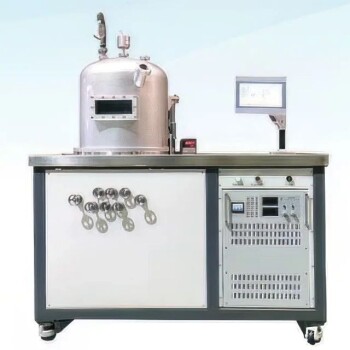
- HFCVD Machine System Equipment for Drawing Die Nano Diamond Coating
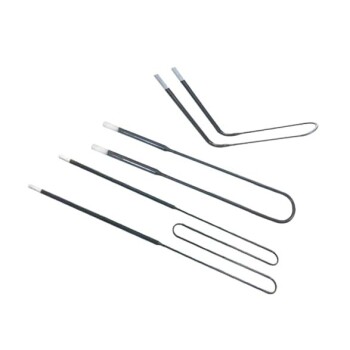
- Molybdenum Disilicide MoSi2 Thermal Heating Elements for Electric Furnace
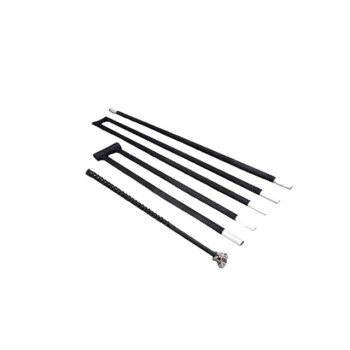
- Silicon Carbide SiC Thermal Heating Elements for Electric Furnace
- Multi Heating Zones CVD Tube Furnace Machine for Chemical Vapor Deposition Equipment
People Also Ask
- What is Hot-filament Chemical Vapor Deposition (HFCVD)? Achieve High-Quality Thin Films with Precision Control
- What are the equipment for chemical vapor deposition? A Guide to the 5 Essential Components
- What is the significance of the vacuum pressure control system in the CVD coating process for powders?
- What is the function of high-purity Argon (Ar) gas during CVD? Optimize Your Thin Film Uniformity and Purity
- What are the advantages of using Chemical Vapor Deposition (CVD) for coating turbine blades? Enhance Life & Performance