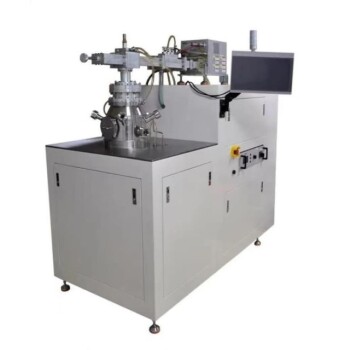
Microwave activation systems offer a fundamental advantage over traditional methods by utilizing volumetric heating. Instead of relying on external heat sources, these systems generate heat directly within the material via high-frequency molecular vibration, resulting in significantly faster heating speeds, superior thermal uniformity, and higher overall energy efficiency.
The Core Distinction: While traditional methods rely on slow thermal conduction from the surface inward, microwave activation penetrates deep into precursor particles immediately. This internal heat generation drives intense structural rearrangement, creating activated carbon with superior pore structure and surface area in a fraction of the time.
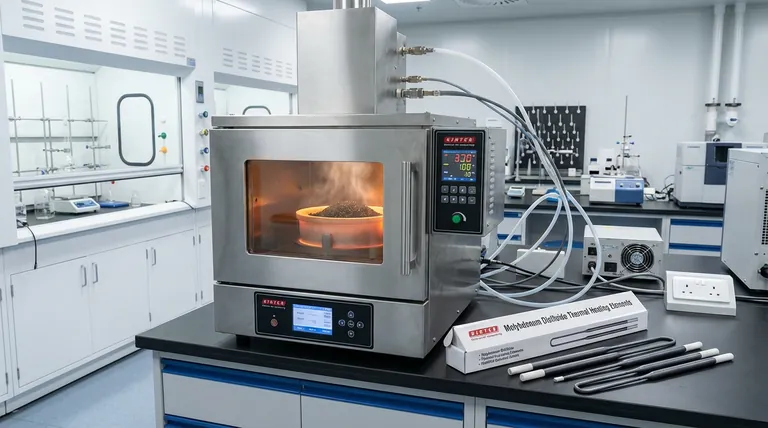
The Fundamental Shift: Volumetric Heating
Direct Molecular Interaction
Traditional heating relies on thermal conduction, where heat slowly travels from the outside of the material to the center. In contrast, microwave systems use electromagnetic waves to induce high-frequency vibration of polar molecules.
Eliminating Thermal Gradients
This vibration creates heat simultaneously throughout the volume of the material. By bypassing the limitations of conduction, microwave activation ensures uniform heating across the entire sample, preventing uneven activation.
Deep Layer Penetration
The radiation penetrates rapidly into the deep layers of precursor particles. This ensures that the core of the material is activated just as effectively as the surface.
Efficiency and Process Speed
Drastic Reduction in Time
The speed advantage is substantial. In complex processes such as sol-gel procedures (including polymerization, aging, and drying), microwave activation can reduce total processing time by more than 90 percent.
Energy Optimization
Because heat is generated internally rather than transferred through the air or a container, energy wastage is minimized. This results in significantly higher energy efficiency compared to resistive heating methods.
Superior Material Characteristics
Enhanced Pore Architecture
Microwave activation induces more intense structural rearrangement and oxidative dehydration, particularly when processing materials like carbon black impregnated with hydrogen peroxide. This results in a richer distribution of micropores and mesopores.
Increased Surface Area
The process promotes more intense surface development than conventional chemical activation. Consequently, the final product exhibits a larger specific surface area, which is critical for performance.
Higher Adsorption Capacity
The improved porosity and surface area directly translate to functional performance. Microwave-activated carbon demonstrates significantly enhanced adsorption capacity for targets such as metal ions and macromolecules.
Operational Considerations
Dependency on Polar Molecules
The mechanism relies on the presence of polar molecules to generate friction and heat. The effectiveness of the process is therefore linked to the specific precursor used, such as impregnated carbon black or sol-gels.
Equipment Specialization
Achieving these results often requires specialized hardware, such as customized multimode microwave reaction furnaces. These allow for the precise control over hierarchical pore structures that standard kilns cannot match.
Making the Right Choice for Your Goal
If you are evaluating whether to transition to microwave activation, consider your specific production targets:
- If your primary focus is Adsorption Performance: The method yields higher microporosity and specific surface area, making it superior for capturing metal ions and macromolecules.
- If your primary focus is Process Efficiency: The ability to reduce processing times by over 90% in specific applications offers a massive throughput advantage.
- If your primary focus is Structural Control: Microwave heating allows for precise tuning of hierarchical pore structures (micropores vs. mesopores) to meet specific technical requirements.
By switching to microwave activation, you are not just heating material faster; you are utilizing a mechanism that actively engineers a superior internal structure.
Summary Table:
| Feature | Microwave Activation | Traditional Heating |
|---|---|---|
| Heating Mechanism | Internal Volumetric Heating | External Thermal Conduction |
| Processing Time | Up to 90% Reduction | Standard (Hours to Days) |
| Pore Development | Rich Micropores & Mesopores | Limited Structural Control |
| Energy Efficiency | High (Direct Energy Transfer) | Low (Heat Loss to Environment) |
| Surface Area | Significantly Increased | Standard Development |
Revolutionize Your Material Processing with KINTEK
Transitioning to microwave technology requires precision and specialized hardware. KINTEK provides industry-leading, customizable microwave systems and high-temperature lab furnaces designed to meet your specific research and production targets.
Backed by expert R&D and manufacturing, our systems enable you to:
- Achieve unprecedented adsorption performance through superior pore architecture.
- Maximize throughput with drastic reductions in processing cycles.
- Ensure uniform quality using advanced volumetric heating technology.
Whether you need Muffle, Tube, Rotary, Vacuum, or CVD systems, our equipment is tailored to your unique chemical activation needs. Contact KINTEK today to optimize your lab's efficiency!
Visual Guide

References
- M. M. El-Maadawy, Ahmed Taha. Conversion of carbon black recovered from waste tires into activated carbon <i>via</i> chemical/microwave methods for efficient removal of heavy metal ions from wastewater. DOI: 10.1039/d4ra00172a
This article is also based on technical information from Kintek Furnace Knowledge Base .
Related Products
- MPCVD Machine System Reactor Bell-jar Resonator for Lab and Diamond Growth
- 915MHz MPCVD Diamond Machine Microwave Plasma Chemical Vapor Deposition System Reactor
- Cylindrical Resonator MPCVD Machine System for Lab Diamond Growth
People Also Ask
- What are the essential components of an MPCVD reactor system? Build a Pristine Environment for High-Purity Materials
- How does pressure affect the MPCVD growth process? Master Plasma Control for Superior Film Quality
- How do carbon-containing groups contribute to diamond growth in the MPCVD method? Unlock High-Quality Diamond Synthesis
- Why is temperature control important in the MPCVD growth process? Ensure High-Quality, Reliable Diamond Film Deposition
- What are the key components of an MPCVD system? Unlock High-Purity Crystal Growth