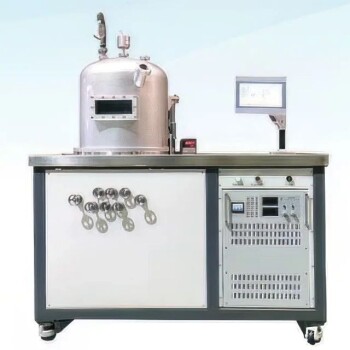
The primary advantages of a high-pressure nitrogen environment are significantly faster processing times and superior energy efficiency compared to atmospheric steam. By utilizing the high thermal conductivity of nitrogen and leveraging pressure as a catalyst, this method eliminates the energy-intensive phase changes required for steam generation.
By substituting high pressure for higher temperatures and removing the need to boil water, high-pressure nitrogen systems can reduce treatment cycles from dozens of hours to just 8–12 hours while ensuring more uniform heat transfer.
Accelerating Production Cycles
Drastic Reduction in Process Time
The most immediate operational impact is the speed of treatment. Traditional atmospheric steam processes often require dozens of hours to complete a modification cycle.
In contrast, a closed high-pressure nitrogen system can achieve the desired degree of modification in merely 8 to 12 hours.
Pressure as a Substitute for Heat
This time reduction is achieved because high pressure effectively acts as a substitute for higher temperatures.
By manipulating pressure within a closed vessel, the system accelerates the chemical changes in the wood without solely relying on thermal ramping.
Optimizing Energy Efficiency
Eliminating Phase Change Energy
Standard steam modification requires a significant energy input to convert liquid water into steam (latent heat of vaporization).
Nitrogen systems bypass this requirement entirely. Because no energy is wasted on converting water to steam, the overall energy profile of the process is more efficient.
Superior Thermal Conductivity
High-pressure nitrogen exhibits higher thermal conductivity than atmospheric steam.
This allows heat to penetrate the wood structure more rapidly and effectively, reducing the amount of energy required to maintain target temperatures.
Improving Product Consistency
Enhanced Heat Transfer Uniformity
In atmospheric steam environments, maintaining consistent temperature distribution can be challenging.
The high-pressure nitrogen environment promotes better heat transfer uniformity. This ensures that the wood is modified evenly throughout the batch, rather than suffering from inconsistent treatment zones.
Understanding the Operational Context
System Requirements
While the process is faster and more energy-efficient, it requires a closed system capable of handling high pressures.
This differs from atmospheric vessels, which operate at ambient pressure. Operators must ensure their infrastructure is rated for these pressurized conditions to realize the efficiency gains safely.
Making the Right Choice for Your Goal
When deciding between high-pressure nitrogen and atmospheric steam, consider your facility's primary constraints.
- If your primary focus is increasing throughput: The high-pressure nitrogen system is the clear choice, reducing cycle times by up to 70% (from dozens of hours to 8-12 hours).
- If your primary focus is energy reduction: Choose nitrogen to eliminate the substantial energy costs associated with generating steam from water.
- If your primary focus is product quality: The nitrogen environment offers superior heat transfer uniformity, resulting in a more consistent final product.
Switching to high-pressure nitrogen transforms thermal modification from a multi-day bottleneck into a streamlined, single-shift operation.
Summary Table:
| Feature | Atmospheric Steam Environment | High-Pressure Nitrogen Environment |
|---|---|---|
| Processing Time | Dozens of hours | 8–12 hours (Up to 70% faster) |
| Energy Requirement | High (Phase change/boiling water) | Low (No phase change required) |
| Heat Transfer | Variable/Standard | High Uniformity & Conductivity |
| Primary Mechanism | High Thermal Ramping | Pressure-Catalyzed Modification |
| System Type | Ambient Pressure Vessel | Closed High-Pressure System |
Transform Your Thermal Processing Efficiency
Is your production bottlenecked by long treatment cycles? KINTEK provides industry-leading high-pressure and vacuum systems designed to revolutionize your material modification workflows. Backed by expert R&D and precision manufacturing, we offer Muffle, Tube, Rotary, Vacuum, and CVD systems, all fully customizable to meet your unique high-temperature and pressure requirements.
Why partner with KINTEK?
- Faster Throughput: Reduce multi-day processes to a single shift.
- Lower Energy Costs: Eliminate the need for energy-intensive steam generation.
- Expert Customization: Tailored solutions for wood, ceramics, and advanced materials.
Contact KINTEK Today to Optimize Your Lab or Production Facility
References
- Guntis Sosins, Jānis Zicāns. Water-Related Properties of Wood after Thermal Modification in Closed Process under Pressure in Nitrogen. DOI: 10.3390/f15010140
This article is also based on technical information from Kintek Furnace Knowledge Base .
Related Products
- HFCVD Machine System Equipment for Drawing Die Nano Diamond Coating
- 9MPa Air Pressure Vacuum Heat Treat and Sintering Furnace
- High Pressure Laboratory Vacuum Tube Furnace
- High Temperature Muffle Oven Furnace for Laboratory Debinding and Pre Sintering
- Laboratory Quartz Tube Furnace RTP Heating Tubular Furnace
People Also Ask
- What is Hot-filament Chemical Vapor Deposition (HFCVD)? Achieve High-Quality Thin Films with Precision Control
- What are the equipment for chemical vapor deposition? A Guide to the 5 Essential Components
- What is the significance of the vacuum pressure control system in the CVD coating process for powders?
- What is the function of high-purity Argon (Ar) gas during CVD? Optimize Your Thin Film Uniformity and Purity
- What are the advantages of using Chemical Vapor Deposition (CVD) for coating turbine blades? Enhance Life & Performance