
Boron Nitride (BN) crucibles are the preferred choice for this application because they provide a chemically inert environment that withstands elevated temperatures without degrading. Specifically, BN remains non-reactive with graphite powder and active components like copper up to 450 °C, ensuring that the crucible itself does not introduce impurities or alter the composition of your catalyst sample.
The definitive value of a Boron Nitride crucible is its ability to function as a strictly neutral vessel. By eliminating chemical reactivity and preventing adhesion between the vessel and the sample, BN ensures that your experimental data reflects the true properties of the graphite catalyst rather than artifacts of contamination.
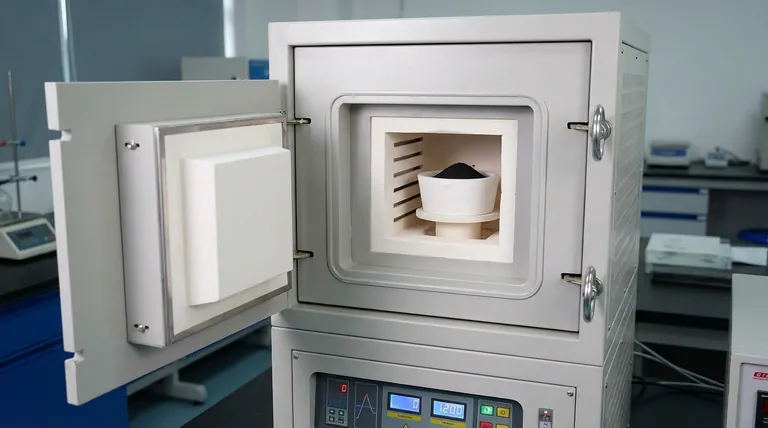
Preserving Chemical Integrity
The primary challenge in high-temperature heat treatment is preventing "cross-talk" between the sample and its container.
Preventing Chemical Reactions
At high temperatures, many standard crucible materials can become reactive. Boron Nitride is chemically inert, meaning it will not react with graphite powder or copper-based active components.
Eliminating Impurity Infiltration
Because the BN structure is stable, it prevents the infiltration of crucible material into your catalyst. This is critical for comparative experimental studies, where even trace impurities can skew results and lead to false conclusions about catalytic activity.
Mechanical and Physical Advantages
Beyond chemical composition, the physical properties of Boron Nitride facilitate smoother experimental workflows.
Non-Wetting Surface
Boron Nitride exhibits excellent non-wetting properties, acting effectively as a release agent. This prevents reaction products or molten components from adhering to the crucible walls, ensuring you can recover the entire sample without loss.
Thermal Stability in Inert Atmospheres
BN crucibles maintain their structural integrity at the temperatures required for treating graphite catalysts (specifically cited up to 450 °C). This thermal stability ensures the vessel does not degrade, crack, or release particulates during the heating process.
Understanding the Trade-offs
While BN is ideal for this specific application, it is essential to understand its operational constraints to avoid failure.
Requirement for Inert Atmospheres
The superior performance of Boron Nitride is most reliable when used within an inert atmosphere. Introducing oxygen at high temperatures can degrade BN, potentially compromising the inert barrier it is meant to provide.
Temperature Thresholds
While BN is highly heat resistant, you must operate within the verified range for your specific sample types (such as the 450 °C benchmark for copper/graphite systems). Exceeding specific thermal limits without checking the oxidation resistance of the specific BN grade can lead to material degradation.
Making the Right Choice for Your Goal
To ensure the success of your graphite catalyst treatment, align your equipment choice with your specific experimental priority:
- If your primary focus is Data Accuracy: Choose BN to eliminate the variable of crucible-induced contamination, ensuring your comparative studies are statistically valid.
- If your primary focus is Sample Recovery: Rely on BN’s non-wetting properties to prevent adhesion, allowing for the easy removal of sintered or treated samples without mechanical scraping.
By selecting Boron Nitride, you are effectively removing the variable of the container from your experiment, allowing you to focus entirely on the chemistry of your catalyst.
Summary Table:
| Feature | Key Benefit | Impact on Experiment |
|---|---|---|
| Chemical Inertness | Non-reactive with graphite & copper | Prevents sample contamination and artifacts |
| Non-Wetting Surface | Acts as a natural release agent | Ensures 100% sample recovery without adhesion |
| Thermal Stability | Maintains integrity in inert atmospheres | Prevents crucible degradation during heating |
| High Purity | No material infiltration into samples | Reliable data for comparative catalytic studies |
Enhance Your Catalyst Research with KINTEK's Precision Thermal Solutions
Precision is paramount in high-temperature material science. To achieve valid experimental results, you need equipment that eliminates variables and prevents contamination.
Backed by expert R&D and manufacturing, KINTEK offers a comprehensive range of lab high-temp furnaces, including Muffle, Tube, Rotary, Vacuum, and CVD systems. Our solutions are fully customizable to your unique research needs, ensuring you have the ideal environment for treating graphite catalysts and other advanced materials.
Ready to elevate your lab's efficiency and data accuracy?
Contact KINTEK Today to discuss your custom furnace requirements and discover how our high-performance systems can support your next breakthrough.
References
- Hiroshi Itahara, Yasuhiro Takatani. Facile synthesis of electrocatalytically active Cu/graphite using the negative electrode of spent Li-ion batteries. DOI: 10.1039/d3gc04472f
This article is also based on technical information from Kintek Furnace Knowledge Base .
Related Products
- High Temperature Muffle Oven Furnace for Laboratory Debinding and Pre Sintering
- Vertical Laboratory Quartz Tube Furnace Tubular Furnace
- 1200℃ Controlled Inert Nitrogen Atmosphere Furnace
- 1400℃ Muffle Oven Furnace for Laboratory
- 1700℃ High Temperature Muffle Oven Furnace for Laboratory
People Also Ask
- What thermal phenomena occur during polymer binder burnout in ceramic green bodies? Lab Furnace Guide
- What role does a high-temperature muffle furnace play in STFO synthesis? Achieve Pure Perovskite Results
- Why is controlled heat treatment in a muffle furnace necessary for calcined clay? Achieve Optimal Pozzolanic Activity
- How does a high-temperature muffle furnace facilitate the formation of LaNbxAl1−xO3+δ perovskite structures? Key Roles
- What role does a high-temperature muffle furnace play in the multi-stage synthesis of Li0.5MnFe1.5O4? Key to Pure Spinel



















