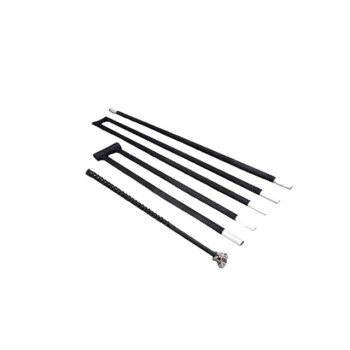
Non-carbon heat source auxiliary devices are strictly necessary because the reduction of iron ore with hydrogen is a strongly endothermic process. Unlike traditional blast furnaces where carbon combustion generates massive amounts of heat, the reaction between hydrogen and iron ore absorbs thermal energy, causing the reactor temperature to drop rapidly. These devices provide essential chemical heat compensation to maintain the temperature field without reintroducing carbon emissions to the process.
The shift to hydrogen metallurgy removes the internal heat source provided by carbon combustion. Auxiliary non-carbon heating is the critical engineering solution to counteract endothermic cooling, ensuring consistent reactor temperatures and efficient iron production while strictly adhering to decarbonization targets.
The Thermal Dynamics of Hydrogen Reduction
The Endothermic Cooling Effect
The fundamental chemical challenge in hydrogen metallurgy is that the reduction reaction absorbs heat rather than releasing it.
As hydrogen reacts with iron ore, it consumes significant thermal energy from the immediate environment. This results in a rapid drop in temperature inside the reactor, unlike traditional methods where the fuel also acts as the heater.
Impact on Reduction Rates
Temperature stability is directly linked to process efficiency.
If the reactor temperature is allowed to fall due to the endothermic nature of the reaction, the reduction rate—the speed at which iron oxide is converted to metallic iron—is negatively affected. Without intervention, the process becomes sluggish and commercially unviable.
How Auxiliary Devices Solve the Problem
Chemical Heat Compensation
To maintain a stable temperature field, the system requires an external injection of energy to balance the heat loss.
Auxiliary devices serve as this thermal bridge. By introducing electric arc heating, plasma, or microwave heating, operators can provide the necessary heat compensation to stabilize the reactor's internal environment.
Preserving the Carbon-Free Standard
The constraint of "non-carbon" sources is driven by the environmental goals of the project.
Using natural gas or coal to reheat the reactor would defeat the purpose of using hydrogen. Therefore, technologies that convert electrical energy into heat (such as plasma or arcs) are required to maintain the temperature field without adding carbon emissions.
Understanding the Trade-offs
Increased Electrical Load
While these devices solve the thermal deficit, they significantly increase the electrical energy consumption of the plant.
You are effectively trading chemical fuel consumption for high-intensity electrical demand. The efficiency of the overall operation becomes heavily dependent on the efficiency of the auxiliary heating technology used (e.g., microwave vs. plasma).
Complexity of Control
Integrating an external heat source adds a layer of complexity to reactor control.
Operators must precisely balance the input of auxiliary heat against the fluctuating rate of the endothermic reaction. This requires sophisticated monitoring to ensure the temperature field remains uniform rather than creating localized hot or cold spots.
Optimizing Your Metallurgical Strategy
The necessity of these devices dictates how you design your reactor's energy infrastructure.
- If your primary focus is Process Stability: Prioritize auxiliary devices with rapid response times, such as plasma, to instantly counteract temperature drops and maintain optimal reduction rates.
- If your primary focus is Total Decarbonization: Ensure that the significant electrical load required by the electric arc or microwave heaters is supplied entirely by renewable energy grids.
Success in hydrogen metallurgy depends not just on the hydrogen supply, but on mastering the thermal balance through precise, non-carbon heating.
Summary Table:
| Feature | Traditional Carbon-Based | Hydrogen Metallurgy (Non-Carbon) |
|---|---|---|
| Reaction Type | Exothermic (Releases Heat) | Endothermic (Absorbs Heat) |
| Thermal Impact | Self-sustaining heat source | Rapid temperature drop |
| Heating Method | Carbon combustion | Plasma, Electric Arc, Microwave |
| Carbon Footprint | High CO2 emissions | Net-zero potential |
| Process Goal | Fuel & reduction combined | Pure chemical heat compensation |
Achieve Thermal Precision in Carbon-Free Metallurgy
Transitioning to green steel requires more than just hydrogen—it demands expert thermal management. KINTEK provides the high-performance heating infrastructure necessary to stabilize endothermic reactions and maintain optimal reduction rates.
Backed by expert R&D and manufacturing, KINTEK offers Muffle, Tube, Rotary, Vacuum, and CVD systems, along with other specialized lab high-temp furnaces—all fully customizable to meet your unique metallurgical research and production needs.
Ready to optimize your hydrogen reduction process? Contact our technical experts today to design your custom thermal solution.
References
- Fucheng Zhang, Ying Xu. Prospects for green steelmaking technology with low carbon emissions in China. DOI: 10.1002/cey2.456
This article is also based on technical information from Kintek Furnace Knowledge Base .
Related Products
- Silicon Carbide SiC Thermal Heating Elements for Electric Furnace
- Molybdenum Disilicide MoSi2 Thermal Heating Elements for Electric Furnace
- Electric Rotary Kiln Continuous Working Small Rotary Furnace Kiln for Pyrolysis Plant Heating
- Vacuum Heat Treat Furnace with Ceramic Fiber Liner
People Also Ask
- How do the different types of silicon carbide heating elements compare in terms of applications? Find the Best Fit for Your High-Temp Needs
- What are the temperature capabilities and mounting options for silicon carbide heating elements? Unlock High-Temp Flexibility and Durability
- How do silicon carbide heating elements enhance the heat treatment of alloys? Achieve Superior Temperature Control
- What are the advantages of using silicon carbide heating elements in industrial furnaces? Boost Efficiency and Durability
- What is the recommended surface load for silicon carbide heating elements at different furnace temperatures? Maximize Lifespan & Performance