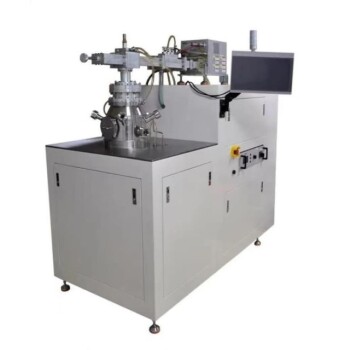
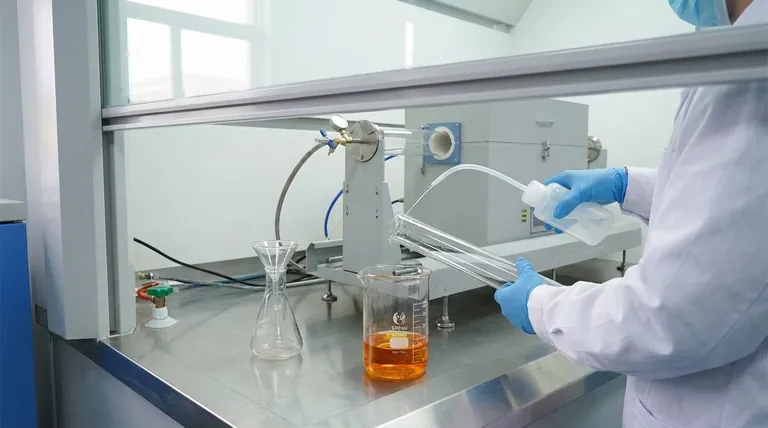
The primary purpose of pre-treating quartz tube reactors with aqua regia and deionized water is to rigorously eliminate trace metals and organic contaminants from the inner walls of the reaction vessel. This critical preparation step creates a pristine environment, ensuring that foreign impurities are not introduced into the crystal lattice during the Chemical Vapor Transport (CVT) process.
Pre-treatment in CVT is not merely a cleaning step; it is a foundational requirement for material integrity. By stripping away microscopic contaminants, you ensure the resulting Transition Metal Dichalcogenides (TMDs) maintain the high purity and superior electronic properties required for high-performance applications.
The Critical Role of Reactor Purity
Eliminating Invisible Contaminants
Quartz tubes, even when visually clean, often harbor microscopic residues. These can include trace metals from manufacturing or organic compounds from handling and storage.
Aqua regia, a potent mixture of nitric and hydrochloric acid, is chemically aggressive enough to dissolve these stubborn contaminants.
Preventing Lattice Integration
During the high-temperature conditions of CVT, surface contaminants become mobile. Without pre-treatment, these impurities can vaporize and integrate into the growing crystal structure.
Once an impurity enters the crystal lattice, it creates a permanent structural defect that cannot be removed.
Ensuring Electronic Performance
The primary reference highlights that this cleaning procedure is essential for Transition Metal Dichalcogenides (TMDs).
These materials are often prized for their specific electronic properties. Contamination degrades these properties, rendering the material unsuitable for sensitive electronic or optical applications.
Operational Considerations and Safety
The Necessity of the Rinse
The primary reference emphasizes a "thorough deionized water rinse" following the acid treatment. This step is as critical as the acid wash itself.
If the acid is not completely removed, the residual chemicals themselves become contaminants, potentially altering the transport chemistry inside the tube.
Handling Hazardous Reagents
While aqua regia is effective, it presents a safety trade-off. It is highly corrosive and releases toxic fumes, requiring the use of a fume hood and appropriate Personal Protective Equipment (PPE).
However, in the context of high-quality crystal growth, the safety risks are managed to secure the non-negotiable benefit of reactor purity.
Making the Right Choice for Your Goal
When deciding on your preparation protocol, consider the end-use of your crystals:
- If your primary focus is High-Performance Electronics: You must strictly adhere to the aqua regia and deionized water protocol to guarantee superior electronic properties and minimal defects.
- If your primary focus is Basic Synthesis Testing: While high purity is always preferred, you might occasionally bypass rigorous acid cleaning only if the electronic quality of the resulting crystal is irrelevant to your experiment.
Consistently treating your reactor ensures that any defects in your crystals are due to growth parameters, not preventable contamination.
Summary Table:
| Step | Treatment Agent | Primary Function | Impact on Crystal Growth |
|---|---|---|---|
| Acid Wash | Aqua Regia | Dissolves trace metals & organic residues | Prevents lattice defects and impurity integration |
| Rinse | Deionized Water | Removes residual corrosive chemicals | Ensures a neutral, pristine reaction environment |
| Drying | High-Temp/Vacuum | Eliminates moisture | Prevents unwanted oxidation during synthesis |
Elevate Your Research with KINTEK’s Precision Heating Solutions
High-performance crystal growth starts with the right environment. KINTEK provides the cutting-edge tools you need to ensure material integrity. Backed by expert R&D and manufacturing, we offer high-quality Muffle, Tube, Rotary, Vacuum, and CVD systems, all fully customizable to meet the rigorous demands of your lab.
Whether you are synthesizing Transition Metal Dichalcogenides (TMDs) or developing next-gen electronic materials, our systems offer the thermal stability and precision required for excellence.
Ready to optimize your CVT process? Contact KINTEK today to discuss your custom furnace needs and secure the purity your research deserves.
Visual Guide

References
- Bhupendra Mor, Kirti Korot. Comparative optical response and structural assessment of MoS₂ and MoSe₂ single crystals grown via iodine-assisted chemical vapor transport. DOI: 10.33545/26647575.2025.v7.i2a.168
This article is also based on technical information from Kintek Furnace Knowledge Base .
Related Products
- Laboratory Quartz Tube Furnace RTP Heating Tubular Furnace
- Vertical Laboratory Quartz Tube Furnace Tubular Furnace
- Multi Zone Laboratory Quartz Tube Furnace Tubular Furnace
- High Pressure Laboratory Vacuum Tube Furnace
- 1200℃ Split Tube Furnace Laboratory Quartz Tube Furnace with Quartz Tube
People Also Ask
- What physical conditions does a laboratory Tube Furnace provide for SOEC? Precision Heat for Solid Oxide Characterization
- What are the main features and functions of a laboratory tube furnace? Unlock Precise High-Temp Control for Your Lab
- What role does a laboratory tube furnace play in geological and mineralogical research? Unlock Earth's Secrets with Precision
- What conditions do tube furnaces provide for Au-Seeded TiO2 nanowires? Master Precision Thermal Synthesis
- What conditions does a tube furnace provide for post-ion-implantation? Achieve Precise Microstructural Repair