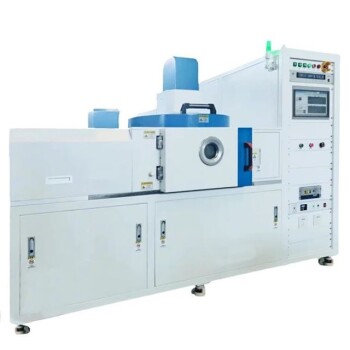
Field Assisted Sintering Technology (FAST), or Spark Plasma Sintering (SPS), creates a distinct advantage in recycling Ti-6Al-4V chips by utilizing pulsed electrical current to heat materials directly. This method enables extremely high heating rates of up to 100°C/min, allowing for full densification in minutes rather than hours. By operating as a solid-state process, it avoids melting the alloy, thereby preserving the original fine microstructure and significantly reducing energy consumption compared to traditional methods.
Core Takeaway FAST/SPS replaces energy-intensive melting with a rapid, solid-state consolidation process. This approach not only drastically cuts processing time and carbon emissions but also retains the superior mechanical properties of the original titanium alloy by suppressing grain growth.
The Mechanics of Rapid Densification
To understand why FAST/SPS is superior for this application, one must look at how energy is applied to the material.
Direct Energy Transfer
Unlike conventional sintering which relies on external heating elements, FAST/SPS passes pulsed current directly through graphite molds and the material particles.
Exceptional Heating Rates
This direct application of energy results in heating rates as high as 100°C/min.
Reduced Cycle Times
Because the material heats so quickly, the Ti-6Al-4V chips reach near-full density within minutes. This short holding time is critical for process efficiency.
Preservation of Material Properties
The most significant technical advantage of FAST/SPS lies in its ability to maintain the integrity of the titanium alloy's microstructure.
Solid-State Processing
FAST/SPS is a solid-state recycling method, meaning the material never reaches its melting point.
Suppressing Grain Growth
By avoiding the liquid phase and minimizing exposure to high heat, the process effectively suppresses grain growth in the original powder or chips.
Superior Microstructure
The result is a finished product that partially preserves the original fine microstructures. This leads to mechanical properties that are often superior to those achieved through traditional sintering methods.
Environmental and Operational Efficiency
Beyond material quality, FAST/SPS addresses the growing industrial need for sustainable manufacturing practices.
Lower Temperature Requirements
The process achieves full densification at temperatures typically between 800°C and 1000°C, which is significantly lower than the melting point of titanium alloys.
Reduced Energy Consumption
Because the process requires lower temperatures and shorter holding times, the total energy input is drastically lower than traditional melting processes.
Lower Carbon Footprint
The combination of speed and efficiency results in a significant reduction in carbon emissions, making it a more environmentally viable option for recycling operations.
Understanding the Operational Context
While FAST/SPS offers distinct advantages, it is important to understand the specific parameters required for success.
Reliance on Graphite Molds
The process explicitly relies on passing current through graphite molds. This necessitates the management of mold consumables and ensures the geometry of the recycled part is limited to the capabilities of the mold design.
Temperature Sensitivity
Success depends on precise thermal control. While the process prevents melting, it still requires maintaining temperatures between 800°C and 1000°C to ensure near-full density without compromising the microstructure.
Making the Right Choice for Your Goal
The decision to implement FAST/SPS depends on your specific recycling priorities.
- If your primary focus is Material Quality: FAST/SPS is the optimal choice because it suppresses grain growth and preserves the original fine microstructure of the Ti-6Al-4V chips.
- If your primary focus is Sustainability: This technology is superior due to its ability to significantly reduce energy consumption and carbon emissions through lower operating temperatures.
- If your primary focus is Throughput: The ability to achieve heating rates of 100°C/min and densification in minutes offers a distinct speed advantage over traditional melting cycles.
FAST/SPS transforms titanium recycling from a high-energy re-melting process into a precise, solid-state consolidation technique that prioritizes both speed and material integrity.
Summary Table:
| Feature | FAST/SPS Technology | Traditional Melting/Sintering |
|---|---|---|
| Heating Rate | Up to 100°C/min (Direct pulsed current) | Slow (External heating) |
| Processing State | Solid-state (No melting) | Liquid phase/Melting |
| Densification Time | Minutes | Hours |
| Microstructure | Suppresses grain growth; preserves fine structure | Coarse grain growth due to high heat |
| Energy Efficiency | High (800°C - 1000°C) | Low (High melting temperatures) |
| Environmental Impact | Significantly lower carbon footprint | High energy consumption and emissions |
Elevate Your Advanced Manufacturing with KINTEK
Maximize the potential of Ti-6Al-4V recycling and high-performance material synthesis with KINTEK’s industry-leading thermal solutions. Backed by expert R&D and precision manufacturing, KINTEK offers a comprehensive range of high-temperature systems—including Muffle, Tube, Rotary, Vacuum, and CVD systems—all fully customizable to meet your unique laboratory or industrial needs.
Our specialized equipment ensures the precise thermal control required to suppress grain growth and achieve full densification while minimizing energy costs. Ready to optimize your recycling process? Contact our experts today to discover how our tailored sintering solutions can bring superior efficiency and material integrity to your facility.
Visual Guide

References
- Samuel Lister, Martin Jackson. A comparative study of microstructure and texture evolution in low cost titanium alloy swarf and powder recycled via FAST and HIP. DOI: 10.1177/02670836241277060
This article is also based on technical information from Kintek Furnace Knowledge Base .
Related Products
- Spark Plasma Sintering SPS Furnace
- RF PECVD System Radio Frequency Plasma Enhanced Chemical Vapor Deposition
- 600T Vacuum Induction Hot Press Vacuum Heat Treat and Sintering Furnace
- High Temperature Muffle Oven Furnace for Laboratory Debinding and Pre Sintering
- Vacuum Heat Treat Sintering Furnace with Pressure for Vacuum Sintering
People Also Ask
- How does the heating mechanism of Spark Plasma Sintering (SPS) function? Enhance TiC/SiC Composite Fabrication
- Why is it necessary to maintain a high vacuum environment during the SPS of SiC? Key to High-Density Ceramics
- What are the technical advantages of using an SPS sintering furnace? Elevate Al2O3-TiC Material Performance
- What are the steps in the discharge plasma sintering process? Master Fast, High-Density Material Consolidation
- What are the advantages of spark plasma sintering (SPS) over traditional forging? Precision Microstructural Control