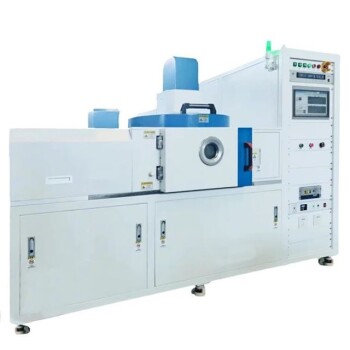
The primary advantage of Direct Liquid Injection Pulsed Pressure Chemical Vapor Deposition (DLI-PP-CVD) is its exceptional precision in precursor delivery. By introducing dissolved precursors into the reaction chamber via pulsed liquid injection, the system allows for molecular-level control over the dosage. This capability solves common consistency issues, enabling the reproducible, wafer-scale growth of Molybdenum Disulfide (MoS2) nanosheets with highly specific thickness requirements.
By replacing continuous evaporation with pulsed liquid injection, DLI-PP-CVD decouples precursor delivery from thermal instability. This ensures the scalable fabrication of uniform MoS2 films, ranging from sub-monolayers to multiple layers, with high reproducibility.
The Mechanics of Precision Growth
Molecular-Level Dosage Control
Standard CVD processes often rely on the thermal evaporation of solid powders, which can lead to inconsistent vapor pressure.
DLI-PP-CVD circumvents this by using a precision liquid injection system. Precursors are dissolved in solvents and introduced in exact quantities.
Upon injection, these precursors undergo rapid vaporization, ensuring that the exact intended amount of material reaches the substrate.
The Function of Pulsed Intervals
The system does not flood the chamber; instead, it operates in pulsed intervals.
This pulsing technique allows the system to refresh the precursor supply periodically.
It provides a distinct advantage in managing the reaction kinetics, preventing the uncontrolled buildup of material that leads to uneven growth.
Scalability and Uniformity
Achieving Wafer-Scale Reproducibility
A major challenge in nanomaterial synthesis is moving from a small sample to a large area.
The precise control offered by DLI-PP-CVD enables the growth of MoS2 nanosheets across a wafer-scale area.
Because the precursor dosage is strictly regulated, the resulting films maintain consistent quality across the entire surface.
Tunable Thickness Capabilities
Different applications require different material properties, often dictated by layer count.
This system is ideal for fabricating thin films with specific distribution characteristics.
Operators can target thicknesses ranging from sub-monolayers to multiple layers simply by adjusting the pulse parameters and liquid volume.
Operational Context and Control
Regulating the Reaction Environment
While the injection method is unique, the system relies on fundamental CVD principles regarding environmental control.
Like standard systems, the regulation of pressure and temperature is critical for managing nucleation kinetics.
Proper management of the chamber pressure helps control the evaporation rate of the precursors, ensuring the reactants are available at the right density for film formation.
Managing Defect Density
Vacuum systems working in tandem with CVD setups play a crucial role in the quality of the final crystal.
maintaining specific pressure ranges (typically between 50 and 300 Torr in sulfidation contexts) helps prevent excessive loss of volatile elements like sulfur.
Ensuring an adequate source of these elements is vital for defect passivation, potentially transforming films from high-defect structures into high-quality crystals.
Operational Considerations and Trade-offs
Solvent Compatibility Complexity
Unlike solid-source CVD, DLI-PP-CVD introduces the variable of solvents.
You must ensure that the solvent used to dissolve the precursor does not react negatively with the substrate or the MoS2 film.
The rapid vaporization process requires the solvent to evaporate cleanly without leaving carbonaceous residues that could degrade the nanosheet quality.
System Complexity vs. Simplicity
This method offers higher precision but introduces more mechanical complexity than a simple tube furnace setup.
The requirement for liquid injectors and pulse controllers increases the maintenance overhead.
Operators must balance the need for molecular precision against the increased operational cost and setup time.
Making the Right Choice for Your Goal
DLI-PP-CVD is a specialized tool designed for high-specification manufacturing. To determine if it fits your current project, consider your output requirements:
- If your primary focus is Scalability: Choose this system to achieve uniform coverage across full wafers, which is difficult to achieve with standard powder vaporization.
- If your primary focus is Thickness Tuning: Rely on this method for applications requiring strict control over layer count, specifically when targeting sub-monolayer or precise multi-layer architectures.
Ultimately, DLI-PP-CVD transforms MoS2 growth from an experimental art into a reproducible engineering process.
Summary Table:
| Feature | DLI-PP-CVD Advantage | Impact on MoS2 Growth |
|---|---|---|
| Precursor Delivery | Pulsed liquid injection | Molecular-level dosage & consistency |
| Scalability | Wafer-scale reproducibility | Uniform film quality across large surfaces |
| Thickness Control | Tunable pulse parameters | Range from sub-monolayers to multi-layers |
| Process Stability | Decoupled thermal stability | Prevents uncontrolled material buildup |
| Quality Control | Precise kinetic management | Reduced defect density & high-quality crystals |
Elevate Your Nanomaterial Synthesis with KINTEK
Transition from experimental variability to reproducible engineering excellence. Backed by expert R&D and manufacturing, KINTEK offers high-performance CVD systems, Muffle, Tube, Rotary, and Vacuum furnaces, all customizable to meet your unique laboratory and production requirements.
Whether you are targeting wafer-scale MoS2 uniformity or complex multi-layer architectures, our team provides the precision tools you need to succeed. Contact KINTEK today to discuss your custom furnace solution!
References
- Felipe Wasem Klein, Matthieu Paillet. Determining by Raman spectroscopy the average thickness and <i>N</i>-layer-specific surface coverages of MoS<sub>2</sub> thin films with domains much smaller than the laser spot size. DOI: 10.3762/bjnano.15.26
This article is also based on technical information from Kintek Furnace Knowledge Base .
Related Products
- HFCVD Machine System Equipment for Drawing Die Nano Diamond Coating
- Custom Made Versatile CVD Tube Furnace Chemical Vapor Deposition CVD Equipment Machine
- RF PECVD System Radio Frequency Plasma Enhanced Chemical Vapor Deposition
- Inclined Rotary Plasma Enhanced Chemical Deposition PECVD Tube Furnace Machine
- Cylindrical Resonator MPCVD Machine System for Lab Diamond Growth
People Also Ask
- What is Hot-filament Chemical Vapor Deposition (HFCVD)? Achieve High-Quality Thin Films with Precision Control
- What are the equipment for chemical vapor deposition? A Guide to the 5 Essential Components
- What is the significance of the vacuum pressure control system in the CVD coating process for powders?
- What is the function of high-purity Argon (Ar) gas during CVD? Optimize Your Thin Film Uniformity and Purity
- What are the advantages of using Chemical Vapor Deposition (CVD) for coating turbine blades? Enhance Life & Performance