
The primary advantages of chemical vapor sterilization are its ability to sterilize instruments without causing rust or corrosion and its relatively rapid cycle times. Unlike steam autoclaves, this low-moisture method is exceptionally gentle on carbon steel and other metals, preserving the sharpness of cutting edges and extending the lifespan of expensive tools.
Chemical vapor sterilization is the preferred method for protecting metal instruments from the damage caused by moisture. Its key benefit is preventing corrosion and dulling, but this comes with the critical trade-off of requiring specialized equipment and careful handling of chemical agents.
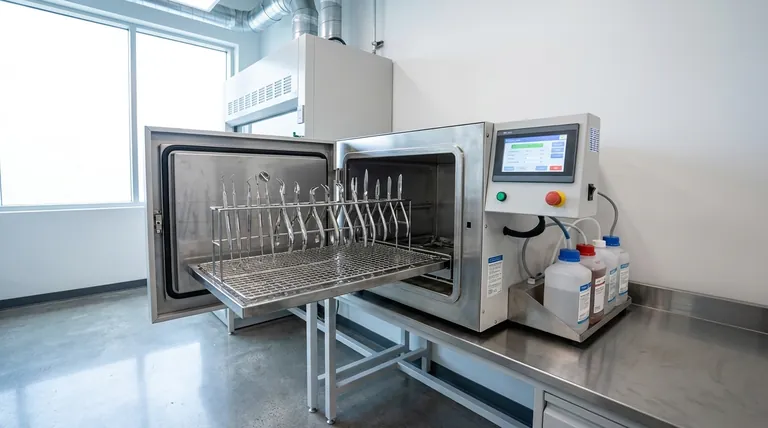
The Core Mechanism: How It Sterilizes
A Low-Moisture, High-Temperature Process
Chemical vapor sterilization is not a liquid-based process. Instead, it uses a specific chemical solution—typically a mixture of formaldehyde, acetone, alcohol, and water—that is heated under pressure in a specialized chamber.
This creates a hot, unsaturated chemical vapor that sterilizes the instruments. Because the water content is very low, the conditions that cause oxidation (rusting) and corrosion on metals are avoided.
The Role of Heat and Pressure
The process requires a dedicated device, often referred to by the brand name Chemiclave, that functions similarly to an autoclave. The combination of heat (around 132°C or 270°F) and pressure (around 20 psi) allows the chemical vapor to thoroughly penetrate instrument packs and kill all microbial life, including resilient bacterial spores.
Key Advantages of Chemical Vapor Sterilization
Prevents Corrosion and Dulling
This is the single most important advantage over steam sterilization. The near-absence of water in the vapor means that carbon steel instruments, dental burs, and orthodontic pliers will not rust or lose their integrity.
For practices that rely on sharp, precise instruments, this benefit is paramount. It prevents the premature degradation and replacement of costly tools.
Ensures Instrument Longevity
By preventing rust and corrosion, chemical vapor sterilization directly translates to a lower total cost of ownership for your instruments. The initial investment in the sterilizer and solutions is offset by the significantly extended lifespan of the tools being sterilized.
Provides Rapid Sterilization Cycles
Cycle times are efficient, often ranging from 20 to 40 minutes. After the sterilization phase, there is no lengthy drying cycle required, as is often the case with steam autoclaves which can leave instruments wet.
Produces Dry, Ready-to-Use Instruments
Instruments emerge from the cycle completely dry and often cool enough to be handled and stored almost immediately. This improves workflow efficiency and eliminates the risk of contamination associated with handling wet instrument packs.
Understanding the Trade-offs and Requirements
Specialized Equipment is Necessary
You cannot perform chemical vapor sterilization without a dedicated unit designed for this purpose. This equipment represents a significant capital investment compared to some other methods.
Requires Chemical Handling and Ventilation
The chemical solutions used have a strong, unpleasant odor and contain hazardous materials like formaldehyde. Proper, adequate ventilation in the sterilization area is not just recommended; it is a critical safety requirement to protect staff from chemical exposure.
Incurs Ongoing Solution Costs
Unlike a steam autoclave that uses distilled water, this method requires the ongoing purchase of a proprietary chemical solution. This recurring operational expense must be factored into any cost-benefit analysis.
Limited Material Compatibility
While excellent for metals, the process may not be suitable for some plastics, textiles, and other materials that cannot withstand the chemicals or the high temperature of the cycle. Always verify manufacturer guidelines for any item you wish to sterilize.
Making the Right Choice for Your Goal
Deciding on a sterilization method requires balancing instrument needs with operational realities.
- If your primary focus is preserving expensive, sharp metal instruments: Chemical vapor sterilization is the superior choice to prevent rust, dulling, and corrosion common with steam.
- If your primary focus is minimizing staff exposure to chemicals: A steam autoclave is a simpler and safer option, as it operates only with water and heat.
- If your primary focus is workflow speed and instrument turnover: The rapid, dry-to-dry cycle of chemical vapor sterilization offers a distinct efficiency advantage over many steam autoclave systems.
Ultimately, selecting the right method depends on a clear-eyed assessment of the instruments you use, your facility's constraints, and your highest priorities.
Summary Table:
| Advantage | Key Benefit |
|---|---|
| Prevents Corrosion | No moisture means no rust on carbon steel tools. |
| Preserves Sharpness | Protects cutting edges from dulling. |
| Rapid Cycle Times | Efficient 20-40 minute sterilization cycles. |
| Dry, Ready-to-Use Instruments | No lengthy drying time; tools are ready immediately. |
| Extends Instrument Lifespan | Reduces long-term replacement costs. |
Protect your investment in precision metal instruments. Chemical vapor sterilization is ideal for preserving the sharpness and integrity of carbon steel tools, but it requires specialized, reliable equipment. KINTEK's advanced laboratory furnaces and sterilization systems are engineered for precise, consistent performance. Leveraging exceptional R&D and in-house manufacturing, we offer deep customization to meet your unique sterilization requirements. Contact KINTEK today to find the perfect high-temperature solution for your laboratory.
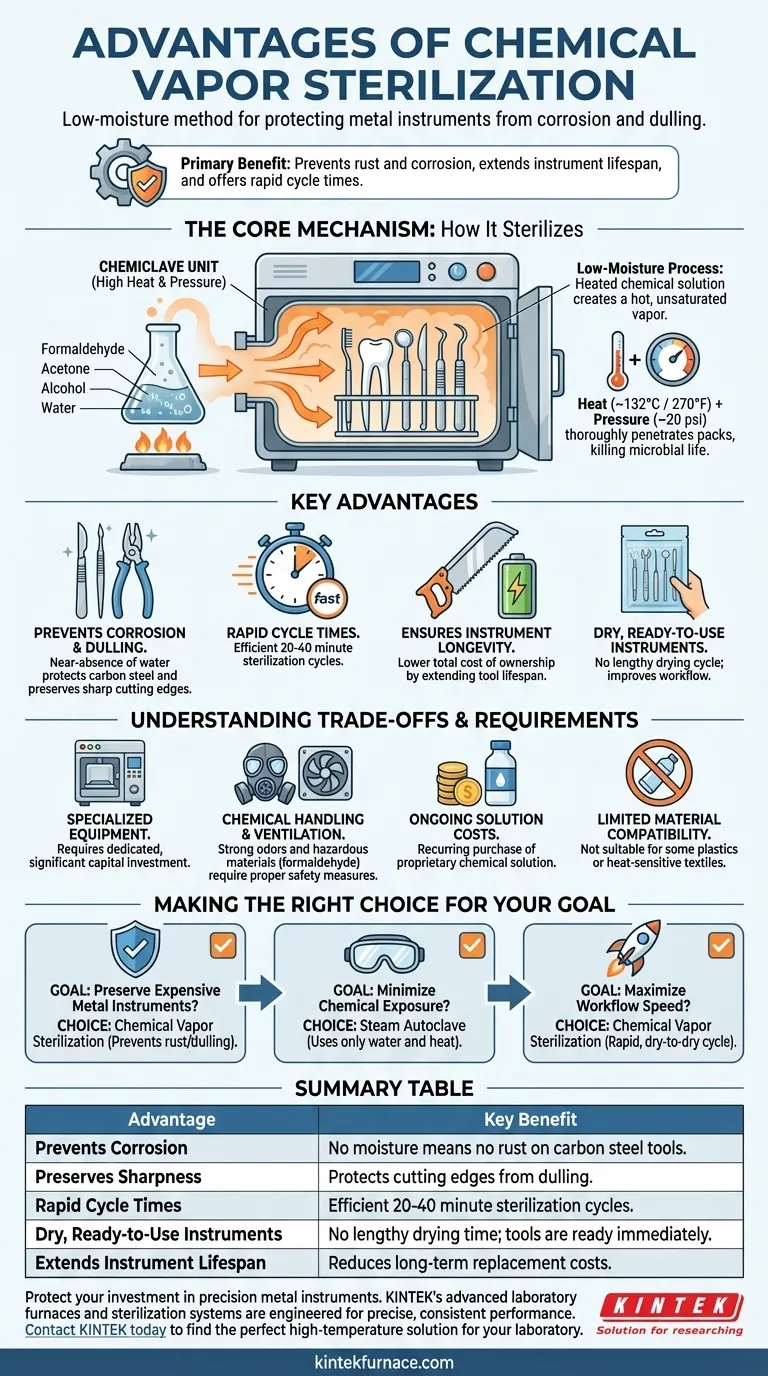
Visual Guide
Related Products
- Custom Made Versatile CVD Tube Furnace Chemical Vapor Deposition CVD Equipment Machine
- 915MHz MPCVD Diamond Machine Microwave Plasma Chemical Vapor Deposition System Reactor
- MPCVD Machine System Reactor Bell-jar Resonator for Lab and Diamond Growth
- Multi Heating Zones CVD Tube Furnace Machine for Chemical Vapor Deposition Equipment
- Slide PECVD Tube Furnace with Liquid Gasifier PECVD Machine
People Also Ask
- What is a CVD tube furnace and what is its primary function? Discover Precision Thin-Film Deposition
- Why are CVD tube furnace sintering systems indispensable for 2D material research and production? Unlock Atomic-Scale Precision
- Which industries and research fields benefit from CVD tube furnace sintering systems for 2D materials? Unlock Next-Gen Tech Innovations
- How does CVD tube furnace sintering enhance graphene growth? Achieve Superior Crystallinity and High Electron Mobility
- What are the practical applications of gate media prepared by CVD tube furnaces? Unlock Advanced Electronics and More





