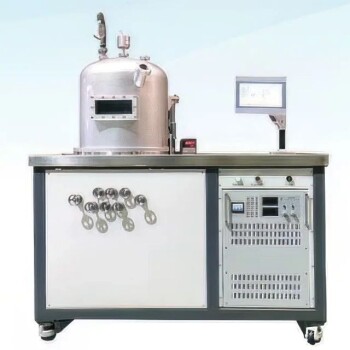
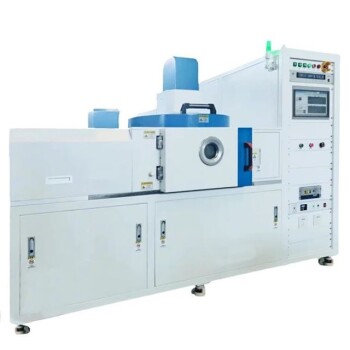
Atomic Layer Deposition (ALD) ensures effective passivation through a precise, self-limiting surface reaction mechanism that avoids the high-energy impact associated with other deposition methods. By alternating pulses of precursors—specifically HfCl4 and water vapor—the system grows high-k dielectric layers like HfO2 atom by atom. This gentle, layer-by-layer approach enables the formation of a dense, uniform film that passivates the WS2 surface without disrupting its delicate atomic structure.
ALD stands apart from physical deposition methods by preserving the integrity of the underlying Van der Waals interface. This damage-free growth minimizes charge trapping and ensures the intrinsic electronic properties of the WS2 are maintained for optimal device performance.
The Mechanics of Damage-Free Growth
The Self-Limiting Reaction
The core of the ALD process is its self-limiting surface reaction.
Unlike methods that rely on line-of-sight deposition, ALD introduces chemical precursors one at a time. This ensures that reactions only occur at available surface sites, preventing uncontrolled accumulation of material.
Layer-by-Layer Precision
The system alternates the introduction of HfCl4 precursors and water vapor.
This sequential pulsing allows the HfO2 dielectric to grow layer-by-layer. This strictly controlled growth mode is essential for creating high-quality interfaces on functionalized WS2 surfaces.
Superiority Over Physical Vapor Deposition (PVD)
Enhanced Step Coverage
Compared to Physical Vapor Deposition (PVD), ALD provides superior step coverage.
The gas-phase precursors can penetrate and coat complex geometries uniformly. This ensures that the passivation layer is continuous, even over irregular surface features.
Increased Film Density
The chemical nature of the ALD process results in higher film density.
A denser dielectric layer provides better insulation and environmental protection for the WS2 channel compared to the often porous films resulting from PVD.
Preserving the Van der Waals Interface
Protecting the Lattice
The most critical advantage of ALD is its ability to deposit material without damaging the underlying Van der Waals interface.
High-energy deposition techniques can bombard and disrupt the atomic lattice of 2D materials. ALD’s chemical approach is sufficiently gentle to leave the WS2 structure intact.
Reducing Charge Trapping
By maintaining a pristine interface, ALD significantly reduces charge trapping.
Defects and damage at the interface usually act as trap sites for charge carriers. Eliminating these defects directly improves the stability and performance of the electronic device.
Understanding the Trade-offs
The Requirement for Surface Preparation
The primary reference notes that ALD is performed on functionalized graphene or WS2 interfaces.
Pristine 2D materials are often chemically inert, making it difficult for ALD precursors to bind. Proper functionalization is a necessary prerequisite to initiate uniform nucleation.
Processing Speed vs. Quality
While ALD offers superior quality, the layer-by-layer mechanism is inherently slower than PVD.
You are trading rapid deposition rates for film density, uniformity, and interface quality.
Making the Right Choice for Your Goal
To maximize the performance of WS2-based devices, align your deposition strategy with your specific engineering requirements:
- If your primary focus is electronic mobility: Choose ALD to minimize interface scattering and damage to the Van der Waals structure.
- If your primary focus is dielectric reliability: Rely on ALD for its superior film density and reduced charge trapping compared to PVD.
ALD remains the definitive standard for integrating high-k dielectrics with 2D materials when interface integrity is non-negotiable.
Summary Table:
| Feature | Atomic Layer Deposition (ALD) | Physical Vapor Deposition (PVD) |
|---|---|---|
| Mechanism | Self-limiting surface reaction | Line-of-sight physical impact |
| Growth Mode | Atomic layer-by-layer | Rapid, bulk accumulation |
| Interface Impact | Gentle; preserves atomic lattice | High-energy; risks lattice damage |
| Film Density | High / Superior insulation | Lower / Potentially porous |
| Step Coverage | Excellent on complex geometries | Limited by shadowing effects |
Elevate Your Thin-Film Research with KINTEK
Precision at the atomic level is non-negotiable for high-k dielectric integration. KINTEK provides state-of-the-art laboratory solutions tailored for advanced materials research. Backed by expert R&D and manufacturing, we offer high-performance CVD and Vacuum systems designed to support your delicate 2D material passivation needs. Whether you are working with WS2 or functionalized graphene, our customizable systems ensure the uniform growth and interface integrity your project demands.
Ready to optimize your deposition process? Contact us today to discuss your unique lab requirements!
Visual Guide

References
- Pieter‐Jan Wyndaele, Stefan De Gendt. Enhancing dielectric passivation on monolayer WS2 via a sacrificial graphene oxide seeding layer. DOI: 10.1038/s41699-024-00464-x
This article is also based on technical information from Kintek Furnace Knowledge Base .
Related Products
- HFCVD Machine System Equipment for Drawing Die Nano Diamond Coating
- RF PECVD System Radio Frequency Plasma Enhanced Chemical Vapor Deposition
People Also Ask
- What is Hot-filament Chemical Vapor Deposition (HFCVD)? Achieve High-Quality Thin Films with Precision Control
- What are the equipment for chemical vapor deposition? A Guide to the 5 Essential Components
- What is the significance of the vacuum pressure control system in the CVD coating process for powders?
- What is the function of high-purity Argon (Ar) gas during CVD? Optimize Your Thin Film Uniformity and Purity
- What are the advantages of using Chemical Vapor Deposition (CVD) for coating turbine blades? Enhance Life & Performance